Rapper Afroman: Doesn't Understand Bitcoin, but Becomes a New Crypto Freedom Fighter

Foresight NewsОпубліковано о 2026-06-09Востаннє оновлено о 2026-06-09

Анотація

Joseph "Afroman" Foreman, the rapper famed for "Because I Got High," has become an unlikely symbol for the crypto community's libertarian ideals. Following a 2022 police raid on his Ohio home, which yielded no charges, Foreman used the footage to create viral songs mocking the officers, leading to a lawsuit he ultimately won. His defense of free speech against government overreach resonated deeply with attendees at the Bitcoin 2024 conference in Las Vegas, where he performed. Despite admitting he knows little about cryptocurrency and owns none, event organizers saw his personal fight as embodying Bitcoin's core ethos of individual sovereignty and resistance to centralized control. Foreman, a self-described "icon of weed culture," has long performed for paying crowds but found a new political voice after his legal battle. His platform, which includes federal marijuana legalization and police accountability, aligns with the diverse, anti-establishment crowd at the Bitcoin conference, though he remains unaffiliated with any major party. The event featured an auction of his memorabilia, celebrating him as a modern "freedom fighter." In a final surprise, Foreman used his stage time to announce his candidacy for the 2028 U.S. presidential election, thrilling the remaining audience before launching into his signature hit.


Author: Jessica Klein, Wired

Translation: Saoirse, Foresight News


Joseph Edgar Foreman, better known by his stage name Afroman, is taking a long drag from a blunt. In a makeshift backstage lounge at The Venetian in Las Vegas, partitioned by curtains, the 51-year-old rapper is unhurried, even as thousands wait outside. The joint was rolled by his videographer, a woman in a tight evening minidress and clear sky-high heels. This grand venue is a world away from the dive bars he toured for over two decades.


Foreman is wearing his courtroom suit, an American flag-print outfit he now wears everywhere. In 2022, police, suspecting him of drug-related crimes and kidnapping, raided his Winchester, Ohio home. They found nothing incriminating except a jar of 'green herbal substance,' THC concentrate wax, paraphernalia, and over $5,000 in cash. After the raid, Foreman released songs mocking the officers involved, joking about receding hairlines and their wives, and humiliating them in various ways. Seven officers sued him for defamation and invasion of privacy, seeking $4 million. Foreman won the case, and clips from the trial went viral, earning him widespread public support.


After all, going viral is Foreman's specialty. He claims his 2000 college party anthem "Because I Got High" originally promoted free expression — a debatable point, but he is undeniably skilled at capturing attention. His calm demeanor during the trial and his emphasis on free speech drew millions to his music. Footage from his home security cameras, showing officers entering his house, was used in music videos, further boosting his popularity. The most viral, "Lemon Pound Cake," mocked an officer who seemed overly interested in a cake on the kitchen counter during the search. The video garnered nearly 10 million views on YouTube, and the so-called "Cake Cop" later reported receiving hundreds of lemon pound cakes as harassment.


The rapper's victory cast him as a "freedom fighter" in the public eye, which is why he traveled to Las Vegas to perform for a crowd of libertarian-leaning crypto enthusiasts. Craig Deutsch, the programming director for the Bitcoin conference, said Foreman's "fight for his right to create songs about police who illegally entered his home perfectly aligns with Bitcoin's core ethos." The annual Bitcoin conference attracts a diverse crowd: industry professionals, early Bitcoin adopters, and QAnon followers distrustful of government systems. It has also become a key campaign stop. Donald Trump delivered a keynote in 2024 during his presidential run; JD Vance spoke the following year. Now in its second year in Las Vegas, attendance is up despite Bitcoin's price being about $33,000 lower than last year.


Host Gregg Davis enters the smoky greenroom, finding Foreman surrounded by a small entourage: former pimp Bishop Don "Magic" Juan, an assistant in an emerald suit, men taking turns passing a blunt, and two young women in tight, shiny dresses.


"How should I introduce you?" Davis asks.


"Speak from the heart," Foreman replies. "Talk about the struggle, the hustle, the American Dream — if you remember that word — then just bring out Afroman."


The host jokingly thanks Foreman for "making the room smell so nice." Shortly after, his manager enters, politely informing him that hotel staff have smelled marijuana and are threatening to call the police.
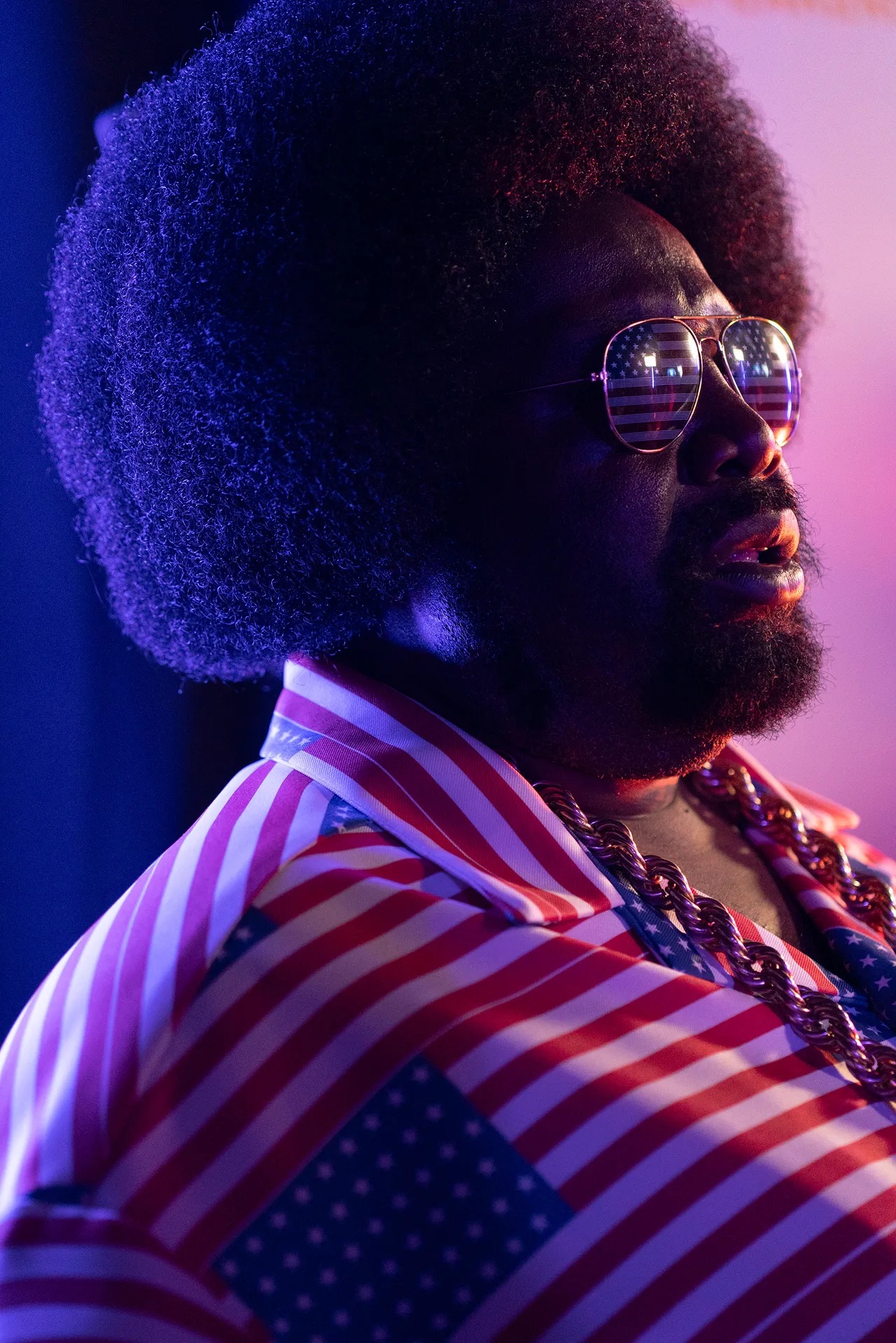

Joseph Edgar Foreman, widely known as rapper Afroman, rose to fame with "Because I Got High," a comedy song about the consequences of smoking marijuana. The song was nominated for a Grammy in 2002. Photo: Gabriella Angotti-Jones


"Okay, okay, I got it," Foreman says, turning to his crew. "They want us to put it out. Everybody, take a few last hits."


He has 20 minutes until he takes the Bitcoin conference's "Satoshi Main Stage," named after Bitcoin's pseudonymous creator. The rapper admits he knows nothing about cryptocurrency, doesn't own a single Bitcoin, and doesn't understand its logic. He pauses briefly, trying to think of something that will resonate with the crypto faithful, then lets it go. "I'm 51," he says. "I'll just wing it. It'll work out."


Foreman learned to sing in church and started writing raps at 12. His first song, he recalls, mocked a bully girl at his new school who had a mustache, with lyrics like, "Hairy Carrie ruins herself, so the hair on her lip gets no breeze." As an adult, back in Mississippi, he recorded "Because I Got High" shortly after quitting his job at a chicken processing plant, distributing 500 copies at a Mardi Gras party in New Orleans. Kids took it home and uploaded it to Napster; within days, Foreman says, it spread globally. In 2001, Universal Records flew to New York to sign him; the song earned a Grammy nomination the next year.


But Foreman's peak was fleeting. He never matched the success of his ode to marijuana-induced slacking. He parted ways with Universal and began self-releasing music online in 2004. For two decades, he's sustained a career performing his hit at college parties worldwide. He never intended to be an activist, but libertarian themes slowly seeped into his work. In an early interview with Time, he said, "I don't want to agitate anybody. I just thought, 'We're all potheads, let's just have some fun.'" In 2014, he partnered with the NORML legalization advocacy group for a positive spin on the song, highlighting medicinal benefits like glaucoma relief.


But these were often business opportunities, not deep convictions. Foreman tours relentlessly, taking gigs for the paycheck. He opened for Snoop Dogg on the 2018 Puff Puff Pass tour; he was paid $2,500 to perform three songs at a Pennsylvania frat party before police shut it down. He's had his own legal troubles: in 2015, he slapped a woman who rushed the stage, resulting in a $65,000 settlement and court-ordered anger management classes. After the Ohio raid but before his trial went viral, he even filed to run for U.S. President in 2024.


Earlier this year, millennials were surprised to see the party-rap icon from their youth re-emerge as a defender of the First Amendment. When a judge asked during the trial if the police entering his home gave him the right to mock them in song, Foreman responded, "They kicked my door down with guns, they searched my premises. Yes, I have freedom of speech. I could be in my backyard having fun, taking a bad situation and making it fun with my expression." He argued that since the officers chose to enter his home and appear on his security footage, using them in his video was fair game. The jury sided with him in just six hours. Foreman says he plans to write 50 to 100 songs about the officers who raided his home.


Overall, as he puts it, he's a "marijuana icon" first, with politics layered on top. This deeply appeals to the Bitcoin community. Rap is protest music, and Bitcoin is often called "the money of rebellion." Foreman fits into a lineage of conference speakers like former NSA whistleblower Edward Snowden and Silk Road founder Ross Ulbricht — the latter pardoned by Trump in 2025 after 11 years in prison for operating the dark web marketplace.


Conference organizer Deutsch says, "Whether Afroman is deep into crypto or not, in my mind, he is a Bitcoiner."


The morning before his performance, Foreman heads to Top Golf on the Las Vegas Strip. His companions include actor Christopher McDonald (who played Shooter McGavin in "Happy Gilmore"), a 19-year-old Amish boy on his Rumspringa (who had performed a cover of Weird Al Yankovic's "Amish Paradise" with Foreman the night before), two men from California, and Don Juan. It's all part of his paid appearance package for the Bitcoin conference. As a professional entertainer, he plays along: coaching the Amish boy on rapping, engaging with crypto fans, even as he's just beginning to grasp their zeal for digital currency.
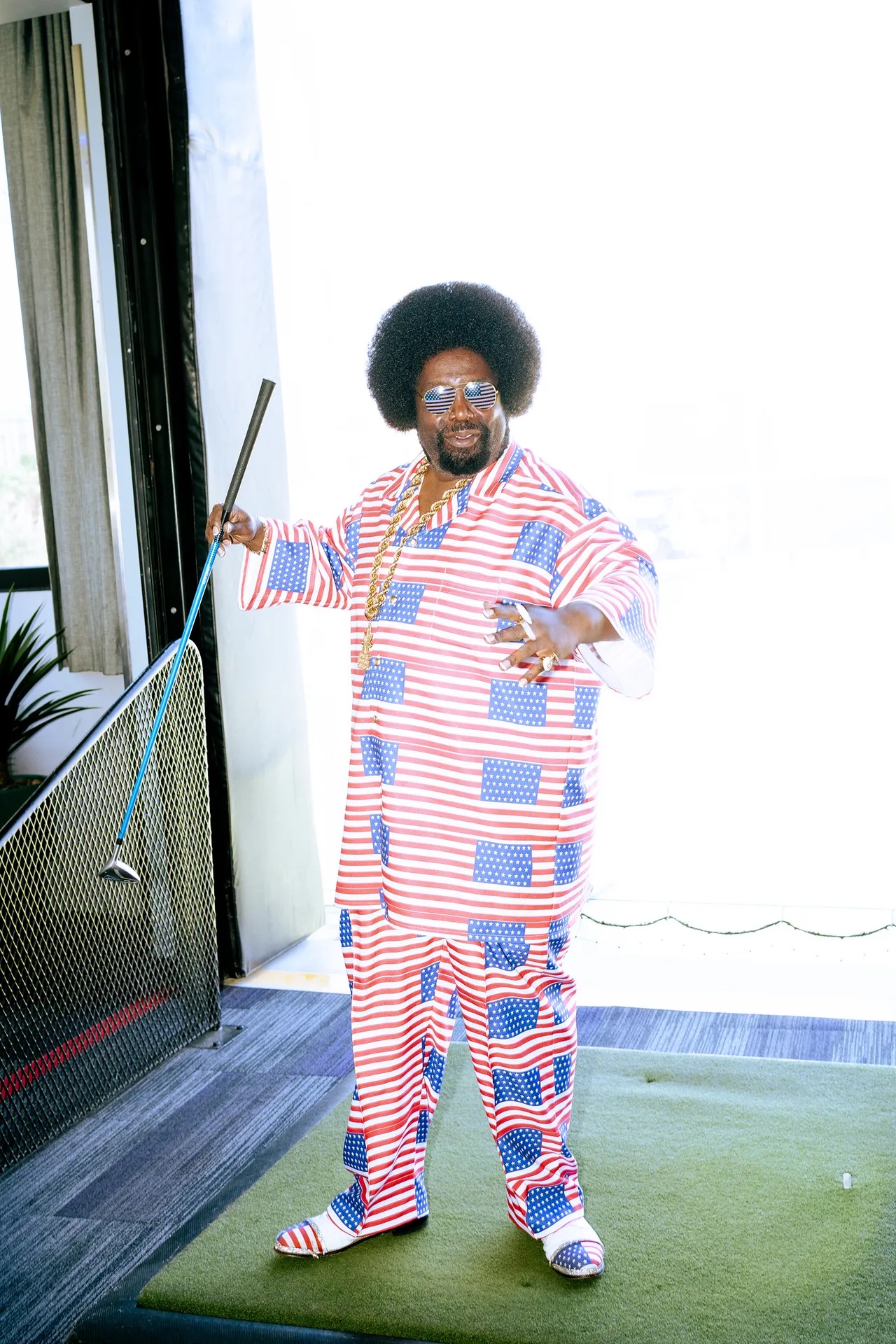

As part of his appearance at the Bitcoin conference, Foreman spent a morning at Top Golf on the Las Vegas Strip. Photo: Gabriella Angotti-Jones


Laken Schafer, 29, is Foreman's videographer. They met at a cannabis-themed wedding where she was filming and he was officiating. Foreman hired her because he "didn't want a sweaty male cameraman." Photo: Gabriella Angotti-Jones


Don Juan tends to Foreman throughout. They met through a mutual friend about 15 years ago and reconnect annually at the "Players' Ball," the pimp convention Don Juan started in 1974 for his birthday. He calls Foreman a "gentle giant," sitting beside him as his videographer tees off in heels. On the table is Don Juan's signature custom cup, featuring a diamond-encrusted silhouette of a woman.


Don Juan explains to Foreman, "Bitcoin keeps going up in value, and most regular people don't understand it." He once bought crypto but lost his private keys. He believes a figure like Afroman can introduce it to people outside the bubble.


Learning that one Bitcoin is worth about $77,000 and that someone once traded 10,000 Bitcoin for two pizzas in 2010 (worth about $41 at the time), Foreman remarks, "It's tough for the average person to get a whole Bitcoin."


He has a realization: "So it's like stocks? You buy it, hold it, and hope it goes up?"


The Bitcoin community, once a small group of cypherpunks wanting financial transactions free from government control, is now filled with political opportunists — many urging the U.S. government to hoard crypto to boost its price. In recent years, the conference has featured crypto-friendly Republican politicians, with MAGA merch everywhere, though political views aren't monolithic. This suits Afroman: he's not aligned with any party, focusing on issues that directly affect him. He supports jury trials in family court (he's divorced), federal marijuana legalization, civilian oversight boards for police (as a Black man, he feels this deeply); he's anti-war, against foreign aid, supports sex work legalization, and wants reparations for descendants of slaves.


Despite Trump's appearance at the conference, Foreman doesn't align with him. "The policy of qualified immunity for police is a deal-breaker for me," he says, also rejecting the glorification of Nazis and Confederate statues. "As a Black man, those are red lines."


Foreman has beliefs, but he advocates most fiercely when they intersect with his self-interest. During his 2024 presidential run, his two main platforms were: recreational marijuana legalization and mandatory body cameras for all police officers.
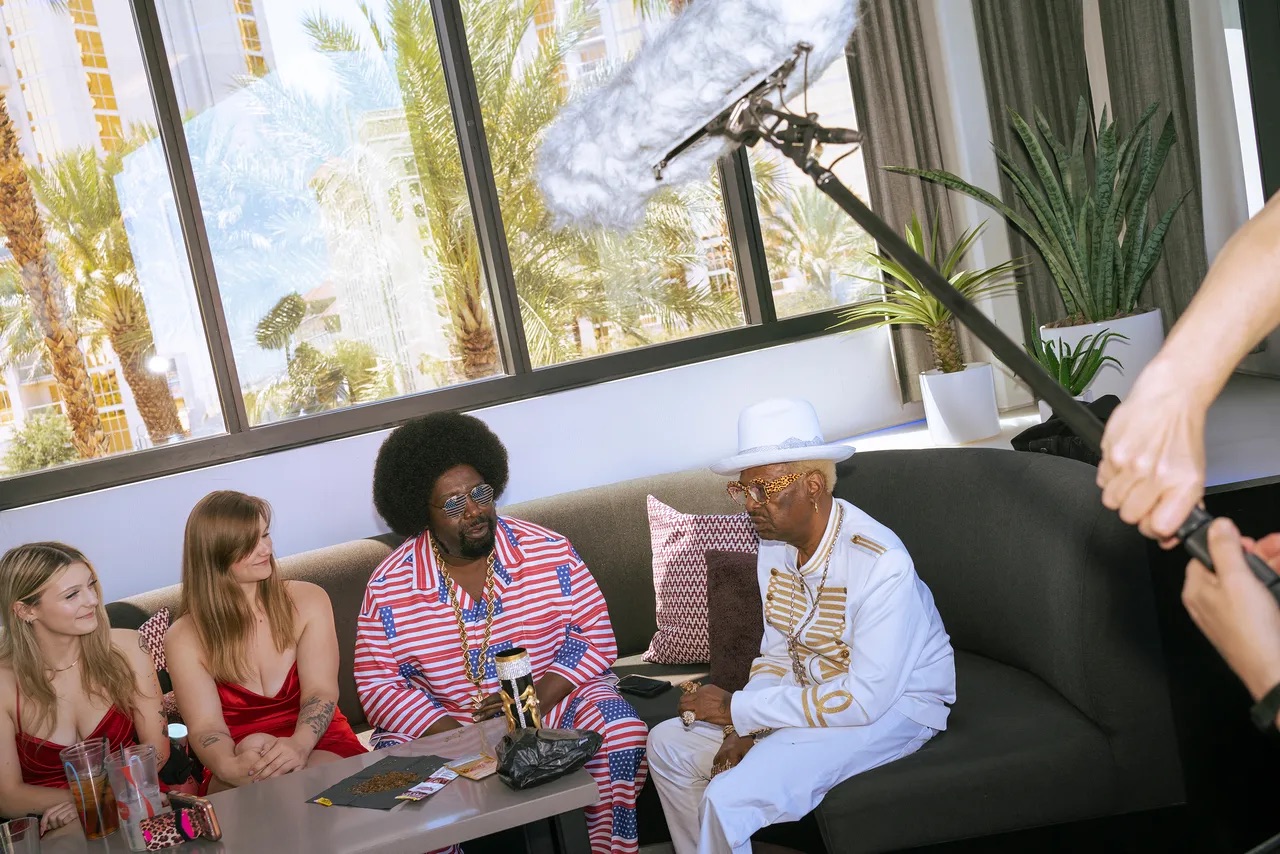

Afroman (from left) with his assistant Lilly Music, Laken Schafer, and Don Juan. Photo: Gabriella Angotti-Jones


Don Juan praises Foreman: "He's powerful now. People want something new. He's not just a rapper; he has a strong personality. Running Afroman for president isn't far-fetched."


Foreman declares, "I guarantee you, if I'm president, all these problems will be solved."


The three-day conference expo hall is filled with Bitcoin mining company booths. Suited professionals mingle with enthusiasts in sailor hats and Bitcoin logo face paint. In one corner, a mannequin sports Afroman's signature afro. A nearby glass case displays auction items: Afroman-signed rolling papers, a used ashtray, and commemorative bills with his portrait.


The items are listed by Scarce City, an auction house specializing in crypto memorabilia like old Bitcoin magazines and a harmonica set owned by crypto promoter and antivirus pioneer John McAfee. Last year, when Ross Ulbricht spoke, Scarce City auctioned three of his prison IDs and sneakers; one ID sold for 5.5 Bitcoin after bidding wars, worth about $371,000.


Scarce City's general manager, Sam Kimbrow, followed Foreman's trial and reached out in January to auction his items, hoping to help with legal fees, including the iconic American flag suit from court. The 40-year-old says assembling this collection fulfills "a millennial fantasy," hoping it shows a younger generation that artists can stand up for their rights.


"The core ethos of what we auction is freedom and personal sovereignty," she says. "Afroman is a living, modern-day freedom fighter."


After the auction, the flag suit sold for about $4,000 worth of Bitcoin, the ashtray for about $230 worth, but the signed rolling papers received no bids.


The auction didn't significantly benefit Foreman. He reveals he was paid a flat fee (undisclosed) to participate in Las Vegas events for three days. But he states his reason plainly: "They said one thing: 'Afroman, there's money involved!'"


On the conference's final day, an hour before his main stage performance, Foreman does an on-stage interview for elite attendees who bought the "Whale Pass" for $12,999 — an event closed to most media. The interviewer is Tracy Hoyos-Lopez, Kraken's head of strategic initiatives, known for influencing Trump's embrace of Bitcoin. All sixty seats fill quickly.


Asked about his mindset during the police raid, Foreman replies, "I'm used to police automatically thinking I'm a criminal. I'm patient. I wait for them to realize they're wrong."


"Through freedom of speech, we can call out corruption in the system," Foreman continues. "Once you see the problem, you can address it. Once it's addressed, you can fix it. I even hope this raid will make me enough money that I'll be glad the police came to my house."


According to Billboard, after winning the case, Foreman's music streams surged over 500%, helping cover the $20,000 in property damage from the raid.


The audience is fully on his side. Under a ceiling of colorful planet decorations, they sing along to "Because I Got High," even if they don't know all the words. They cheer when Foreman explains using footage of the actual officers who wronged him in his videos. Hoyos-Lopez concludes, "The greatest asset in America, in the Constitution, is freedom of speech. And Afroman, you have exercised that right to perfection."
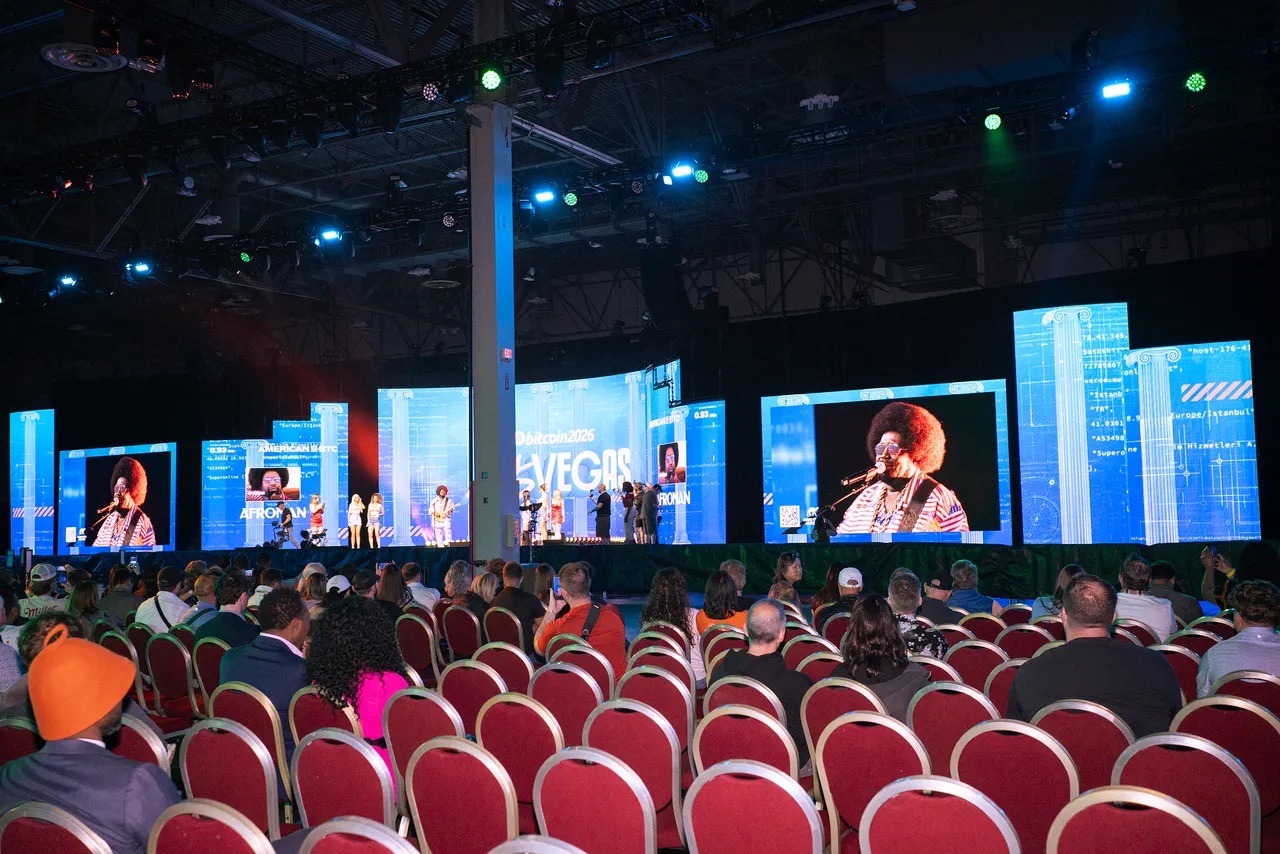

On the final night of the Bitcoin conference, Foreman took the Satoshi stage to perform his most famous song and make a special announcement. Photo: Gabriella Angotti-Jones


On the Bitcoin conference's closing night, Foreman takes the Satoshi stage, performs his hit, and makes a major announcement.


By the third day, the crowd has thinned, and The Venetian ballroom isn't packed. But the remaining audience nearly fills the 8,000 seats, there specifically for Afroman. As the only performer who's lived a protest story, the vibe isn't electric, but a middle-aged white woman in the front row gets up to dance.


Before starting, Foreman almost forgets his announcement. "Damn, I'm high," he says. "I almost forgot to tell y'all: I'm running for president in 2028."


The crowd erupts. Someone yells, "Afroman for president!"


Then, strumming a borrowed guitar shaped like the letter B, he launches into the song that made him famous.


Пов'язані питання

QWho is Afroman and what is he best known for in his music career?

AAfroman, whose real name is Joseph Edgar Foreman, is a rapper best known for his 2000 hit single 'Because I Got High,' a comedic song about the consequences of smoking marijuana, which earned him a Grammy nomination in 2002.

QWhat legal event in 2022 transformed Afroman into a symbol of free speech and a 'freedom fighter'?

AIn 2022, police raided Afroman's Ohio home on suspicion of drug-related and kidnapping offenses. He was not convicted. He later released songs and a music video using footage from the raid to mock the officers. When seven of them sued him for defamation and privacy invasion, he won the case, championing freedom of speech. The legal victory and his response made him a symbol of free speech.

QWhy was Afroman invited to perform at the Bitcoin conference despite not knowing about cryptocurrency?

ABitcoin conference organizers, like program director Craig Deutsch, believed Afroman's fight for his right to create songs about the police raid and his victory in court aligned perfectly with Bitcoin's core pursuit of individual liberty and resistance against the traditional system.

QWhat significant announcement did Afroman make during his performance at the Bitcoin conference's closing night?

ADuring his performance on the Nakamoto Stage, Afroman announced his candidacy for the 2028 U.S. Presidential election.

QAccording to the article, what were some of the items auctioned by Scarce City on Afroman's behalf, and what was the result?

AScarce City auctioned Afroman's personal items, including his signed rolling papers, a used ashtray, and his iconic American flag suit worn during his court appearances. The flag suit sold for the equivalent of about $4,000 in Bitcoin, the ashtray for about $230 in Bitcoin, but the signed rolling papers received no bids.

Пов'язані матеріали

Fundraising is Like a Strange Dance: The 'Absurd Drama' of Silicon Valley Founders' Capital Raises

The article details a series of absurd and revealing anecdotes shared by Silicon Valley founders about their venture capital fundraising experiences, sparked by Greg Isenberg's story of pitching to a sleeping a16z partner. Founders describe surreal pitch meetings: one faced a barefoot, peanut-eating investor who offered triple the requested amount after 30 seconds; another performed a pitch in a VC's parked car; a founder discovered his audience understood no English beyond "yes." These stories highlight the often irrational and performative nature of fundraising. Beyond the absurdity, darker power imbalances are exposed. Stories include investors suggesting founders fire co-founders for their equity, blatant market misjudgments, disrespectful behavior from LPs, and discriminatory remarks. A debate also emerges around "Sequoia's" practice of splitting a round into two valuations. However, the thread isn't solely critical. Positive counter-narratives celebrate supportive VCs who offered crucial advice during crises, respected founders' timelines, and showed simple gestures of respect—like a partner personally fetching coffee before a major pitch. Ultimately, the collective sharing acts as a pressure release, illustrating that fundraising is a complex dance of power, trust, and sometimes sheer theater. It underscores that beyond capital, mutual respect and integrity remain the most enduring foundations of the founder-investor relationship.

marsbit5 хв тому

Fundraising is Like a Strange Dance: The 'Absurd Drama' of Silicon Valley Founders' Capital Raises

marsbit5 хв тому

Vitalik's Vision for the Next Evolution of On-Chain Finance: How to Reconstruct DeFi with an 'Options Mindset'?

Vitalik Buterin recently proposed a conceptual shift for DeFi: replacing traditional Collateralized Debt Positions (CDPs) and forced liquidations with an options-based mechanism. This aims to address key vulnerabilities in current DeFi lending. The traditional CDP model, foundational to protocols like MakerDAO and Aave, allows users to borrow against collateral but relies on real-time oracles and triggers sudden, mandatory liquidations during price volatility. This can cause cascading sell-offs, oracle manipulation risks, and significant MEV extraction, exacerbating market stress. Vitalik's alternative envisions splitting an asset like 1 ETH into two complementary components: one offering stable/index-like exposure and the other absorbing the opposite risk/reward. Instead of a hard liquidation threshold, a user's exposure to the target asset would gradually and smoothly deviate (following a near-quadratic curve) as the collateral price moves. The system would primarily depend on "slow oracles" for periodic settlement rather than instant price feeds. Key potential benefits include: the elimination of abrupt, forced liquidations; drastically reduced reliance on vulnerable real-time oracles; and inherent resistance to certain MEV exploits centered on liquidation auctions. The article posits that for Ethereum DeFi to maintain its relevance amid competition from faster, cheaper chains, it must compete on sophisticated financial engineering and robustness—not just transaction speed or yields. The core value proposition should shift towards offering users clearer, more manageable risk structures, greater autonomy, and resilience in extreme scenarios, moving DeFi from high-risk experimentation towards becoming reliable financial infrastructure.

marsbit44 хв тому

Vitalik's Vision for the Next Evolution of On-Chain Finance: How to Reconstruct DeFi with an 'Options Mindset'?

marsbit44 хв тому

AI Agent Completely Transforms Web3 Gaming: From the Rugpull Bakery Bot Controversy to the New 2026 Agent Paradigm

This article explores how the AI Agent paradigm is fundamentally transforming Web3 gaming, moving from a disruptive force to a core, legitimized element. It begins with the controversy in the competitive baking game Rugpull Bakery, where automated scripts caused fairness issues. Instead of banning them, the developers integrated AI Agents into the official gameplay by providing technical documentation (skill.md, agent.json), marking a shift towards "Agentic Gaming." The piece outlines three primary implementation models for AI Agents in Web3 games by 2026: 1. **Autonomous Competitors & Economic Entities:** AI Agents act as independent players with unique strategies. Examples include TEN Protocol's poker agents, AI Arena's trainable NFT fighters, and Satoshi Strike Force's "Digital Athletes" trained on player data. The Somnia blockchain is highlighted as a dedicated "Agentic L1" infrastructure supporting this model at scale. 2. **Modular Infrastructure & Programmable Environments:** This model, exemplified by EVE Frontier, allows AI Agents to program game world logic itself. Using "Smart Assemblies" (e.g., Smart Turrets, Smart Gates), Agents can modify shared economic and physical rules on-chain, creating dynamic, player/AI-built worlds. The ERC-8183 standard further enables these automated entities to hire other AI services for complex tasks. 3. **Hybrid Companions & Dynamic Adaptation:** Here, AI serves as a collaborative partner. In Parallel Colony, highly autonomous AI Avatars work alongside human players who provide high-level guidance. Illuvium plans to use AI to make NPCs dynamic and responsive, creating personalized, emergent narratives for each player. The conclusion posits that Web3 gaming has reached a "post-human" inflection point. Blockchains' transparency and programmability, combined with new standards and infrastructure like Somnia, make integrating and governing AI Agents not just viable but essential. The future lies in a symbiotic digital order where players transition from manual laborers to commanders and partners of algorithmic intelligence.

marsbit1 год тому

AI Agent Completely Transforms Web3 Gaming: From the Rugpull Bakery Bot Controversy to the New 2026 Agent Paradigm

marsbit1 год тому

Торгівля

Спот
Ф'ючерси

Популярні статті

Що таке BITCOIN

Розуміння HarryPotterObamaSonic10Inu (ERC-20) та його позиції у крипто-просторі Останніми роками ринок криптовалют спостерігав за зростанням популярності мем-коінів, які привертають інтерес не тільки трейдерів, але й тих, хто шукає спілкування та розважальну цінність. Серед цих унікальних токенів є HarryPotterObamaSonic10Inu (ERC-20), інтригуючий проект, що поєднує культурні посилання з тканинами криптовалюти. Ця стаття досліджує ключові аспекти HarryPotterObamaSonic10Inu, вивчаючи його механізми, спільноту та його взаємодію з ширшим крипто-ландшафтом. Що таке HarryPotterObamaSonic10Inu (ERC-20)? Як випливає з його назви, HarryPotterObamaSonic10Inu є мем-коіном, побудованим на блокчейні Ethereum, класифікованим за стандартом ERC-20. На відміну від традиційних криптовалют, які можуть підкреслювати практичну корисність або інвестиційний потенціал, цей токен процвітає завдяки розважальній цінності та силі своєї спільноти. Проект спрямований на створення середовища, де зацікавлені користувачі можуть об'єднуватися, ділитися ідеями та брати участь у заходах, натхненних різноманітними культурними явищами. Однією з примітних особливостей HarryPotterObamaSonic10Inu є нульовий податок на транзакції. Цей привабливий елемент має на меті заохочувати торгівлю та участь у спільноті, позбавлену додаткових витрат, які можуть відлякувати дрібних трейдерів. Загальна пропозиція монет становить один мільярд токенів, що позначає намір підтримувати суттєву циркуляцію в межах спільноти. Творець HarryPotterObamaSonic10Inu (ERC-20) Походження HarryPotterObamaSonic10Inu дещо окутане таємницею; деталі про творця залишаються невідомими. Розвиток цього токена позбавлений впізнаваної команди або чіткої стратегії, що не є рідкістю в секторі мем-коінів. Натомість проект виник органічно, а його розвиток значною мірою залежить від ентузіазму та участі його спільноти. Інвестори HarryPotterObamaSonic10Inu (ERC-20) Щодо зовнішніх інвестицій та підтримки, HarryPotterObamaSonic10Inu також залишається невизначеним. Токен не зазначає жодних відомих інвестиційних фондів або значної організаційної підтримки. Натомість життєва сила проекту полягає в його базовій спільноті, яка інформує про його зростання та стійкість через колективні дії та залученість у крипто-просторі. Як працює HarryPotterObamaSonic10Inu (ERC-20)? Як мем-коін, HarryPotterObamaSonic10Inu функціонує передусім поза традиційними рамками, що часто регулюють вартість активів. Є кілька відмінних аспектів, що визначають, як працює проект: Транзакції без податку: Завдяки відсутності податкових зборів на транзакції, користувачі можуть вільно купувати та продавати токен, не турбуючись про приховані витрати. Залучення спільноти: Проект процвітає завдяки взаємодії спільноти, використовуючи соціальні медіа для створення шуму та сприяння залученню. Обговорення, обмін контентом та залученість є ключовими елементами, що допомагають розширити його охоплення та зміцнити лояльність серед прихильників. Відсутність практичної корисності: Слід зазначити, що HarryPotterObamaSonic10Inu не пропонує конкретної корисності в рамках фінансової екосистеми. Натомість він класифікується як токен, що призначений в основному для розваги та спільнотних активностей. Культурне посилання: Токен кмітливо вплітає елементи популярної культури, щоб привернути інтерес, зв'язуючи з ентузіастами мемів та крипто-стежками. HarryPotterObamaSonic10Inu ілюструє, як мем-коіни функціонують інакше, ніж традиційні криптовалютні проекти, увійшовши на ринок як інноваційні соціальні конструкти, а не утилітарні активи. Хронологія HarryPotterObamaSonic10Inu (ERC-20) Історія HarryPotterObamaSonic10Inu відзначена кількома значними етапами: Створення: Токен виник з вірусного мему, захопивши уяву багатьох крипто-ентузіастів. Конкретні дати створення недоступні, що підкреслює його органічний розвиток. Лістинг на біржах: HarryPotterObamaSonic10Inu з'явився на різних біржах, дозволяючи зручніший доступ і торгівлю спільноти. Ініціативи залучення спільноти: Ведення діяльності, спрямованої на покращення взаємодії спільноти, включаючи конкурси, кампанії в соціальних мережах та створення контенту від фанатів та прихильників. Плани на майбутнє: Дорожня карта проекту включає запуск колекції NFT, мерчандайзинг та електронну комерцію, пов'язану з його культурними темами, що далі залучає спільноту та намагається додати більше вимірів до його екосистеми. Ключові моменти про HarryPotterObamaSonic10Inu (ERC-20) Спільнотний підхід: Проект надає пріоритет колективному внеску та креативності, забезпечуючи, щоб участь користувачів була в центрі його розвитку. Класифікація як мем-коін: Це є його епігенез розважальної криптовалюти, що відрізняється від традиційних інвестиційних інструментів. Жодного прямого відношення до Bitcoin: Незважаючи на схожість у назві, HarryPotterObamaSonic10Inu є відмінним і не має жодного зв’язку з Bitcoin або іншими усталеними криптовалютами. Зосередженість на співпраці: HarryPotterObamaSonic10Inu створено для того, щоб надати простір для співпраці та обміну історіями серед його власників, забезпечуючи шлях для творчості та спільного зв'язку. Перспективи на майбутнє: Амбіція розширитися за межі початкової концепції в NFT та мерчандайз відкриває шлях для проекту потенційно потрапити в більш мейнстрімні сфери цифрової культури. Оскільки мем-коіни продовжують захоплювати уяву спільноти криптовалют, HarryPotterObamaSonic10Inu (ERC-20) вирізняється своїми культурними зв'язками та орієнтованим на спільноту підходом. Хоча він може не відповідати типовій моделі утилітарного токена, його суть полягає в радощах і товариськості, що підтримуються серед його прихильників, підкреслюючи еволюційну природу криптовалют в усе більш цифрову епоху. Оскільки проект продовжує розвиватися, важливо спостерігати за тим, як динаміка спільноти вплине на його траєкторію в постійно змінюваному ландшафті технології блокчейн.

2.0k переглядів усьогоОпубліковано 2024.04.01Оновлено 2024.12.03

Що таке BITCOIN

Як купити BTC

Ласкаво просимо до HTX.com! Ми зробили покупку Bitcoin (BTC) простою та зручною. Дотримуйтесь нашої покрокової інструкції, щоб розпочати свою криптовалютну подорож.Крок 1: Створіть обліковий запис на HTXВикористовуйте свою електронну пошту або номер телефону, щоб зареєструвати обліковий запис на HTX безплатно. Пройдіть безпроблемну реєстрацію й отримайте доступ до всіх функцій.ЗареєструватисьКрок 2: Перейдіть до розділу Купити крипту і виберіть спосіб оплатиКредитна/дебетова картка: використовуйте вашу картку Visa або Mastercard, щоб миттєво купити Bitcoin (BTC).Баланс: використовуйте кошти з балансу вашого рахунку HTX для безперешкодної торгівлі.Треті особи: ми додали популярні способи оплати, такі як Google Pay та Apple Pay, щоб підвищити зручність.P2P: Торгуйте безпосередньо з іншими користувачами на HTX.Позабіржова торгівля (OTC): ми пропонуємо індивідуальні послуги та конкурентні обмінні курси для трейдерів.Крок 3: Зберігайте свої Bitcoin (BTC)Після придбання Bitcoin (BTC) збережіть його у своєму обліковому записі на HTX. Крім того, ви можете відправити його в інше місце за допомогою блокчейн-переказу або використовувати його для торгівлі іншими криптовалютами.Крок 4: Торгівля Bitcoin (BTC)Легко торгуйте Bitcoin (BTC) на спотовому ринку HTX. Просто увійдіть до свого облікового запису, виберіть торгову пару, укладайте угоди та спостерігайте за ними в режимі реального часу. Ми пропонуємо зручний досвід як для початківців, так і для досвідчених трейдерів.

4.7k переглядів усьогоОпубліковано 2024.12.12Оновлено 2026.06.02

Як купити BTC

Що таке $BITCOIN

ЦИФРОВЕ ЗОЛОТО ($BITCOIN): Комплексний аналіз Вступ до ЦИФРОВОГО ЗОЛОТА ($BITCOIN) ЦИФРОВЕ ЗОЛОТО ($BITCOIN) — це проект на основі блокчейну, що працює в мережі Solana, який має на меті поєднати характеристики традиційних дорогоцінних металів з інноваціями децентралізованих технологій. Хоча він має таку ж назву, як і Bitcoin, який часто називають “цифровим золотом” через його сприйняття як засобу збереження вартості, ЦИФРОВЕ ЗОЛОТО є окремим токеном, розробленим для створення унікальної екосистеми в ландшафті Web3. Його мета — позиціонувати себе як життєздатний альтернативний цифровий актив, хоча деталі щодо його застосувань і функціональностей все ще розробляються. Що таке ЦИФРОВЕ ЗОЛОТО ($BITCOIN)? ЦИФРОВЕ ЗОЛОТО ($BITCOIN) — це токен криптовалюти, спеціально розроблений для використання в блокчейні Solana. На відміну від Bitcoin, який виконує широко визнану роль зберігання вартості, цей токен, здається, зосереджується на більш широких застосуваннях і характеристиках. Помітні аспекти включають: Інфраструктура блокчейну: Токен побудований на блокчейні Solana, відомому своєю здатністю обробляти швидкі та низьковартісні транзакції. Динаміка постачання: ЦИФРОВЕ ЗОЛОТО має максимальне постачання, обмежене 100 квадрильйонами токенів (100P $BITCOIN), хоча деталі щодо його обігового постачання наразі не розголошуються. Утиліта: Хоча точні функціональності не викладені, є вказівки на те, що токен може бути використаний для різних застосувань, потенційно пов'язаних з децентралізованими додатками (dApps) або стратегіями токенізації активів. Хто є творцем ЦИФРОВОГО ЗОЛОТА ($BITCOIN)? На даний момент особа творців і команди розробників, що стоять за ЦИФРОВИМ ЗОЛОТОМ ($BITCOIN), залишається невідомою. Ця ситуація є типовою для багатьох інноваційних проектів у сфері блокчейну, особливо тих, що пов'язані з децентралізованими фінансами та феноменом мем-коінів. Хоча така анонімність може сприяти культурі, орієнтованій на спільноту, вона посилює занепокоєння щодо управління та підзвітності. Хто є інвесторами ЦИФРОВОГО ЗОЛОТА ($BITCOIN)? Доступна інформація вказує на те, що ЦИФРОВЕ ЗОЛОТО ($BITCOIN) не має жодних відомих інституційних спонсорів або помітних венчурних капіталовкладень. Проект, здається, працює за моделлю “рівний до рівного”, зосереджуючись на підтримці та прийнятті спільноти, а не на традиційних шляхах фінансування. Його активність і ліквідність переважно розташовані на децентралізованих біржах (DEX), таких як PumpSwap, а не на встановлених централізованих торгових платформах, що ще більше підкреслює його підхід знизу вгору. Як працює ЦИФРОВЕ ЗОЛОТО ($BITCOIN) Операційні механізми ЦИФРОВОГО ЗОЛОТА ($BITCOIN) можна детальніше розглянути на основі його дизайну блокчейну та характеристик мережі: Механізм консенсусу: Використовуючи унікальний proof-of-history (PoH) Solana в поєднанні з моделлю proof-of-stake (PoS), проект забезпечує ефективну валідацію транзакцій, що сприяє високій продуктивності мережі. Токеноміка: Хоча конкретні дефляційні механізми не були детально описані, велике максимальне постачання токенів вказує на те, що воно може задовольняти мікротранзакції або нішеві випадки використання, які ще потрібно визначити. Інтероперабельність: Існує потенціал для інтеграції з більш широкою екосистемою Solana, включаючи різні платформи децентралізованих фінансів (DeFi). Однак деталі щодо конкретних інтеграцій залишаються невизначеними. Хронологія ключових подій Ось хронологія, яка підкреслює значні віхи, пов'язані з ЦИФРОВИМ ЗОЛОТОМ ($BITCOIN): 2023: Початкове розгортання токена відбувається на блокчейні Solana, позначене його адресою контракту. 2024: ЦИФРОВЕ ЗОЛОТО набуває видимості, оскільки стає доступним для торгівлі на децентралізованих біржах, таких як PumpSwap, що дозволяє користувачам торгувати ним проти SOL. 2025: Проект спостерігає спорадичну торгову активність і потенційний інтерес до ініціатив, очолюваних спільнотою, хоча на даний момент не зафіксовано жодних значних партнерств або технічних досягнень. Критичний аналіз Сильні сторони Масштабованість: Основна інфраструктура Solana підтримує високі обсяги транзакцій, що може підвищити утиліту $BITCOIN у різних сценаріях транзакцій. Доступність: Потенційно низька торгова ціна за токен може привабити роздрібних інвесторів, сприяючи більш широкій участі завдяки можливостям дробового володіння. Ризики Відсутність прозорості: Відсутність публічно відомих спонсорів, розробників або процесу аудиту може викликати скептицизм щодо стійкості та надійності проекту. Волатильність ринку: Торгова активність сильно залежить від спекулятивної поведінки, що може призвести до значної волатильності цін і невизначеності для інвесторів. Висновок ЦИФРОВЕ ЗОЛОТО ($BITCOIN) постає як цікавій, але неоднозначний проект у швидко розвиваючійся екосистемі Solana. Хоча він намагається використати наратив “цифрового золота”, його відхід від встановленої ролі Bitcoin як засобу збереження вартості підкреслює необхідність чіткішого розмежування його передбачуваної утиліти та структури управління. Майбутнє прийняття та адаптація, ймовірно, залежатиме від вирішення поточної непрозорості та більш чіткого визначення його операційних та економічних стратегій. Примітка: Цей звіт охоплює синтезовану інформацію, доступну станом на жовтень 2023 року, і можуть відбутися події, що виходять за межі дослідницького періоду.

75 переглядів усьогоОпубліковано 2025.05.13Оновлено 2025.05.13

Що таке $BITCOIN

Обговорення

Ласкаво просимо до спільноти HTX. Тут ви можете бути в курсі останніх подій розвитку платформи та отримати доступ до професійної ринкової інформації. Нижче представлені думки користувачів щодо ціни BTC (BTC).

活动图片