比特币与以太坊ETF资金持续外流:月度净流入仍为负值

bitcoinistОпубліковано о 2025-12-31Востаннє оновлено о 2025-12-31

Анотація

比特币和以太坊ETF资金持续外流,30日净流量仍为负值,显示资本正从这两种数字资产中撤出。美国现货ETF自2024年获批后虽迅速成为传统投资者重要入口,但近期需求疲软,BTC和ETH的30日净流出分别达6.56亿和4.22亿美元,类似2025年上半年流出阶段。不过历史显示资金可能再次爆发性回归。另据数据,全球368个实体持有的数字资产国库总额已超1850亿美元,其中73%由企业控制。当前比特币价格约8.81万美元,近期呈横盘整理态势。

数据显示,比特币和以太坊的30天ETF净流入仍为负值,表明资金正持续从数字资产中流出。

比特币与以太坊ETF近期持续呈现资金净流出

正如CryptoQuant社区分析师Maartunn在X平台的最新帖文中解释,过去一个月中,比特币和以太坊现货交易所交易基金(ETF)均面临资金净流出的局面。

现货ETF是一种让投资者间接获取标的资产价格波动的投资工具。在加密货币领域,这意味着ETF投资者无需进行链上操作——基金会代为购买并托管代币。

美国现货ETF在数字资产领域属于相对新兴的事物,比特币ETF和以太坊ETF分别于2024年1月和2024年7月获得美国证券交易委员会(SEC)批准。

对于不熟悉加密货币钱包和交易所的投资者而言,现货ETF是一种便捷的投资方式。尤其是机构投资者,更倾向于通过此类工具获取风险敞口。

自推出以来,这些投资工具迅速满足了传统投资者的需求,成为该领域的基石之一。

下图展示了比特币和以太坊现货ETF自推出以来30天净流入的变化情况。
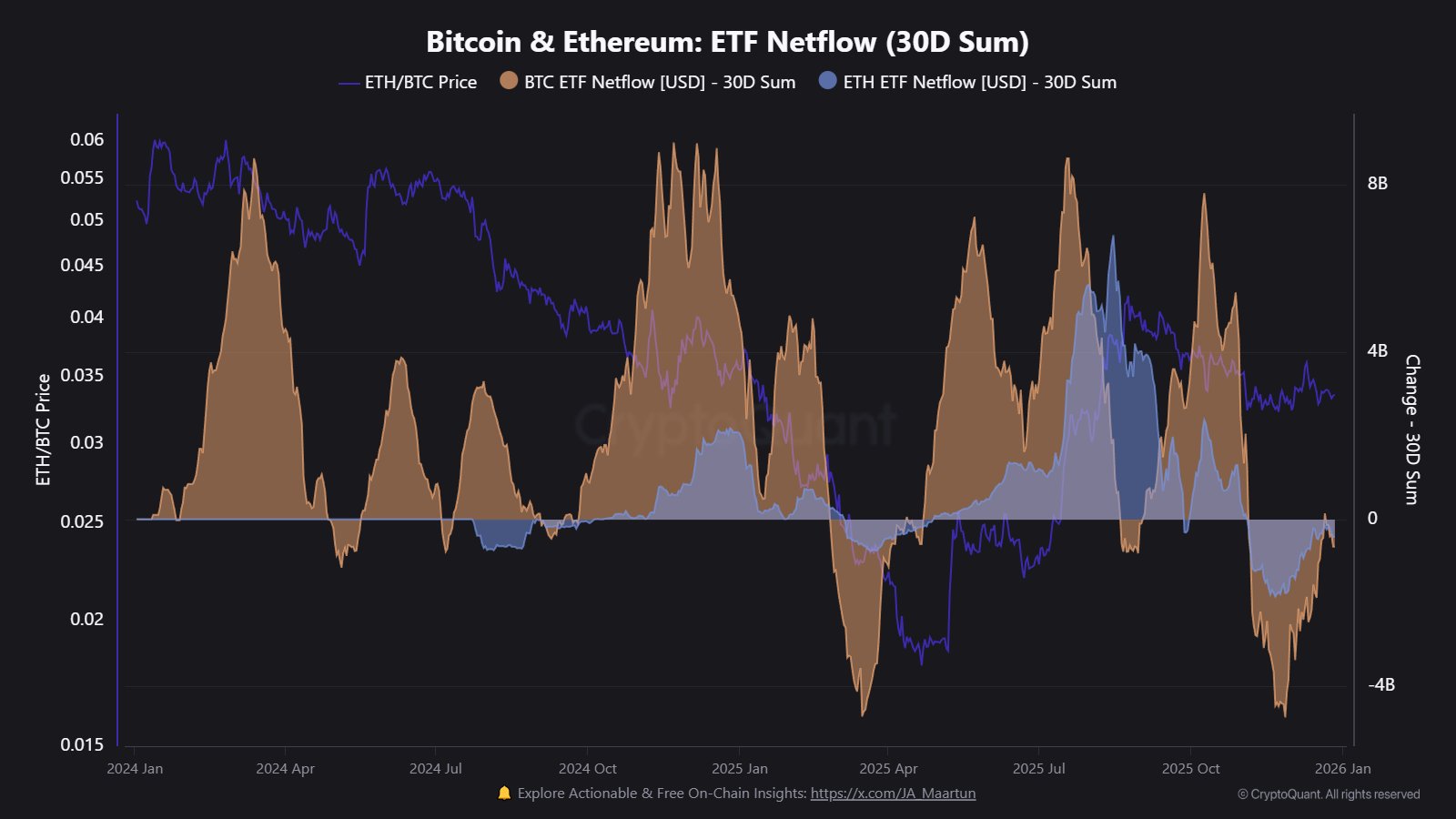
近期两项资产的该指标值持续为负 | 来源:@JA_Maartun on X

从图表可见,比特币和以太坊的30天现货ETF净流入已持续一段时间为负值,表明这些基金正遭遇持续的资金净流出。

虽然最近情况略有改善,但两项资产的指标仍为负值,比特币为-6.56亿美元,以太坊为-4.22亿美元。当前市场的疲软需求与2025年上半年资金外流的阶段相似。

当时市场需求最终强势回归,推动价格大幅上涨。此次是否会出现同样反弹,或需求疲软将持续一段时间,仍有待观察。

另一个较近的市场需求来源是数字资产国债。机构DeFi解决方案提供商Sentora在X平台最新帖文中强调,目前368个实体持有的加密货币国债总额已超过1850亿美元。
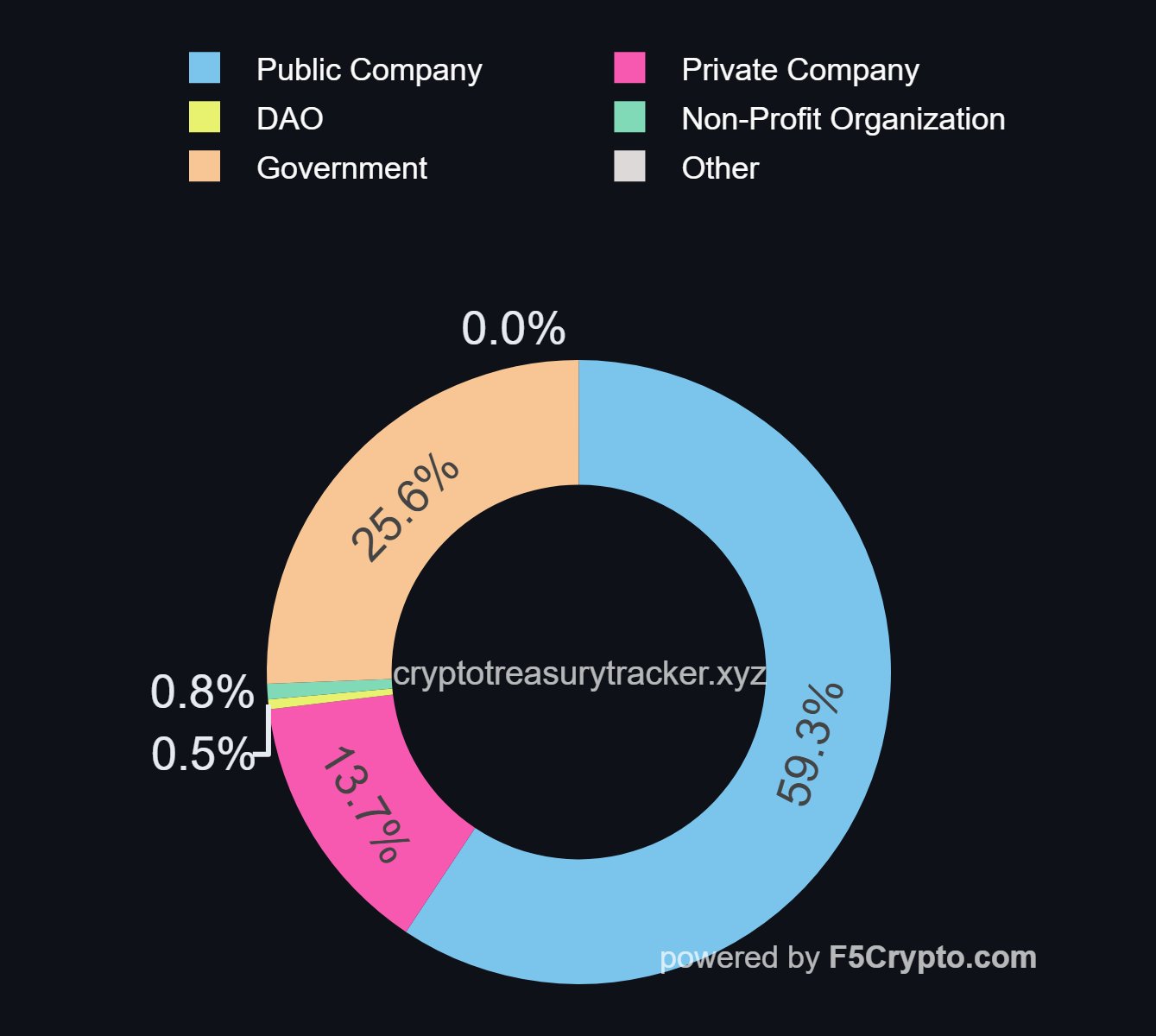
各领域国债持有分布情况 | 来源:Sentora on X

其中73%的数字资产国债由企业持有,其余则由政府掌控。

比特币价格走势

截至发稿时,比特币交易价格约为88,100美元,与上周持平。

该加密货币价格近期呈现横盘整理态势 | 来源:TradingView上的BTCUSDT图表

Пов'язані питання

Q比特币和以太坊ETF的30天净流量目前处于什么状态?

A比特币和以太坊ETF的30天净流量均为负值,比特币为-6.56亿美元,以太坊为-4.22亿美元,表明资金持续从这两种数字资产中流出。

Q美国现货ETF在加密货币领域是什么时候获得批准的?

A美国比特币现货ETF于2024年1月获得美国证券交易委员会(SEC)批准,以太坊现货ETF于2024年7月获得批准。

Q除了ETF,近期加密货币市场的另一个需求来源是什么?

A近期另一个需求来源是数字资产国库,目前368个实体持有的加密货币国库总额已超过1850亿美元。

Q当前比特币的价格是多少?

A截至文章撰写时,比特币的交易价格约为88,100美元,与上周相比基本持平。

Q现货ETF对哪些投资者特别有吸引力?

A现货ETF对不熟悉加密货币钱包和交易所的投资者特别有吸引力,尤其是机构实体更倾向于通过ETF获得加密货币风险敞口。

Пов'язані матеріали

Google TPU Shipments Revised Up by 50%

Recent industry research indicates a significant upward revision in the shipments of Google's TPU (Tensor Processing Unit) chips. Previous expectations for 2027 were set at around 10 million units, but new estimates now point to 15 million units, a 50% increase. This substantial boost directly translates to higher demand across the entire supporting supply chain. Google's TPU clusters utilize a standardized all-optical interconnect architecture. Consequently, key hardware components are deeply integrated and scaled in fixed ratios with the chips. The 15 million TPU target will drive corresponding demand increases for NPO optical engines (roughly a 1:1 match), 1.6T optical modules, OCS optical switches, high-end server power supplies, fiber optics & MPO connectors, and liquid cooling solutions. Among these, liquid cooling is highlighted as the sector experiencing the most significant transformation and offering the most stable potential for excess returns. As next-generation TPU chips reach power levels where traditional air cooling is insufficient, liquid cooling becomes essential. 2026 is forecasted as the first year of substantial adoption for Google's liquid cooling solutions. This shift, coupled with delivery and capacity bottlenecks faced by incumbent overseas manufacturers, is creating a prime window for domestic Chinese suppliers to enter and secure Google's core supply chain. The market size for Google-specific liquid cooling is projected to potentially triple from a baseline of hundreds of billions to around 300 billion units by 2028. The logic for the fiber optic sector is also being rewritten. Once considered a cyclical commodity tied to telecom operator procurement, fiber is now a strategic and scarce resource for AI Data Centers (AIDC). A severe supply-demand imbalance, driven by the long lead time for preform production (18-24 months) and surging demand from cloud giants, is supporting strong performance. Chinese fiber manufacturers are well-positioned to capture a significant share of global AIDC demand, with exports potentially reaching 200-300 million core kilometers in 2026. Overall, the investment focus within the AI computing industry is shifting from pure "chip performance speculation" towards the more certain incremental growth in computing infrastructure and its supporting ecosystem. The upward revision in Google TPU shipments, along with the potential for further doubling by 2028, is seen as solidifying performance visibility for the entire supporting supply chain over the next two years.

marsbit1 год тому

Google TPU Shipments Revised Up by 50%

marsbit1 год тому

What Wall Street Really Wants After the Crypto Story Recedes

The tide of speculative crypto narratives has receded, revealing Wall Street's true objective: building a controlled, yield-generating, and compliant financial pipeline on distributed ledgers. They are migrating core functions onto blockchains, not for decentralization, but for efficiency and new revenue streams. Key developments include BlackRock's BUIDL fund, a tokenized treasury fund acting as a foundational reserve asset, and the rise of Securitize, which is going public and partnering with the NYSE to build a 24/7 digital securities trading and settlement system. This signals a major shift of securities clearing to blockchain technology. To make volatile assets like Bitcoin palatable for institutional investors, firms like BlackRock and Goldman Sachs are creating "covered call" ETFs (e.g., BITA). These products systematically sell options on Bitcoin holdings, transforming price volatility into stable monthly income, effectively repackaging crypto as a yield-bearing asset. Stablecoins are being positioned not as speculative tools but as efficient payment rails. Companies like Stripe and Mastercard are integrating them for instant, low-cost merchant settlements and cross-border card payments, respectively. Critically, new legislation like the GENIUS Act shapes them as non-interest-bearing, heavily regulated extensions of the US dollar system. In summary, Wall Street is quietly constructing a parallel, blockchain-based financial infrastructure featuring tokenized traditional assets, structured crypto yields, and programmable dollar pipelines—all under its control and fully integrated with existing regulatory and credit frameworks.

marsbit1 год тому

What Wall Street Really Wants After the Crypto Story Recedes

marsbit1 год тому

Tying Itself to SpaceX: Cursor's $60 Billion Rise

This article recounts the rapid rise of AI-powered coding startup Cursor and its 25-year-old MIT graduate CEO, Michael Truell. Launched in 2023, Cursor achieved explosive growth, reaching over 10 billion USD in revenue by late 2025. However, its journey highlights a central dilemma for AI application companies: dependence on foundational model providers. Cursor initially relied heavily on Anthropic's models but faced an existential threat when Anthropic launched its own competing coding tool, Claude Code. In response, Cursor declared an internal emergency in early 2026 and accelerated development of its own model, Composer. To secure the immense computing power needed, Truell struck a pivotal deal with Elon Musk's SpaceX in April 2026. The collaboration grants Cursor access to SpaceX's supercomputing resources for Composer, while SpaceX's Grok model benefits from Cursor's programming data. The agreement includes a potential 600 billion USD acquisition of Cursor by SpaceX later in the year, though a substantial termination fee is in place if the deal falls through. The story explores Cursor's intense, sometimes controversial hiring practices involving lengthy unpaid "work trials," its complex partnership-turned-rivalry with Anthropic, and its high-stakes gamble to ensure independence through the SpaceX alliance. The core question remains: will Cursor evolve into a defining, independent "generational" software company, or become a key piece in a tech giant's AI arsenal?

marsbit1 год тому

Tying Itself to SpaceX: Cursor's $60 Billion Rise

marsbit1 год тому

Торгівля

Спот
Ф'ючерси

Популярні статті

Як купити RED

Ласкаво просимо до HTX.com! Ми зробили покупку RedStone (RED) простою та зручною. Дотримуйтесь нашої покрокової інструкції, щоб розпочати свою криптовалютну подорож.Крок 1: Створіть обліковий запис на HTXВикористовуйте свою електронну пошту або номер телефону, щоб зареєструвати обліковий запис на HTX безплатно. Пройдіть безпроблемну реєстрацію й отримайте доступ до всіх функцій.ЗареєструватисьКрок 2: Перейдіть до розділу Купити крипту і виберіть спосіб оплатиКредитна/дебетова картка: використовуйте вашу картку Visa або Mastercard, щоб миттєво купити RedStone (RED).Баланс: використовуйте кошти з балансу вашого рахунку HTX для безперешкодної торгівлі.Треті особи: ми додали популярні способи оплати, такі як Google Pay та Apple Pay, щоб підвищити зручність.P2P: Торгуйте безпосередньо з іншими користувачами на HTX.Позабіржова торгівля (OTC): ми пропонуємо індивідуальні послуги та конкурентні обмінні курси для трейдерів.Крок 3: Зберігайте свої RedStone (RED)Після придбання RedStone (RED) збережіть його у своєму обліковому записі на HTX. Крім того, ви можете відправити його в інше місце за допомогою блокчейн-переказу або використовувати його для торгівлі іншими криптовалютами.Крок 4: Торгівля RedStone (RED)Легко торгуйте RedStone (RED) на спотовому ринку HTX. Просто увійдіть до свого облікового запису, виберіть торгову пару, укладайте угоди та спостерігайте за ними в режимі реального часу. Ми пропонуємо зручний досвід як для початківців, так і для досвідчених трейдерів.

366 переглядів усьогоОпубліковано 2025.03.05Оновлено 2026.06.02

Як купити RED

Обговорення

Ласкаво просимо до спільноти HTX. Тут ви можете бути в курсі останніх подій розвитку платформи та отримати доступ до професійної ринкової інформації. Нижче представлені думки користувачів щодо ціни RED (RED).

活动图片













