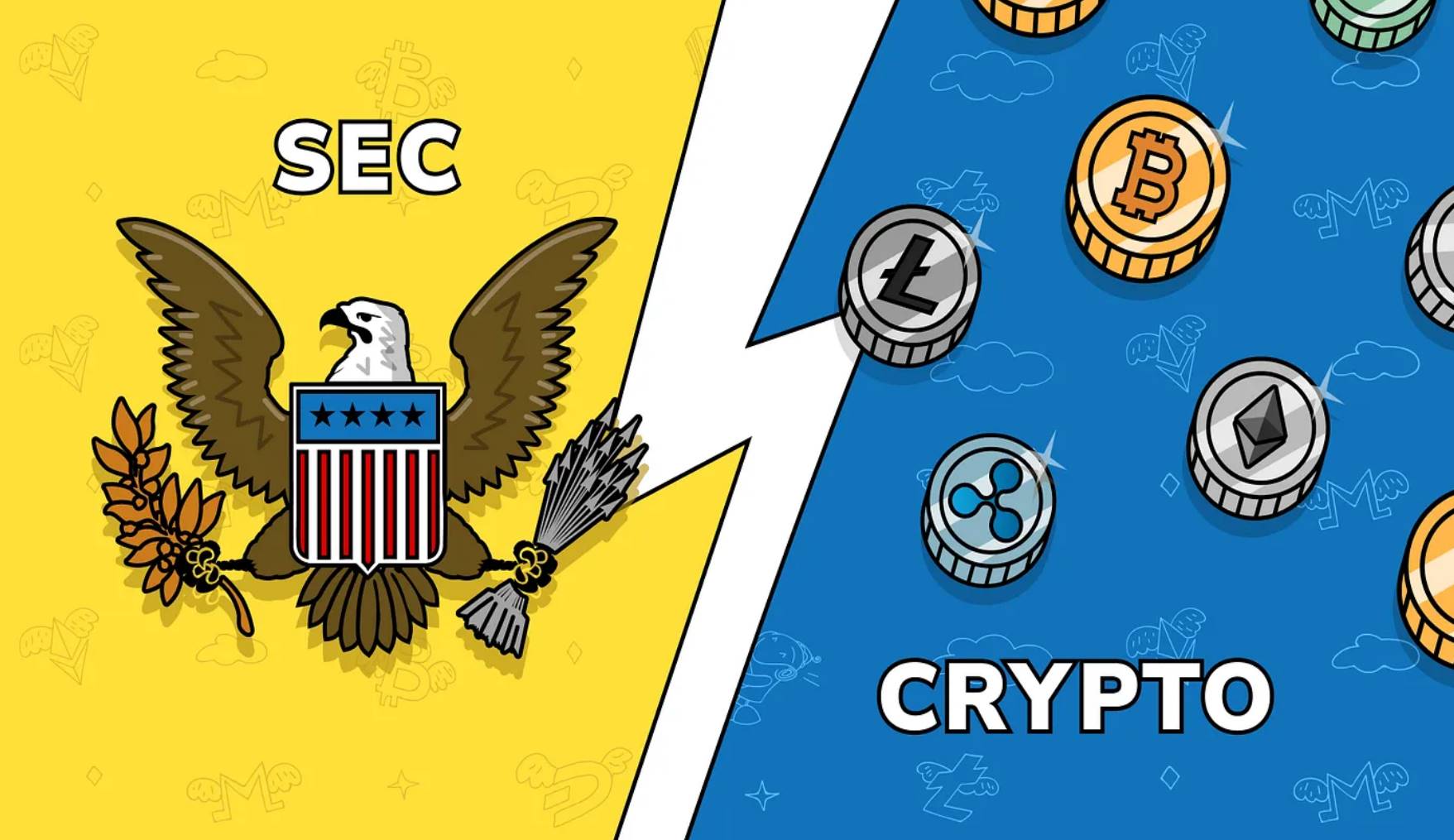
SEC 与加密的恩怨纠葛即将落幕,还是开启新的篇章?

深潮Опубліковано о 2024-09-26Востаннє оновлено о 2024-09-26

美国证券交易委员会(SEC)向 OpenSea 发出 Wells 通知,加剧了关于加密资产监管的争论,凸显了其长期在法律和监管上面临的挑战。

撰文:Eterna Capital

翻译:白话区块链

最近有消息称,美国证券交易委员会向流行的 NFT 市场 OpenSea 发出了 Wells 通知(正式指控的前奏),为多年来一直困扰区块链行业的法律传奇增添了新的篇章。

众所周知,SEC 的历史立场是「除了比特币之外的所有东西都是证券」——包括,根据给 OpenSea 的通知,包括 NFT。关于加密资产是证券还是商品的争论至关重要:它决定了 SEC 还是 CTFC 负责监管。从本质上讲,这是一种司法练习,用于理解什么可以被视为 1946 年定义的「证券」:因此,它很难应用于加密货币等现代技术。由此产生的不确定性和监管不连贯性一直是加密行业增长的主要上限,因为它降低了采用率、研发率、融资率等。

细心的投资者已经注意到,最近的司法发展表明,美国证券交易委员会(SEC)未能说服法院——而且它通过寻求进一步的诉讼而成功的机会正在减弱。

1、SEC 诉 CONSENSYS

1)ETH 2.0 之后

2024 年 6 月,美国证券交易委员会 (SEC) 放弃了对 Consensys 的以太坊 2.0(区块链过渡到权益证明)调查。根据 Consensys 自己的声明,「这意味着 SEC 不会以 ETH 销售是证券交易为由提出指控」。这当然是个好消息——

但精明的观察者们更倾向于等待 SEC 公布对 Consensys 的 ETH 2.0 交易及瑞波币的调查结果。

如今,我们对这些方面的乐观态度也是有理由的。

2)ETH 2.0 之前

在以太坊过渡到权益证明(即工作量证明时代)之前,SEC 仍可能对 Consensys 的以太坊交易进行调查。对于投资者来说,令人担忧的可能不是诉讼本身,而是诉讼内容:SEC 针对 Consensys 的工作量证明活动提起的诉讼可能包含令 ETH 投资者感到担忧的细节,即这些细节是否可以被视为证券。

幸运的是,这种诉讼发生的可能性越来越小,原因有二:

  1. 加密货币已经成为一个两极分化、政治化的话题,两位总统候选人都不会轻视它;

  2. 现货以太坊 ETF 的批准可以被看作是「证券与商品」之争的最终结论。

2、SEC 诉 RIPPLE

1)微妙的判决

2024 年 8 月,托雷斯法官发布了一项具有里程碑意义的裁决,裁定 Ripple 向机构投资者出售其 Token (XRP) 属于未注册证券发行。虽然这导致 1.25 亿美元的民事罚款,但鉴于罚款金额低于美国证券交易委员会要求的 25 亿美元,这一裁决被视为成功。

此外,法院裁定 XRP 在交易平台的二级销售不属于证券交易,这被视为 Ripple 和所有加密货币的胜利。

然而,这是一场惨胜:托雷斯法官的裁决承认 XRP 在某些情况下可以被视为一种证券——但它并不是所有交易的统一证券。这凸显了将传统(即「未经改革的」)证券法应用于加密货币的复杂性,并允许 SEC 在不同情况下采取行动。

2)法律含义

案件结束了吗?可能不会。双方必须在 10 月 6 日之前提出上诉。Ripple 可能会将「胜利」收入囊中,而不会上诉。相反,SEC 可能会上诉(事实上,它在审判结束前,即 2023 年 8 月就试图上诉——不出所料,Torres 法官驳回了上诉)。虽然上诉法院很可能会支持 Torres 法官的非正统裁决,但也不能保证一定会如此。

具有约束力的先例?与媒体经常误报的情况不同,需要注意的是,这项裁决不具有约束力(除非上诉法院批准)。另一方面,同样需要注意的是,势头显然是积极的:事实上,其他法官在其他案件中也引用了 SEC v Ripple 案(例如,在涉及 BNB Token 的案件中,Ripple 裁决在 SEC v BN 案中被引用,对被告有利,2024 年 7 月)。

其他山寨币怎么样?即使 Ripple 案以具有约束力的先例结束,它仍然会让大多数其他山寨币受到影响:事实上,XRP 是一个例外,它从未进行过 ICO,其共识也不基于权益证明。

3、SEC 的策略转变

Consensys 和 Ripple 案件可被视为对 SEC 执法策略的重大挑战,特别是在其寻求广泛处罚和在加密货币领域执行合规性的方法上。

1)政治支持

这两起案件都发生在 SEC 对加密货币的监管立场受到越来越多的政治审查的背景下。专家们经常忽视这样一个事实,即 SEC 是一个独立的监管机构,据说不受政治影响。尽管如此,在选举的推动下,我们看到国会两党不同寻常地共同推动限制 SEC 的权力并提供更明确的监管准则。

甚至连佩洛西和舒默等著名民主党人也与拜登政府分道扬镳,支持立法,为加密货币行业带来监管透明度,并减少 SEC 的广泛执法自由裁量权。与此同时,特朗普批评现任政府对 SEC 的处理方式,甚至暗示如果连任,将解雇加里·根斯勒——尽管美国总统无权解雇 SEC 主席。

2)一系列法律挫折

SEC 在加密货币领域的监管行动面临重大法律挑战。事实上,在 Consensys 和 Ripple 案件发生后不久,上诉法院裁定 SEC 拒绝 Grayscale 的现货比特币 ETF 申请是「武断和反复无常的」,这引发了人们对该机构决策过程的质疑。SEC 在撤销对 Ripple 联合创始人的指控后面临公众审查。几周后,犹他州一家法院因在涉及另一个加密货币项目的案件中「严重滥用权力」而对其进行谴责。SEC 在针对 Coinbase 的案件中似乎也遇到了类似的挑战。

这些事件,加上美国证券交易委员会最终勉强批准 BTC 和 ETH 现货 ETF,表明美国证券交易委员会的做法发生了转变。

4、结论:转折点?

Consensys 和 Ripple 的案件远未取得决定性的胜利,但标志着 SEC 和加密货币之间斗争的转折点。它们凸显了明确立法的必要性,为判例法的发展奠定基础:鉴于该行业尚处于萌芽阶段,依赖逐案法院判决将阻碍加密货币的长期发展。

尽管 SEC 可能会考虑上诉,并且其他案件仍在继续审理,但新兴趋势有利于该技术。这是司法发展、话题政治化以及现货 ETF 无可争议的成功(不仅仅是财务上的)的结果。

在此背景下,即使 SEC 随后对 OpenSea 发出通知并提起诉讼,人们也可以将其归咎于「死气沉沉」。无论 11 月大选结果如何,不确定性是唯一不变的因素,但机构投资者现在可以合理地期待这里考虑的司法发展,最终释放出他们多年来一直在等待的监管清晰度。

Пов'язані матеріали

Trillion-Dollar Euphoria for Memory Sellers, Halved Profits for Memory Buyers

Title: The Trillion-Dollar Memory Seller's Carnival vs. The Buyer's Halved Profits On May 26, a stark contrast unfolded. While memory chipmaker Micron's market cap surged past $1 trillion, smartphone maker Xiaomi reported plummeting profits. Xiaomi's Q1 2026 profits fell 43% year-on-year. Executive Lu Weibing cited memory prices quadrupling from last year, adding roughly $210 to a phone's cost. To survive, Xiaomi is cutting entry-level models, sacrificing volume. Micron's stock, however, skyrocketed over 19% in a day, capping an 8x gain in a year. Major banks like UBS and JPMorgan issued bullish reports, raising price targets drastically. Their core thesis: Long-Term Agreements (LTAs) with AI cloud giants (Microsoft, Google, etc.) are eliminating the memory industry's notorious boom-bust cycle. By locking in fixed-price, multi-year contracts for AI-grade memory (HBM, server DDR5), these deals promise stable, utility-like earnings, justifying a higher valuation (20-30x P/E vs. the historical 8-15x). The article reveals a three-tiered memory market in 2026: 1) **AI Storage (HBM/DDR5/Enterprise SSD)**: Extreme shortage, soaring prices, LTAs. This is Micron's story. 2) **Mobile/Embedded Memory**: Also facing sharp price hikes as AI production crowds out capacity, severely pressuring phone makers like Xiaomi. 3) **PC Retail**: Some spot prices are falling due to channel inventory liquidation, creating a divergence from contract markets. The author questions if LTAs truly end the cycle. It hinges on sustained, hyper-growth AI demand. Micron's current profits are at a cycle peak, driven mostly by price hikes, not volume. If AI capital expenditure growth slows, the massive industry capacity expansion (e.g., Micron's $250B+ CapEx plan) could lead to a glut. Historically, using peak-cycle earnings for valuation is a classic trap. While the AI-driven structural shift might be real, the unanimous Wall Street euphoria warrants caution, echoing past bubbles like Cisco's in 2000. The memory seller's trillion-dollar狂欢 (carnival) continues, but the cycle's shadow remains.

链捕手4 хв тому

Trillion-Dollar Euphoria for Memory Sellers, Halved Profits for Memory Buyers

链捕手4 хв тому

Agentized OS: It's Not About AI, It's About the Foundation

The Agentic OS: Beyond AI, It's About the Foundational Stack In 2026, major operating systems like Android, iOS, HarmonyOS, and Windows are entering the "Agentic" era, integrating proactive AI assistants deeply into the system layer. However, the real competition lies not in the flashy AI features showcased at events, but in the three-layer foundational stack that enables them: the system-level AI Runtime, proprietary/controllable chips, and the on-device/cloud model matrix. The AI Runtime acts as the central scheduler, managing model inference, resource allocation, and exposing capabilities to apps. Controllable chips (e.g., Apple Silicon, Google Tensor, Huawei Kirin) are crucial for deep hardware-software co-optimization, determining the efficiency and experience limits of on-device Agents. The on-device/cloud model matrix provides the "intelligence," with proprietary, chip-optimized small models (like Gemini Nano, Apple's ~3B model) handling daily tasks locally for low latency, privacy, and reliability, while cloud models tackle complex requests. Deep synergy between these three layers enables key Agent differentiators: ultra-low latency and power efficiency, genuine "on-device first" privacy, access to system-level personal context across apps, and reliable performance as a system service even offline. OS vendors with strong integration across this stack (like Apple, Google, and Huawei) build a deeper moat. Beyond this core stack, long-term competitiveness depends on variables like structured App integration (e.g., App Intents/AppFunctions) for reliable multi-step workflows, and robust privacy frameworks that build user trust. This shift towards Agentic OS extends beyond phones and PCs to IoT, cars, and XR glasses via existing multi-device ecosystems. The race is won not in a keynote, but through generations of meticulously co-developed chips, models, and system software.

marsbit1 год тому

Agentized OS: It's Not About AI, It's About the Foundation

marsbit1 год тому

Why Sam Altman's 'Water and Electricity Theory' Sparks Copyright Controversy

OpenAI CEO Sam Altman's recent statement that "intelligence will become a utility like electricity or water" has sparked significant controversy, primarily around copyright issues and the nature of AI development. While positioning AI as a utility serves as a compelling narrative for infrastructure investors, critics argue the analogy is flawed in three key areas. First, there's a fundamental "property gap." Traditional utilities like water and power create new, physical infrastructure from scratch. In contrast, major AI models are trained by reorganizing vast amounts of existing human-created content—books, articles, code, etc.—often scraped from the web without explicit permission or compensation to creators. This "free acquisition, paid resale" model is seen by many as ethically problematic. Second, there's a "pricing gap." True public utilities are typically regulated to ensure universal service with non-discriminatory, cost-plus pricing. AI's token-based pricing, however, involves significant price discrimination (e.g., output tokens costing much more than input tokens) and is designed for revenue maximization, not equitable access. Third, a "governance gap" exists. Utilities operate under public oversight, while AI pricing and development are currently controlled by a few private companies. Furthermore, the industry's own shift toward buying licensed training data (e.g., deals with Reddit or news publishers) undermines its previous legal reliance on "fair use" for freely scraped data. In conclusion, while AI is indeed becoming a foundational technology, calling it a public utility remains contentious. The title requires not just scale and a pay-per-use model, but also credible solutions for data provenance, equitable pricing, and public governance.

marsbit1 год тому

Why Sam Altman's 'Water and Electricity Theory' Sparks Copyright Controversy

marsbit1 год тому

Торгівля

Спот
Ф'ючерси
活动图片