The U.S. Treasury Department, led by Scott Bessent, conducted the first enlarged buyback of long-term government bonds amounting to $5.2 billion on September 10, but the operation failed to halt the rise in yields, writes the FT.
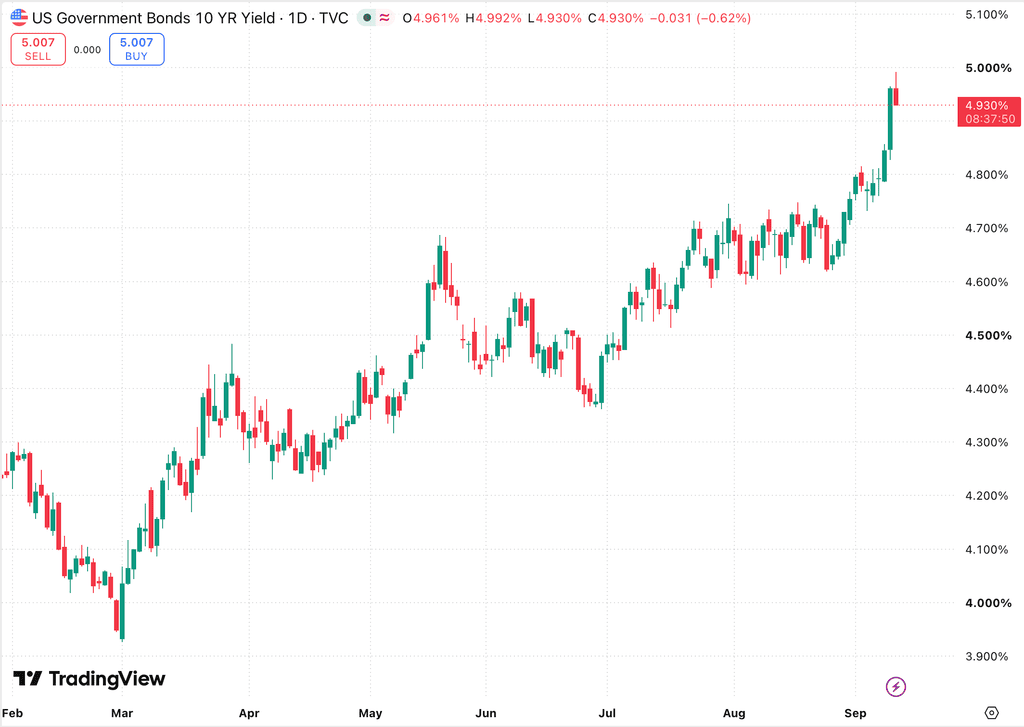
Following the announcement of the results, the yield on 10-year bonds climbed above 4.85% for the first time since 2023, and on September 11, it reached nearly 4.98%—the highest level in almost three years. At the time of writing, the indicator was at 4.93%.
Investors believe the scale of intervention was insufficient for the U.S. government debt market, which is worth about $32 trillion, while rising oil prices, inflation risks, budget deficits, and expectations of a Fed rate hike continue to weigh on bonds.
Buyback of up to $6 Billion Failed to Calm the Market
Ahead of the operation, the U.S. Treasury announced it was prepared to buy back up to $6 billion of long-term debt with maturities of 10 to 20 years. This is three times the standard volume of $2 billion and exceeds the previous promise from August to increase operations to at least $4 billion.
However, in reality, the Treasury accepted offers for only $5.2 billion out of more than $10 billion in bids from investors. Meanwhile, the yield on 10-year bonds rose to 4.98%, and for 30-year bonds, the indicator also set a new multi-year high of over 5.4%.
For the market, this signaled that even direct intervention by the Treasury is currently unable to reverse the main factors pushing rates higher.
Amundi's Chief Investment Officer, Vincent Mortier, stated that the small scale of the operation "does not solve the broader problem" of rising U.S. bond yields. According to him, the signal the Treasury sends to the market through the buyback could prove counterproductive, as it demonstrates a "certain nervousness" on the part of the U.S. government.
Morgan Stanley also warned about the unusual nature of such intervention. Morgan Stanley Wealth Management's Chief Economic Strategist, Ellen Zentner, noted:
"We cannot ignore the fact that some actions by the U.S. carry risks typical of emerging markets. Usually, we have not seen interventionist policy from the U.S. And when we have, it was a formal, institutionalized process."
Why Yields Continue to Rise
One of the main factors pressuring U.S. bonds this week was the sharp rise in oil prices amid escalating war between the U.S. and Iran and supply issues through the Strait of Hormuz. The price of Brent rose to nearly $110 per barrel, and on September 11, it reduced its gains and traded around $104.
More expensive energy increases inflationary risks and raises the likelihood that the Fed will have to keep rates high for longer or even raise them again. According to the CME FedWatch Tool, the market estimates the probability of a Fed rate hike this month at approximately 84.7%.
Bond yields are also pressured by:
- the record volume of U.S. government debt, which has exceeded $40 trillion;
- massive budget deficit;
- high debt servicing costs;
- rising inflation expectations;
- significant volume of new borrowing;
- bond sales by technology companies to finance AI investments;
- expectations of strong economic growth due to the development of artificial intelligence.
An additional factor was statements by U.S. President Donald Trump about the possibility of paying $5,000 to every adult American if Republicans win the midterm elections. Such a program could cost the budget over $1 trillion and heighten concerns about future government spending.
Investors Consider Bessent's First Move Insufficiently Large
Disappointment with the scale of the operation was noticeable even before it took place. Mark Cabana, head of U.S. rates strategy at Bank of America, stated that the Treasury was effectively "saving" on intervention, which contradicts an "at any cost" approach.
"If you're going to intervene, your priority should be steering the market in a certain direction or reaching a certain level, not the price you're willing to pay for it. You can't have both."
DoubleLine portfolio manager Bill Campbell also believes Bessent should have acted on a larger scale:
"I thought Bessent would understand: in any intervention, your first shot is your best, and you need to go in big right away."
A similar reaction was shown by market participants on X. Analysts at The Kobeissi Letter wrote, after the announcement of the increased buyback, that even tripling the volume to $6 billion did not stop the rise in 10-year bond yields. They noted that the market is effectively "fighting the U.S. Treasury."
Separately, The Kobeissi Letter emphasized that the Treasury faces a fundamental problem: the U.S. has a deficit of over $2 trillion, spends over $1.2 trillion per year on interest payments, and oil prices have nearly doubled since the start of the war.
A user on platform X under the pseudonym Hedgie pointed out the contrast between Bessent's statement "I'm the boss now" and the market's reaction. According to him, the Treasury increased the buyback from $2 billion to $4 billion, then to $6 billion, but after that, the market continued to sell bonds, and 10-year yields only rose.
At the same time, crypto-skeptic Peter Schiff stated that even tripling the buyback of long-term bonds did not stop the rise in yields, and such a situation could support demand for gold.
Recall that Morgan Stanley estimated the maximum possible buyback amount at around $10 billion.