# HBM İlgili Makaleler

HTX Haber Merkezi, kripto endüstrisindeki piyasa trendleri, proje güncellemeleri, teknoloji gelişmeleri ve düzenleyici politikaları kapsayan "HBM" hakkında en son makaleleri ve derinlemesine analizleri sunmaktadır.

Samsung and SK Hynix are Now the Only Buyers Through Buybacks, Korean Stocks Start to Decouple from Global AI Rally

On October 8, Samsung Electronics posted record quarterly operating profit of 107.4 trillion won. Yet, South Korea's KOSPI index fell 2.62% and has retreated roughly 27% from its 2024 high, decoupling from the global AI stock rally seen in the US, Japan, and Taiwan. The divergence stems not from corporate earnings but from a drastic shift in buyer composition. Samsung and SK Hynix, the two dominant memory chipmakers, account for over half of the KOSPI's weight, making its performance synonymous with the memory sector. While AI-driven HBM demand fueled their rise earlier, the market is now facing a liquidity crunch. Leverage has unwound rapidly, with trading volume down about 70% from its May peak. Foreign investors have been major sellers, withdrawing approximately $131 billion net from Korean equities this year, the largest outflow among major Asian markets. In September, their net selling of Samsung and SK Hynix made up 76.6% of the total. Concurrent appreciation of the Korean won has further eroded US dollar returns for foreign holders. The primary source of buying support has been share buybacks, overwhelmingly from the two chip giants. However, Samsung's major buyback program concluded in early October, and SK Hynix's program is about 80% complete, with its daily purchases slowing. With this key support waning, a buyer vacuum looms. Retail investors shifted to net sellers of KOSPI stocks in Q3, turning instead to US equities, though they briefly returned as net buyers in early October. Institutional views are split, with some reducing exposure, citing that the easy money in memory stocks has been made. The market's future trajectory hinges on whether domestic institutional buyers, like pension funds, will step in to fill the void left by receding foreign capital and corporate buybacks. The outcome depends on sustained HBM demand, memory pricing, and broader risk sentiment influenced by factors like US inflation data. The current adjustment is concentrated in the previously crowded memory trade, not a wholesale rejection of Korean assets or the AI supply chain narrative.

marsbit9 saat önce
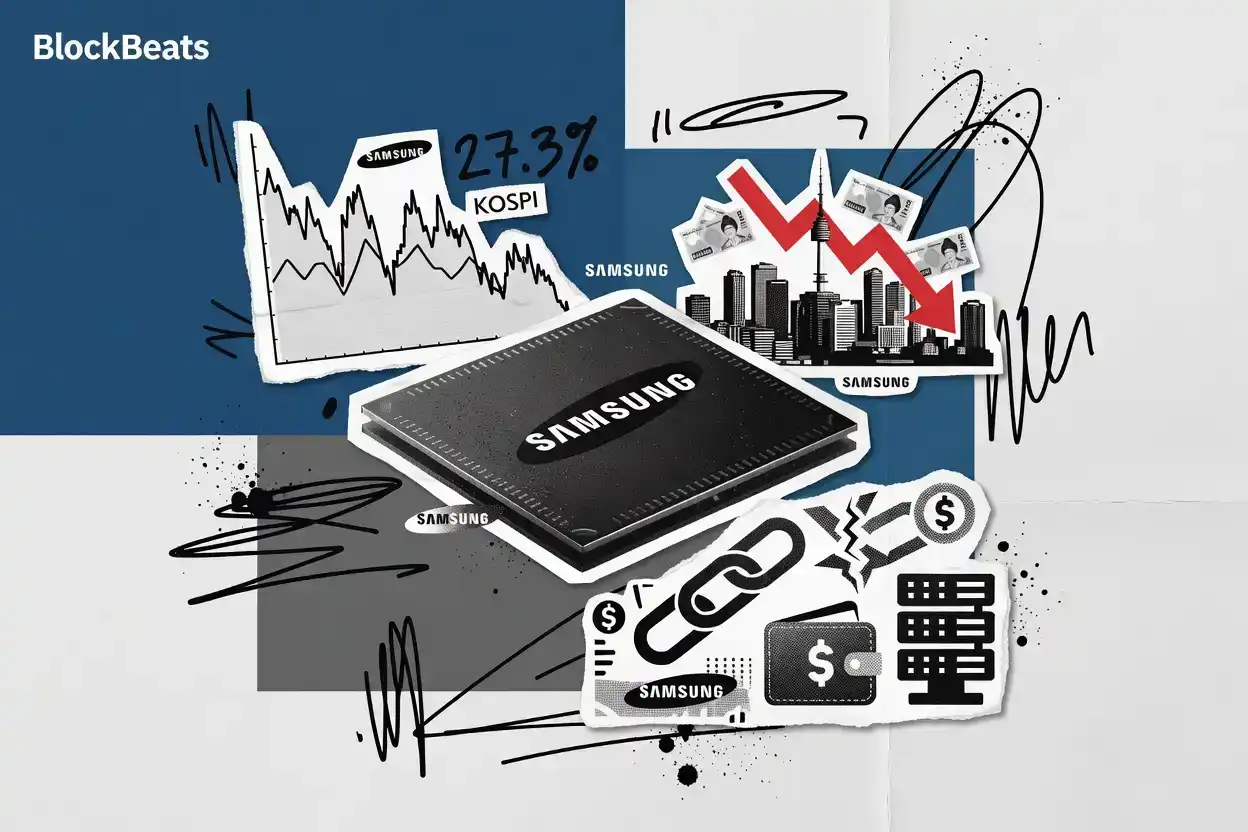
Samsung and SK Hynix are Now the Only Buyers Through Buybacks, Korean Stocks Start to Decouple from Global AI Rally

marsbit9 saat önce

Samsung HBM, Achieving a Comeback?

The competition in next-generation HBM is extending from DRAM chip performance to advanced packaging technology. A recent report, based on technician interviews, suggests Samsung has begun delivering samples using hybrid bonding to customers, potentially gaining an early lead in verification. SK Hynix reportedly faces challenges in developing its hybrid bonding process but has already delivered 12-layer HBM4E samples using its existing Advanced MR-MUF packaging, indicating it continues to progress on its current path. Hybrid bonding, which directly connects copper interconnects between chips, is seen as crucial for future HBM with 16+ layers, offering benefits like higher interconnect density, lower signal loss, and improved thermal performance. Samsung has promoted its Hybrid Copper Bonding (HCB) technology for such applications. However, the real challenge lies in manufacturing. Achieving stable, high-yield production requires precise control over processes like Chemical Mechanical Planarization (CMP), surface cleanliness, and managing wafer thinness and warpage. Moving from lab samples to mass production involves overcoming hurdles in yield, cost, and reliability across multiple bonded interfaces. While delivering samples provides a potential lead in customer validation, it doesn't guarantee commercial success. SK Hynix's continued progress with MR-MUF shows that traditional packaging remains viable. The competition is shifting to a systemic contest involving memory design, bonding technology, thermal management, and advanced packaging. The ultimate winner will be determined by which company can achieve stable high-volume production at a competitive cost. Separately, market data indicates Samsung's HBM market share rose from 21% in Q1 to 33% in Q2, closing the gap with SK Hynix. Analysts project Samsung's HBM revenue and its proportion of HBM4 sales to grow significantly by 2027.

marsbit2 gün önce 02:11

Samsung HBM, Achieving a Comeback?

marsbit2 gün önce 02:11

Samsung's Most Profitable Quarter Ever, Yet Its Stock Price is 30% Below the June High

Samsung Electronics reported its most profitable quarter in Korean corporate history for Q3 2026, with operating profit reaching approximately 107.4 trillion won, a 782.5% year-over-year increase. This single-quarter profit equals about 2.5 times the company's total 2025 operating profit. Despite the record earnings, Samsung's stock price fell 2.42% on the day of the preliminary results announcement (October 8, 2026), trading about 30% below its June 2026 peak. The market's tepid response is attributed to three factors: results slightly missing high analyst estimates, a deceleration in the year-over-year profit growth rate (from 1813.8% in Q2 to 782.5% in Q3), and concerns about future demand and rising costs. The stellar performance was driven almost entirely by the semiconductor division, particularly high-bandwidth memory (HBM) for AI data centers. Memory chip operating margins are estimated at around 80%. In stark contrast, the mobile and consumer electronics division is expected to report a loss for a second consecutive quarter, partly due to the high cost of memory components. The company reportedly plans to cut smartphone production by 20-30% in Q4 while raising prices for its flagship Galaxy S26 series. Analysts are divided on the outlook. Bulls, like Citi, focus on the significant pricing power for next-generation HBM4 products, maintaining a buy rating. Bears, referencing reports from Morgan Stanley, question the sustainability of price increases as major cloud service providers' capital expenditures approach or exceed their EBITDA, potentially straining their ability to absorb further cost hikes. The report underscores a key tension in the AI hardware supply chain: while demand for AI memory is driving historic profits for chipmakers, the associated high costs are simultaneously pressuring the profitability of downstream device manufacturers, including Samsung's own smartphone business. The market appears to be pricing the future growth *slope* of these record profits rather than the current profit *level* itself.

marsbit10/09 11:07

Samsung's Most Profitable Quarter Ever, Yet Its Stock Price is 30% Below the June High

marsbit10/09 11:07

Micron Q4 Revenue Soars Nearly 4 Times Year-over-Year, Q1 Revenue Guidance Exceeds Expectations But Gross Margin Falls Short; CEO Predicts Tighter Memory Supply in Coming Years

Micron Technology reported record-breaking results for Q4 FY2026, with revenue reaching $54.229 billion, up 379% year-over-year and exceeding market expectations. The company provided strong guidance for Q1 FY2027, projecting revenue of approximately $61.5 billion and adjusted EPS of around $38.15, both above consensus estimates. While the Q1 gross margin guidance of ~86.25% was slightly below expectations, CFO Mark Murphy indicated this would be the low point for the fiscal year, with margins expected to improve thereafter. CEO Sanjay Mehrotra stated that AI-driven demand continues to strengthen, and the memory and storage supply-demand balance is forecast to be tighter in 2027 and 2028 than in 2026. Data center revenue surged 56% sequentially in Q4 to $18.002 billion, accounting for 33% of total revenue, with a 90% gross margin. HBM revenue growth outpaced the company's overall growth, with most of its 2027 HBM bit supply already under contract at significantly higher prices. Micron has signed 26 strategic customer agreements, covering over 35% of projected revenue through 2030 and providing greater earnings predictability. The company plans to increase capital expenditures, particularly for fab and cleanroom construction, to prepare for capacity expansion in late 2028 and beyond, as the market focus shifts to the pace of new capacity ramping relative to sustained AI-driven demand growth.

marsbit10/01 05:06

Micron Q4 Revenue Soars Nearly 4 Times Year-over-Year, Q1 Revenue Guidance Exceeds Expectations But Gross Margin Falls Short; CEO Predicts Tighter Memory Supply in Coming Years

marsbit10/01 05:06

Micron Set to Release New Financial Report, JPMorgan Bullish with a Target of $1540

Summary: Micron is set to report new earnings, with JPMorgan setting a bullish target price of $1540. The report highlights that Micron is likely to deliver another quarter of revenue, gross margin, and EPS above market expectations, with further upward revisions possible for next quarter's guidance. The focus is shifting from short-term performance beats to longer-term structural changes. Key points: - DRAM and NAND ASP are expected to rise ~20% QoQ this quarter. - The HBM supply-demand gap is projected to persist until 2028, with potential continued price support. - Micron's long-term Supply Commitment Agreements (SCAs) now likely cover over 35% of its DRAM and NAND production, locking in future revenue, improving cash flow visibility, and establishing a significantly higher profit floor compared to past cycles. - AI is transforming Micron's business mix, driving higher ASPs and margins, particularly in data centers where SSD revenue is booming. - Starting December 9, 2026, Micron is expected to return 100% of excess cash to shareholders, primarily through stock buybacks, which could become a new valuation catalyst given strong projected free cash flow. - The core argument is that Micron's business model is evolving from a volatile cyclical stock to one with more stable, structurally higher profits due to HBM demand, long-term contracts, and a capital return program.

marsbit09/29 09:56

Micron Set to Release New Financial Report, JPMorgan Bullish with a Target of $1540

marsbit09/29 09:56

With Q3 Earnings Looming, Samsung Electronics and SK Hynix Face "Extremely High Expectations", Testing the "Global AI Trade"

With their Q3 earnings approaching, Samsung Electronics and SK Hynix, the two South Korean chip giants at the center of an AI-driven semiconductor "supercycle," face intense market scrutiny. Analysts hold exceptionally high expectations, forecasting combined operating profits nearing a record. However, recent slight downward revisions to forecasts, attributed to a stronger Korean won, highlight the impact of currency fluctuations. The upcoming reports will be a critical test for the durability of the "AI trade." Key areas of focus include: the sustainability of memory chip price increases, which are expected to slow in Q4; the stabilizing yet potentially margin-limiting effect of Long-Term Supply Agreements (LTAs); and whether next-generation High Bandwidth Memory (HBM4) can translate into substantial profits, reshaping data center architecture as AI agents demand exponentially more memory bandwidth. Beyond memory, Samsung's foundry business is anticipated to return to profitability in Q3, a positive signal. Conversely, its consumer electronics division grapples with the "chip inflation" paradox, where rising component costs hurt margins despite strong high-end device sales. Ultimately, these earnings will signal whether the current boom represents a transient spike or a more structurally resilient shift. The results will influence not only the companies' short-term valuations but also set the tone for global tech infrastructure investment in the coming years.

marsbit09/28 05:46

With Q3 Earnings Looming, Samsung Electronics and SK Hynix Face "Extremely High Expectations", Testing the "Global AI Trade"

marsbit09/28 05:46

UBS Research Report Analysis: Micron's FQ4 Revenue Expected at $524 Billion, Share Buyback Restrictions Lifted in December

UBS maintains a Buy rating on Micron Technology with a $1625 price target, implying 48% upside from the September 22 closing price of $1096. The analyst report, dated September 23, 2026, shifts the market debate from "cycle peak" to "duration," forecasting a widening DRAM supply-demand gap through 2027. Server DDR bit demand is expected to grow ~80%, with server + storage SSD bit demand potentially exceeding 100%. For Micron's FQ4:26, UBS estimates revenue of $52.4B, slightly above guidance, with gross margin of 87.6% (160 bps above guidance). FQ1 revenue is guided to $58-59B. The outperformance is attributed entirely to pricing strength. In FQ4, DRAM revenue was $39.7B with bit shipments up 3% and ASP up 23% QoQ. NAND revenue was $12.7B with bit shipments up 4% and ASP up 23%. Gross margins are projected to peak around 91% in FQ4:27 / FQ1:28. On the supply side, while CXMT's DRAM bit share is expected to rise, UBS believes concerns over its capacity expansion are exaggerated, with supply shortages persisting at least into Q2 2028. For HBM, Micron's C2027 bit shipments are adjusted to ~11.72B Gb, with a blended ASP forecast to rise ~76% YoY. A key catalyst is the expiration of CHIPS Act stock repurchase restrictions on December 9, 2026. UBS expects buybacks to commence in FQ2:27 (~$20B quarterly), quickly scaling to $40-50B per quarter. UBS raises its C2027-C2029 EPS estimates to $21.2, $27.7, and $21.9, with C2028 and C2029 above consensus. The $1625 price target is based on ~8x NTM P/E applied to the C2029 EPS of ~$21.9, discounted back to C2028.

marsbit09/28 05:45

UBS Research Report Analysis: Micron's FQ4 Revenue Expected at $524 Billion, Share Buyback Restrictions Lifted in December

marsbit09/28 05:45

Changxin Technology's G5 Announced for Mass Production, What's the Key Point?

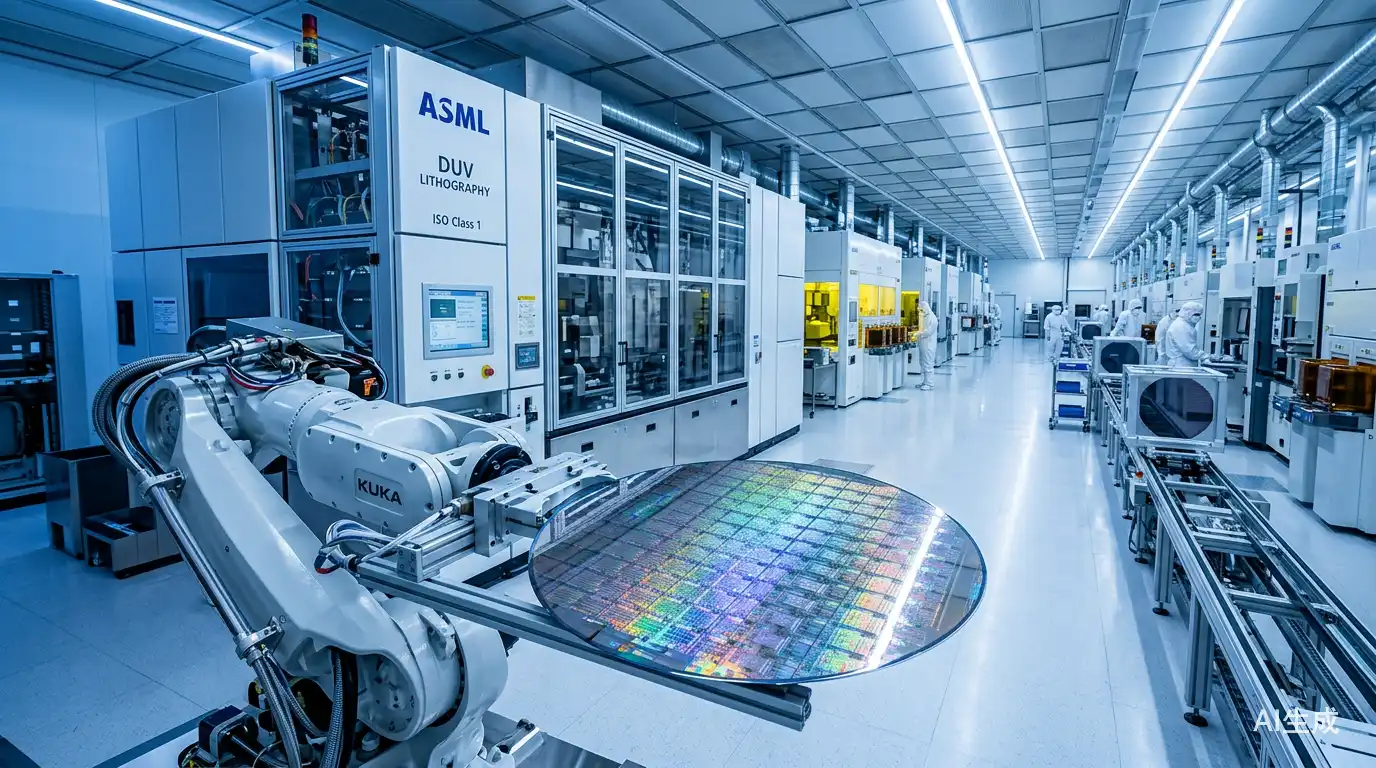
Changxin Storage announced the mass production of its fifth-generation DRAM technology platform (G5) and showcased two 24Gb LPDDR5X products based on it. The key specifications include an active area half-pitch of 11.95nm, a capacitor aspect ratio of 45:1, a core function area height of 6762nm, and at least a 50% increase in die-per-wafer (converted to an 8Gb base) compared to the previous generation. Notably, this 1c node-equivalent process was achieved using DUV multi-patterning instead of unavailable EUV lithography, though questions remain about its ultimate cost competitiveness. The announced 50%+ die increase is a theoretical design density gain, distinct from actual production yield, which remains undisclosed. While achieving process parity, Changxin's per-bit cost is still reportedly higher than the top three manufacturers (Samsung, SK Hynix, Micron). G5's main focus is mobile LPDDR; products like LPDDR6 were launched ahead of competitors. However, the company lags significantly in high-value segments like HBM and server DDR5. Changxin currently holds a 9.5% global DRAM revenue share, serving as a supplier for general-purpose memory (like DDR4, LPDDR5/5X/6) to clients including Xiaomi and Transsion, filling a gap left by major players shifting to HBM. Its recent massive IPO and profitability mark a new phase. Key future indicators will be the yield ramp-up speed, cost reduction progress, and potential entry into the HBM market.

marsbit09/20 11:25

Changxin Technology's G5 Announced for Mass Production, What's the Key Point?

marsbit09/20 11:25

活动图片