# Financial System İlgili Makaleler

HTX Haber Merkezi, kripto endüstrisindeki piyasa trendleri, proje güncellemeleri, teknoloji gelişmeleri ve düzenleyici politikaları kapsayan "Financial System" hakkında en son makaleleri ve derinlemesine analizleri sunmaktadır.

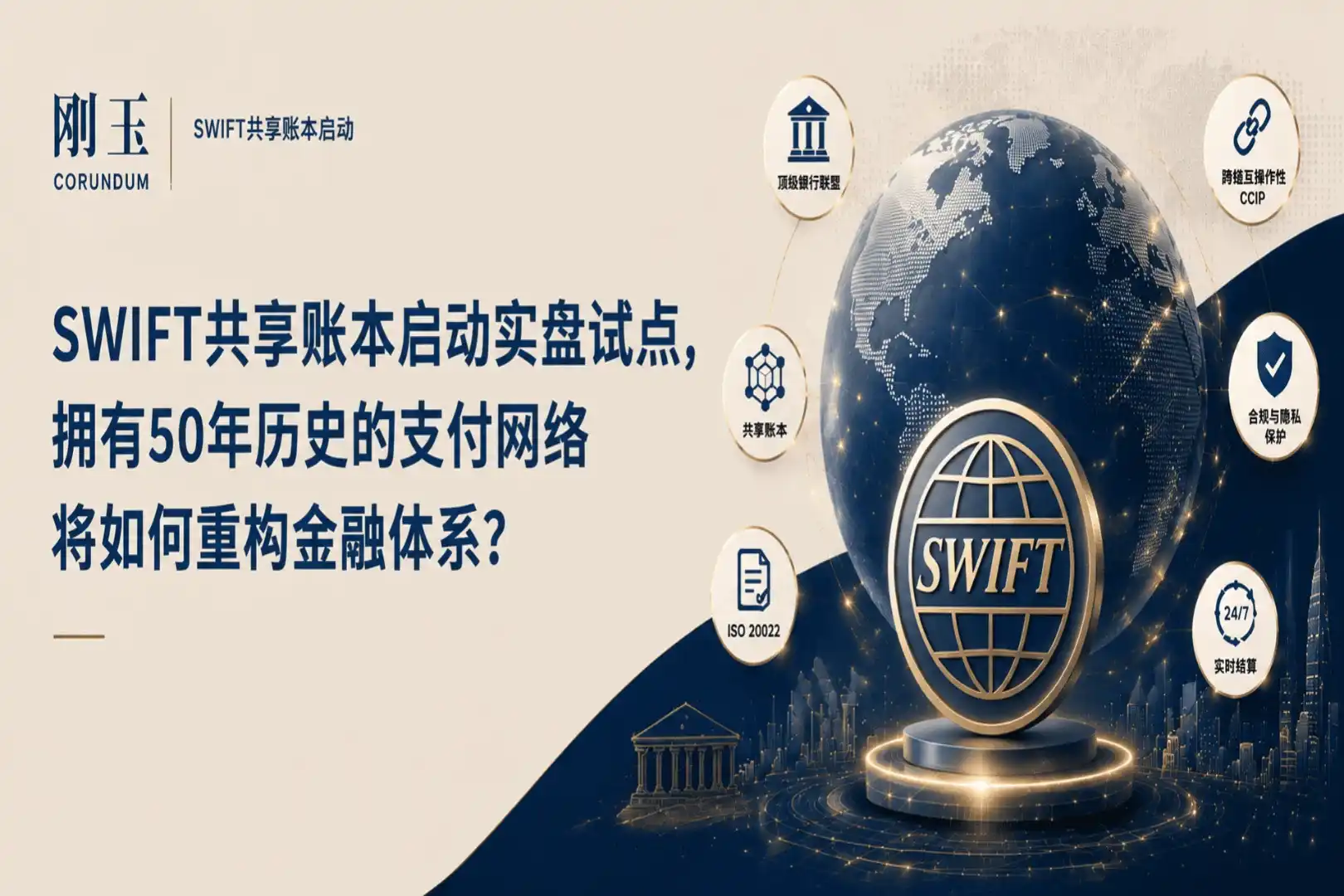
SWIFT Shared Ledger Launches Live Pilot, How Will the 50-Year-Old Payment Network Reconstruct the Financial System?

SWIFT, a global financial messaging provider with a 50-year history, has launched a live pilot of a blockchain-based "shared ledger" in July 2026, involving 17 major banks. This marks a direct move by traditional finance to upgrade its core payment infrastructure using blockchain technology, transforming SWIFT's role from a messaging channel to a "value orchestration layer" for digital payments. The system is built on Hyperledger Besu (EVM-compatible) and integrates Chainlink's CCIP for cross-chain interoperability. It deepens the fusion of the ISO 20022 messaging standard with smart contracts to automate compliance (KYC/AML). The primary settlement medium in this network is "tokenized deposits"—digital representations of traditional bank deposits, not independent stablecoins—preserving the existing two-tier banking system. The move introduces "atomic settlement" (24/7, instant) but requires banks to adopt "pre-funding" models, increasing demands on liquidity management. It presents direct competitive pressure on native blockchain payment tokens (e.g., XRP) by offering an efficient, bank-backed alternative for cross-border settlement. Significant regulatory hurdles remain, including legal jurisdiction over cross-border digital assets, legal definitions of "settlement finality" for smart contracts, and balancing blockchain transparency with data privacy/localization laws. Technologies like zero-knowledge proofs may be needed to resolve privacy-compliance conflicts. Industry views are mixed: participating banks and SWIFT emphasize extending trusted, compliant finance into the digital realm with real-time efficiency, while crypto analysts warn of potential "liquidity backlash" as capital flows back to the traditional, now-tech-enhanced banking system. This pilot signifies that traditional finance and crypto are entering a phase of direct competition and fusion at the infrastructure level, likely leading to a future of interconnected, highly regulated financial networks rather than a fully decentralized system.

marsbitDün 07:41
SWIFT Shared Ledger Launches Live Pilot, How Will the 50-Year-Old Payment Network Reconstruct the Financial System?

marsbitDün 07:41

Zuckerberg Begins Betting on Prediction Markets, While Asian Countries Still View Them as Gambling

Mark Zuckerberg is backing prediction markets, with Meta developing its own app "Arena," signaling major tech validation. This industry now sees over $14 billion in monthly volume. These markets function as binary contracts (payout $1 if an event occurs, $0 if not), with trading prices reflecting real-time event probabilities. Results are settled by oracles. Prediction markets originated from informal political betting and academic experiments like the Iowa Electronic Markets. Their core mechanism relies on "skin in the game"—participants risk their own money, making aggregated information more reliable than polls or expert opinions. They have proven accurate in forecasting areas like monetary policy, elections, and market events. While Western markets are integrating them into regulated financial systems, many Asian jurisdictions still classify them as gambling, leading to regulatory divergence. This stance creates three major issues for Asia: regulatory arbitrage and capital outflow, loss of informational sovereignty as valuable social data accumulates offshore, and a lack of user protection within a formal framework. The article argues that Asia's focus should shift from blocking these markets to responsibly harnessing the data they generate within a regulated system. The current avoidance of discussion cedes leadership and advantages to foreign entities.

Foresight News07/09 11:47

Zuckerberg Begins Betting on Prediction Markets, While Asian Countries Still View Them as Gambling

Foresight News07/09 11:47

From 'Punishment' to 'Acceptance': SEC's 2% Discount Tears Open Compliance Gap for Stablecoins

This article discusses a significant policy shift by the U.S. SEC regarding the capital treatment of payment stablecoins held by broker-dealers. On February 19, the SEC’s Division of Trading and Markets issued new guidance allowing broker-dealers to apply a 2% discount—rather than a punitive 100% haircut—to certain stablecoin holdings when calculating net capital requirements. This change aligns stablecoins with money market funds and other low-risk assets, making it financially viable for regulated entities to hold and use them. The move is seen as a major step toward integrating digital assets into mainstream finance. It follows the passage of the GENIUS Act in July 2025, which established a federal regulatory framework for payment stablecoins. The SEC’s guidance is designed to bridge the gap between existing rules and the new law, enabling broker-dealers to use stablecoins for settlement, trading, and tokenized securities without excessive capital penalties. The author highlights that this shift is part of a broader effort by the SEC to move away from enforcement-heavy regulation under former Chair Gary Gensler and toward a more structured, inclusive approach. The change is expected to encourage more institutional participation, improve liquidity, and support the use of stablecoins in cross-border payments and financial inclusion. However, challenges remain, including ongoing tensions between federal and state regulators and pending legislation to clarify the classification of digital assets. The 2% discount symbolizes a meaningful step toward recognizing stablecoins as legitimate financial tools within the U.S. regulatory system.

比推02/21 15:34

From 'Punishment' to 'Acceptance': SEC's 2% Discount Tears Open Compliance Gap for Stablecoins

比推02/21 15:34

The Era of Digital Cash Twins: Future Collaboration Prospects of National and Market Currencies

The future of money is not a binary choice between state-issued currency and private alternatives. Instead, a dual system is emerging where Central Bank Digital Currencies (CBDCs) and stablecoins coexist and collaborate. CBDCs, such as China’s e-CNY and the EU’s digital euro, are state-backed and prioritize monetary sovereignty, regulatory oversight, and public interest. Stablecoins, privately issued and blockchain-native, excel in cross-border payments and decentralized finance due to their speed and flexibility. Globally, CBDC deployment is advancing with varied approaches: The Bahamas’ "Sand Dollar" focuses on financial inclusion, China’s e-CNY has scaled rapidly, and the EU and UK emphasize privacy. Meanwhile, the U.S. is prioritizing stablecoin regulation over a digital dollar, while countries like India and Brazil are exploring programmable CBDCs for targeted policy implementation. Japan is taking a "wholesale-first" approach to upgrade financial infrastructure. Key initiatives like the BIS’s Agora project and Singapore’s Guardian Project are testing interoperability between CBDCs and stablecoins, aiming to prevent fragmentation in the digital monetary system. Rather than competing, state and market currencies are forming a collaborative framework—CBDCs providing stability and control, and stablecoins enabling innovation and global reach.

marsbit01/28 11:01

The Era of Digital Cash Twins: Future Collaboration Prospects of National and Market Currencies

marsbit01/28 11:01

活动图片