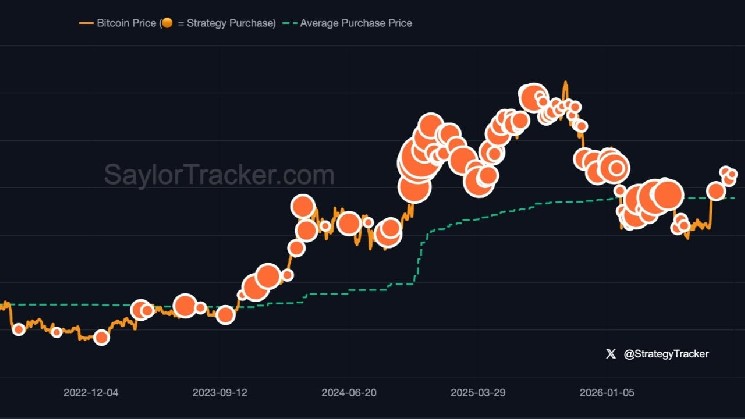
Trading firm QCP Capital published its latest weekly report, analyzing the main event of recent days – the August US employment report. The data turned out to be significantly stronger than forecasts and forced markets, including the crypto market, to revise their expectations regarding the Federal Reserve's next moves.
According to the report, the US economy added 162,000 jobs in August – against a forecast of just 55,000. For comparison: the revised figure for July was only 21,000. The sharp improvement alleviated some concerns that the weakness of July's data could evolve into a full-blown labor market slowdown. The unemployment rate remained at 4.1%, and average hourly earnings grew by 0.3% compared to the previous month – another confirmation of employment resilience. As QCP analysts note, it was this report that decisively shifted market focus from the theme of economic cooling to the theme of inflation and the trajectory of the Fed rate ahead of the September Federal Open Market Committee (FOMC) meeting.
How the Crypto Market Reacted to the Data
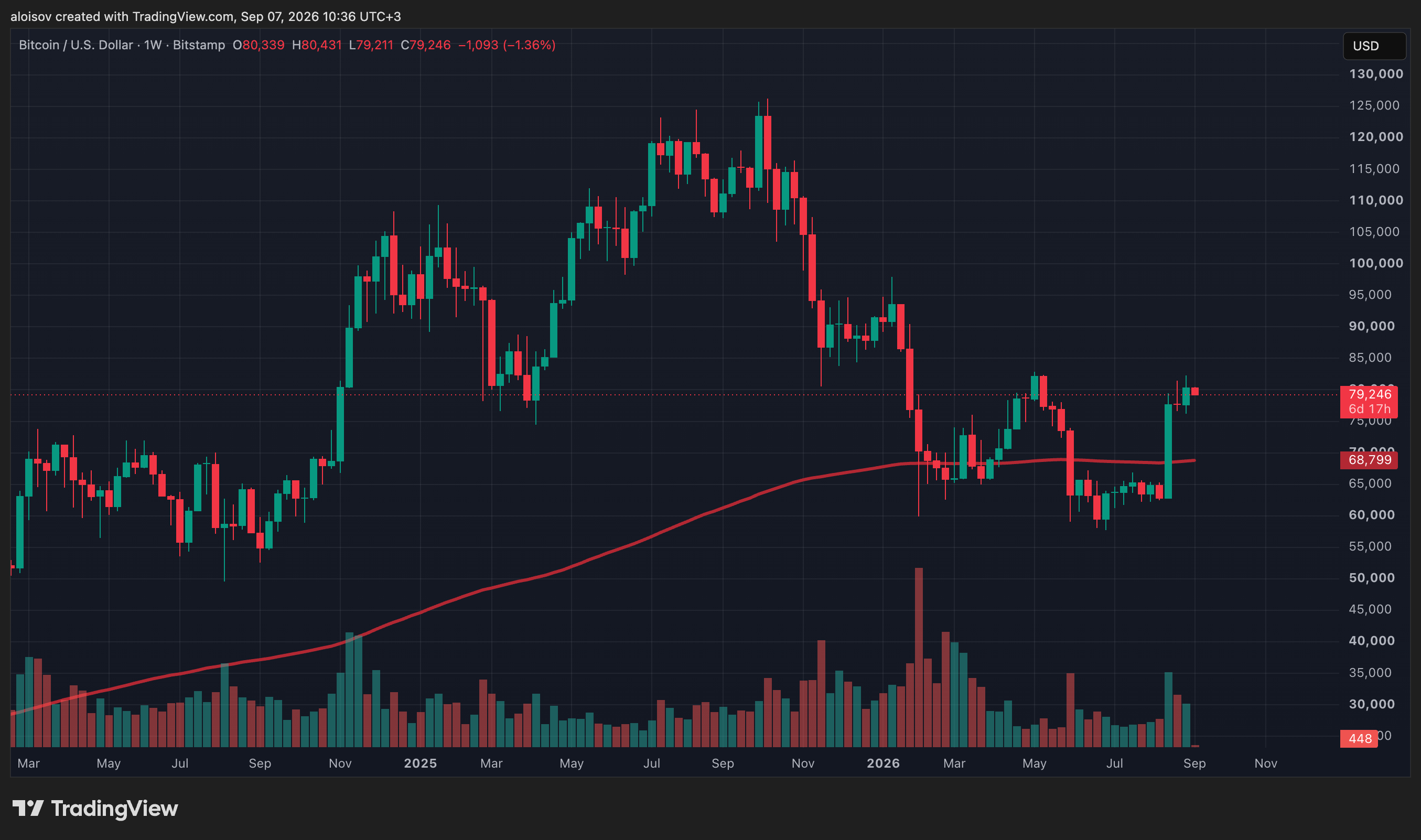
The crypto market remained stable throughout the week. Bitcoin traded above $82,000 at the start but pulled back to $79,300 by the week's end. Ethereum held steady around $2,500 all this time.
The dynamics of spot Bitcoin ETFs deserve particular attention: from September 1 to 4, they recorded a net inflow of $770 million. Wednesday stands out especially, with an inflow of $730.8 million – this sum more than offset the outflow of $236.5 million recorded on Monday. To you, this might look like ordinary statistics, but in reality, such a turnaround shows that institutional investors are actively participating in the market's reassessment following the publication of strong employment data.
At the same time, Bitcoin's short-term volatility remains subdued: the implied volatility for 18-day at-the-money options is hovering around 37–38%, despite the approaching inflation releases and the FOMC meeting.
Market Structure and Trader Positioning
QCP notes that last week's price movement structure reflects the broader macroeconomic backdrop more than crypto-specific factors. The improved employment data temporarily reduced fears about a worsening economic situation, which generally supported risk appetite.
However, a clear problem persists: Bitcoin has so far been unable to firmly establish itself above the $80,000–$82,000 range, and Ethereum continues to face selling pressure above $2,500. This technical resistance indicates that traders are still cautious about committing new capital, awaiting a clearer picture on inflation.
The strong ETF inflows provide structural support for the market, but the pattern itself – outflow on Monday, followed by massive inflow on Wednesday – more likely speaks to position rebalancing ahead of important data rather than sustained directional conviction among players. The compression in volatility ahead of approaching catalysts, in the opinion of QCP analysts, reflects a state of anticipation, not strong directional bets already priced in.
Technical Levels for Bitcoin and Ethereum
The QCP report provides the following key levels:
- Bitcoin – Resistance: $80,000–$82,000; Support: $77,000–$78,000; Secondary Support: $75,000–$76,000
- Ethereum – Resistance: $2,500–$2,550; Support: $2,400–$2,425; Secondary Support: $2,300–$2,350
Inflation Data – The Key Test of the Week
The strong employment report alleviated some immediate concerns about labor market deterioration but simultaneously brought inflationary themes to the forefront. This week sees the release of two key inflation reports.
On Thursday, the August Producer Price Index (PPI) is published – it will provide the first signal of price pressure at the producer level. On Friday, the August Consumer Price Index (CPI) and core CPI are released – the indicator the Fed monitors especially closely when making rate decisions.
Considering that Fed Chair Kevin Warsh maintains a hardline (hawkish) rhetoric and the Fed's 2% inflation target remains in focus, the release of CPI on Friday will be the key test for market expectations regarding a potential rate adjustment in September. Moderate data would give the Fed more room to wait and monitor incoming statistics without pressure to act immediately. If inflation again proves stubborn, it would strengthen the position of those advocating for a rate adjustment and could accelerate the reassessment of market expectations.
Legislative and Political Events
In addition to statistics, QCP analysts highlight two events in the political sphere to watch:
- On Tuesday, September 15, a procedural vote on the CLARITY Act bill (the document regulating the structure of the crypto asset market in the US) is expected in the US Senate. The timing of the vote coincides with the general reassessment of market expectations for Fed policy, but the legislative process has already faced delays, and the next window for substantive consideration of the bill remains uncertain.
- The FOMC meeting concludes on Thursday, September 17, after which the monetary policy decision will be announced.
The Week Ahead: Inflation as the Defining Variable
According to QCP Capital's assessment, the environment for the crypto market remains constructive but not yet fully formed. Steady ETF demand continues to support the market from below, but technical resistance at the $80,000–$82,000 level for Bitcoin and $2,500 for Ethereum still limits upward movement. The combination of subdued volatility and approaching catalysts suggests the market is preparing for a directional move immediately after the inflation data is released.
The strong employment report by itself does not settle the question of future Fed policy – it merely shifts the emphasis. If the CPI confirms that inflation continues to approach the Fed's 2% target, arguments for a wait-and-see stance will strengthen. If the data shows renewed price pressure, the arguments of those favoring a rate adjustment will gain weight. For the crypto market, the conclusion is straightforward: it is the inflation data that will most likely determine whether current ranges will hold or an accelerated reassessment of direction will begin.
The market currently resembles a compressed spring – all energy is stored, but the direction of movement will be decided by a single statistical release. Bitcoin and Ethereum are stuck at familiar marks, and institutional money via ETFs continues to methodically arrive, as if preparing the ground for the next step.
The combination of facts from the QCP Capital report paints a picture of a market that knows how to wait: strong employment, subdued volatility, and stubborn resistance at key levels converge at one point – the release of the CPI.
AI Opinion
From the perspective of machine data analysis, the current configuration has already occurred this year: the May Producer Price Index report showed the largest annual gain since March 2022, and core CPI inflation was 2.8% versus a forecast of 2.7% – after which Bitcoin closed the week below $78,000. The coincidence of scenarios does not guarantee a repetition, but the September week is structured according to the same pattern: first PPI, then CPI, then market reaction.
A historical parallel from 2021 adds ambiguity: back then, rising inflation was read by the market as an argument in favor of Bitcoin as "digital gold"; today, the same indicator is more often interpreted as a signal for tighter Fed policy. The change in interpretation of the same figure speaks less about the economy and more about a shift in the dominant market narrative. The technical corridor of $80,000–$82,000 is not the only variable in this equation: should we expect the market to react to Friday's CPI as straightforwardly as in May, or will the narrative turn in another direction again?
end-content