Plume Launches Tokenized Bond Fund

cryptonews.ruPublished on 2026-10-06Last updated on 2026-10-06

Abstract

Plume has launched nBND, a tokenized vault backed by the Fidelity Total Bond ETF (FBND). The initiative is part of Plume's development of a platform for institutional assets on blockchain, while Fidelity is a U.S. asset manager offering investment products and financial services. This new product allows investors to access a tokenized, yield-bearing instrument based on an existing bond fund. According to Plume, the launch is intended to expand the range of assets available in on-chain capital markets.

Plume has launched nBND — a tokenized vault backed by the Fidelity Total Bond ETF (FBND). Plume is developing a platform for institutional assets to operate on the blockchain, and Fidelity is an American asset management company offering investment products and financial services.

The new product allows investors to access a tokenized fixed-income instrument based on an existing bond fund. As Plume notes, the launch should expand the choice of assets in on-chain capital markets.

Trending Cryptos

Related Questions

QWhat is the name of the new tokenized product launched by Plume?

AThe new product launched by Plume is called nBND.

QWhat existing asset does the new nBND tokenized vault from Plume track or replicate?

AThe nBND tokenized vault replicates the performance of the Fidelity Total Bond ETF (FBND).

QWhat is the main objective of Plume's platform according to the article?

AThe main objective of Plume's platform is to enable institutional assets to operate on the blockchain.

QWhat type of investment product does the Fidelity Total Bond ETF (FBND) represent?

AThe Fidelity Total Bond ETF (FBND) is a bond fund, which is a type of fixed-income investment product.

QHow is the launch of nBND expected to impact on-chain capital markets according to Plume?

APlume believes the launch of nBND will expand the selection of assets available in on-chain capital markets.

Related Reads

Aave's Half-Year Report Card: A 97-Person Team Burned $20 Million in Half a Year, What Is the DeFi Leader Up To?

Aave Labs' 180-day report (Q2–Q3 2026) reveals a 97-person team that logged ~100,000 hours, completed 6,096 tracked items, shipped 28 product or protocol deployments, and spent nearly $19.48 million (excluding token compensation), while the Aave protocol generated about $44.58 million in revenue. Total deposits grew roughly 40% in Q3 to $33.8 billion, but this followed a sharp Q2 decline driven by the rsETH bridge exploit and a broader DeFi contraction, so the rebound was largely a partial recovery. Protocol revenue actually fell about 37% quarter-over-quarter, from $27.29 million to $17.29 million, as high Q2 liquidation fees (including Chainlink SVR) dropped sharply and borrowing interest income declined, even though GHO interest, swap fees, and stablecoin utilization improved. The report also signals Aave's expansion beyond crypto-native lending. Aave V4, launched in March, reached $1.34 billion in deposits by October 1, and now supports tokenized equities via an Equities Hub on Base, custody-based institutional lending with Anchorage and Chainlink, and externally operated independent instances such as EtherFi and Sentora that share revenue with the DAO. Aave Labs is also pursuing consumer and enterprise distribution through the Aave App (over $45 million in user balances), Stable Vaults for embedded yield, and an MCP Server letting AI assistants read protocol data and prepare—but not sign—transactions. Under the Aave Will Win Framework, the DAO funds development and receives gross brand-product revenue. The core open questions are growth quality, whether new businesses generate durable revenue, and balancing concentrated execution against DAO dependence on a key service provider.

marsbit5m ago

Aave's Half-Year Report Card: A 97-Person Team Burned $20 Million in Half a Year, What Is the DeFi Leader Up To?

marsbit5m ago

Circle Partners With DBS to Expand Institutional USDC Access Across Asia

Circle, the issuer of the USDC stablecoin, has partnered with Singapore-based DBS Bank to expand institutional access to USDC across Asia. Announced on November 18, the agreement allows eligible institutional clients to mint and redeem the dollar-backed stablecoin directly through DBS, with near-instant settlement between US dollars and USDC available 24 hours a day. This gives institutions another way to access USDC without relying entirely on cryptocurrency exchanges and other secondary-market liquidity providers, supporting corporate treasury operations, payment settlement and liquidity management. Institutions can convert between dollars and USDC without being restricted by conventional banking hours or payment cut-off times. Access is limited to eligible institutional clients rather than retail customers. The agreement builds on DBS and Circle's participation in Project BLOOM, an industry initiative led by the Monetary Authority of Singapore focused on developing infrastructure for the safe and scalable use of tokenised money. DBS reported that 88% of large corporations surveyed were already deploying or piloting tokenised money applications, with more than three in five adopting or planning to adopt stablecoins. Evy Theunis, head of digital assets at DBS's Institutional Banking Group, said the partnership would give institutions more choice in managing and transferring value, while Circle Chief Commercial Officer Kash Razzaghi said it would help expand institutional access to USDC across Asia. Transaction limits, fees and a detailed country-by-country rollout schedule were not disclosed.

TheNewsCrypto15m ago

Circle Partners With DBS to Expand Institutional USDC Access Across Asia

TheNewsCrypto15m ago

From Crypto VC to Traditional VC: The Three Essential Capabilities of Venture Capital

In this article, Big Brain Holdings investor Derrick Cui reflects on his transition from crypto venture capital to traditional VC in AI, reindustrialization, and space, contrasting crypto's short liquidity cycles and narrative-driven token prices with traditional VC's decade-long capital lockups and illiquid equity. He explains why LPs still allocate to venture despite poor average returns and illiquidity: each year produces rare companies capable of returning an entire fund; business success defies checklists, rewarding subjective judgment; consensus is often wrong, so non-consensus bets offer asymmetric upside; and top investors can repeatedly generate excess returns across cycles. He describes the investor's job as deal sourcing, diligence, and pitching, noting AI tools have lowered sourcing barriers but顶级 deals still come from genuine relationships, and that likability is an underrated professional asset. He then details three core capabilities: (1) Data—separating verifiable facts from founder promises, using third-party validation to pierce polished narratives; (2) Context—building comparative, industry-wide knowledge to judge talent and technical bottlenecks, now accelerated by reasoning models that shift the key skill from reading papers to asking higher-quality questions; and (3) Storytelling—constructing a rigorous "Right to Win" narrative that explains why a company prevails across multiple possible futures, sometimes via systematic cluster bets (e.g., SMRs for AI energy demand) rather than single-company wagers. He also admits past mistakes: being "nerd-sniped" by technical brilliance that doesn't equal a great business, chasing non-consensus ideas for their own sake, and rejecting the "spray and pray" mentality. Finally, he warns that fundraising incentives—DPI substitutes, markups, co-investment halo, hot-round chasing—can distort investment decisions, and concludes that VC is a trainable skill built on data capture, better questions, and credible winning narratives.

marsbit29m ago

From Crypto VC to Traditional VC: The Three Essential Capabilities of Venture Capital

marsbit29m ago

Research Report Interpretation | Space Fund Scale Grew to $18 Billion in One Year, but In-Orbit Direct Investment Accounts for Only 3%

Barclays analysts Katherine Ogundiya and team published a 61-page report on November 16 introducing an "in-S.P.A.C.E." framework for the in-orbit economy, screening 37 commercial space activities down to 15 priority areas and 3 wildcard sectors. Global space-themed fund assets grew from $1.24 billion in Q2 2024 to over $18 billion by Q2 2026, yet only 3% is directly invested in in-orbit operations, while 47% sits in semiconductors, components, and software. Private markets are more direct: of 33 space unicorns worth about $92 billion, 9 in-orbit operators account for roughly $26 billion, or 28%. Global government space spending reached $141 billion in 2025, up 7.4%. The report identifies five physical bottlenecks—launch concentration, spectrum and network routing, orbital congestion, in-orbit servicing standards, and regulatory approval—noting China and the U.S. accounted for over 82% of orbital launch attempts from 2024 to July 2026, with SpaceX and CASC together near 71%, and Starlink performed over 207,000 collision-avoidance maneuvers between December 2025 and May 2026. Among the highest-scoring priority tracks, GEO satellite life extension offers clear economics: about 85% of GEO satellites retire from fuel depletion, and extending life five years costs roughly $65 million versus $150–300 million for a replacement. Orbital AI computing and data centers scored only 8, ranking as a wildcard due to unresolved thermal, power, and economic challenges. Barclays maps over 350 companies across four investment paths: integrated launch and space systems players like Rocket Lab (RKLB) and Firefly (FLY), bottleneck-breaking specialists such as Astroscale, MDA Space, Mynaric, and Thales, "picks and shovels" suppliers including Linde (LIN) and Air Liquide, and downstream applications like Planet Labs (PL) and AST SpaceMobile (ASTS). A heavy-lift rocket launch now consumes about 8,000 tonnes of liquid oxygen, five times a traditional large rocket's 1,600 tonnes, with Linde projecting about $1 billion in annual space revenue by 2030.

marsbit1h ago
Research Report Interpretation | Space Fund Scale Grew to $18 Billion in One Year, but In-Orbit Direct Investment Accounts for Only 3%

marsbit1h ago

The AI Bubble Has Already Burst, Yet Retail Investors Are Still Frantically Buying the Dip: A Hedge Fund Veteran Warns Nvidia's Risks Are Far From Over

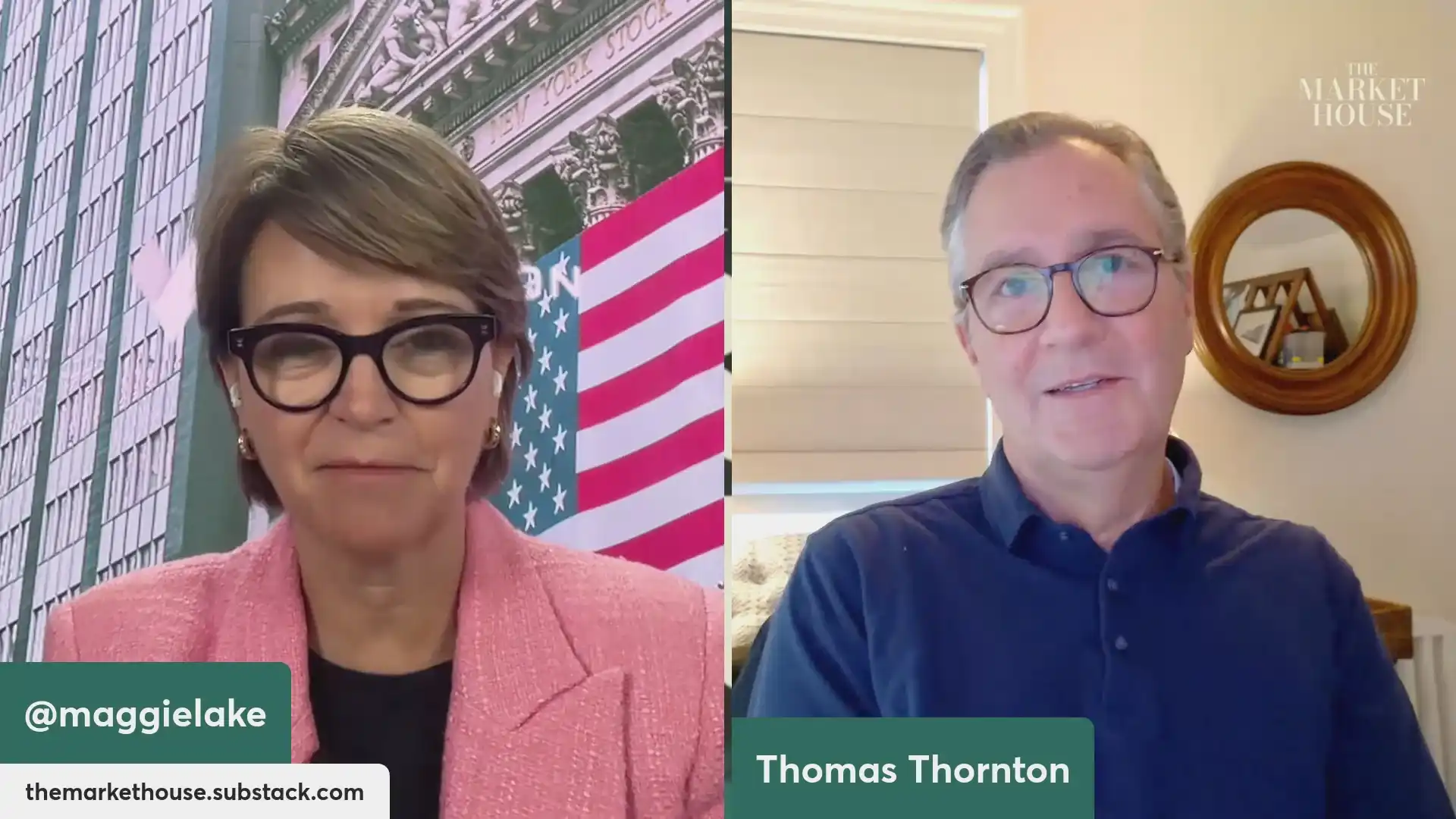
Former hedge fund trader Tom Thornton warns that the AI bubble has already burst, yet retail investors remain trapped in "buy the dip" muscle memory while institutions steadily reduce tech exposure. He points to record single-week inflows into QQQ (~$13.4 billion) even as prices fell—a classic topping pattern where dip-buying eventually fails and confidence collapses. Thornton argues AI's boom rests on a fragile chain of circular financing deals that must unfold perfectly; several links are already cracking. On Nvidia, he stresses that DOJ and congressional investigations aren't short-term noise—any evidence of knowingly bypassing export controls could trigger criminal, not just civil, liability and hammer the business model and valuation. He expects management to spin earnings positively, but even a slight guidance cut could crush the stock and wash out retail dip-buyers, making 2027 a tougher year for markets. Thornton is watching DeMark indicators on the Nasdaq 100 and Mag 7 for true capitulation, noting defensive sectors like staples and utilities are now flashing sell signals. He remains long gold, has started buying silver and gold miners (GDX), is baffled by Anthropic IPO valuations, exited Alibaba on Nvidia-related news, would short a SpaceX-Tesla merger on antitrust grounds, and says the ultimate contrarian buy signal is a front-page photo of a floor trader with his head in his hands.

marsbit1h ago

The AI Bubble Has Already Burst, Yet Retail Investors Are Still Frantically Buying the Dip: A Hedge Fund Veteran Warns Nvidia's Risks Are Far From Over

marsbit1h ago

Trading

Spot

Hot Articles

How to Buy PLUME

Welcome to HTX.com! We've made purchasing Plume Network (PLUME) simple and convenient. Follow our step-by-step guide to embark on your crypto journey.Step 1: Create Your HTX AccountUse your email or phone number to sign up for a free account on HTX. Experience a hassle-free registration journey and unlock all features.Get My AccountStep 2: Go to Buy Crypto and Choose Your Payment MethodCredit/Debit Card: Use your Visa or Mastercard to buy Plume Network (PLUME) instantly.Balance: Use funds from your HTX account balance to trade seamlessly.Third Parties: We've added popular payment methods such as Google Pay and Apple Pay to enhance convenience.P2P: Trade directly with other users on HTX.Over-the-Counter (OTC): We offer tailor-made services and competitive exchange rates for traders.Step 3: Store Your Plume Network (PLUME)After purchasing your Plume Network (PLUME), store it in your HTX account. Alternatively, you can send it elsewhere via blockchain transfer or use it to trade other cryptocurrencies.Step 4: Trade Plume Network (PLUME)Easily trade Plume Network (PLUME) on HTX's spot market. Simply access your account, select your trading pair, execute your trades, and monitor in real-time. We offer a user-friendly experience for both beginners and seasoned traders.

14.0k Total ViewsPublished 2025.01.21Updated 2026.08.14

How to Buy PLUME

Discussions

Welcome to the HTX Community. Here, you can stay informed about the latest platform developments and gain access to professional market insights. Users' opinions on the price of PLUME (PLUME) are presented below.

活动图片