Part of the fees a user pays for transfers in the network may go to a validator, while another part may be removed from circulation. The project's foundation, meanwhile, operates on its own reserves, and a token holder might not receive anything at all. To assess a blockchain's economics, one must trace the entire path of the money.
In a regular company, a client's payment becomes its revenue. For a public blockchain, this connection is often absent. The network is maintained by independent participants. Development may be handled by several teams. A separate foundation funds research and grants. Another company sells services around the technology. And user fees are distributed according to rules written into the protocol itself.
Therefore, metrics like how much the network earned in fees say nothing without additional explanation. It's important to understand who exactly received that sum.
Where the User's Fee Goes
In Ethereum, a transaction payment consists of a base fee and a tip to the validator. The base part is burned: the paid $ETH is permanently removed from circulation. The tip goes to the validator who proposed the block containing the transaction. The Ethereum Foundation—the fund financing the ecosystem's development—does not receive a percentage of this payment.
Ethereum's official documentation provides a simple calculation. When transferring 1 $ETH, with a base gas price of 10 gwei and a tip of 2 gwei, the user will pay 0.000252 $ETH. Of this, 0.00021 $ETH will be burned, and 0.000042 $ETH will go to the validator.
For the user, this is one fee. From an economic standpoint, there are already two different cash flows within it.
In Solana, the rules are different. The base fee is currently 5000 lamports—the smallest units of $SOL—per signature. Half of this amount is burned, and half goes to the validator. If a user pays extra for priority processing of an operation, that extra payment goes entirely to the validator.
Validators have another source of income—staking rewards for participating with locked $SOL in securing the network. These are created through the issuance of new coins. The validator retains its set commission, and the rest of the reward is distributed among the owners of the $SOL who delegated their coins to it for staking.
Thus, even from the example of the two largest networks, the word "fee" cannot be considered synonymous with "project revenue." The money can go to those who directly service the network or even be destroyed.
If the Foundation Doesn't Get Fees, What Does It Live On
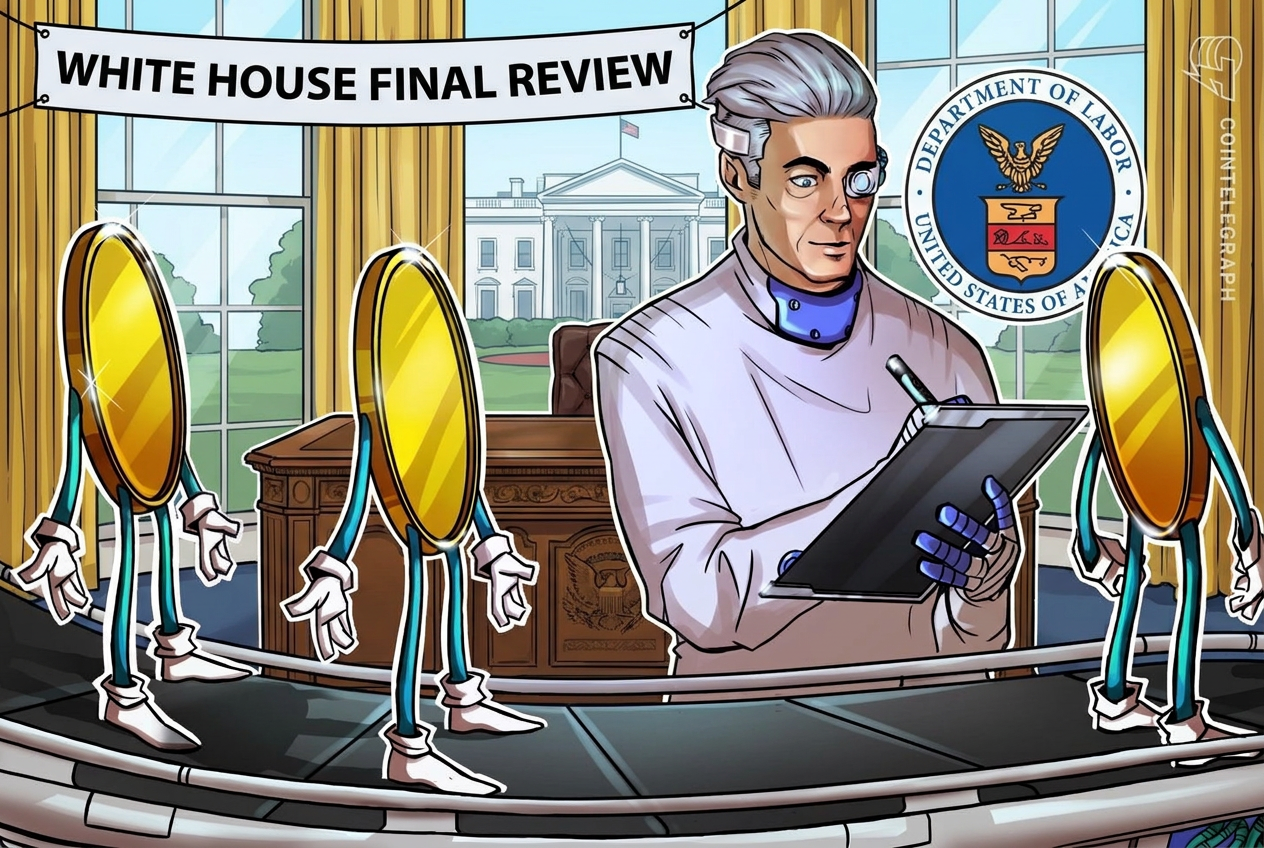
The Ethereum Foundation does not take a percentage of user transactions. The foundation has its own treasury, from which research, software development, security, and other directions for Ethereum's development are funded.
In 2025, the foundation for the first time detailed the rules for managing this money. At that time, the target annual spending level was about 15% of the treasury size, and the cash reserve was meant to cover approximately 2.5 years of such expenses. In the future, the foundation plans to gradually reduce the share of annual spending.
The treasury itself can also generate income. In February 2026, the Ethereum Foundation began staking around 70,000 $ETH. Rewards from these coins are returned to the foundation's treasury. So, money for Ethereum's development and fees for using Ethereum exist separately.
The foundation can sell part of its assets, earn income from its equity, and distribute grants. The network, at the same time, continues to operate according to its own rules, with fees going to validators or being burned by the protocol itself.
This structure explains why a blockchain might even need a foundation. Its task is not necessarily to earn from every transaction. It can fund work whose results are difficult to sell directly: research, security, software tools, and ecosystem development.
How to Make Money on Code That Can Be Taken for Free
The situation with developers is even more interesting. The code of many blockchain projects is open. A company can take it, modify it, and launch its own system without buying a license in the traditional sense.
We can look at how networks earn money using the Optimism project as an example.
Its technological foundation for launching networks is distributed as open-source software. But starting in 2026, Optimism simultaneously sells OP Enterprise—commercial support for companies that need their own network but don't want to monitor its infrastructure around the clock themselves.
A client can use the open code independently. Or pay for Optimism specialists to assist with launch, updates, security, monitoring, and troubleshooting. In the fully managed option, OP Labs takes over the network's operation. For the most critical systems, 99.95% availability and a response to a serious failure within 15 minutes are promised.
This clearly shows the economics of open code. The technology is free, but the work around it isn't necessarily. Companies earn in a similar way on cloud infrastructure, technical support, and system operations, even though the software code itself is available to everyone.
How One Open Network Gets Money from Another
There is another option. Base—the network launched by Coinbase—is built on Optimism technology. At the same time, under an agreement, Base is obligated to transfer to the Optimism ecosystem the larger of two sums: 2.5% of the income from processing transactions or 15% of the profit from such operations after the costs of submitting data to Ethereum.
So, Optimism didn't just write code once that Coinbase then took for free. A separate economic link exists between the projects.
By 2026, many networks already operate on the same technological foundation. Optimism receives a portion of their revenues. In the 12 months leading up to January 2026, such receipts amounted to 5,868 $ETH. Among the networks generating this income, Optimism itself lists Base, Unichain, Ink, World Chain, Soneium, and its own OP Mainnet.
Here, the source of money is not in selling a copy of the software code. Revenue arises from a functioning ecosystem of networks, their users, and agreements between participants.
Do Token Owners Get Money?
Over 12 months, Optimism received 5,868 $ETH. Until recently, all this income went to the treasury managed by the project's governance system. Owning the OP token itself did not mean that a person received a share of these $ETH.
In January 2026, Optimism's governance approved a new mechanism. Over 12 months, half of the incoming revenue should be directed towards regular OP buybacks. The program started in February. The purchased tokens go to the treasury, not directly to holders' wallets.
The link between network usage and the token became more direct: more revenue means more funds can be allocated to buying OP.
But this is still not dividends. The holder does not receive the right to claim a specific share of the revenue. The purchased coins remain at the disposal of the treasury, and their further use is determined by the project's governance.
Ethereum is structured differently. The more base fees users pay, the more $ETH can be burned. This reduces the coin's supply, but again, the money is not distributed among all its holders. Direct rewards go to staking participants and validators.
Therefore, the same growth in fees can affect the economics of two tokens in completely different ways.
The Network, the Foundation, and the Developer Are Different Wallets
To evaluate a blockchain project, one can separate at least four parties. The network sets the rules for processing operations and distributing fees. Validators or the operator ensure the direct operation of the infrastructure and may receive money for this. The foundation or development company finances development or sells separate services. A token holder benefits only if a mechanism exists within the system that links the network's operation to the coin itself.
These roles may overlap, but one does not automatically follow from the other. The Ethereum Foundation can fund Ethereum developers without receiving user fees. A validator can earn $ETH without having any relation to the foundation. The Optimism company can sell commercial support for open code. Base can earn its own income and simultaneously give a portion of it to Optimism.
What an Investor Should Look At
If an analytical service writes that a blockchain received $100 million in fees, one shouldn't focus solely on the amount. It's worth checking four things: who paid for what, where the funds went (to validators, the network operator, to the treasury, to token burning), what expenses the recipient incurred, and whether there is a mechanism linking this revenue to the token: staking, coin burning, buybacks, or other distribution.
Only after this can the fee metric be used in evaluating a crypto-asset. Otherwise, it's easy to compare two networks with identical $100 million in fees and miss the main point: in one, almost the entire sum went to independent validators; in another, part became the operator's profit; and in a third, the revenue is used to buy back its own token.
end-content