Nvidia's Jensen Huang Poised to Bet $10 Billion on Anthropic's Massive IPO!

marsbitPublished on 2026-09-12Last updated on 2026-09-12

Abstract

Nvidia is reportedly in talks to invest up to $10 billion as an anchor investor in Anthropic's upcoming IPO, which could be the largest in history. According to exclusive Reuters reporting, the IPO aims to raise $100 billion at a valuation nearing $2 trillion, dwarfing previous records. This potential investment follows a previous $10 billion deal where Nvidia funded Anthropic in exchange for a $30 billion cloud compute commitment on Microsoft Azure, powered by Nvidia chips. This pattern highlights a key dynamic in AI: major chipmakers and cloud providers invest in model companies to secure future customers for their hardware and services. Anthropic's revenue has skyrocketed, growing from an annualized $9 billion at the end of 2025 to over $65 billion by July 2026. To support this growth and reduce reliance on external suppliers, the company has begun developing its own custom chips. The anticipated IPO, expected before the November U.S. midterm elections, is seen as a pivotal moment in the race toward Artificial Superintelligence (ASI), with Nvidia's potential massive bet signaling a strategic move to secure its position in the coming AI era.

Just now, a huge bombshell has hit the AI world—

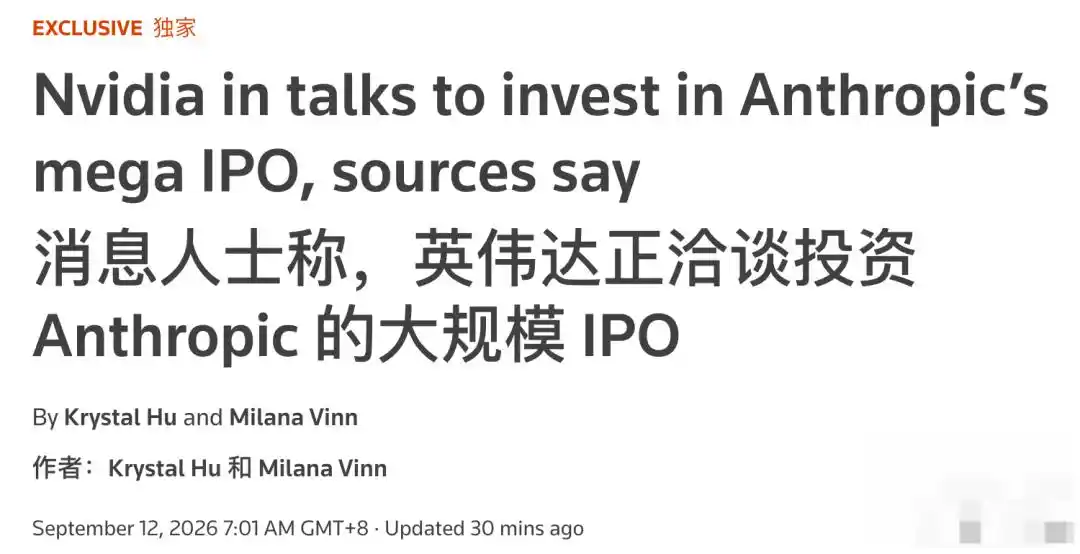
Reuters exclusively reported: Nvidia is in talks with Anthropic to invest up to $10 billion, diving into what could be the largest IPO in history!
That's right, you read that correctly.

The guy selling shovels, Jensen Huang, is about to put money directly into the hands of the gold diggers. And he's doing it as an "anchor investor."

$2 Trillion, The Largest IPO in Human History?

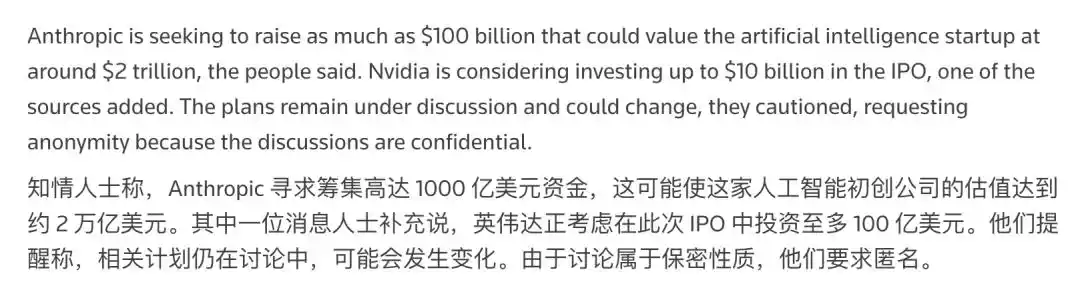
According to two sources familiar with the matter who spoke to Reuters, Anthropic's IPO plans to raise up to $100 billion, targeting a valuation nearing $2 trillion.
If successful, this would shatter the record set by SpaceX in June this year, which raised $75 billion, making it the largest IPO in the history of global capital markets.

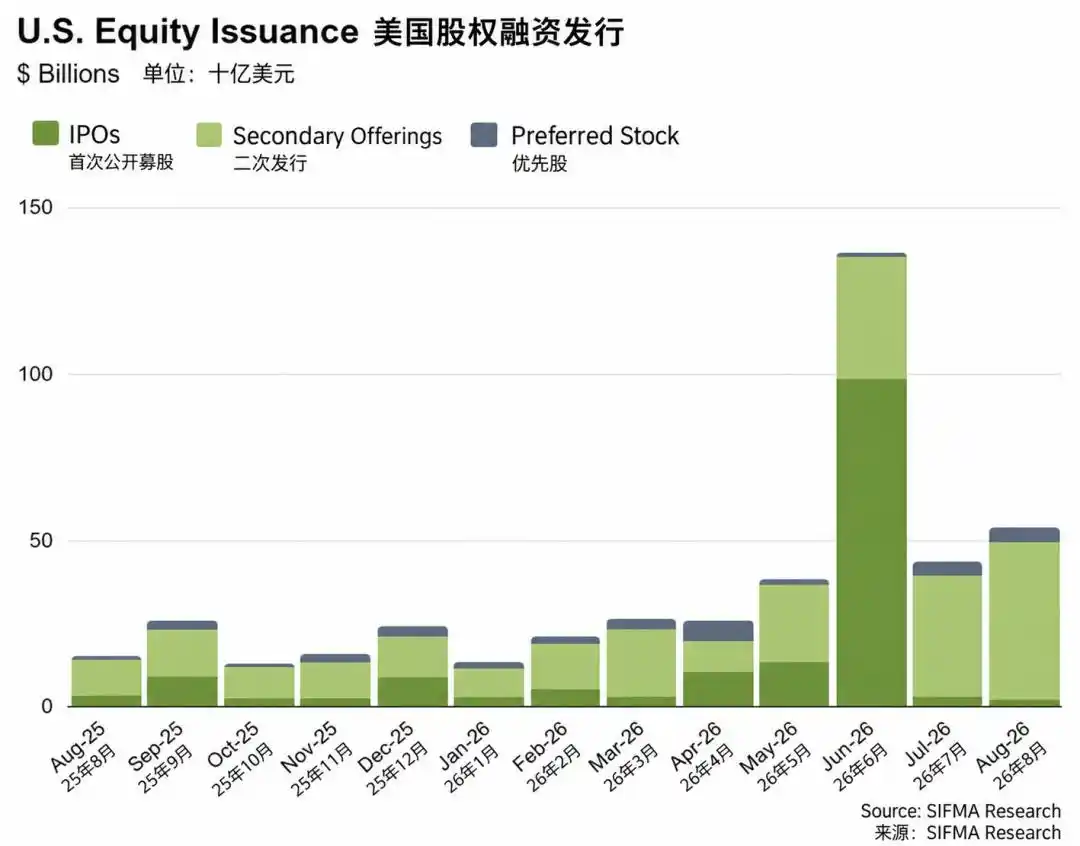
What does $100 billion mean? In the first eight months of this year, the entire US IPO market (excluding SPACs) raised only $137 billion.

In other words, Anthropic alone would account for 73% of the total market volume from the first eight months.
According to the report, Nvidia is considering investing up to $10 billion in the deal.

However, negotiations are still ongoing, and terms could change at any time. Anthropic declined to comment, and Nvidia has not yet responded.

The IPO is expected to be completed before the US midterm elections in November.

Jensen Huang's Calculus: More Than Just an Investment

An "anchor investor" is a major institutional buyer that commits to subscribing *before* the public roadshow, providing a vote of confidence to the market.

When Arm went public, Nvidia and Amazon were anchor investors; during SpaceX's IPO, Saudi Arabia's PIF played a similar role.

If Anthropic can secure a "headline buyer" of Nvidia's caliber, the signal to the entire capital market is unmistakable—even the GPU king is willing to put real money on the line, what are you waiting for?

But the story is far more nuanced than that.

There's a very delicate relationship here: Nvidia is both a "supplier" to Anthropic and its "investor."

Training and running the Claude models is inseparable from Nvidia's GPUs.

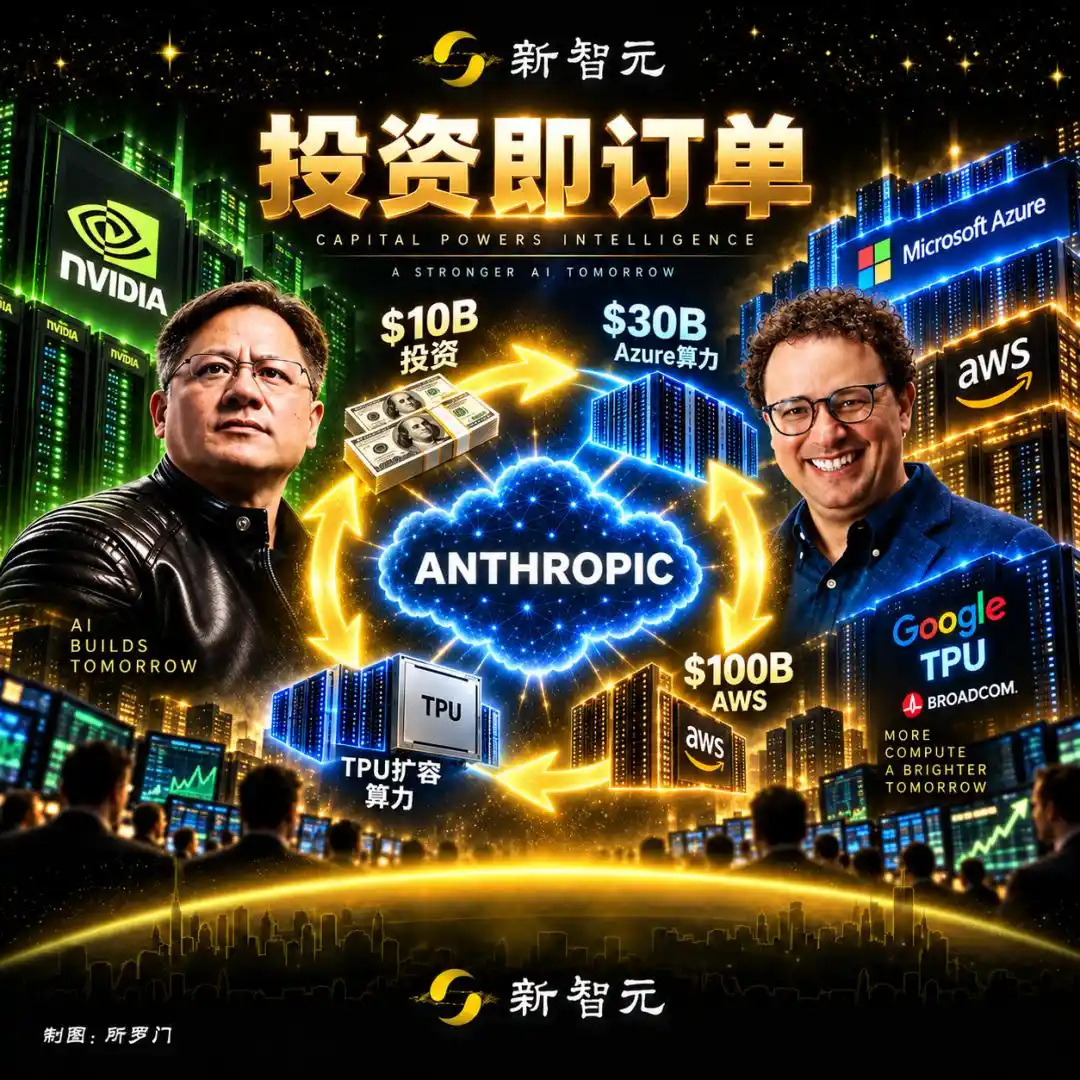
And just in November 2025, Nvidia invested $10 billion in Anthropic—in exchange, Anthropic committed to purchasing $30 billion worth of computing power on Microsoft Azure, which, incidentally, runs on Nvidia's chips.

Think about it: Nvidia invests $10 billion, Anthropic turns around and spends $30 billion on cloud services powered by Nvidia chips. The money goes full circle, right back into Jensen Huang's pocket.

Now, by adding another $10 billion during the IPO phase, this cycle extends from the private market to the public market.

And it's not just Nvidia.

On Anthropic's list of major backers, Amazon and Google also play the dual role of "investor + compute provider."

In April this year, Anthropic announced plans to invest over $100 billion in Amazon AWS over the next decade, using over 1 million Amazon Trainium2 chips; it also signed "multi-gigawatt" agreements to expand its use of Google and Broadcom's TPUs.

The capital logic of the AI industry couldn't be clearer: Money raised by model companies ultimately becomes purchase orders for computing power, flowing back into the hands of chip giants and cloud providers.

Investing in AI companies is essentially pre-booking customers for your own chips and cloud services.
Supporting this astronomical valuation is Anthropic's explosive growth trajectory.

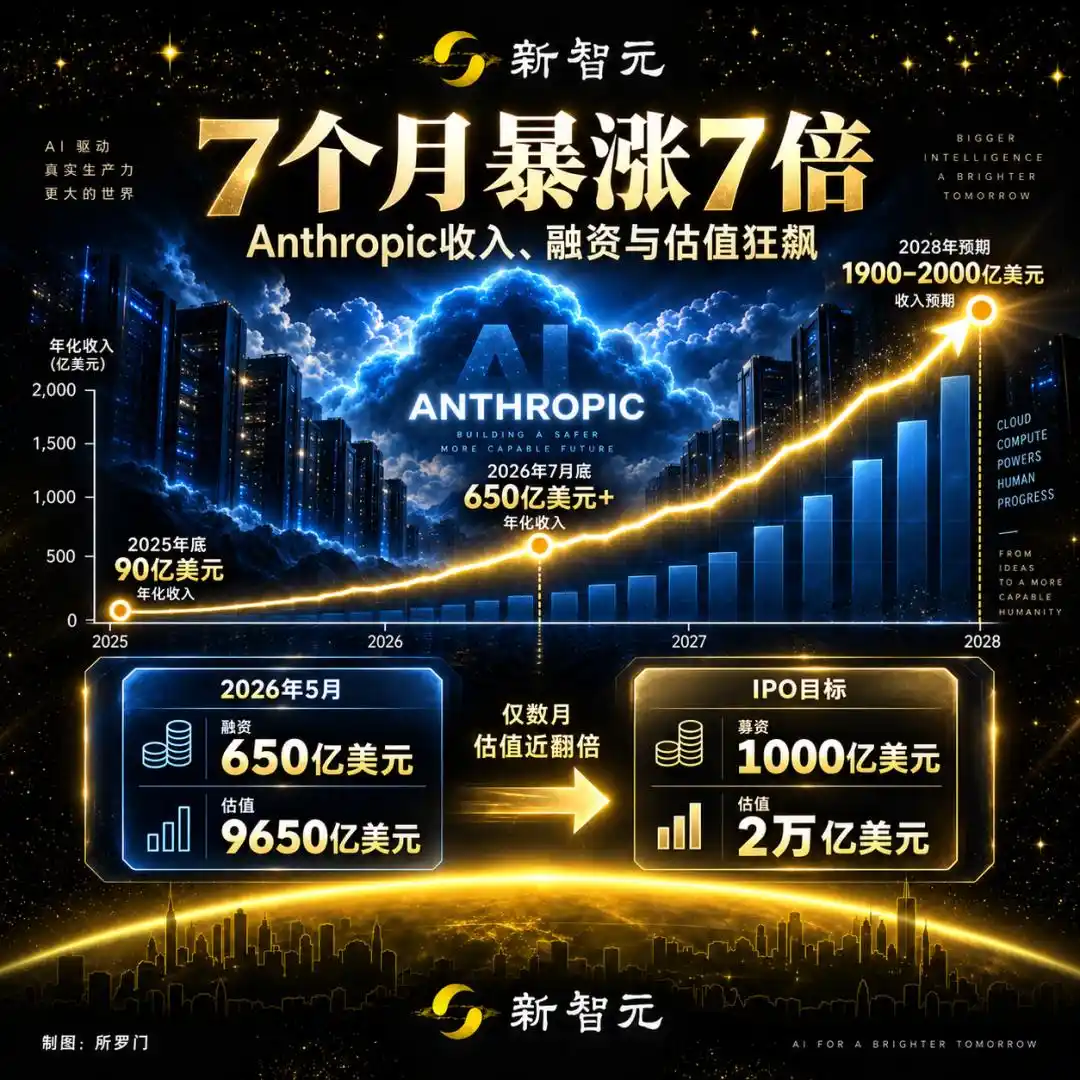
At the end of 2025, Anthropic's annualized revenue was approximately $9 billion. By the end of July 2026, this number had skyrocketed to over $65 billion, a more than seven-fold increase in just seven months.

Reuters previously reported that Anthropic expects revenue to reach $190 to $200 billion by 2028.

In May this year, Anthropic just completed a $65 billion funding round, valuing the company at $965 billion. Now, the IPO is aiming to hit $2 trillion directly, effectively doubling the valuation in a matter of months.
Meanwhile, Claude's user demand is growing so fast that it has stretched Anthropic's existing computing resources thin.

To reduce dependence on external chips, Anthropic has even formed an internal team to begin developing custom chips in-house.

This Is Just the Beginning

Zooming out, Nvidia's $10 billion bet on Anthropic's IPO is a microcosm of the AI industry entering its "decisive moment" in 2026.

As of the end of August, the US IPO market has raised $137 billion, setting a historical record, and the year is far from over.

This means that from late 2026 into 2027, humanity will, for the first time, price "tickets to AGI" on the public capital markets.

Anthropic and OpenAI, the two companies considered most likely to reach artificial general intelligence first, will successively stand on the Nasdaq, facing public judgment from global investors.

Behind this IPO feast lies an unprecedented infrastructure arms race in human history. Global spending on AI-related projects has already reached $2.6 trillion.

Most crucially: Everyone is betting on the same thing—ASI is approaching.

Real product progress continues to validate this prediction.

When AI starts improving itself, when models start improving models, once this flywheel starts spinning, everything accelerates.

This is the real reason Nvidia is desperately pouring money into Anthropic: They are not just investing in a company's IPO; they are investing in a ticket to the age of ASI (Artificial Superintelligence).

References:

https://www.reuters.com/legal/transactional/nvidia-talks-invest-anthropics-mega-ipo-sources-say-2026-09-11/

Editor: Solomon

This article is from the WeChat public account "Xinzhiyuan", author: Xinzhiyuan

Related Questions

QAccording to the article, what is NVIDIA reportedly considering investing in Anthropic's upcoming IPO, and what is the maximum amount mentioned?

ANVIDIA is reportedly considering investing up to $10 billion as an anchor investor in Anthropic's upcoming mega IPO.

QWhat record-breaking valuation is Anthropic's IPO reportedly targeting?

AAnthropic's IPO is reportedly targeting a valuation close to $2 trillion, which would make it the largest IPO in history.

QHow does the article describe the strategic relationship between NVIDIA and Anthropic beyond just investment?

AThe article describes a strategic cycle where NVIDIA is both a supplier and an investor. NVIDIA invests money into Anthropic, and Anthropic uses that capital to purchase massive amounts of compute power (cloud services powered by NVIDIA chips), effectively circulating funds back to NVIDIA.

QWhat was Anthropic's reported annualized revenue as of July 2026, and how does it compare to the figure from late 2025?

AAs of July 2026, Anthropic's annualized revenue was reported to be over $65 billion, a more than seven-fold increase from approximately $9 billion in late 2025.

QWhat broader industry trend or 'bet' does the article suggest NVIDIA's massive investment in Anthropic represents?

AThe article suggests the investment represents a bet on the imminent arrival of ASI (Artificial Superintelligence). NVIDIA is not just investing in a company's IPO but is buying a 'ticket to the ASI era'.

Related Reads

Strategy stock sheds 5% amid MSCI index removal, Bitcoin sell-off

Strategy (Michael Saylor's Bitcoin treasury company) fell 6.49% on Thursday to close at $114.41, after MSCI confirmed the company's removal from its global equity indexes, compounded by a broader crypto market sell-off. The removal takes effect after the Nov. 30 market close and could trigger selling by index-tracking funds; JPMorgan previously estimated roughly $2.8 billion in potential selling pressure. Ryan Kirkley, CEO of Global Settlement Network, said the decision could distinguish Bitcoin treasury companies from traditional operating businesses and limit indirect crypto exposure for passive investors, noting that index inclusion had given ordinary passive investors leveraged Bitcoin exposure they never chose. He added it raises questions about whether such companies should be classified alongside traditional operating businesses, arguing that buying and holding an asset isn't an operating business but rather a fund that doesn't follow fund rules. In its Aug. 31 response to MSCI's proposed rules, Strategy called the changes a pretext for targeting digital asset treasury companies and downplayed the impact, saying MSCI-linked funds held about 13 million of its shares, just 3.1% of basic shares outstanding. The decline coincided with a broader crypto sell-off, with Bitcoin near $71,340, down 4.3% in 24 hours, and total crypto market capitalization down 3% to about $2.49 trillion.

cointelegraph1h ago

Strategy stock sheds 5% amid MSCI index removal, Bitcoin sell-off

cointelegraph1h ago

US Justice Department, business groups and DeFi firms challenge Illinois crypto tax

The US Department of Justice, business and financial industry groups, and a coalition of DeFi firms have backed a legal challenge to Illinois' 0.2% digital asset tax, arguing it unfairly targets crypto transactions and could impose taxes even without profit. The Justice Department filed a statement of interest, while the US Chamber of Commerce and SIFMA submitted an amicus filing. A coalition including Andreessen Horowitz, Paradigm, Uniswap and Aave Labs also filed a brief. The law, enacted in June, taxes the value of digital assets exchanged, transferred or stored regardless of profit. The Digital Chamber sued Illinois officials in July, followed by a separate challenge from the Blockchain Association and Crypto Council for Innovation in August. Originally set for Jan. 1, 2027, the tax was delayed to July 1, 2027. Illinois projected $60 million in fiscal year 2027 revenue. SIFMA and the Chamber warned the tax would affect banks, broker-dealers, custodians and asset managers nationwide, exposing them to compliance costs and burdening customers—someone who loses money owes the same tax as someone who profits, and moving assets between accounts could trigger tax without a sale or gain. They argued it discriminates against digital assets and may violate federal internet tax protections and constitutional interstate commerce requirements. The DOJ said the tax undermines federal efforts to promote crypto innovation, citing the Strategic Bitcoin Reserve and GENIUS Act. The DeFi coalition warned the rules could impose obligations on software developers and blockchain participants lacking customer information or control over funds.

cointelegraph2h ago

US Justice Department, business groups and DeFi firms challenge Illinois crypto tax

cointelegraph2h ago

DTCC Plans Solana Expansion as Wallet Rules Limit Access

DTCC plans to connect its tokenization service to Solana in the second half of 2027, allowing certain securities held by its DTC subsidiary to be converted into digital tokens on the network. Analysts say the move could attract more traditional financial institutions to Solana, which is known for fast transactions and low fees and had about $4.94 billion in total value locked as of Nov. 12. However, the impact may be limited by US regulatory rules. Alex Lin of Reforge noted that Solana's experience handling memecoin trading served as a public stress test, giving the network credibility to handle retail-scale volume reliably. Still, under a December 2025 SEC no-action letter, DTC participants must register wallets to hold tokenized securities, and tokens can only be transferred between registered wallets. Lin said the near-term impact is overstated because the tokens remain in a walled garden, inaccessible to permissionless retail and DeFi liquidity until regulators allow these assets to function as true onchain collateral. DTCC launched its tokenization service on the Canton Network and its private Besu network on Oct. 28, with 20 DTC participants signed on, though it has not said whether any plan to use Solana. Kha Nguyen of Birdeye said Solana has already seen growing demand for tokenized stocks, with trading volume reaching around $4.9 billion in H1 2026 and over 1 million accounts holding tokenized stocks by late September. However, broader Solana activity has slowed, with transactions down nearly 40%, DEX volume down 34.4%, and fees down 39%, while tokenized RWA value rose almost 7% to $4.76 billion. Nguyen said DTCC's integration would need banks, brokers, and issuers to actively issue, trade, and settle on Solana, with enough liquidity for large trades. He stressed that assets must be active rather than idle—traded around the clock, used as collateral, and earning yield. Lin agreed that long-term impact depends on where assets are used for secondary trading and collateral activity, not where they are issued.

cointelegraph3h ago

DTCC Plans Solana Expansion as Wallet Rules Limit Access

cointelegraph3h ago

Trading

Spot
活动图片