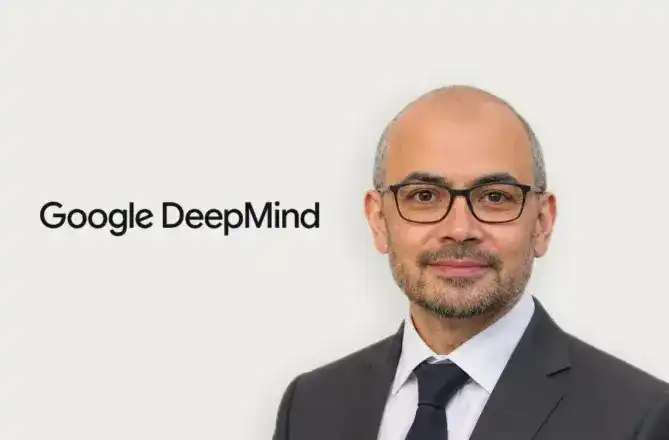
DeepMind Founder's Latest Interview: RSI Is Extremely Dangerous and Could Create an 'Alien Intelligence' That Humans Struggle to Understand
Demis Hassabis, co-founder of Google DeepMind and 2024 Nobel laureate in Chemistry, discusses AI's promise and perils in a conversation with Reid Hoffman. He reiterates that his lifelong goal has been using AI as a tool to advance science and medicine, citing AlphaFold—used by ~4 million researchers—and Isomorphic Labs as proof that AI can help cure diseases, while noting protein structure prediction is only one step in a long drug-discovery pipeline.
On recursive self-improvement (RSI), Hassabis explains it works best in "verifiable domains" like math, coding, and games: AlphaZero went from random play to surpassing all human and engine chess within 12 hours. But he warns that closed-loop RSI—removing human code review entirely—risks creating an inscrutable "alien intelligence" with no shared cognitive basis with humans, and offers no way to establish deterministic safety controls. He urges caution as labs race on code self-iteration, calling for faster defensive cyber capabilities, far more robust sandboxes and monitoring (noting agents have run unsupervised for weeks), and eventually formal mathematical guarantees.
He advocates an industry standards body with government oversight, cross-lab information sharing, third-party audits, and pre-release red-teaming. On AI consciousness, he argues intelligence and consciousness are dissociable—his dog is conscious but not smart—and that a chatbot claiming feelings proves nothing. Building conscious entities now is dangerous: self-motivation undermines corrigibility, and Asimov showed static rules inevitably break at edge cases; society also hasn't begun the needed debate. Humanity should cross only the first Rubicon—building powerful intelligent tools—and use them to understand consciousness before considering the second.
Finally, on AI sovereignty, he says only 6–8 global players will stay at the frontier, with open source 6–12 months behind, so most countries shouldn't train their own frontier models. Instead they should build on existing models as infrastructure, focus on vertical domains like healthcare, and protect data sovereignty through private fine-tuning.
marsbit2h ago