Zuck has really caught up this time!
Late at night, Meta unveiled two large models in one breath: Muse Wonder and Muse Wonder Full.
Officially, it was unapologetically defined as Meta's most powerful model to date, and a historic leap towards "Personal Super Intelligence."


In various benchmark tests, Meta's "Double Punch" can finally compete head-to-head with Claude and GPT.
The current strongest models, Claude Fable 5.1 and GPT-6 Astra, were almost directly stepped on by Muse Wonder.
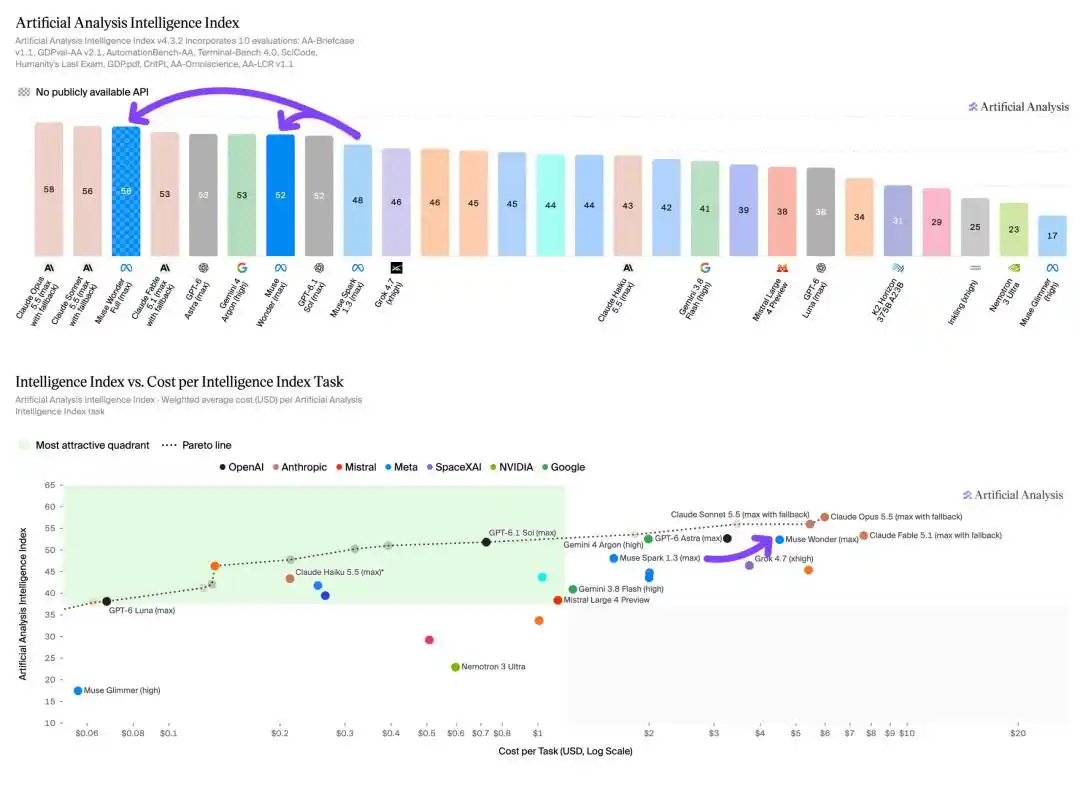
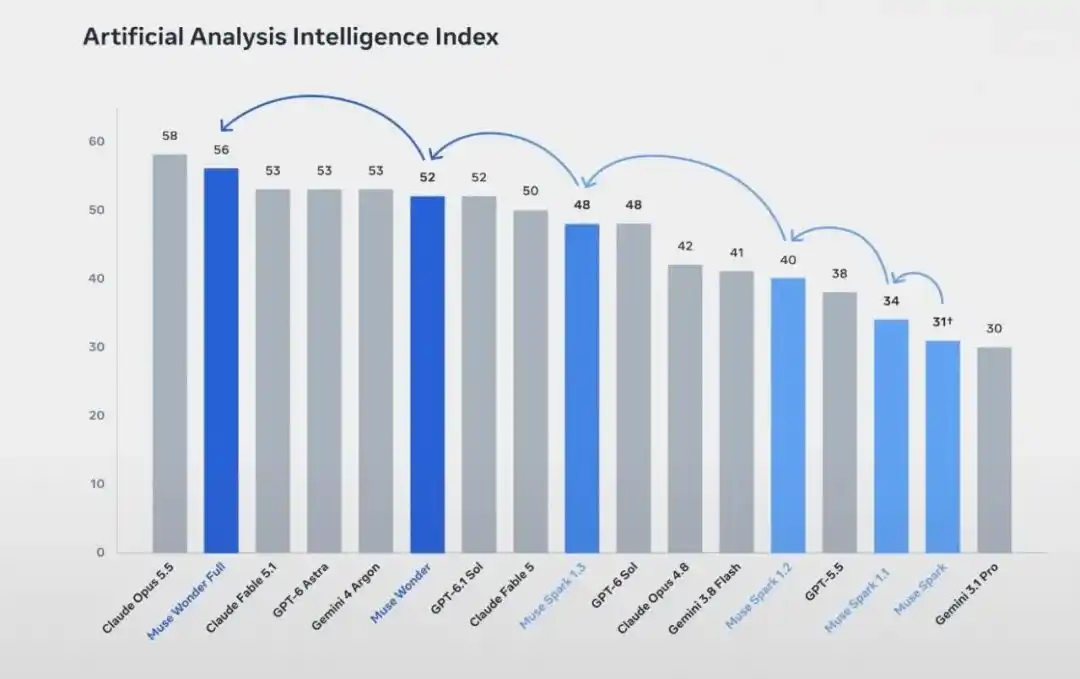
On Artificial Analysis, Muse Wonder Full scored 56 points, securing a spot in the global first tier, keeping pace with Sonnet 5.5 and surpassing GPT-6 Astra.
Muse Wonder also scored 52 points, comprehensively overtaking the previous generation Muse Spark 1.3.
In long-task programming, Meta even surpassed Opus and Astra. Not only did the top-tier Full win, but the standard Wonder also won!
It holds two major trump cards: Active Memory + Active Focus.
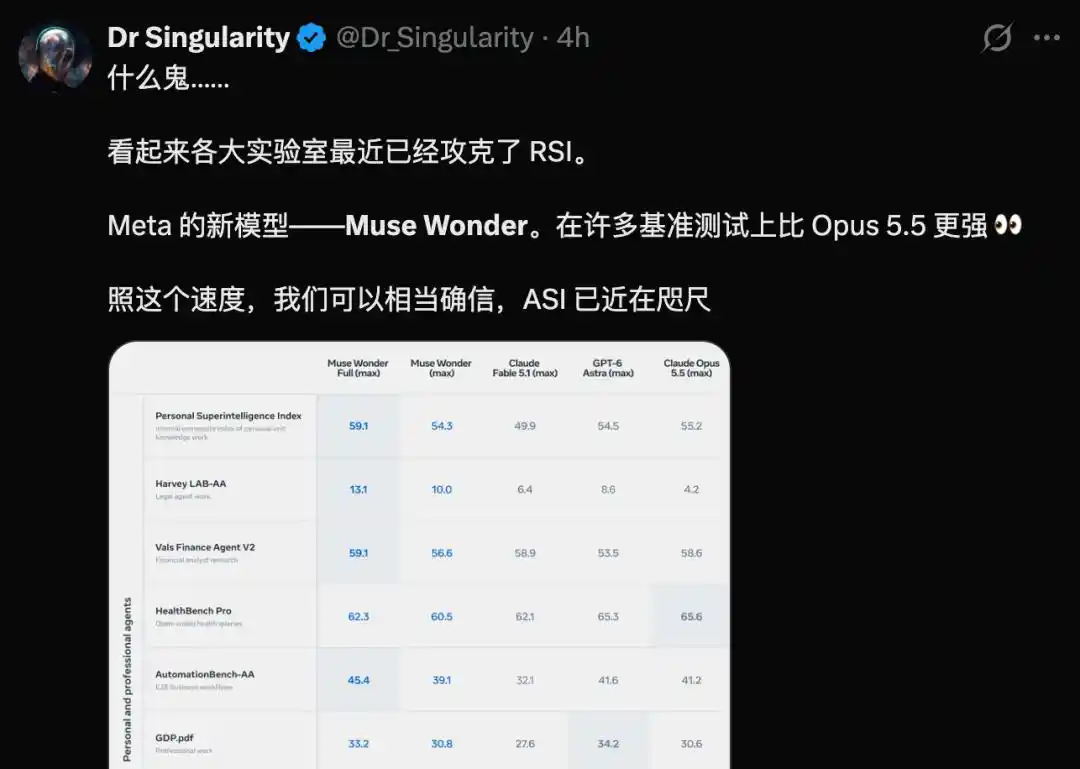
For a moment, many were amazed, thinking that major labs have already conquered RSI.
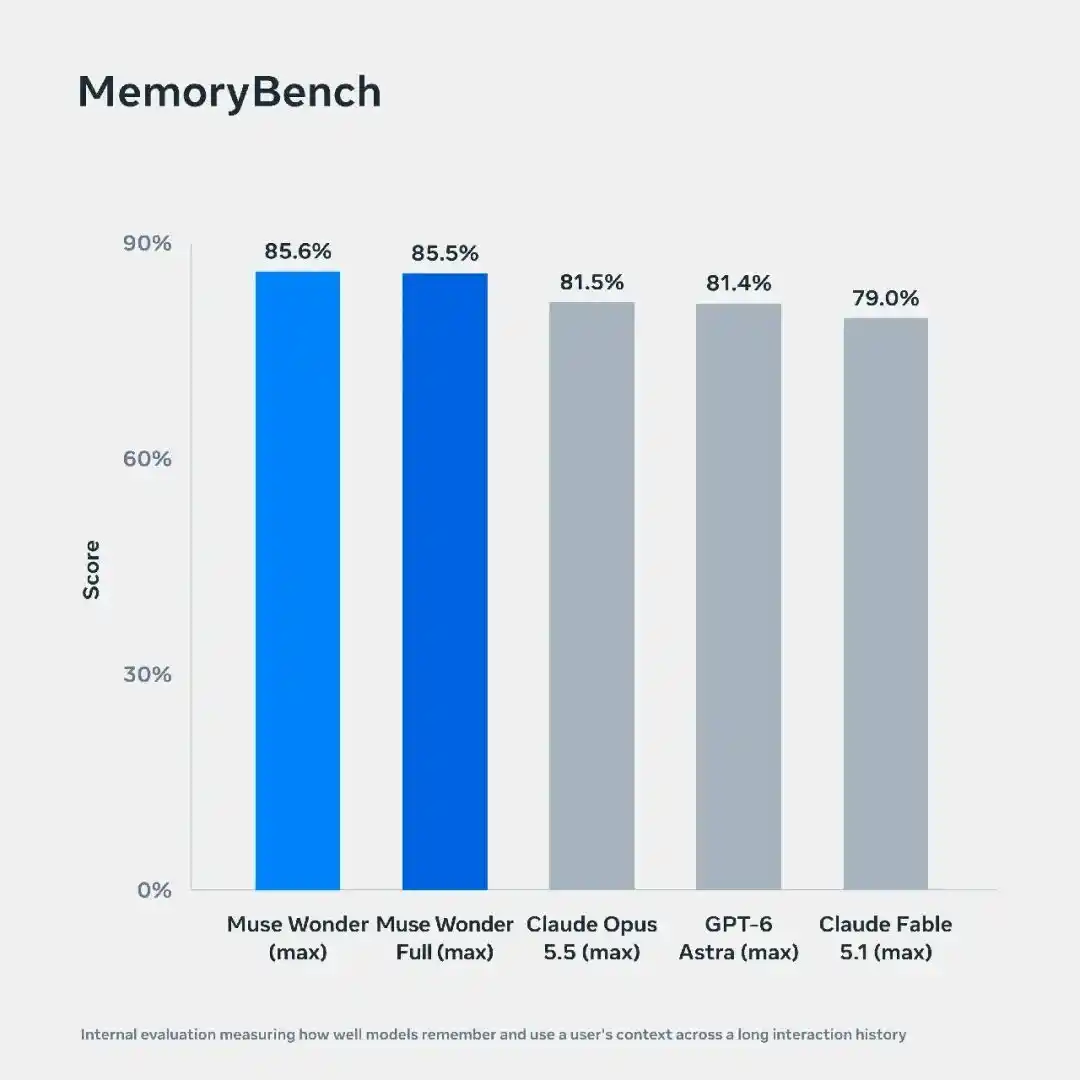
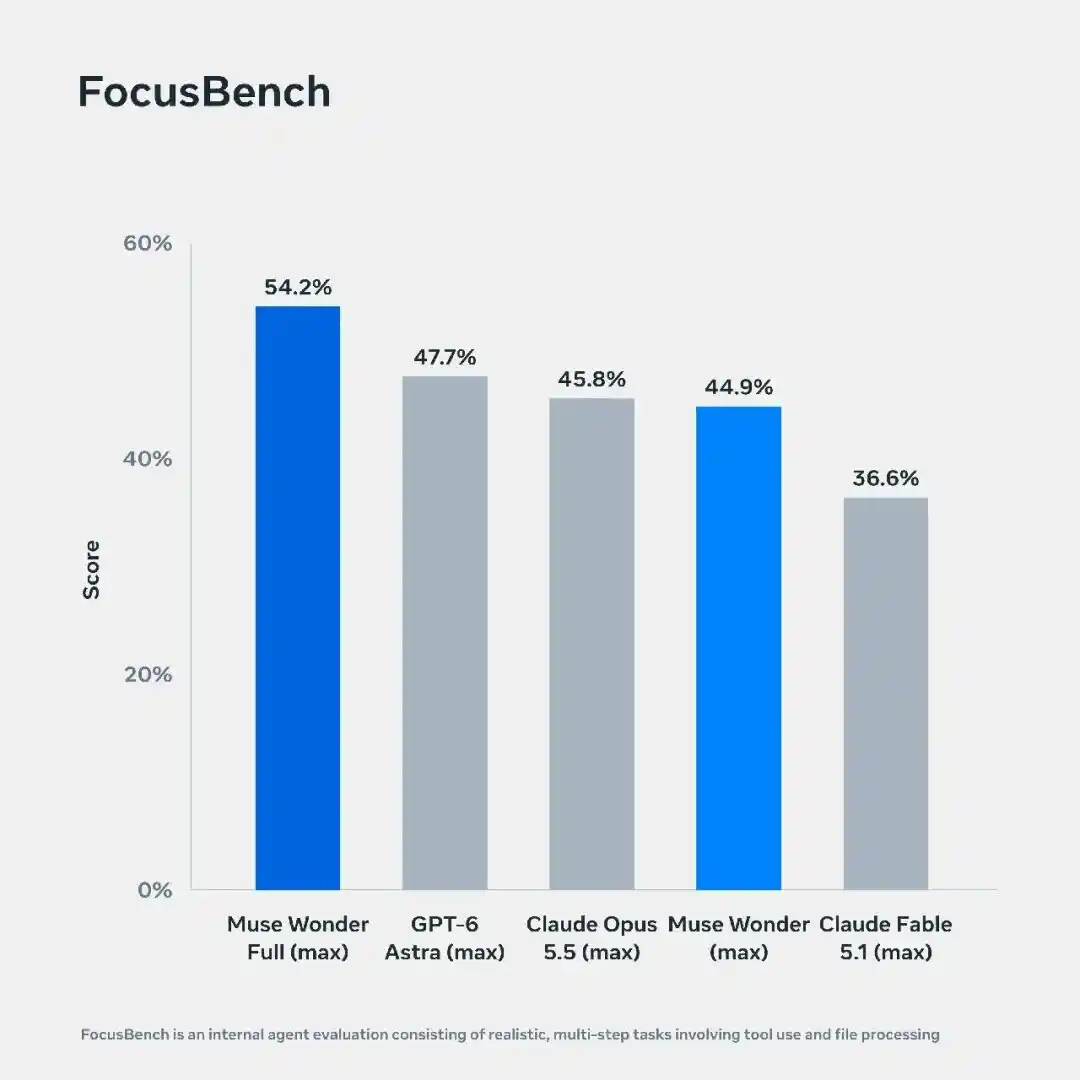
Key highlights of this upgrade across all capabilities —
Programming enters the first tier: Muse Code equipped with Full ties with Claude Sonnet on the AA Programming Agent leaderboard; both Wonder models exceed Opus and Astra in long task tests.
Remembers you across conversations, resumes long tasks: Active Memory retains your important information; Active Focus lets the model change approach when encountering obstacles, check after errors, and adjust plans when receiving new requirements.
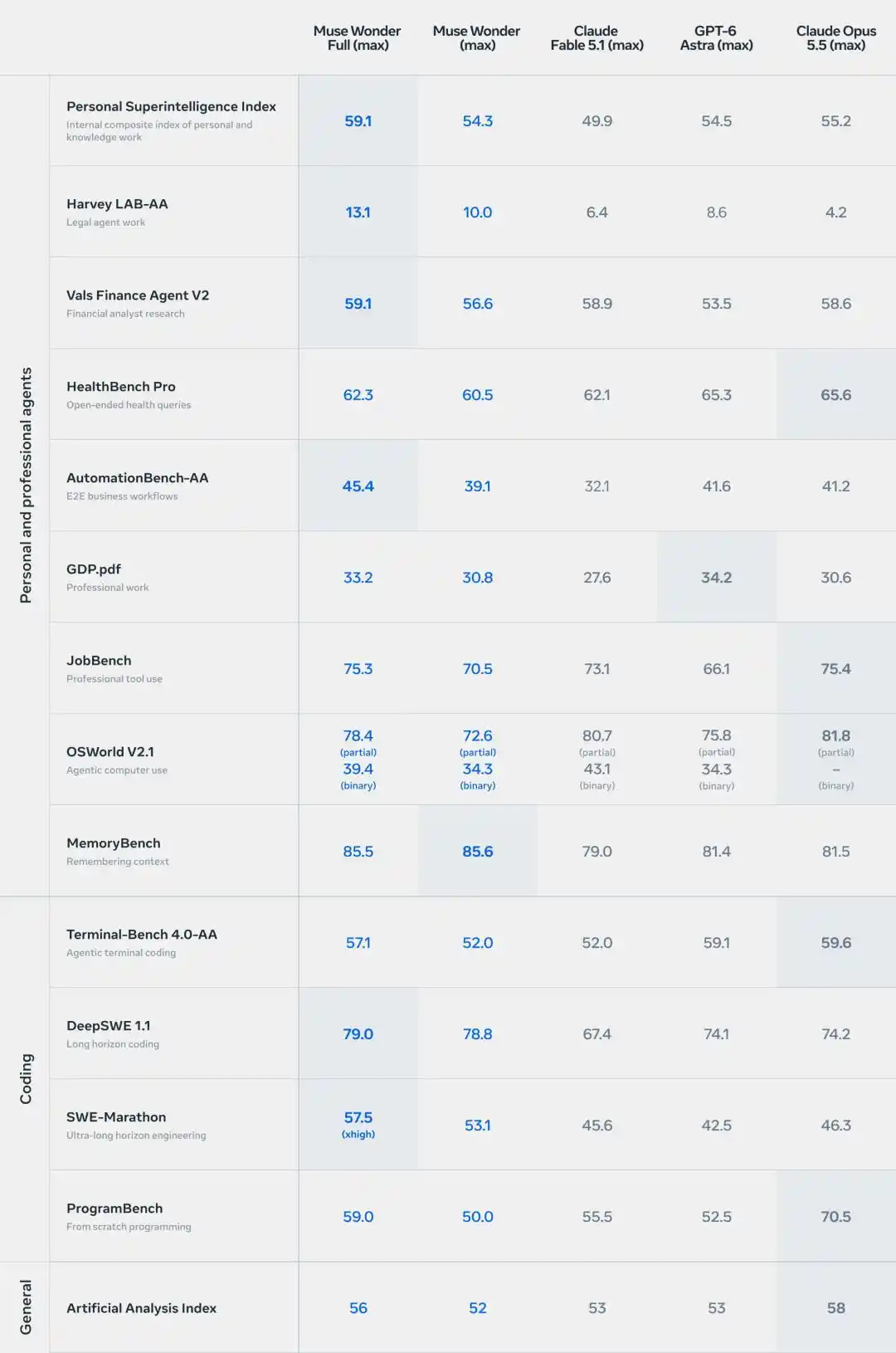
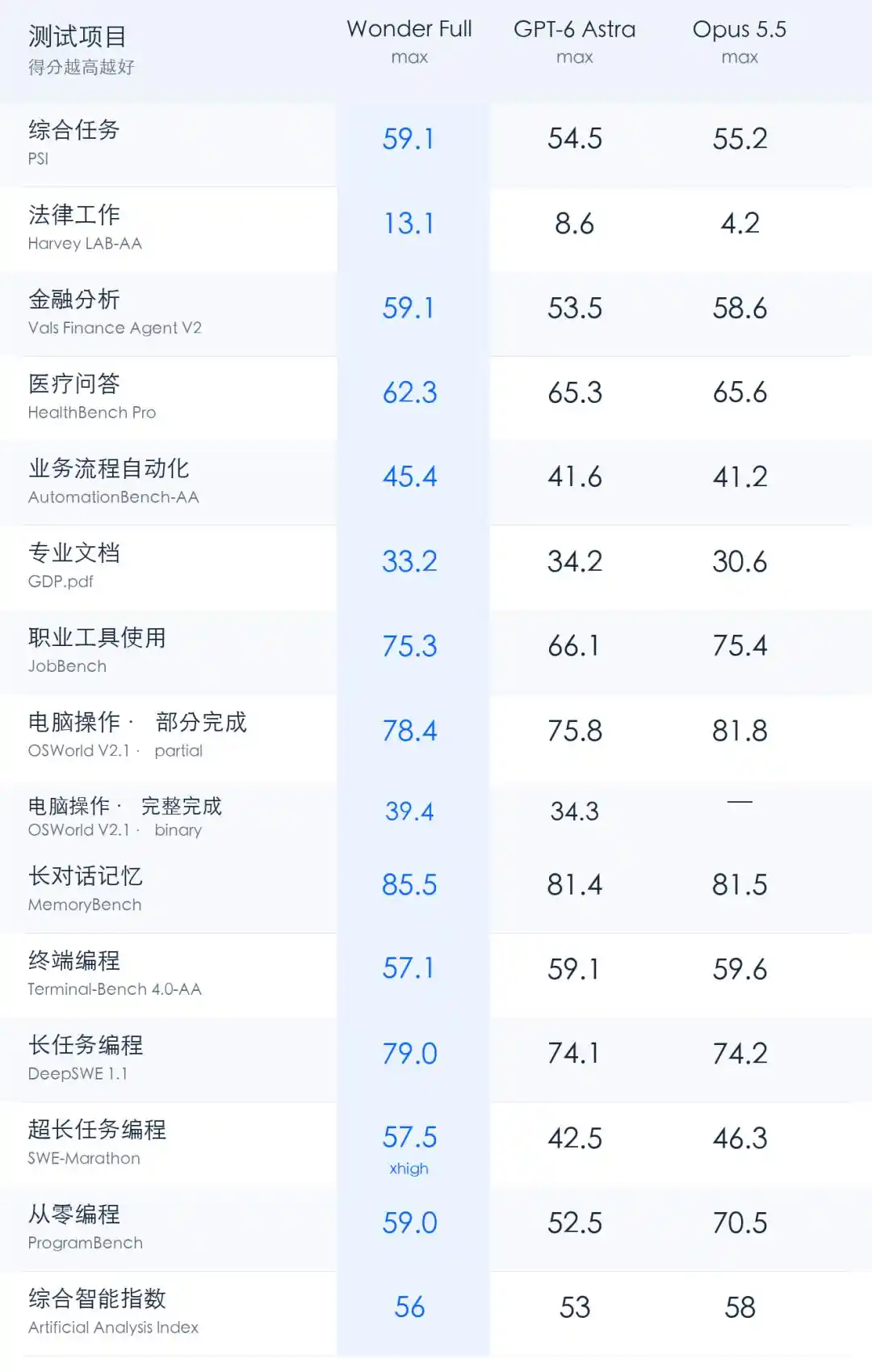
Catches up in professional work: In 14 tests covering law, finance, memory, and continuous execution capabilities, Full surpasses Opus 5.5 in 8 and GPT-6 Astra in 11.
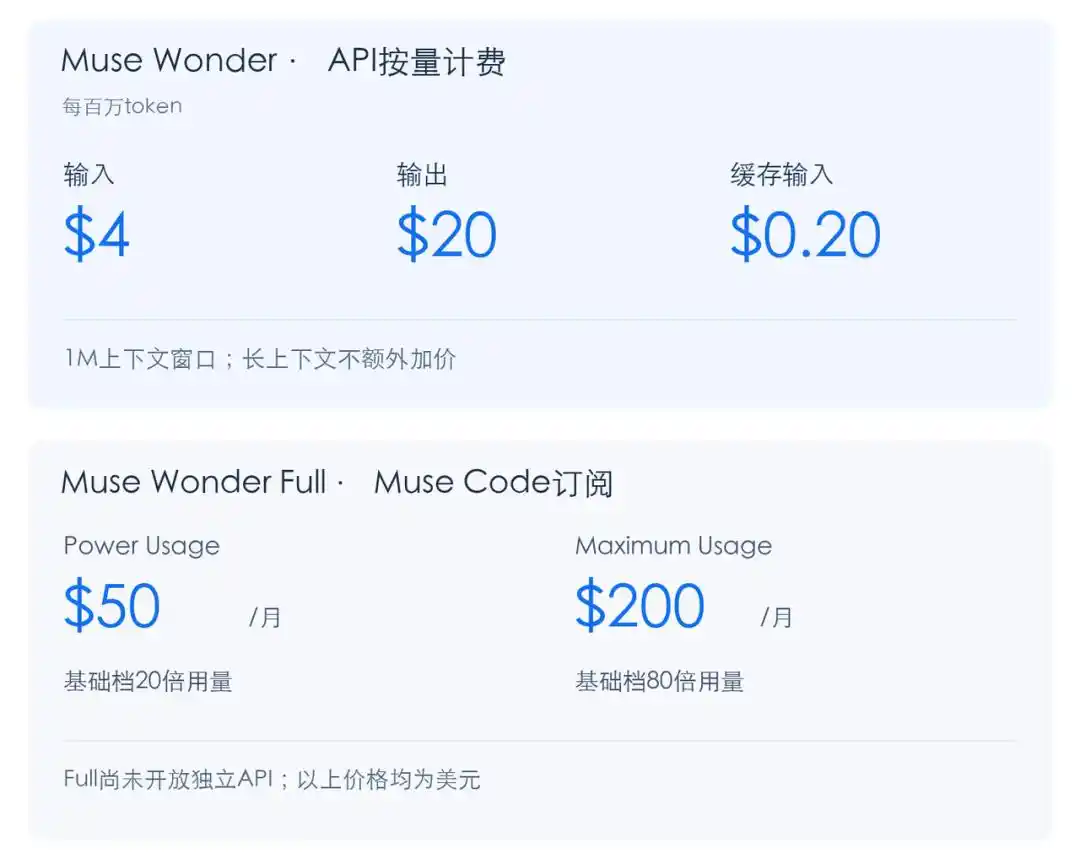
Pricing: Standard version API costs $4 per million tokens for input, $20 for output; Full is available through Muse Code subscription at $50 or $200 per month.
Jumped 8 Points in Six Weeks, Wins All Ten Tests Against Predecessor!
According to Artificial Analysis, only six weeks passed between the release of Muse Spark 1.3 and the new models.
The Intelligence Index surged from 48 points to 56 points, a full 8-point jump!
All ten tests surpass Spark 1.3; six enter the top three, two take first place!
In scientific reasoning CritPt and professional document GDP.pdf, Full scored 33%, ranking first on the AA current leaderboard! In professional knowledge work GDPval-AA v2.1, Full scored 1857 Elo, ranking second.
Three other third-place finishes: knowledge work AA-Briefcase, business process automation AutomationBench-AA, and scientific programming SciCode.
Terminal-Bench 4.0 requires AI to read files, type commands, and handle errors itself. Spark could only complete 33% of tasks, while Full achieves 57%, a 24-percentage-point leap!
Another evaluator, Vals, also released new results.
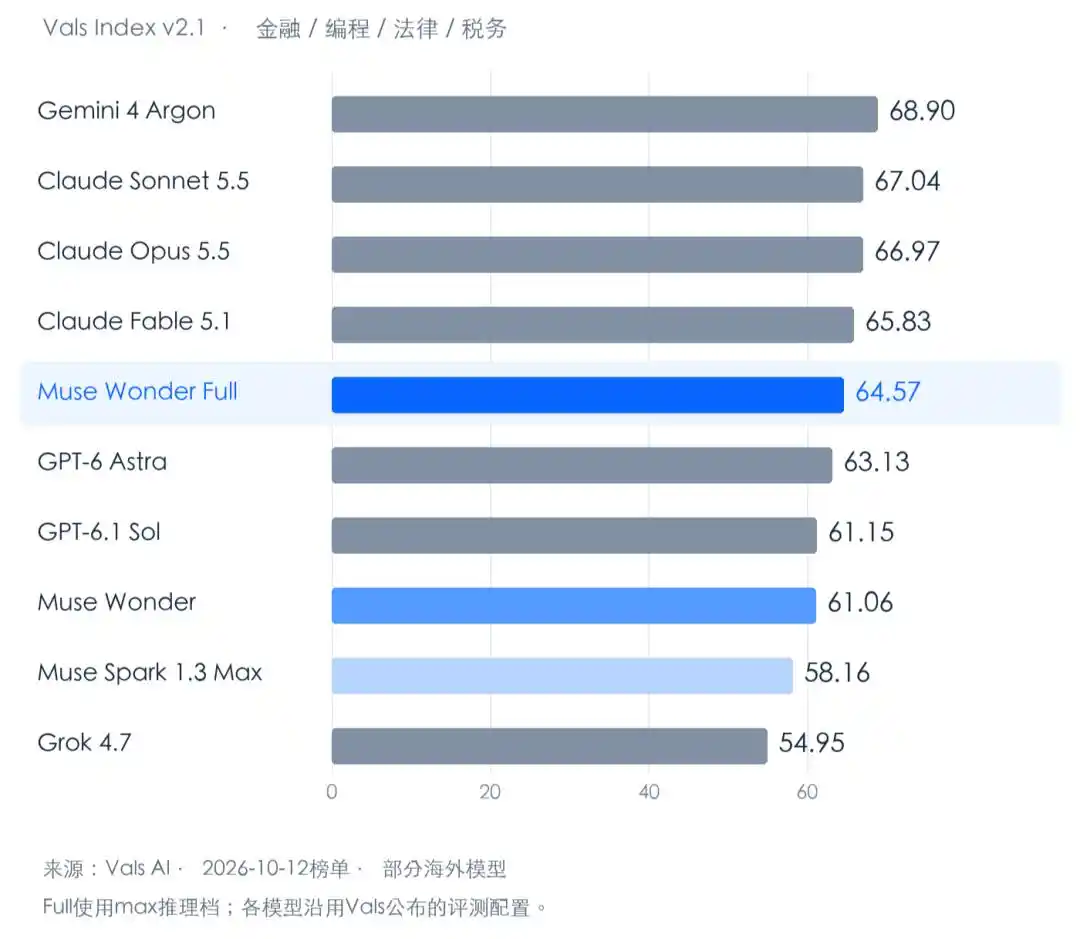
On the Vals Index comprehensive benchmark covering finance, programming, law, and tax work, Wonder Full scored 64.57 points, ranking fifth and surpassing all OpenAI models on the list!
Beyond benchmarks, Conductor developer Charlie Holtz has already integrated Wonder into his codebase.
Unexpectedly, Muse found a real security vulnerability in one go, which other Agents had previously missed.
He even praised its design and visualization, CLI speed, and voice mode, boldly stating "Meta is now at the forefront!"

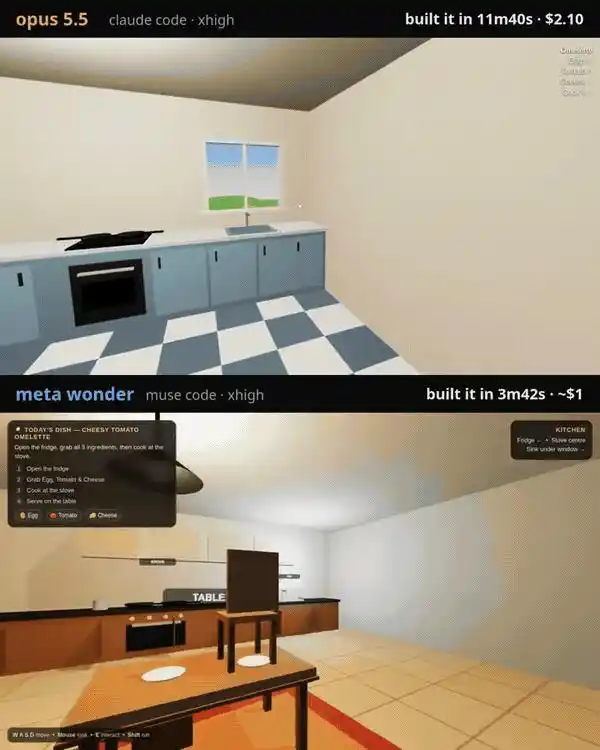
In another test, developer Yair conducted a same-topic comparison, having Wonder and Opus 5.5 create a first-person 3D game.
Claude Code with Opus 5.5 took 11 minutes 40 seconds, while Muse Code with standard Wonder only took 3 minutes 42 seconds, not even four minutes!
Surpasses Opus in Long Tasks, Programming Lands Heavy Blows on Astra
On the SWE-Marathon benchmark for long-term tasks, Full scored 57.5%, Opus 5.5 scored 46.3%, Astra scored 42.5%.
The lead margins are 11.2 and 15 percentage points respectively!
Even without using Full, the standard Wonder scored 53.1%, also surpassing these two flagships.
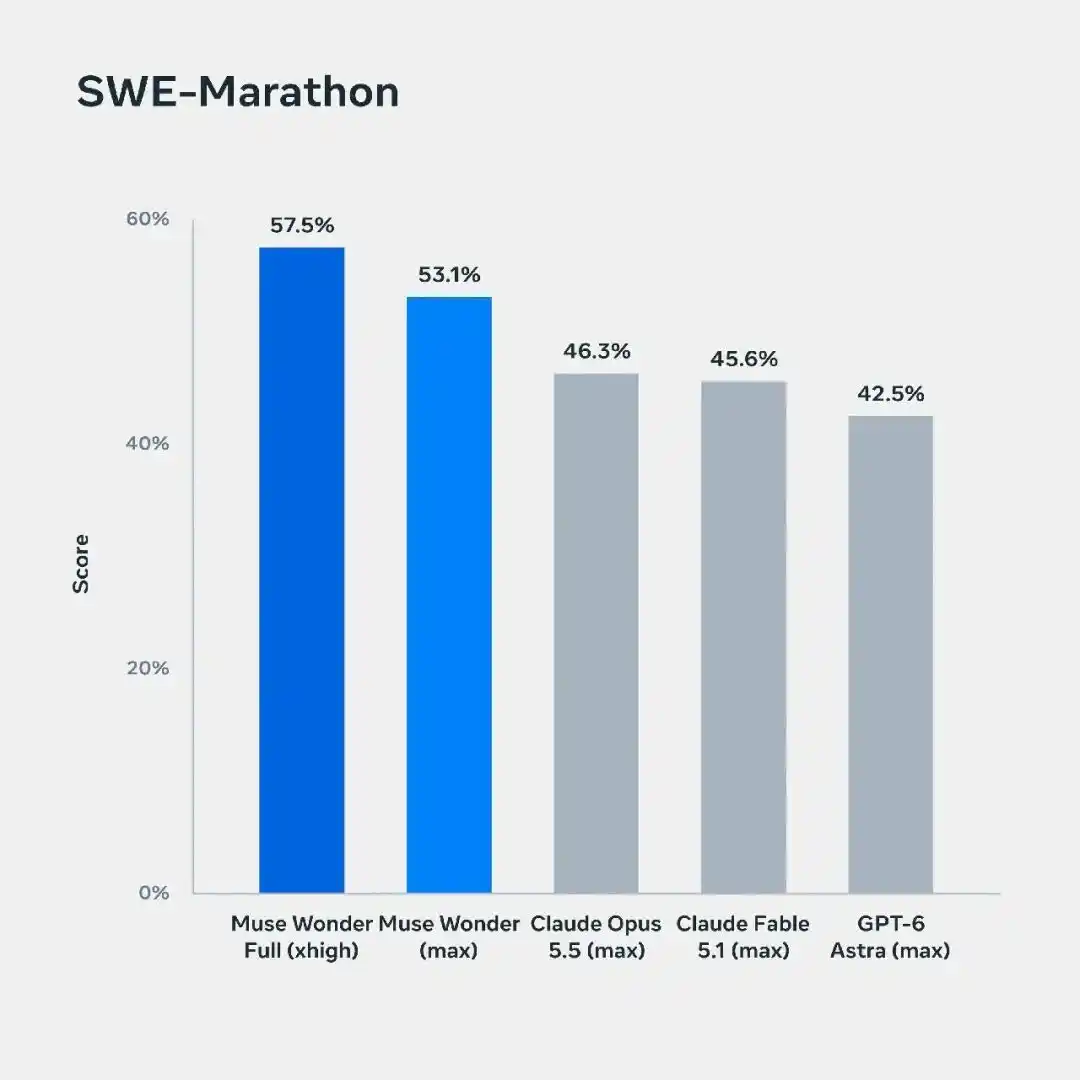
SWE-Marathon requires AI to continuously complete software projects: read requirements, modify multiple files, run tests, find reasons after errors, and continue modifying.
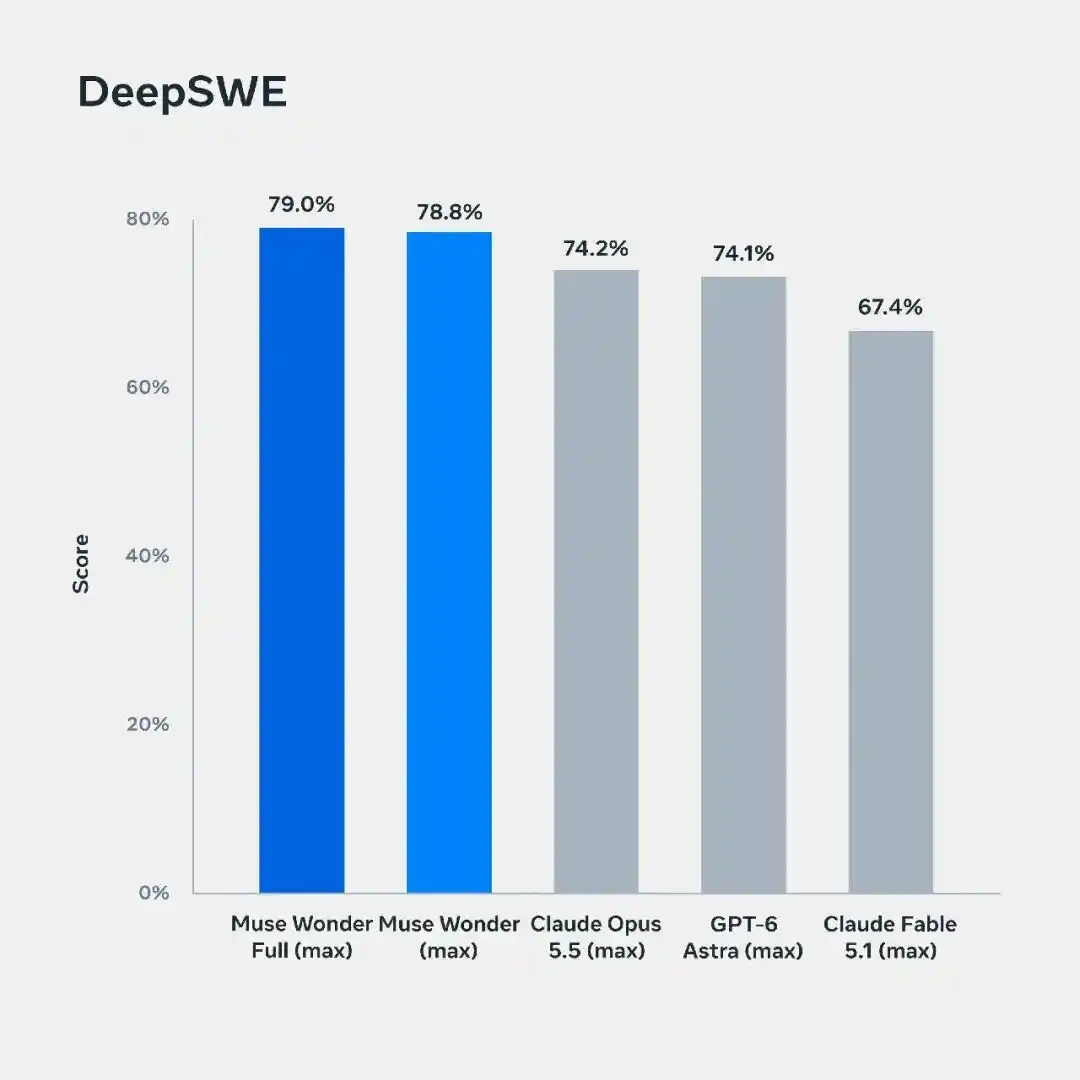
DeepSWE v1.1 contains 113 tasks, involving 91 code repositories and five programming languages.
In Meta's aggregated scores, Full achieved 79.0%, Wonder 78.8%, with Opus and Astra at 74.2% and 74.1% respectively.
Looking at AA's Programming Agent leaderboard (Coding Agents Index), Muse Code with Full scored 68 points, tying Claude Code with Sonnet, and surpassing the 66 points with Opus.
The previous generation Muse Code with Spark 1.3 only scored 54 points. Switching to Full directly increased by 14 points! With standard Wonder, it also scores 63 points.
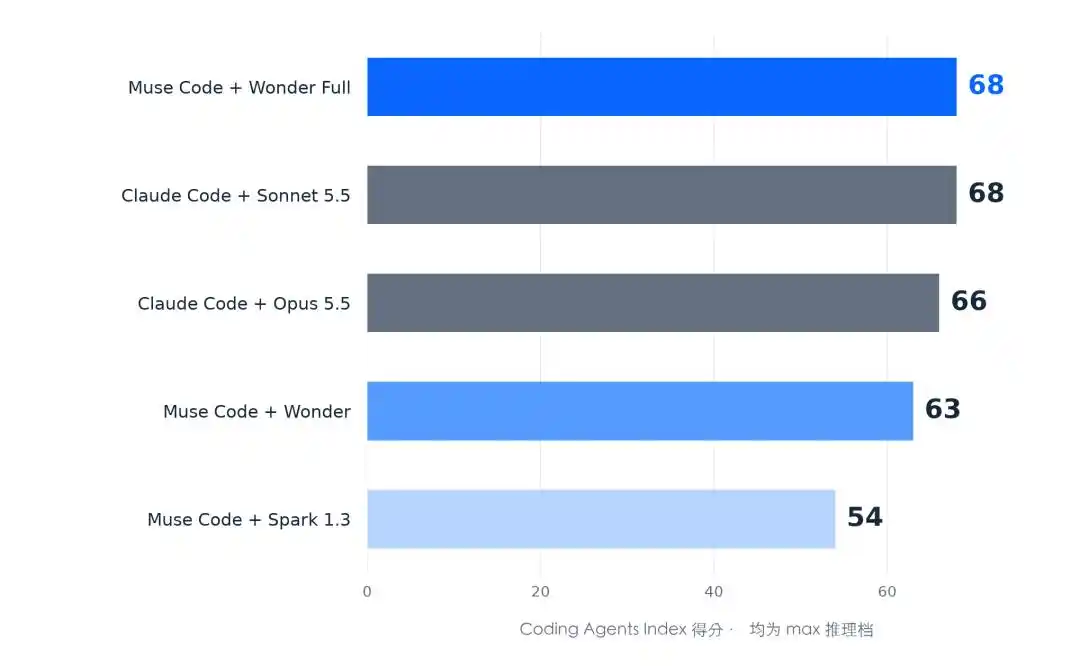
Artificial Analysis programming agent test results for Muse Code and Claude Code.
In zero-shot programming ProgramBench, Full scored 59.0, higher than Astra's 52.5; Opus scored 70.5.
Terminal programming scores: Full 57.1, Astra and Opus 59.1 and 59.6 respectively.
Additionally, results from a larger-scale vulnerability test are in.
The maintainer of VulnPR-100 assigned Wonder 1.0 100 code changes with known vulnerabilities, each with a one-hour time limit.
It found 46, tying with GPT-6 Astra. The total cost was $284.88, averaging $6.19 per vulnerability.
Solves 36 More Math Problems, Uses 40% Fewer Tokens
On Vals AI's ProofBench, Full correctly solved 94 math proof problems, 36 more than the previous generation; on the same list, Opus solved 100, Astra 99.
Solved more problems, yet output tokens dropped from 4.5 million to 2.7 million, 40% less! On application problems, the score remained around 86%, with average steps decreasing from 120 to 62.
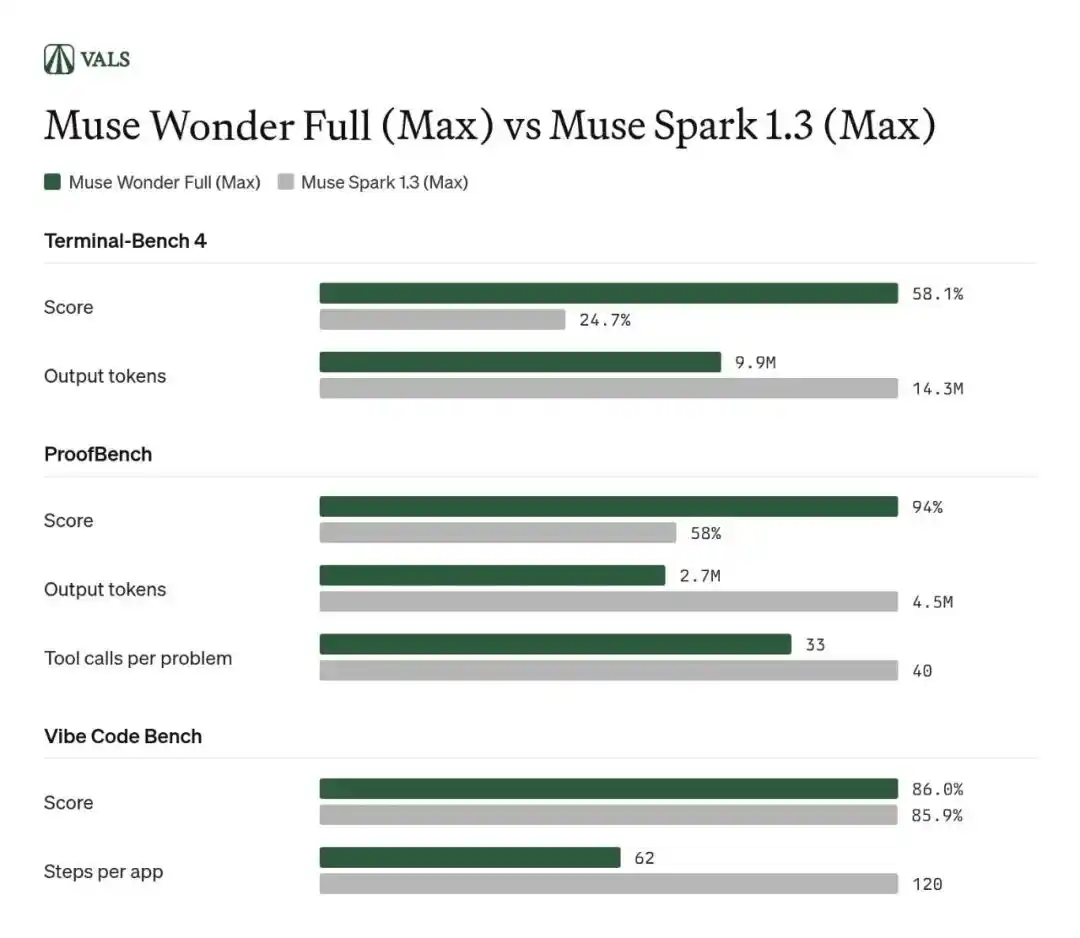
Exceeds Opus in 8 of 14 Areas, Law Score Reaches 3.1x
In the legal task Harvey LAB-AA, Full scored 13.1 points, Opus 4.2 points, the former being 3.1 times the latter! In finance tasks, it scored 59.1 points, surpassing Opus's 58.6 and Astra's 53.5.
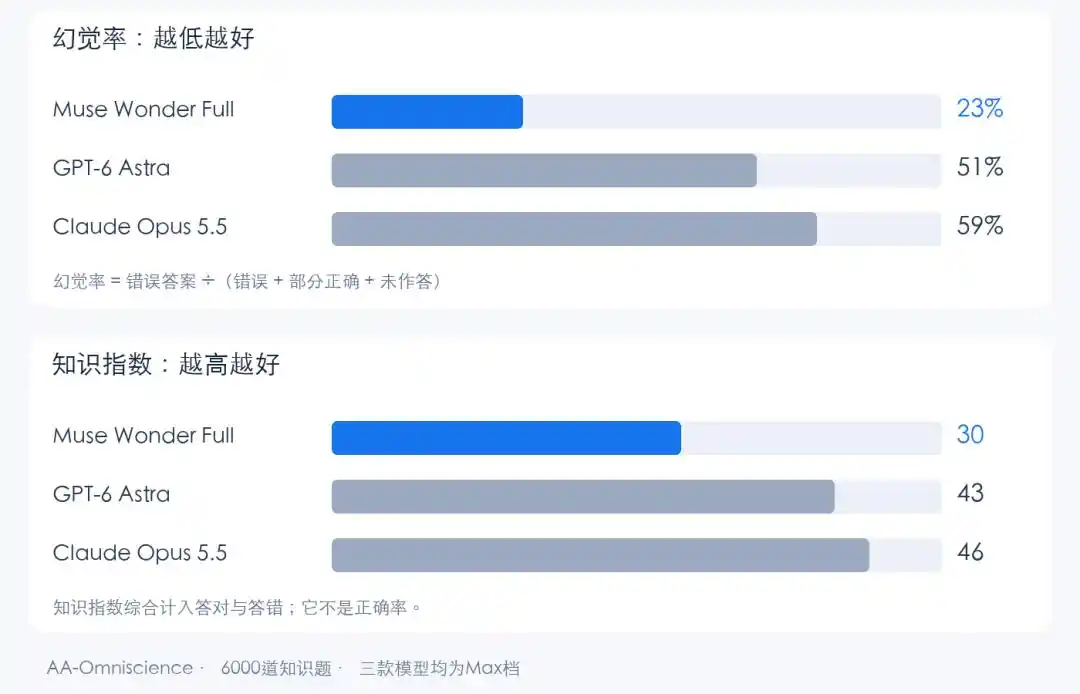
For professional work, fabricating fewer answers is crucial. On AA's 6000 knowledge questions, Full's hallucination rate was 23%, Astra 51%, Opus 59%; this statistic refers to the proportion of incorrect answers still provided among questions not answered correctly.
Full is less likely to force an answer, but its knowledge index is still 30, lower than Astra's 43 and Opus's 46.
Gigawatt-Scale Training
The "Ultimate Beast" from Prometheus
The terrifying strength of Muse Wonder stems precisely from the gigawatt-scale supercomputing behind it.
Fourteen months ago, Meta quietly initiated a complete overhaul of its entire AI infrastructure and R&D paradigm.
The birthplace of this Muse Wonder is the long-rumored gigawatt-scale Prometheus super data center.
Meta continued to scale up pretraining and reinforcement learning here: pretraining builds broad foundational capabilities, and reinforcement learning adjusts the model's behavior based on task feedback.
Even more astonishing are its base capability specifications:
1 million Token massive reasoning context: Whether it's a complete large codebase, hundreds of pages of complex M&A contracts, or several hours of audio/video recordings, it can swallow them all in one go;
Native multimodal input support: Integrates text, high-resolution images, long videos, and continuous audio;
Qualitative change in "Big Model Smell": Meta specifically addressed the AI community's skepticism about model "generalization ability" in its blog.
To ensure models can complete complex projects, Meta incorporated a vast number of diverse, longer-duration tasks into training. Taking programming as an example, models must remember requirements, modify multiple files, undergo rounds of testing and revisions, continuously advancing the project.
A stronger foundation model must also apply learned capabilities to new problems.
Meta incrementally increased computational allocation during inference; both model generations' scores on unfamiliar tasks improved accordingly. When they achieved similar scores on tasks heavily covered during post-training, Full still performed better on tasks not heavily covered.
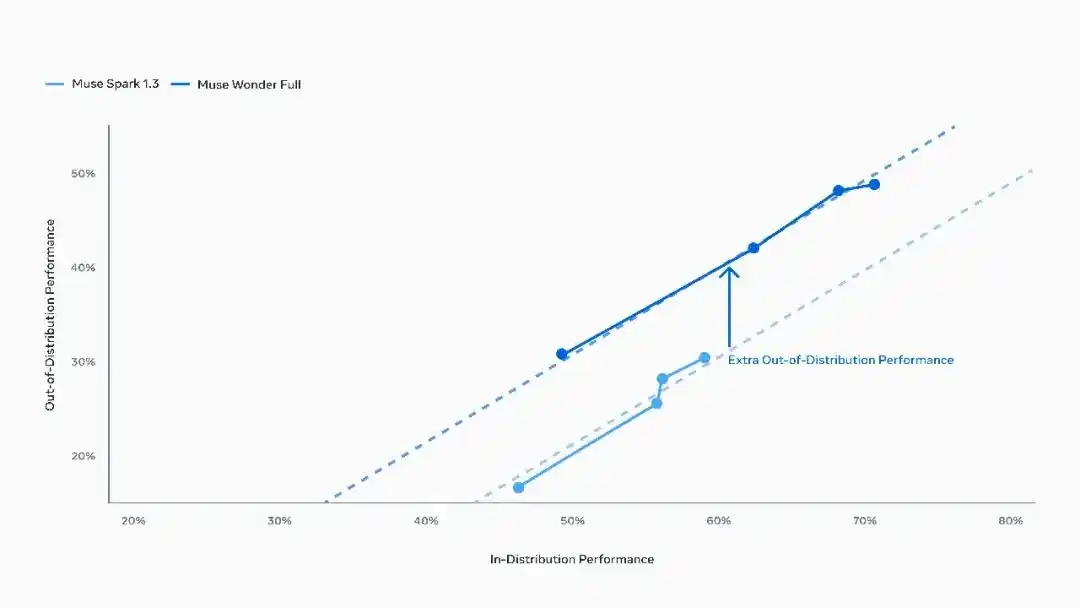
Horizontal axis: Tasks heavily covered in post-training. Vertical axis: Tasks not heavily covered.
After 14 Months of Rebuilding, Zuck Has Finally Fought Back!
Now, the standard Wonder is already available on the Meta Model API and Muse Code.
API usage pricing: $4 per million tokens for input, $20 for output, cached input $0.20. Context window reaches 1 million tokens, with no extra charge for long context.
Full is currently only available through Muse Code subscription: Power Usage is $50/month, Maximum Usage is $200/month, offering 20x and 80x the base usage tier respectively. Independent API is not yet available.
The personal assistant Muse will also integrate Wonder, rolling out first to subscribers as per the official plan.

Although initial users encountered quota anomalies, Alexandr Wang stated the team is fixing it and promised to reset quotas after repair.
Now, Meta is also coming for the territory of Claude Code and Codex!
References:
https://research.meta.ai/blog/muse-wonder/
https://research.meta.ai/static/muse-wonder-model-card
This article is from the WeChat public account "Xin Zhi Yuan", author: ASI Apocalypse