Semiconductors 101, September 8: Just now, the Shenzhen-based memory chip company Longsys rang the bell for its listing on the Hong Kong Stock Exchange.
Its issue price was HK$236 (approximately RMB 202.04) per share, with the opening price remaining flat. As of 10:00, its stock price had slightly fallen by 1.19% to HK$233.2 (approximately RMB 199.62) per share, with a total market capitalization of HK$107.192 billion (approximately RMB 91.758 billion).
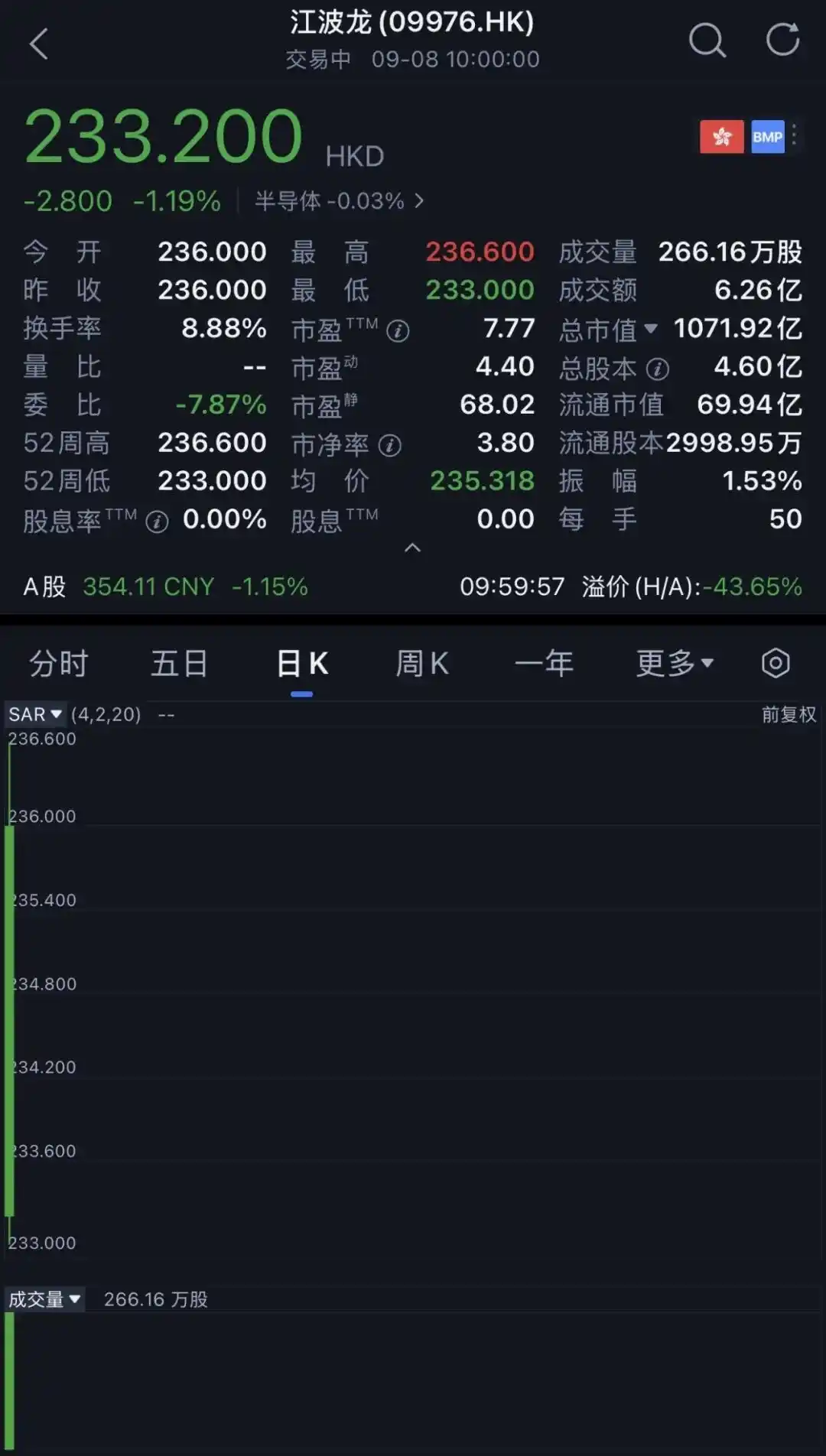
▲ Longsys stock price fluctuations (Source: Tencent Stock Picker)
Founded in 1999, Longsys is an independent-brand semiconductor memory manufacturer. Its core business is the design of controller chips and memory chips, firmware development, and backend manufacturing capabilities, selling storage products for consumer, enterprise, and industrial-grade applications.
For this listing, Longsys introduced 14 cornerstone investors, including Transsion Holdings, Lenovo Group, and Lens Technology, who collectively subscribed to approximately US$151 million (approximately RMB 1.015 billion) worth of offered shares.
According to data from Frost & Sullivan, based on 2025 storage product revenue, Longsys is the ninth-largest memory manufacturer among over 100 global market participants, and the third-largest memory manufacturer and the largest independent memory manufacturer among over 30 market participants in China, holding a 1.2% share of the global semiconductor memory market.
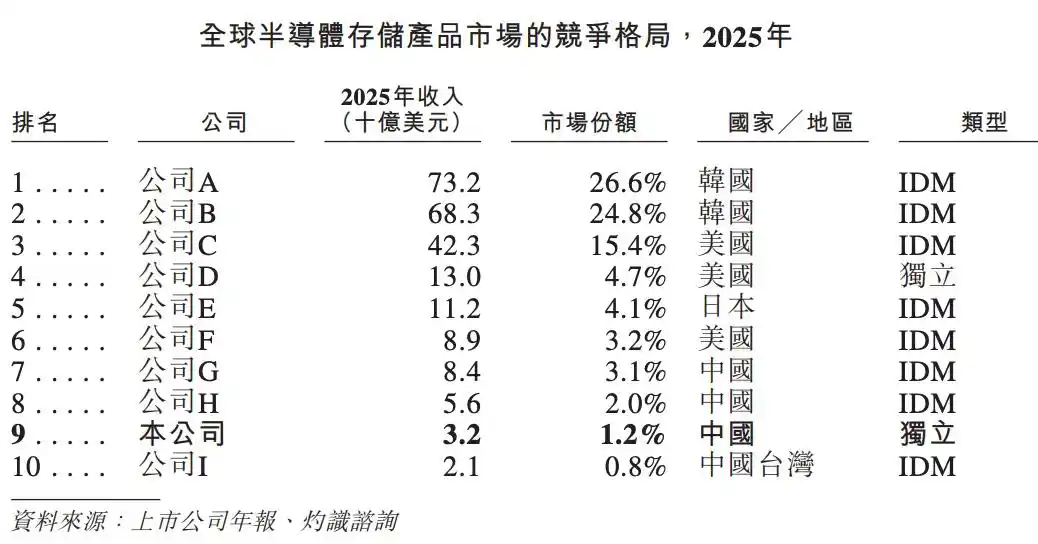
Longsys's customers include Dell, Lenovo, OPPO, Samsung, Transsion, and Xiaomi, among others.
In August 2022, the company was listed on the A-share Shenzhen Stock Exchange. As of the close on September 7, its A-share price had risen 26.86% year-to-date to RMB 358.22 per share, with a market capitalization of RMB 153.916 billion.
To meet diverse customer needs, Longsys's product lines consist of embedded storage solutions, SSDs, mobile storage products, and memory modules. Its prospectus discloses unaudited financial data for the first half of 2026: revenue of RMB 24.088 billion, a year-on-year increase of 136.3%; net profit attributable to the parent company of RMB 10.577 billion, a year-on-year increase of 71,528.66%.
The net proceeds from the global offering are approximately HK$6.0202 billion (approximately RMB 5.16 billion). Of this, HK$4.711 billion (approximately RMB 4.038 billion) will be used to enhance its independent R&D and innovation capabilities in chip design and advanced storage product development; HK$707 million (approximately RMB 606 million) for strategic investments or acquisitions; and HK$602 million (approximately RMB 516 million) for working capital and other general corporate purposes.
01.
First-Half Revenue Grows 136%
Net Profit Skyrockets 700-Fold
For 2023, 2024, 2025, and the first four months of 2026, Longsys's revenue was RMB 10.125 billion, RMB 17.464 billion, RMB 22.766 billion, and RMB 14.707 billion, respectively, with net profits of -RMB 837 million, RMB 505 million, RMB 1.498 billion, and RMB 6.427 billion. R&D investment for the same periods was RMB 594 million, RMB 910 million, RMB 1.048 billion, and RMB 375 million, accounting for 5.9%, 5.2%, 4.6%, and 2.5% of revenue, respectively.
Longsys also disclosed unaudited financial data for the first half of 2026: revenue of RMB 24.088 billion, a year-on-year increase of 136.3%; net profit attributable to the parent company of RMB 10.577 billion, a year-on-year increase of 71,528.66%; gross margin of 58.2%, an increase of 47.2 percentage points from the same period last year; R&D investment of RMB 851 million.
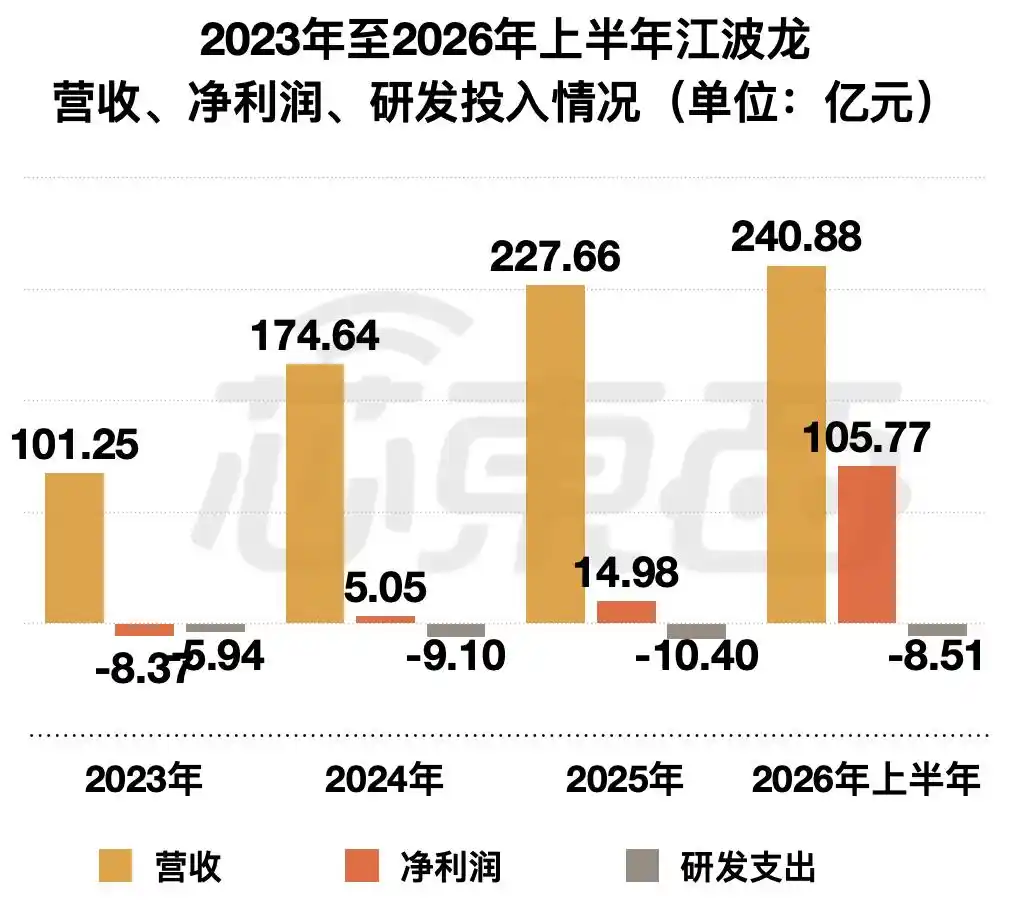
▲ Longsys Revenue, Net Profit, R&D Investment from 2023 to First Half 2026 (Chart by Semiconductors 101)
According to the prospectus, Longsys's loss in 2023 was due to weak end-market demand and increased operating expenses. The subsequent recovery in net profit is related to the overall recovery of the memory product industry, rebounding product demand, and rising prices.
Gross margins for 2023, 2024, 2025, and the first four months of 2026 were 4.7%, 15.8%, 18.0%, and 57.5%, respectively, showing a yearly improving trend. The improvement in the first four months of 2026 was due to a surge in AI infrastructure investment, overall market supply shortage, and rising storage product prices.
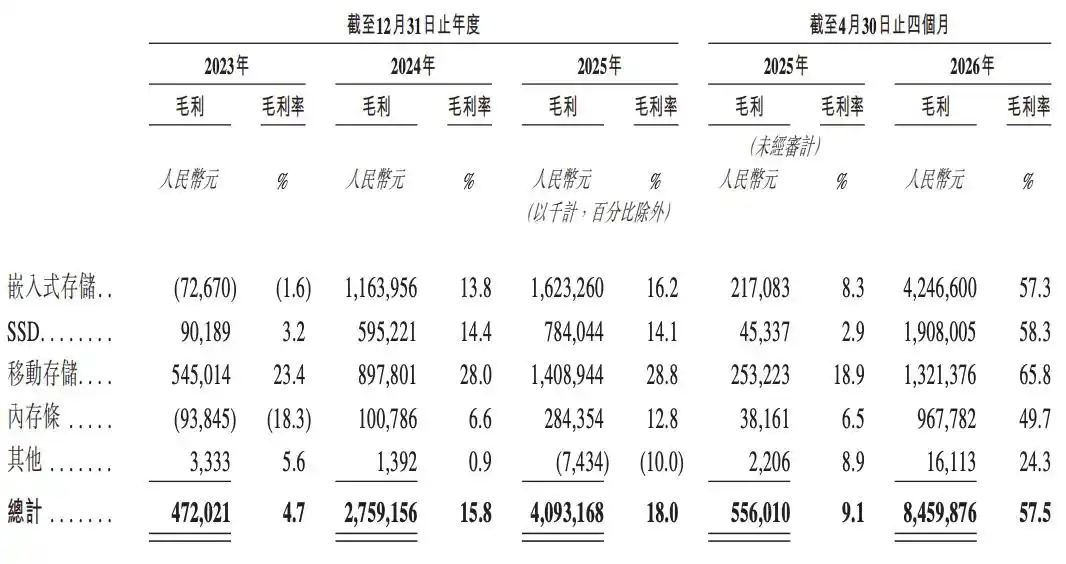
As of June 30, 2026, Longsys had cash and cash equivalents of RMB 3.101 billion.
Longsys operates under three major brands: FORESEE, Zilia, and Lexar.
Among them, FORESEE primarily serves the B2B market, is its self-owned brand, and has advantages in mobile phones, computers, and automotive fields; Zilia mainly serves the B2B market in Latin America, launched in 2023 after acquiring the Brazilian semiconductor memory manufacturer SMART Brazil; Lexar is a global high-end brand acquired by Longsys in 2017, serving the B2C market, with products sold in over 60 countries and regions.
The prospectus shows that FORESEE is Longsys's flagship brand. Its RDIMM products, with capacities ranging from 32GB, 64GB to 96GB, are among the first domestic companies to release a 96GB version. It has developed automotive-grade storage product portfolios including UFS, eMMC, and SPI NAND Flash, with products certified to AEC-Q100 and IATF 16949 automotive standards, adopted by over 20 automotive OEMs.
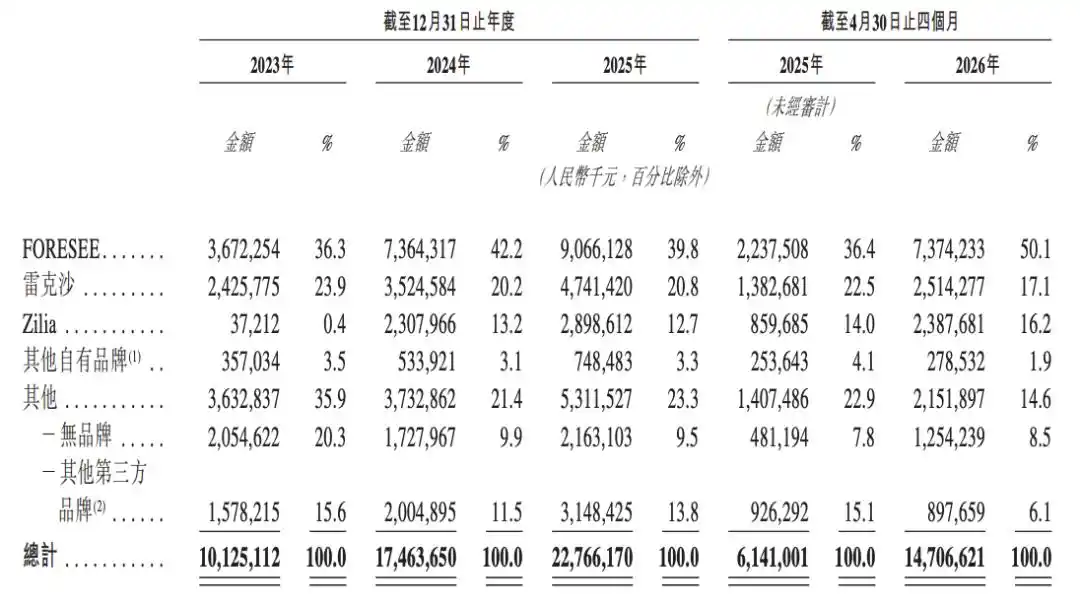
By product line, it consists of embedded storage solutions, SSDs, mobile storage products, and memory modules.
Embedded storage mainly includes three categories: UFS and eMMC, ultra-small eMMC and ePoP, and LPDDR, representing its main source of revenue, accounting for 50.4% of revenue in the first four months of 2026.
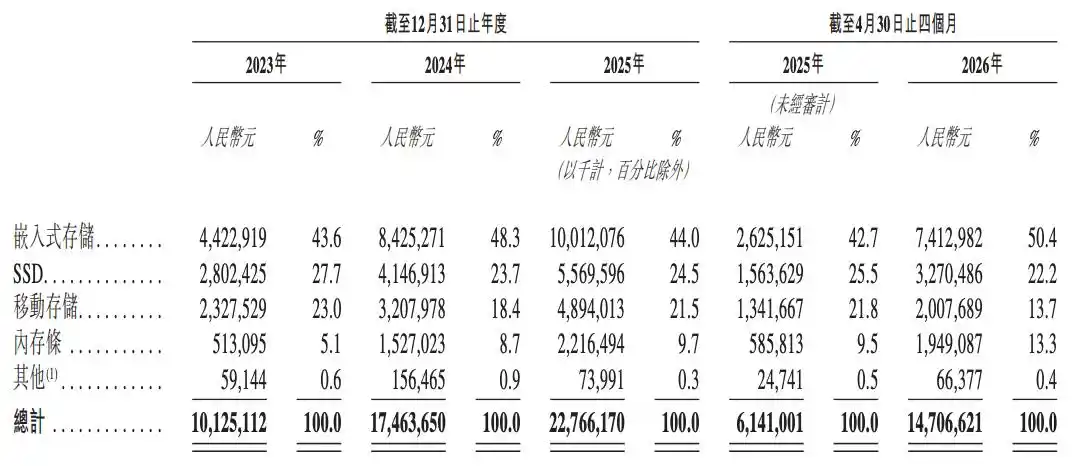
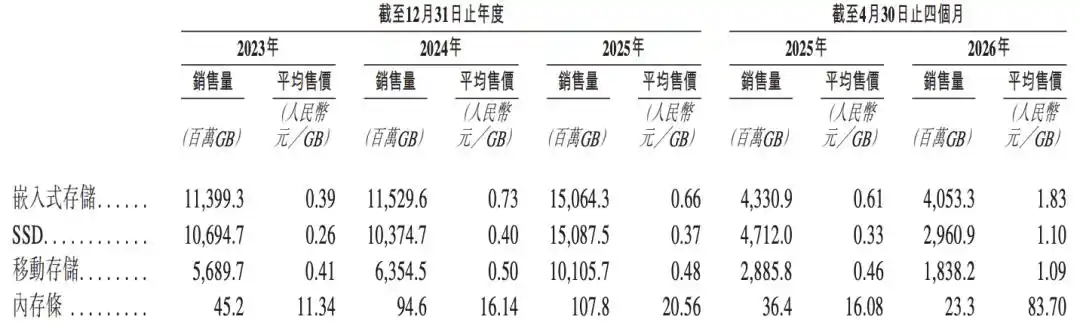
Comparing the first four months of this year with the same period last year, Longsys's product sales volume declined, mainly due to rising product prices reducing the purchasing capacity and willingness of price-sensitive customers, leading some to delay procurement. Additionally, tight supply of key storage raw materials, rising average prices of DRAM and NAND Flash caused Longsys to reduce procurement, thereby limiting memory product output.
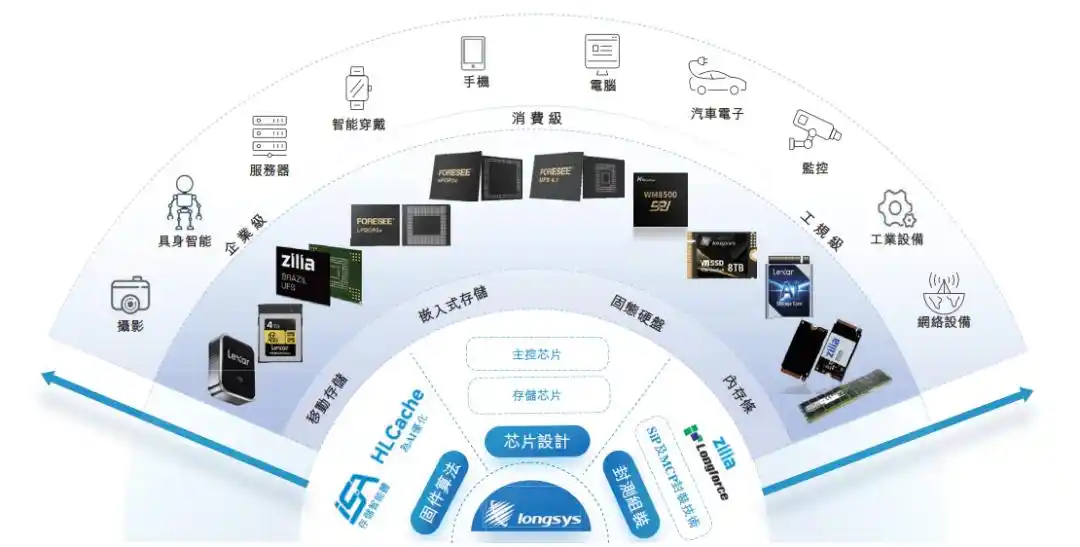
Longsys currently focuses on selling consumer-grade products. In 2023, 2024, 2025, and the first four months of 2025, consumer-grade product revenue accounted for 94.7%, 92.9%, 89.8%, and 88.4% of total revenue, respectively.
02.
Six Self-Designed Controller Chips Commercialized
Cumulative Production Exceeds 250 Million Units
Longsys has already developed independent capabilities in key areas of storage products.
In controller chip design, Longsys has independently designed eight controller chips, six of which have been successfully commercialized, covering USB, SD cards, eMMC, UFS products, and SSDs. As of April 30, 2026, its self-designed controller chips have cumulatively produced over 250 million units. In March 2026, the company launched its self-developed SPU controller chip, integrating a memory controller and intelligent processing engine. SSDs using the SPU chip with a capacity of 64TB can store 128TB of effective data at the host level.
Products using its self-designed controller chips entered mass production in the second half of 2024, generating revenue of RMB 2.989 billion in the first four months of 2026, accounting for 20.3% of revenue for that period.
In memory chip design, the company focuses on SLC NAND Flash and other small-capacity memory chips, with nine SLC NAND Flash memory chips successfully taped out. As of the end of April this year, self-designed SLC NAND chips have cumulatively produced over 200 million units.
In firmware development, Longsys has developed HLC technology and the intelligent Storage Agent (iSA) designed for AI inference on edge devices.
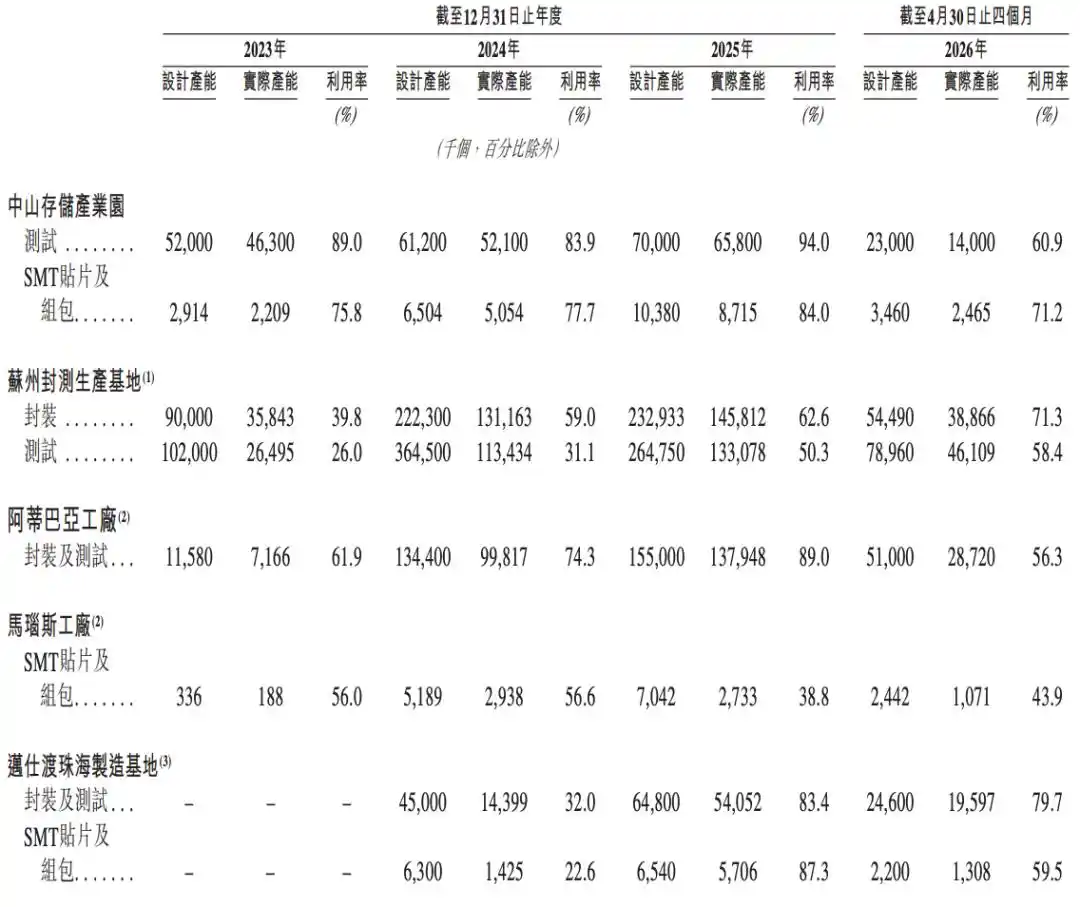
Finally, in packaging and testing, its Suzhou factory possesses SiP and MCP technologies (including stacked packaging), capable of packaging 16-layer stacked storage products; the Zhongshan factory's data center storage product line integrates R&D and retesting, with DPPM for each product line below 50; the factories in Atibaia and Manaus, Brazil, can perform packaging, testing, SMT mounting, and packaging for a range of storage products.
The total designed capacity, actual capacity, and utilization rates of Longsys's production factories are as follows:
Currently, as of April 30, 2026, Longsys has a total of 1,262 R&D personnel, accounting for 35% of its total workforce, holding 645 authorized patents, including 229 invention patents, 182 software copyrights, and 13 registered integrated circuit layout designs.
03.
Main Revenue Source is Overseas
Approximately 30% of Revenue from Top Five Customers
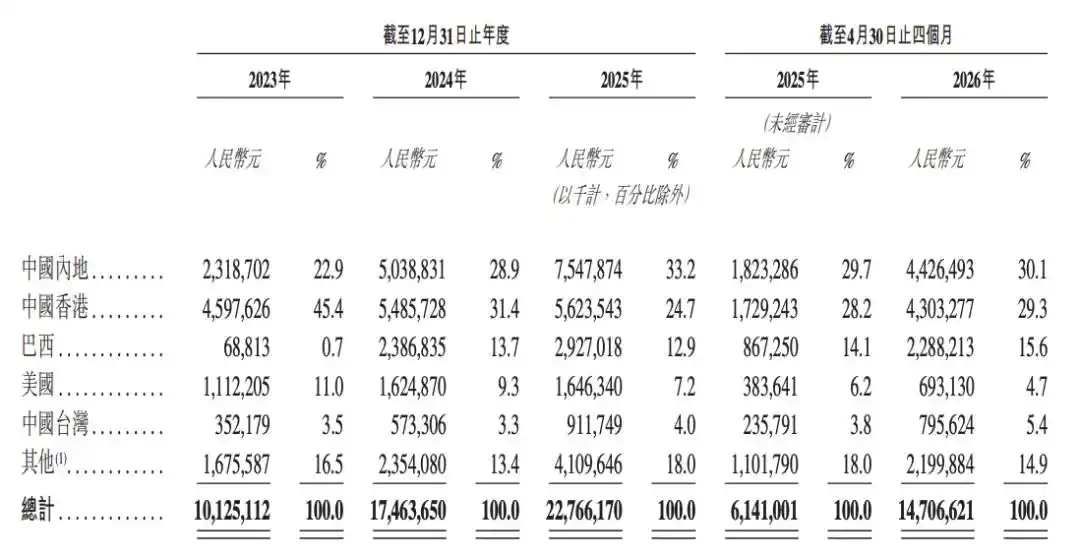
Longsys has established a comprehensive global presence. For 2023, 2024, 2025, and the first four months of 2026, 77.1%, 71.1%, 66.8%, and 69.9% of Longsys's revenue, respectively, came from regions outside Mainland China.
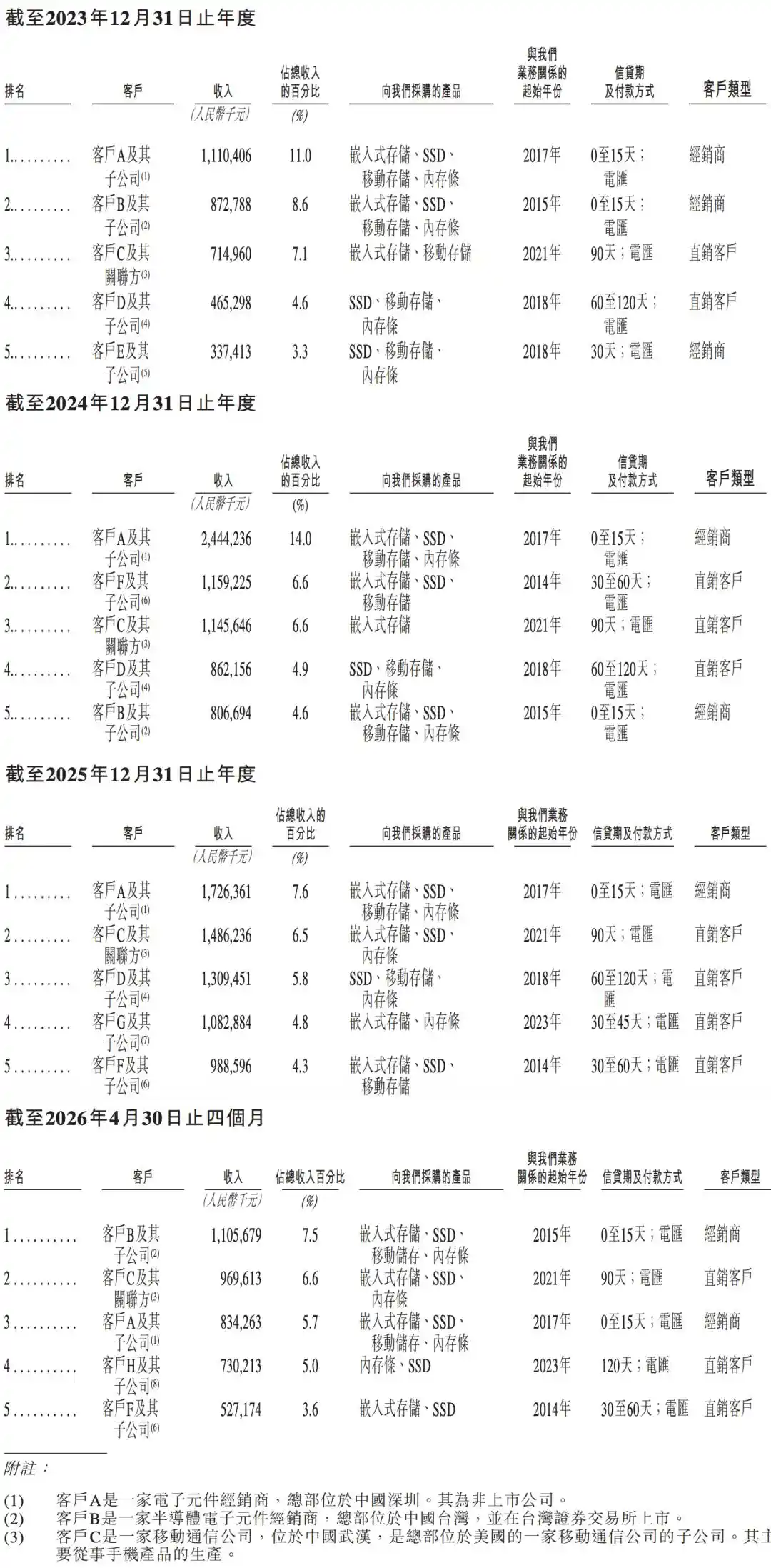
Regarding customers, from 2023 to the first four months of 2026, revenue from the top five customers accounted for 34.6%, 36.8%, 29.0%, and 28.3% of Longsys's total revenue for the respective periods, and all top five customers are independent third parties.
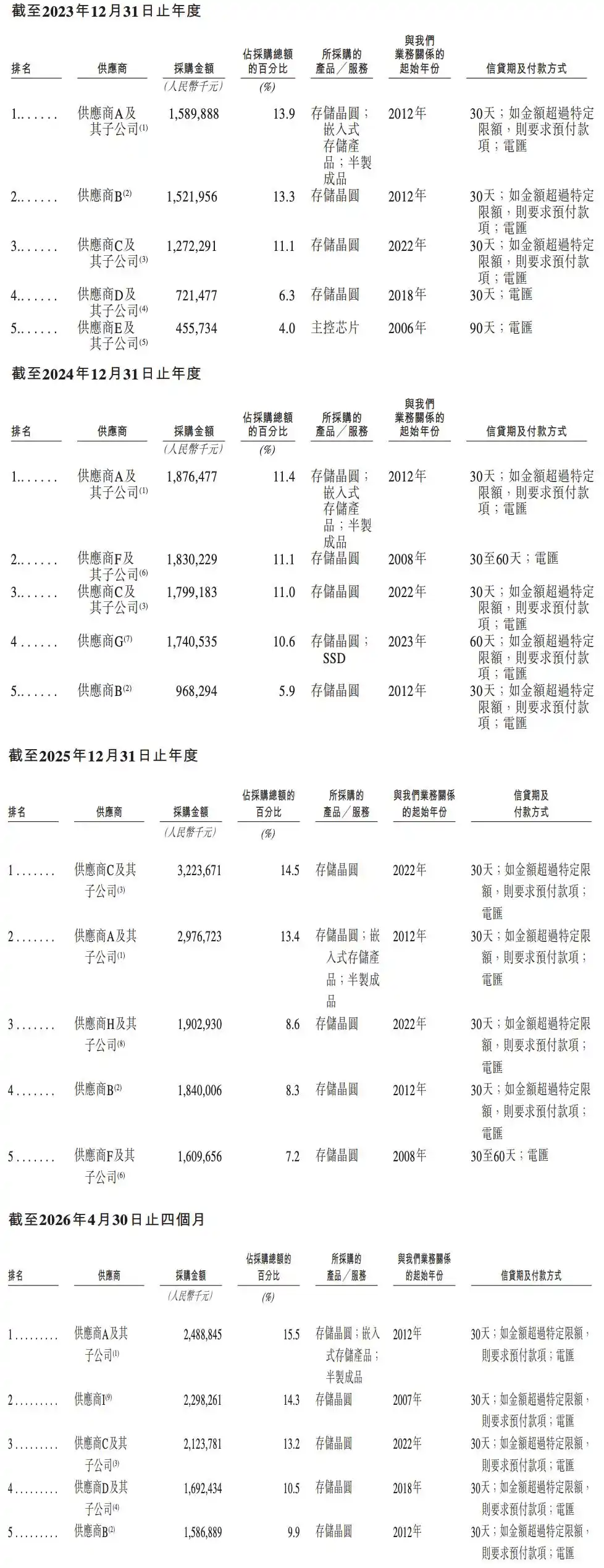
Regarding suppliers, the core raw materials for Longsys's storage products are memory wafers and controller chips. For 2023, 2024, 2025, and the first four months of 2026, purchases from the top five suppliers accounted for 48.6%, 50.0%, 52.0%, and 63.3% of total purchases, respectively.
04.
Jiangxi Twin Siblings at the Helm
Collectively Holding Nearly 40% of Shares
Longsys is led by twin siblings from Jiujiang, Jiangxi: Cai Huabo and Cai Lijiang.
Cai Huabo, now 50, graduated from Jiujiang No.3 Middle School in 1996 and founded Longsys three years later. Between 2015 and 2018, he also served as an independent director at Ingenic Semiconductor.
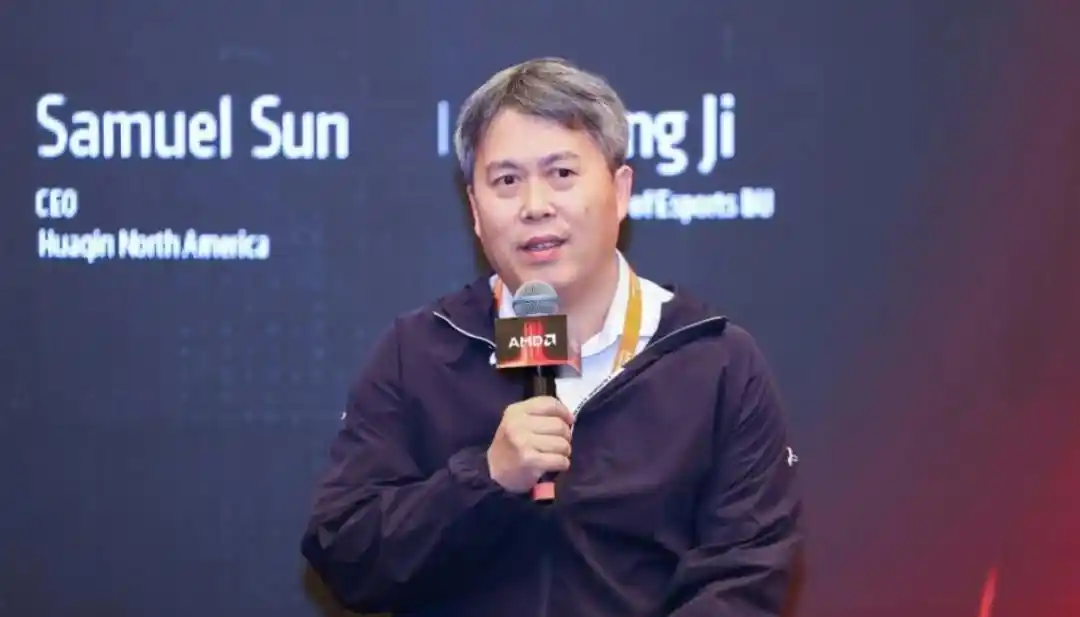
▲ Cai Huabo (Source: Longsys Official Account)
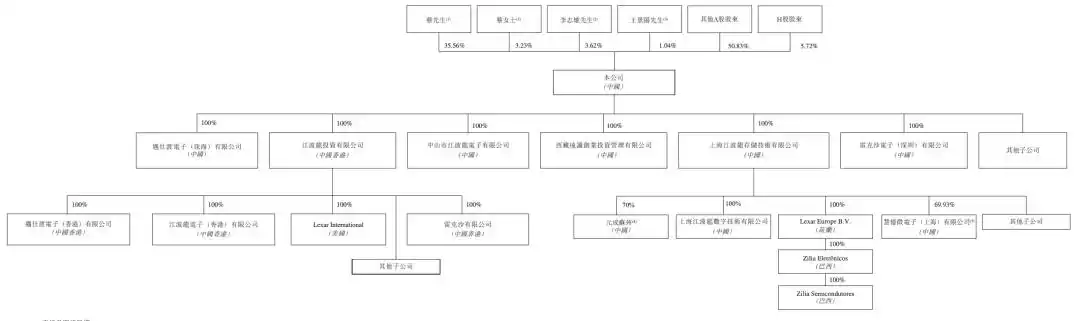
The controlling shareholders of Longsys are its founder, Chairman, and General Manager Cai Huabo and Senior Vice President Cai Lijiang (Cai Huabo's sister), who collectively directly control 38.79% of the voting rights.
The company's post-listing shareholding structure on the Hong Kong Stock Exchange is as follows:
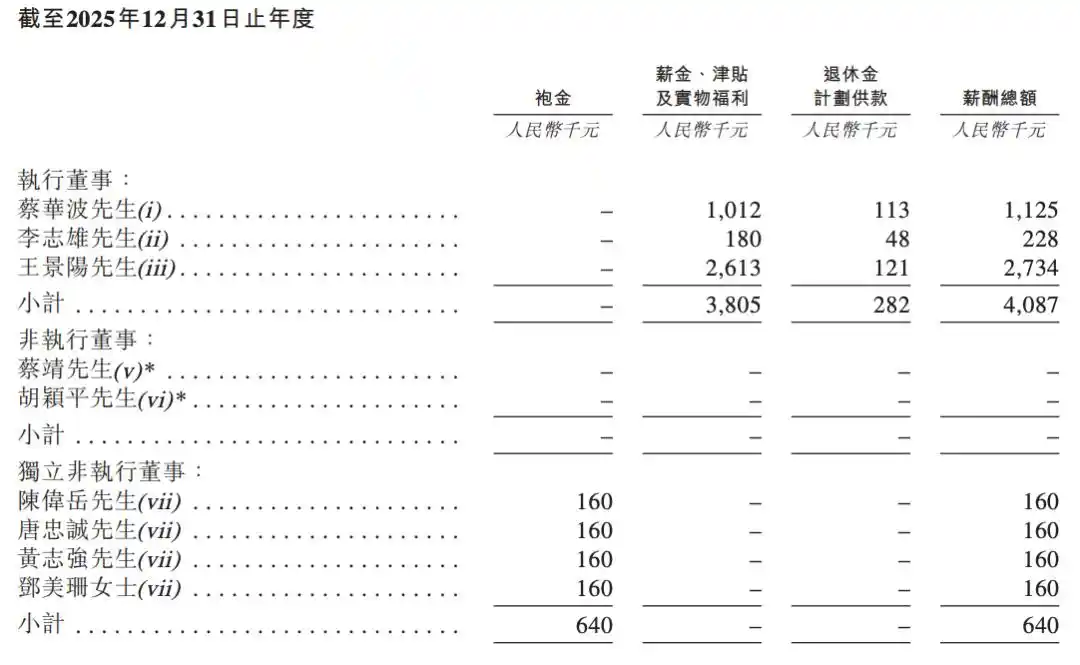
The company's board consists of nine directors, including three executive directors, two non-executive directors, and four independent non-executive directors. As of December 31, 2025, the compensation for board members is as follows:
05.
Conclusion: AI Drives Demand for Memory Chips
Domestic Memory Manufacturers Enter a New Growth Cycle
The global semiconductor memory market is entering a new growth cycle. Since the end of 2022, the emergence of large models has become a significant new driver of memory demand.
Especially since the third quarter of 2025, supported by the massive demand for memory from AI-related applications and data center infrastructure construction, the semiconductor memory market has entered a period of rapid expansion, with demand for storage products exceeding available supply.
On the cloud side, AI model training and inference require intensive data reading and writing, driving demand for high-capacity, high-bandwidth, and high-reliability storage products in AI servers and data centers; on the edge side, the launch of AI smartphones, AI PCs, smart cars, AI wearables, and embodied intelligent devices leads to increasing local data generation, model execution, and real-time interaction, thereby posing new requirements for the performance, energy efficiency, and form factor of memory products.
Longsys holds a position in both the B2B and B2C markets. Its consumer-grade products are designed for consumer electronics like smartphones, tablets, and wearables; enterprise-grade products serve enterprise servers and data centers; industrial-grade products target industrial automation equipment, industrial PCs, automotive, and a wide range of industrial applications.
In the gradually proliferating AI-driven applications, effective memory solutions are becoming increasingly indispensable for supporting fast data access, reliable storage, secure data management, and system-level cost efficiency.
This article is from the WeChat public account "Semiconductors 101," author: Cheng Qian, editor: Panken