Coinbase to Remove 10 Altcoins from its Futures Contract

cryptonews.ruPublished on 2026-08-13Last updated on 2026-08-13

Abstract

Cryptocurrency exchange Coinbase has announced the suspension of futures contracts for 10 altcoins. Trading for these contracts will be halted on August 26 at approximately 21:00 Turkish time. The affected perpetual futures contracts (PERP) are for the following assets: Memecoin ($MEME), The Sandbox ($SAND), Moonbirds (BIRD), Blur (BLUR), Katana (KAT), SPX6900 ($SPX), Zora (ZORA), Axie Infinity (AXS), Gensyn (AI), and LayerZero (ZRO). Coinbase stated that any positions remaining open at the end of the trading day will be closed automatically. The final settlement price will be based on the average index price over the 60-minute period prior to the trading halt, and the funding rate for the final period will be set to zero. The exchange noted it has recently been making consistent decisions to delist assets from its futures platform.

Cryptocurrency exchange Coinbase has announced the suspension of futures contracts for 10 cryptocurrency assets, including Memecoin ($MEME), The Sandbox ($SAND), and Moonbirds (BIRB).

According to Coinbase, trading in these futures contracts will be suspended on August 26 at approximately 21:00 Turkish time.

The contracts to be suspended and delisted are as follows:

  • Memecoin ($MEME-PERP)
  • The Sandbox ($SAND-PERP)
  • Moonbirds (BIRB-PERP)
  • Blur (BLUR-PERP)
  • Katana (KAT-PERP)
  • SPX6900 ($SPX-PERP)
  • ZORA (ZORA-PERP)
  • Axie Infinity (AXS-PERP)
  • Gensyn (AI-PERP)
  • LayerZero (ZRO-PERP)

Coinbase stated that positions remaining open by the end of the trading day will be automatically closed.

According to the exchange's statement, the final settlement price will be calculated based on the average index price over a 60-minute period prior to the trading suspension.

It was also announced that the funding rate applied during the final funding period for the respective contracts will be set to zero.

The Coinbase futures trading platform, which once pursued an aggressive listing policy, has recently been making decisions to sequentially delist its assets.

*This is not investment advice.

end-content

Related Questions

QWhich cryptocurrency exchange announced the suspension of futures contracts for 10 altcoins?

ACoinbase announced the suspension of futures contracts for 10 altcoins.

QOn what date and time will trading for the affected futures contracts be suspended on Coinbase?

ATrading for the affected futures contracts will be suspended on August 26th at approximately 21:00 Turkish Time.

QWhat will happen to positions that remain open at the end of the trading day for these contracts?

APositions that remain open at the end of the trading day will be automatically closed by Coinbase.

QHow will the final settlement price be determined for these contracts?

AThe final settlement price will be calculated based on the average of the index price over a 60-minute period before trading is suspended.

QList at least five of the ten altcoin futures contracts being delisted from Coinbase.

AFive of the ten altcoin futures contracts being delisted are: Memecoin (MEME-PERP), The Sandbox (SAND-PERP), Moonbirds (BIRB-PERP), Blur (BLUR-PERP), and Katana (CAT-PERP).

Related Reads

This Bitcoin Developer's Proposal Makes Quantum Hackers Lose Money When Stealing Coins

Bitcoin developer Cory Fields has proposed a novel game-theoretic defense against future quantum attacks called "quantum landmines," designed to make stealing vulnerable bitcoin unprofitable rather than relying on hard forks or blanket asset freezes. The threat stems from quantum computers potentially using Shor's algorithm to derive private keys from exposed public keys, affecting early addresses and any address that has already spent coins. Under the scheme, an owner of vulnerable coins pre-commits a small quantum-safe output containing a hidden proof of ownership. When a quantum hacker tries to move the old coins, they must post an equal-sized anti-quantum bond. The coins and bond are locked in a challenge period (e.g., 30 days). If the true owner reveals the hidden proof, the network awards both the original coins and the hacker's bond to the owner's quantum-safe address. Since hackers cannot tell which wallets are trapped, attacks become risky and potentially loss-making. However, the same rule means legitimate owners must also post a bond to move their own old coins. For lost or abandoned coins where no owner can respond, Fields proposes a staking auction: anyone can pre-commit anti-quantum bitcoin to challenge a theft attempt, with successful challengers taking part of the hacker's bond while the vulnerable coins are destroyed. A third "sat auction" requires no pre-locking; any attempt to move high-risk coins triggers a bidding war where the top bidder receives the coins (minus their bid) and the second-highest bidder loses everything, echoing the "dollar auction" trap. Fields frames these as thought experiments, not a finalized upgrade. The approach avoids one-size-fits-all freezing that would permanently lock out inactive legitimate holders, but imposes real costs: honest holders need large bonds, offline owners may miss challenge windows, and some coins could be destroyed in auctions. Implementation would require quantum-safe wallet support, consensus rules enforcing bonds, waiting periods, recovery transactions, and auctions, plus community agreement on activation timing and parameters. No code, timeline, or finalized fund distribution has been provided, and none of these protections currently exist on Bitcoin.

marsbit7m ago

This Bitcoin Developer's Proposal Makes Quantum Hackers Lose Money When Stealing Coins

marsbit7m ago

ChatGPT Draws Out Personal Secrets in One Second, Whole Internet Frenzies Over the 'Empty Room' Test

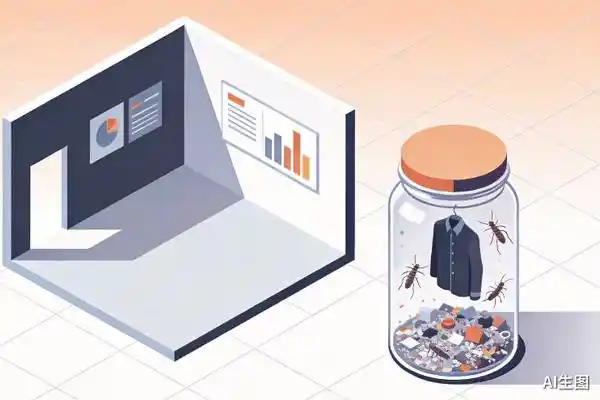
A viral "empty room" experiment has users asking ChatGPT to fill a blank room image with everything it knows about them—and the results are unsettlingly accurate. One user found a jar containing a silverfish, recalling a casual question he'd asked a year earlier, proving how much the AI retains. Users report the outputs are startlingly precise, with some requesting exaggerated versions that turn the room into a full personality showcase. Analyst Patrick Moorhead compared multiple models, finding ChatGPT best and Claude worst. The experiment highlights ChatGPT's memory features: saved memories (names, preferences, goals) and reference to chat history. A paper accepted to ACM Web Conference 2026 analyzed data from 80 real users who exported their ChatGPT data under GDPR. Researchers traced "Model set context updated" log entries back to triggering user messages, extracting 2,050 memories from 65 people's 1,058 conversations and over 20,000 exchanges, dubbing these "algorithmic self-portraits." Key findings: 96% of memories were saved by ChatGPT itself without explicit user instruction (only 84 of 2,050 matched "remember" or "forget" keywords); 52% involved psychological profiling, mostly about desires (73%), intentions (16%), emotions (14%), and beliefs (11%); and 28% contained GDPR-defined personal privacy, with names in 41% and sensitive categories like health, religion, and politics in 7% (health over 60%). Overall, 91% of users had personal data stored and 54% had highly sensitive privacy recorded—contradicting OpenAI's public promise not to proactively save sensitive information. A simulation showed always-extracting memory would raise sensitive data to 31–35% and profiling to 55–59%. OpenAI's June "Dreaming" update lets ChatGPT silently review chats and rewrite memories (e.g., updating travel plans), boosting accuracy from 41.5% (2024) to 82.8% (V3) while cutting compute costs to one-fifth. Critically, deleting a conversation doesn't delete derived memories. A September arXiv paper analyzing 180,000 chat segments from 1,057 users found 21.31% discussed health issues, with over 95% of profiles recorded without user awareness—nearly matching the 96% figure—risking temporary symptoms being permanently mislabeled as conditions. The article concludes that users believed they were training a helpful "second brain," only to realize they themselves were being fully exposed, reduced to monetized "context" in the algorithm's eyes.

marsbit11m ago

ChatGPT Draws Out Personal Secrets in One Second, Whole Internet Frenzies Over the 'Empty Room' Test

marsbit11m ago

Bitbase Points' First Phase "Origin" Launches Trading Personality Cards, Seven Types Generated Weekly

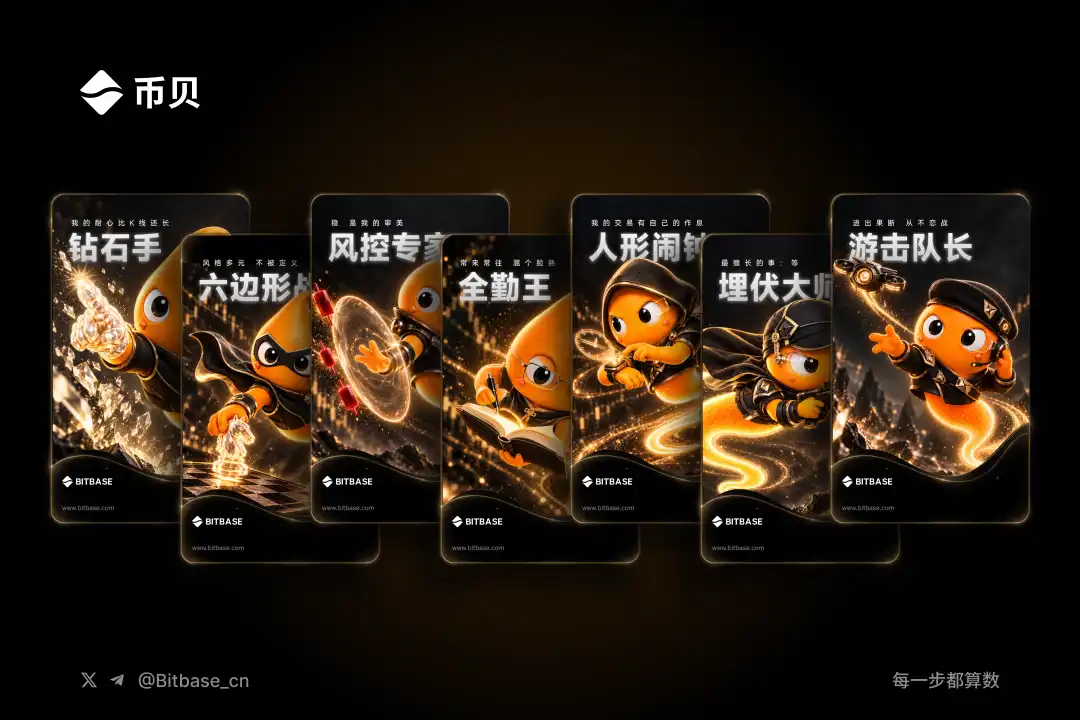
Bitbase has launched trading personality cards in the first phase of its Bitbase Points program, "ORIGIN." The cards are automatically generated by the system based on each user's trading characteristics over the past week and update every Monday at 00:00 UTC. The first batch was generated on November 9 and can be viewed on the Points page. The personality cards are designed to align with ORIGIN's 26-week focus on sustained user participation rather than short-term concentrated trading. While Points record user participation and contribution, personality cards record how users trade, allowing users to track changes in their trading habits week by week throughout the ORIGIN period. There are seven types of personality cards: the "Diamond Hands" representing long-term holding, the "Guerrilla Captain" for short-term trading, the "Human Alarm Clock" for those who trade at fixed times, the "Risk Control Expert" for those focused on risk management, the "Ambush Master" for those primarily using limit orders, the "Full Attendance King" for continuous participation, and the "Hexagon Warrior" for balanced trading styles. Each card features a personality name, a description, and a corresponding image, all derived from Bitbase's brand IP character BENIE. Personality cards are regenerated weekly, so the same user may receive different card types in different weeks. When a card has not yet been generated, the page displays "Generating." Users who continue trading and accumulate more data may receive personality cards in subsequent weekly updates. Users can share their cards on the Points page. Bitbase plans to introduce more personality types during the ORIGIN period. Bitbase is a global digital asset trading platform offering spot, contracts, TradFi, and wealth management services to individual and institutional users, with the brand proposition of "focusing on value amid change."

marsbit22m ago

Bitbase Points' First Phase "Origin" Launches Trading Personality Cards, Seven Types Generated Weekly

marsbit22m ago

Trading

Spot
活动图片