China's Stablecoin Window Closes: A Regulatory Drama Long Written

比推2025-12-09 tarihinde yayınlandı2025-12-09 tarihinde güncellendi

Özet

China's regulatory crackdown on stablecoins marks a definitive shift from targeting speculative trading to safeguarding national financial sovereignty. The recent coordinated ban, emphasized by former central bank officials, underscores that private stablecoins—even those pegged to the yuan—are seen as threats to state-controlled currency issuance and financial stability. Authorities argue that dollar-dominated stablecoins like USDT and USDC facilitate capital flight and expose China to external risks, while domestic alternatives are deemed redundant given the advanced digital yuan (e-CNY) infrastructure. The policy aims to isolate China’s financial system from global crypto influence, preventing "digital dollar colonization" and curbing underground activities like money laundering. However, potential downsides include technological isolation from blockchain innovation, increased opacity in illicit transactions, and reduced influence in global digital currency developments. For industry participants, the message is clear: abandon gray-area operations, avoid RWA tokenization of Chinese assets, and focus either on offshore hubs like Hong Kong or compliant domestic channels like e-CNY integration. The era of ambiguity is over, forcing a choice between exiting entirely or operating within strict regulatory boundaries.

Author: BlockWeeks

Original Title: Abandon Illusions, Bid Farewell to the "Gray Zone": A Review of the Underlying Logic Behind China's Regulatory Crackdown on Stablecoins


Recently, many Web3 friends have been asking BlockWeeks the same question: "Is this the final warning?"

If it were five years ago, we would have said this is a periodic warning; but at this point in December 2025, looking at the joint announcement from the seven associations and the minutes of the central bank coordination mechanism meeting, our answer is: This is not a warning, this is the sound of the door being locked.

Especially after reading the article by Wang Yongli, former Vice President of the Bank of China, "Why is China Firmly Halting Stablecoins?", we discerned some signals that crypto media easily overlook. Today, we won't talk about K-lines; we'll discuss the top-level logic and life-and-death博弈 (game theory/struggle) behind this.

I. The Signal Has Changed: From "Anti-Speculation" to "Anti-Infiltration"

In the past few years, the regulatory focus was on "trading"—shutting down exchanges, the "broken card action" (card suspension action to combat fraud) aiming to prevent ordinary people from being scammed (stability maintenance logic).

But this time, the precise狙击 (sniper attack/targeting) of "stablecoins" and "RWA (Real World Asset tokenization)" signifies a change in logic. This is no longer simply consumer protection but has escalated to national financial security (sovereignty logic).

Why? Because stablecoins are the bridge connecting the fiat world and the crypto world. Before, regulation was about putting more obstacles on the bridge to slow you down; now regulators realize that as long as this bridge (stablecoins) exists, capital can continuously flow overseas through USDT, USDC, and external financial risks can also be transmitted back into the domestic banking system through this bridge.

Wang Yongli's article was very blunt: Cannot let privately issued tokens occupy the status of fiat currency. The subtext of this sentence is: In China, the right to issue currency is absolute national sovereignty and cannot tolerate any "decentralized" challenge, even if you are pegged to the Renminbi.

II. Deconstructing Wang Yongli's Logic: Why is the "RMB Stablecoin" a Dead End?

In the构想 (conception/vision) of many Web3 builders, China would eventually open up to "compliant RMB stablecoins (like CNHC)" to counter dollar hegemony.

But Wang Yongli poured cold water on this directly, with very core reasons, even可以说 (one could say) "soberingly realistic":

  1. If you can't beat them, don't feed them kills: The global stablecoin market is already monopolized by USDT and USDC, with极强的 (extremely strong) network effects. Launching an RMB stablecoin now simply won't gain traction; instead, it might open an interface that makes it easier for USD stablecoins to "counter-attack" the domestic market.

  2. No need for "middlemen": China has the world's most developed mobile payments, and also has the central bank's own digital yuan (e-CNY). The official logic is: Since I have the safest official digital currency, why should I allow private institutions to issue a token that acts as a "middleman taking a cut"?

  3. Criminal Hotbed Theory: In the eyes of regulators, current stablecoins = money laundering + online gambling + telecom fraud. This stereotype cannot be reversed in the short term. Instead, with the rise of the RWA concept, regulators are more worried that someone might package domestic real estate, equity, etc., into tokens and sell them abroad, leading to the failure of capital controls.

III. Deep-Seated Game Theory: What Are We Defending Against?

As industry observers, we need to look beyond the crypto circle. The international environment in 2025 is quite "诡谲" (tricky/volatile).

In the US, the new administration's attitude towards Crypto is ambiguous, even potentially incorporating it into national strategic reserves. The US dollar is accomplishing "digital colonization" through USDC/USDT—a new form of hegemony that can渗透进 (infiltrate into) the economic capillaries of other countries without the Fed needing to open branches.

If China loosens its stance on stablecoins at this time, it would be equivalent to opening a backdoor in its own financial firewall.

Therefore, the essence of this policy is "physical isolation":

  • Externally: Prevent "digital dollars" from entering unimpeded in the form of stablecoins, impacting the RMB exchange rate.

  • Internally: Cut off various Web3暗道 (clandestine channels) for capital flight (RWA, U cards, etc.).

This is a defensive strategy that sacrifices "connectivity" for "security".

IV. Dialectical Thinking: Potential "Side Effects" and Long-Term Concerns

Although "blocking" might be the optimal solution for now, this "one-size-fits-all" approach is not without cost. We must face the following risks:

  1. "Galapagos Phenomenon": Technology Isolation Risk

Web3, DeFi (Decentralized Finance), and public chain technology are the雏形 (embryonic form) of the next generation of internet financial infrastructure. Currently, these innovations are almost entirely built on the USD stablecoin system. By cutting off stablecoins, regulators are also, to some extent, cutting off the connection between Chinese technical personnel and the most cutting-edge global public chain ecosystem. In the long run, if the global financial infrastructure truly shifts towards a blockchain-based clearing system, China might face a technological generation gap due to a lack of practical environment, replaying the "intranet" dilemma.

  1. "Black Boxing" of Underground Finance

Economic common sense tells us that demand does not disappear because of prohibition. As long as foreign trade companies have a need for fast settlement, as long as residents have a need for hedging, underground stablecoin trading will exist. Severe bans will lead to more隐蔽化 (clandestine/hidden) transactions (e.g., through Telegram groups, offline cash settlements), which反而 (instead) increases the difficulty of anti-money laundering and monitoring capital flows. Regulators lose their "grip" (leverage/control) and can only rely on public security organs for事后打击 (ex-post facto crackdowns), which is extremely costly.

  1. Loss of Discourse Power

Actively abandoning the game on the battlefield of "public chain dollars." Since USDT represents dollar hegemony, we could have countered by issuing "offshore RMB stablecoins" (e.g., CNH Stablecoin). But the current policy direction is to completely deny private stablecoins. This might lead to a lack of flexible private carriers for the RMB in the future digital currency basket, relying entirely on the central bank's CBDC (digital currency), which may be less flexible and penetrating than commercialized products like USDC.

V. Where Should Practitioners Go? Abandon Illusions, Embrace the "Dual-Track System"

The policy cards are on the table. For teams still观望 (waiting and watching/hesitating) domestically, here's what we think:

  1. RWA is a dead end in mainland China: Don't even think about tokenizing domestic assets on-chain anymore; this directly touches the two red lines of "illegal fundraising" and "capital controls."

  2. e-CNY is the only "on-chain fiat currency": Although the current e-CNY is not yet very smart, the future direction is definitely central bank-led programmable currency. If you want to do G-end (government-end) business, turn your eyes from Ethereum back to联盟链 (consortium chains) and the digital yuan.

  3. Hong Kong is the only "pressure relief valve": All opportunities are across the Victoria Harbour. China's current strategy is likely "strict blocking domestically,疏导 (channeling/guiding) through Hong Kong."

  • Resolutely clear [stablecoins] to zero in the mainland, ensuring the security of the rear base.

  • Support Hong Kong in issuing compliant stablecoins, letting Hong Kong act as a special forces unit to compete with USDT on the international market.VI. Conclusion: Winter is Here, But Also a Touchstone

Wang Yongli's article and the regulatory组合拳 (combination punch) actually宣告 (declare/announce) the end of the era of野蛮生长 (wild growth) in China's Web3 "gray zone."

For speculators, this is a disaster; but for true Builders, this might be another form of certainty. Only when the illusion of "wanting both" is shattered can we see clearly where the red lines are and where the real battlefield left for us is.

Either go completely overseas to brave the waves, or dance in shackles within the narrow gate of compliance. There is no other way.


Twitter:https://twitter.com/BitpushNewsCN

Bitpush TG Discussion Group:https://t.me/BitPushCommunity

Bitpush TG Subscription: https://t.me/bitpush

Original Link:https://www.bitpush.news/articles/7594155

İlgili Sorular

QWhat is the fundamental shift in China's regulatory logic regarding stablecoins, as described in the article?

AThe regulatory focus has shifted from 'anti-speculation' (preventing retail investors from being harmed) to 'anti-infiltration' (safeguarding national financial sovereignty). It's no longer just about consumer protection but about preventing capital outflows and external financial risks from entering the domestic banking system through stablecoins.

QAccording to the analysis of former bank executive Wang Yongli, why is a 'RMB stablecoin' considered unviable by the official perspective?

AWang Yongli's analysis presents three main reasons: 1) The market is already monopolized by USDT and USDC, making a new RMB stablecoin difficult to promote and potentially opening a backdoor for dollar stablecoins. 2) China already has its official digital currency, e-CNY, making a private 'middleman' token unnecessary. 3) Stablecoins are seen as a hotbed for crime (money laundering, online gambling, fraud), and there are concerns about RWA tokens being used to circumvent capital controls.

QWhat is the core defensive strategy China is employing by banning stablecoins, according to the article's geopolitical analysis?

AThe core strategy is 'physical isolation' or a defensive posture that sacrifices 'connectivity' for 'security.' It aims to: 1) Externally, prevent 'digital dollar' stablecoins from entering and impacting the RMB exchange rate. 2) Internally, cut off Web3 channels for capital flight, such as those using RWA or U cards, to protect the country's financial firewall.

QWhat are the potential negative side effects or long-term risks identified from this strict ban on stablecoins?

AThe article identifies three main risks: 1) 'Galapagos phenomenon' or technological isolation, potentially causing a gap in blockchain/DeFi innovation. 2) The 'blackboxing' of underground finance, making illicit transactions more hidden and harder to monitor. 3) A loss of influence and discourse power in the global digital currency arena by ceding the stablecoin space to dollar-based systems.

QWhat paths does the article suggest for crypto/Web3 practitioners in China following this regulatory crackdown?

AThe article suggests a 'dual-track' approach: 1) Abandon RWA projects involving mainland Chinese assets as they violate core red lines. 2) Focus on the official e-CNY and government-oriented projects on联盟链 (consortium blockchains). 3) Look to Hong Kong as the only 'pressure valve' or special zone where compliant stablecoin development is supported for international competition, while the mainland remains strictly closed off.

İlgili Okumalar

SociFi Dream Shattered? Farcaster Pivots to Bet on Wallet Track

Farcaster, a decentralized social network protocol, has announced a major strategic shift after 4.5 years, abandoning its "social-first" approach to adopt a "wallet-first" growth model. Co-founder Dan Romero acknowledged that despite initial success—such as a surge to 100,000 daily active users (DAU) in early 2024 driven by features like Frames and the DEGEN airdrop—user engagement and revenue sharply declined later that year. By October 2025, monthly revenue had dropped 99% from its peak. The platform will now prioritize building a high-quality wallet within its official app, Warpcast, focusing on the intersection of wallets and social interaction. The new user journey emphasizes wallet funding and utility as key activation points. Farcaster is also enhancing its financial infrastructure through the acquisition of token launch platform Clanker and offering incentives like a 10% reward on USDC deposits. Frames, interactive mini-apps within the social feed, enable "content as transaction" capabilities, allowing users to mint, trade, and pay directly in their feeds. Despite raising $150 million in a 2024 Series A round at a $1 billion valuation, the move has drawn criticism. Some argue it signals the end of the SocialFi dream and a return to a transaction-focused model reminiscent of the 2017 ICO era. Others note challenges in a competitive wallet market and potential feature bloat. Farcaster remains an open protocol, and users can choose alternative clients, but the shift underscores a broader industry reality: pure Web3 social networks may struggle without integrating high-value financial tools to drive user engagement and retention.

marsbit2 dk önce

SociFi Dream Shattered? Farcaster Pivots to Bet on Wallet Track

marsbit2 dk önce

12.9 Today's Market: Why the Drop? BTC\SOL\ETH\BNB\RDNT\STABLE\TRUMP\Horse to Success\bibi Trading Advice

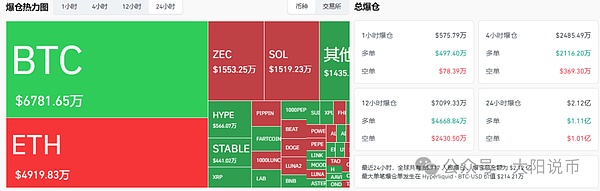
The cryptocurrency market experienced significant volatility, with $212 million in liquidations over 24 hours, including a single $2.14 million Bitcoin liquidation on Hyperliquid. Market sentiment remains nervous, with high turnover reflecting short-term bearishness, though long-term holders remain steady. The Federal Reserve's upcoming meeting is a key focus, as interest rate decisions may influence market direction. Bitcoin’s support is near $88,100, with a potential dip to $85,200–85,900 offering a buying opportunity. Resistance is at $93,400. SOL may see support at $125.8 and $124, with potential accumulation near $120. ETH has supports at $2,955, $2,865, and $2,805, with resistance at $3,282. BNB’s key level is $898; holding above may lead to a bounce toward $939. Meme coins are highly risky, with many projects on BSC and SOL facing extreme volatility and potential scams. High-cap tokens like BIBI are relatively safer. Patience and strict stop-losses are advised. Specific tokens: - 马到成功 (Horse to Success): Accumulating near $2M market cap with strong community support. - ZEC: Showing strength, possibly entering a major upward trend if it holds key levels. - RDNT: Avoid chasing pumps—likely a temporary bounce. - TRUMP: Unlikely to rally this cycle due to locked supply; may perform in the next bull market if Trump remains politically relevant. - STABLE: Bearish due to high fully diluted valuation and lack of catalysts; consider shorting. Overall, December is to accumulate during consolidation while preserving capital for larger opportunities in Q1 2026.

金色财经11 dk önce

12.9 Today's Market: Why the Drop? BTC\SOL\ETH\BNB\RDNT\STABLE\TRUMP\Horse to Success\bibi Trading Advice

金色财经11 dk önce

Financial On-Chain Transformation: A Blueprint for the Overhaul of the U.S. Capital Market

The article "Financial On-Chaining: A Blueprint for the Transformation of U.S. Capital Markets" explores the potential systemic overhaul if the U.S. financial system migrates to blockchain technology, as suggested by SEC Chair Paul Atkins. It outlines seven key structural shifts: 1. Market Dynamics: Transition to T+0 settlement, enabling 24/7 trading and real-time regulatory oversight by the SEC, increasing capital velocity but eliminating traditional market buffers. 2. Banking Sector: Banks would operate with near-transparent balance sheets, reducing risks like asset-liability mismatches but potentially accelerating bank runs. Programmable collateral could unlock new financing efficiency. 3. Real Economy: Democratization of assets through fractional ownership and "micro-IPOs" for SMEs, injecting liquidity premium into U.S. assets. 4. Geopolitics: Digital reinforcement of dollar dominance via tokenized Treasuries and money market funds, attracting global capital through efficiency and transparency. 5. Risk Evolution: Systemic risks would shift from human-driven panics to technical failures (e.g., smart contract bugs, oracle manipulation), making crises faster and more technical. 6. Winners and Losers: Infrastructure builders, new asset managers, and hybrid talent would thrive; traditional intermediaries and opaque industries would decline. 7. Realistic Timeline: Full adoption in two years is unlikely due to technical, legal, and political hurdles, but gradual implementation (e.g., in Treasuries, repos) is inevitable as efficiency drives change.

比推24 dk önce

Financial On-Chain Transformation: A Blueprint for the Overhaul of the U.S. Capital Market

比推24 dk önce

İşlemler

Spot
Futures
活动图片