After the $320 Million Liquid Network Incident: When One Line of Defense Fails, What Can Digital Asset Platforms Still Safeguard?

marsbit2026-09-11 tarihinde yayınlandı2026-09-11 tarihinde güncellendi

Özet

Following a series of recent security incidents in the digital asset space, a key question resurfaces: how should platforms define true security? This is highlighted by the $320 million exploit on the Bitcoin Liquid Network, where assets were transferred not due to compromised keys, but a software vulnerability. Similar events on Cosmos EVM and at Triple-A, involving code bugs and social engineering, underscore a common theme: breaches are often inevitable, but their ultimate impact depends on the depth of a platform's defenses. The critical lesson is that security shouldn't rely on a single, unbreachable gate. The real measure is what happens after the first line fails. Does one compromised credential grant full system access? Can a single point of failure lead to massive asset loss? Effective security lies in layered protections—isolating identities, permissions, critical operations, and asset storage so that a breach in one area is contained. Examining BIT's (formerly Matrixport) updated Trust Whitepaper reveals this philosophy in practice. Its system employs principles like least privilege access, multi-party authorization for sensitive actions, continuous behavioral monitoring, and keeping most assets in cold storage. This creates a series of "gates": a stolen identity doesn't grant full permissions, having a permission doesn't allow independent action, and an online breach doesn't expose core assets. Furthermore, BIT grants its security team a "veto power" to halt pr...

The recent series of security incidents has once again brought the digital asset industry back to a familiar question: What truly constitutes 'security' for a platform?

In early September, a major security incident occurred on the Bitcoin sidechain Liquid Network. Attackers exploited a validation vulnerability in the Elements software, leading to the transfer of approximately 4,000 BTC, worth around $320 million at the time of the incident. Notably, the related PAK and Federation keys themselves were not compromised. This brings to light a more worthy question for discussion: When the keys themselves are not breached, how can an asset transfer that should never have happened still pass through the system?

Similar risks have also emerged in other areas. In August, attackers exploited a critical security vulnerability in Cosmos EVM to attack multiple networks, with six networks actually exploited. The related vulnerability had previously been reported through a bug bounty program. In July, Triple-A fell victim to a social engineering attack where attackers obtained personnel credentials and further accessed the operational environment, ultimately resulting in the transfer of some company-owned assets. However, as client funds were independently stored in trust accounts and isolated from the compromised operational environment, they were not affected.

The causes of these three incidents are different, yet they collectively point to a more realistic issue: Security incidents may be difficult to completely avoid, but when a single link in the code, personnel, or permissions chain is breached, where exactly will the risk stop?

The real thing to guard against is not just 'being breached,' but how far the risk can go.

A more pertinent question than 'whether there was an attack' is: After the first line of defense fails, how much further can the attacker go? If one account is compromised, is that sufficient to perform critical asset operations? If one permission is breached, can they continue to access more core systems? When issues arise in the online environment, how much core asset is truly exposed in the attack path?

This is also a key insight from the recent incidents: The ultimate impact of an attack depends not only on what the attacker breached, but also on how many layers of defense remain in the system after the breach.

If the compromise of a single account can directly access core permissions, or if a problem in the online environment can directly affect a large amount of core assets, then any weak link can be rapidly amplified. Conversely, if there are multiple layers of isolation between permissions, critical operations, risk monitoring, and asset storage, a single breach may not necessarily escalate into a total compromise.

In other words, measuring a platform's security capability is not just about 'whether the first door can be held,' but also about: after the first door is breached, how many doors are left behind it.

Following the attack chain, where are BIT's 'next doors'?

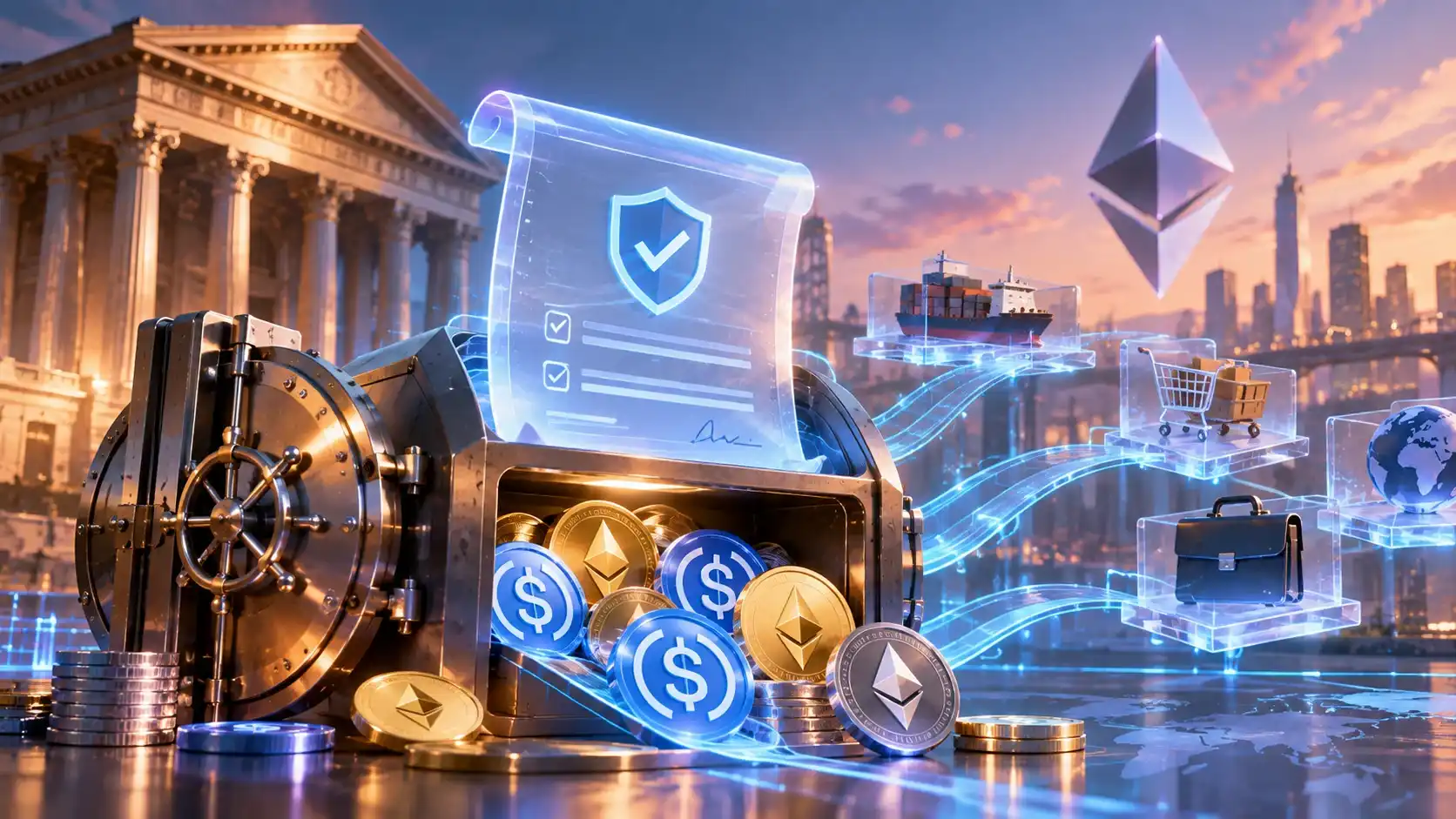
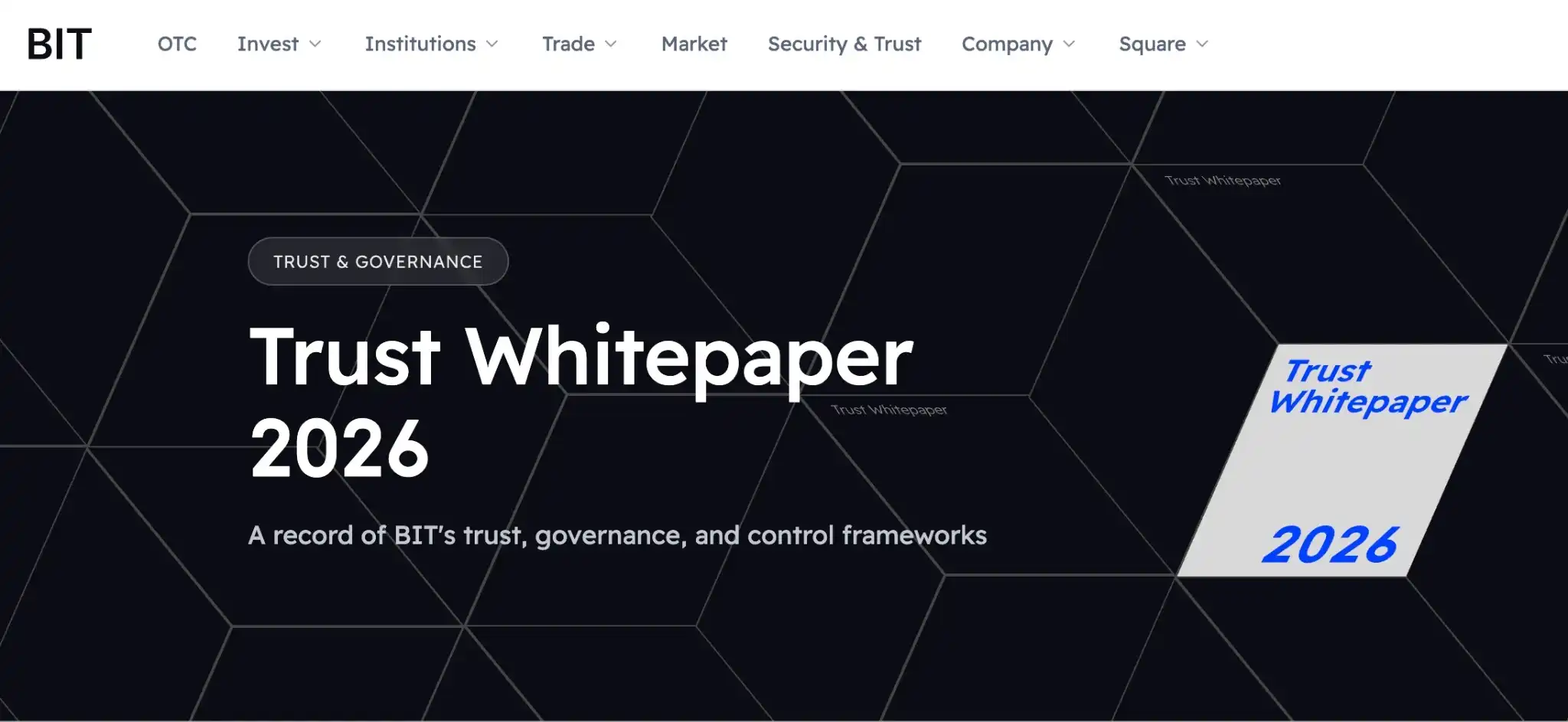
Recently, the global digital financial services platform BIT (formerly Matrixport) released the "BIT Trust Whitepaper" V2.0 (https://www.bit.com/whitepaper). If we re-examine this whitepaper along the question of 'what happens after the first line of defense fails,' one noteworthy aspect is that BIT's security system does not rely on any single line of defense. Instead, it establishes multiple layers of protection between identity, permissions, operations, and assets.
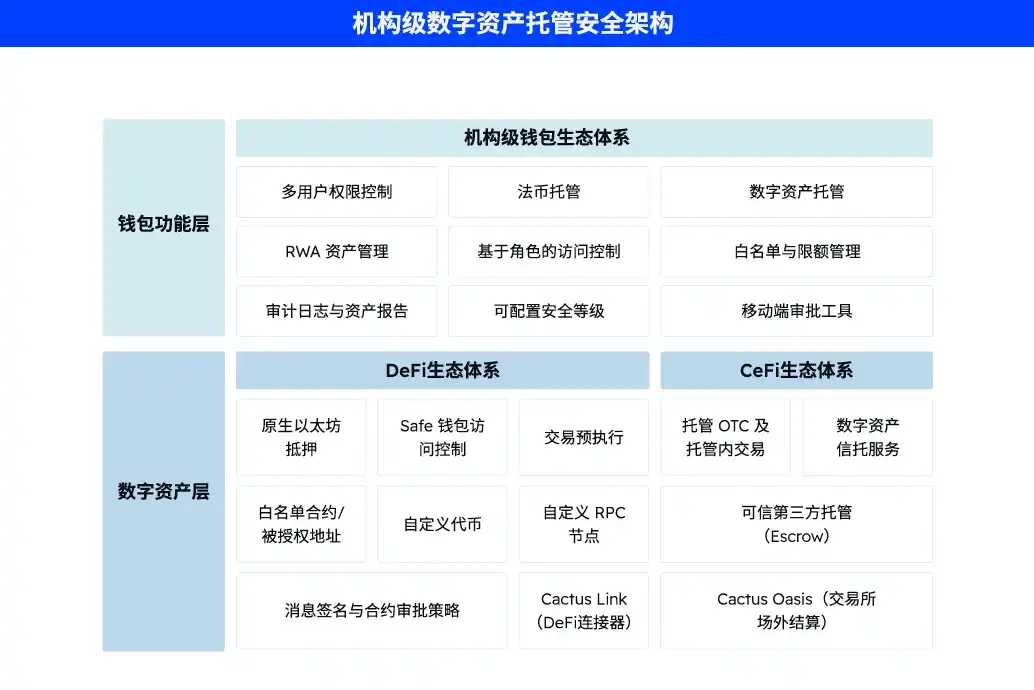
For example, obtaining account credentials does not mean an attacker has all the permissions needed to complete critical asset operations. The whitepaper discloses that BIT limits the systems and operations employees can access based on the principle of least privilege; critical operations involving asset transfers, account security, permission changes, and the generation and approval of transaction instructions require the participation of at least two authorized personnel. This layered approach also extends to institutional-grade digital asset custody scenarios, as exemplified by Cactus Custody.
Successfully passing identity verification does not mean subsequent operations get a continuous 'green light.' BIT conducts ongoing monitoring for behaviors such as abnormal logins, abnormal devices, and abnormal withdrawals. On the asset side, the majority of digital assets are stored in cold wallets, further reducing the exposure of core assets when issues arise in the online environment.

Looking at these mechanisms together, BIT's security logic becomes more intuitive: a compromised identity does not equal obtaining all permissions; obtaining one permission does not equal the ability to independently complete critical operations; passing identity verification does not mean subsequent behaviors are no longer subject to risk assessment; and problems in the online environment do not mean all core assets are simultaneously exposed.

What truly determines how far an attack can ultimately go are precisely these 'does not equal' conditions. This does not mean any attack can be completely avoided, but it does mean that even if one line of defense is breached, there are still opportunities to detect anomalies, restrict permissions, or isolate risks.

The gap in security often lies in what happens after the first door is breached.

When risk is discovered, who has the real authority to press the 'stop button'?

However, having a few more technical lines of defense is not everything. In the Cosmos EVM incident, a noteworthy detail is that the related vulnerability had been reported through a bug bounty program, but based on the information available at the time, it was initially assessed as not leading to the loss of funds in known production network configurations.

This also exposes another often-overlooked issue: Discovering a risk does not mean it has been accurately assessed and adequately addressed.

After a vulnerability is submitted, who determines its severity? If the security team deems the risk unacceptable, do they have the authority to prevent the product from going live? When business progress conflicts with security judgment, who has the final say?

The "BIT Trust Whitepaper" V2.0 discloses that when product plans, requirements, architecture, or launch changes pose significant security risks or do not meet security baselines and compliance requirements, the security team holds a 'one-vote veto' right. They can suspend related activities and require rectification and re-review before proceeding.

The truly noteworthy aspect of this mechanism is not just an additional layer of approval, but that it answers a very practical question: When risk truly emerges, is there someone with the authority to say 'no.' For a security system, the ability to discover problems is important, but ensuring that security judgments can genuinely influence business decisions is equally crucial in determining whether a line of defense is merely written in policy or can truly function effectively.

As business becomes more complex, 'security' is no longer just about assets in a wallet.

As digital financial platforms begin to simultaneously connect different types of assets and financial infrastructure, such as digital assets, U.S. stocks, and RWAs, security issues also extend beyond the wallet and account levels. Who handles the assets, which institutions they pass through, and where they are cleared and held also become important parts of users' risk assessment.

This is also where the "BIT Trust Whitepaper" V2.0 further elaborates on the security and trust system. Beyond risk control and security measures, the whitepaper also discloses the regulatory, audit, and independent verification arrangements corresponding to different business entities. This allows external parties to better assess: who is responsible for what, which mechanisms can be verified, and to what extent these mechanisms cover.

Taking BIT's U.S. stock business as an example, its securities business is operated by Matrix Gelephu Pte. Ltd. and is regulated by the GFSO. The related business also connects to U.S. licensed financial institutions and corresponding clearing and custody infrastructure.

For ordinary users, these seemingly complex financial arrangements can ultimately be boiled down to a few simple questions: Who handles my assets? Through which steps? What are the respective responsibilities of the different institutions? Can the identities and regulatory statuses of these institutions be checked?

This is where 'verifiability' truly becomes meaningful—security cannot rely solely on what a platform claims; it also depends on what users and the outside world can verify.

Looking back at the Liquid Network, Cosmos EVM, and Triple-A incidents, the entry points are completely different, yet they all remind the market: No single line of defense should be assumed to never fail. What truly creates a gap in security may not be a single security technology itself, but who can establish sufficient isolation and checks and balances between identity, permissions, operations, assets, and organizational decision-making, making it harder for a local breach to escalate into a total compromise.

From this perspective, what is noteworthy about the "BIT Trust Whitepaper" V2.0 is not just how many security measures it lists, but whether these measures can form a complete defense system: if one link fails, there is another layer; if the next layer fails, there is still an opportunity to continue identifying, blocking, and isolating risks.

For digital asset platforms, 'never being attacked' may be a difficult promise to make permanently. But another thing can be continuously built: True security is ensuring that even if one line of defense fails, a single breach does not easily escalate into a total compromise. And when these lines of defense not only exist but can also be continuously verified by the outside world, 'trust' is no longer just a statement made by the platform itself.

Trend Kriptolar

İlgili Sorular

QAccording to the article, what common question arises for digital asset platforms following security incidents like the Liquid Network hack?

AThe article highlights the recurring question of how a digital asset platform can truly be considered 'secure,' especially when an asset transfer can occur even without the core keys being compromised.

QWhat key shift in security philosophy does the article suggest is needed, based on the recent incidents?

AThe article suggests that the focus should shift from merely preventing the initial breach to limiting how far an attack can progress ('risk propagation'). The key measure of security is not just if the 'first gate' holds, but how many subsequent gates exist behind it.

QHow does BIT's security approach, as described in its Trust Whitepaper, implement the concept of 'multiple gates' or layers of defense?

ABIT implements multiple layers of defense through principles like least privilege access, multi-signature authorization for critical operations (requiring at least two authorized personnel), continuous risk monitoring for anomalous behavior, and the physical isolation of most digital assets in cold wallets. This ensures a breach in one area (e.g., a credential) does not grant full system access.

QWhat specific power does BIT grant its security team to ensure safety judgments impact business decisions?

ABIT grants its security team a 'one-vote veto' power. This allows them to suspend product launches, feature changes, or other activities if they identify major security risks or non-compliance with security baselines, ensuring safety concerns can override business pressures.

QBeyond technical safeguards, what does the article identify as a crucial component for building user trust in a platform's security?

AThe article identifies 'verifiability' as crucial. Trust is built not just on what a platform claims, but on what users and external parties can independently verify—such as regulatory statuses, audit arrangements, and clear disclosures about which entities handle assets at different stages.

İlgili Okumalar

Founders Fund Leads $5 Million Token Purchase of ANVL: What Exactly is This "Non-Lending" DeFi Protocol Doing?

On October 6th, Founders Fund, led by Peter Thiel, invested $5 million to purchase ANVL tokens from the DeFi protocol Anvil's treasury. The round included participation from Pantera Capital and others, alongside angel investors like Compound founder Robert Leshner. Anvil is not a lending protocol. Instead, users lock assets like ETH or USDC into its vault to generate a verifiable on-chain "Letter of Credit" (LOC). This LOC acts as an economic guarantee, proving the user has sufficient locked collateral to back financial commitments, without borrowing funds. The protocol applies this mechanism to use cases like payment guarantees for merchants (via integration with Flexa) and enabling instant deposits for traders on exchanges like Bullish. Anvil's economic model is unique: it charges zero protocol fees. Its native token, ANVL, derives value solely from governance rights over parameters like supported collateral types. The total supply is 100 billion tokens. Despite an 83% price surge on the investment news, ANVL remains down approximately 89% from its all-time high. The protocol's Total Value Locked (TVL) has also fallen about 87% from its peak of ~$109 million in July 2025 to around $14 million currently. The investment represents a strategic bet that on-chain credit guarantees could become a significant category. Key factors to watch include the rate of real enterprise adoption through Anvil's SDK, the long-term sustainability of its zero-fee model, and the broader migration of traditional trade finance needs to blockchain infrastructure.

marsbit10 dk önce

Founders Fund Leads $5 Million Token Purchase of ANVL: What Exactly is This "Non-Lending" DeFi Protocol Doing?

marsbit10 dk önce

Mathematical Explosion: OpenAI Overnight Solves 722 Math Problems, Quasi-Riemann Hypothesis Proven

OpenAI has stunned the global mathematics and AI communities by releasing a GitHub repository containing 722 manuscripts addressing 372 previously unresolved major mathematical problem families, all reportedly generated by an unreleased internal AI model. The announcement, made without prior peer review, has provoked both excitement and alarm among mathematicians. The most notable breakthrough claims to be a proof of a "quasi-Riemann Hypothesis," establishing a zero-free region for Dirichlet L-functions with real part greater than 7/8 and eliminating the Landau-Siegel zeros—a significant leap in analytic number theory. The work has reportedly undergone formal verification using Lean. Other highlighted results include: unconditionally proving the NP-hardness of the basic semidefinite programming (SDP) threshold for approximation algorithms, based solely on P ≠ NP and circumventing the Unique Games Conjecture; proving the rational Hodge conjecture for abelian varieties with complex multiplication (CM); and resolving both the symmetric and asymmetric Mahler conjectures in convex geometry. According to OpenAI, most proofs were generated automatically by the model, with an average "thinking" time of just three hours per problem. This unprecedented scale and speed have sparked intense debate about the future of human mathematicians. While some express fear about the concentration of intellectual power, others see it as the dawn of a new era of discovery driven by AI. The mathematical world is now tasked with scrutinizing these claims, which, if verified, would represent historic milestones.

marsbit44 dk önce

Mathematical Explosion: OpenAI Overnight Solves 722 Math Problems, Quasi-Riemann Hypothesis Proven

marsbit44 dk önce

As Midterm Elections Approach, the Real Trade in U.S. Stocks Isn't About Who Wins

With the US midterm elections approaching in early November, political uncertainty has re-emenrged as a market variable. While market participants are weighing potential shifts in congressional control and policy direction, historical data suggests midterm elections themselves are not a definitive negative catalyst for US equities. Since 1937, the S&P 500 has averaged a positive gain of 9.2% in midterm election years, though this lags behind the 13.3% average for non-election years. A more consistent historical pattern is increased market volatility and a tendency for stronger performance concentrated in the fourth quarter, as political uncertainty is resolved. The article, citing analysis from J.P. Morgan and Capital Group, argues that the market's primary concern is policy path uncertainty rather than which party wins. This uncertainty tends to depress markets in the run-up to the vote, with a potential rebound afterward as the political risk premium dissipates. However, the article cautions against attributing market performance solely to the election. Recent midterm years like 2018 and 2022 saw significant market declines primarily driven by factors like Federal Reserve tightening and inflation, not the election outcome itself. The core argument is that the midterm election's impact on markets is often secondary to more fundamental drivers. Regardless of whether the result is a unified or divided government, the market's longer-term trajectory has historically been determined by underlying economic conditions. For the current environment, the key variables to watch post-election are not political labels but the path of interest rates, corporate earnings trends, and whether any actual policy changes materially alter cash flow expectations for businesses. The election may influence sentiment and policy expectations, but the sustainability of any year-end rally will ultimately depend on these core fundamentals of profitability, rates, and economic data.

marsbit49 dk önce

As Midterm Elections Approach, the Real Trade in U.S. Stocks Isn't About Who Wins

marsbit49 dk önce

AI Can't Change 'DNA': How Long Can SanDisk Stay Strong?

**AI Cannot Alter the "DNA": How Much Longer Can Western Digital's Run Last?** This analysis examines the sustainability of the current "super cycle" for NAND flash memory, driven by AI, with a focus on Western Digital (WD). The core argument is that while AI demand has fundamentally shifted NAND's role from a data warehouse to an essential component on the compute path, especially for AI inference, this does not eliminate the industry's cyclical nature. The piece first assesses the supply-demand dynamics. On the supply side, major producers are showing capital expenditure restraint for NAND, prioritizing DRAM/HBM. Capacity growth through 2028 relies heavily on technological upgrades (increasing 3D layers to 300+) and expansion primarily from China's YMTC, rather than new fabs. Global new fab capacity from players like Samsung and WD/Kioxia is concentrated post-2029. This results in estimated bit supply growth (CAGR ~24% for 2026-2028) largely driven by higher per-wafer output. Demand is undergoing a structural shift. AI-related NAND demand (for data lakes, KV cache, and staging) is forecast to grow at a 75% CAGR from 2025-2028, becoming the dominant driver. Data center demand will surpass 50% of total NAND demand in 2026. Consumer demand (PC, smartphone) is being squeezed and is expected to decline or stagnate. A key 2027 demand catalyst is NVIDIA's Rubin platform with its dedicated contextual memory storage (ICMS). The analysis concludes that a supply-demand deficit will persist into 2027. However, 2028 is identified as a potential inflection point where supply (led by YMTC's new fab) could outpace demand, ending the price rally. For Western Digital, the analysis models a more conservative path than management's guidance. It forecasts Average Selling Price (ASP) peaking in FY28 (ending June 2028) before declining in FY29-30 as the market loosens, though supported by long-term agreements (LTAs) and a higher mix of data center products. Consequently, margins and profits are expected to peak in FY28 and then contract. The valuation suggests WD's current price largely reflects a neutral scenario, with limited short-term upside unless the market becomes convinced that prices will remain stable post-2028. The fundamental takeaway is that despite AI's transformative impact, NAND's cyclical "DNA" remains intact.

marsbit1 saat önce

AI Can't Change 'DNA': How Long Can SanDisk Stay Strong?

marsbit1 saat önce

İşlemler

Spot

Popüler Makaleler

ONE Nasıl Satın Alınır

HTX.com’a hoş geldiniz! Harmony (ONE) satın alma işlemlerini basit ve kullanışlı bir hâle getirdik. Adım adım açıkladığımız rehberimizi takip ederek kripto yolculuğunuza başlayın. 1. Adım: HTX Hesabınızı OluşturunHTX'te ücretsiz bir hesap açmak için e-posta adresinizi veya telefon numaranızı kullanın. Sorunsuzca kaydolun ve tüm özelliklerin kilidini açın. Hesabımı Aç2. Adım: Kripto Satın Al Bölümüne Gidin ve Ödeme Yönteminizi SeçinKredi/Banka Kartı: Visa veya Mastercard'ınızı kullanarak anında Harmony (ONE) satın alın.Bakiye: Sorunsuz bir şekilde işlem yapmak için HTX hesap bakiyenizdeki fonları kullanın.Üçüncü Taraflar: Kullanımı kolaylaştırmak için Google Pay ve Apple Pay gibi popüler ödeme yöntemlerini ekledik.P2P: HTX'teki diğer kullanıcılarla doğrudan işlem yapın.Borsa Dışı (OTC): Yatırımcılar için kişiye özel hizmetler ve rekabetçi döviz kurları sunuyoruz.3. Adım: Harmony (ONE) Varlıklarınızı SaklayınHarmony (ONE) satın aldıktan sonra HTX hesabınızda saklayın. Alternatif olarak, blok zinciri transferi yoluyla başka bir yere gönderebilir veya diğer kripto para birimlerini takas etmek için kullanabilirsiniz.4. Adım: Harmony (ONE) Varlıklarınızla İşlem YapınHTX'in spot piyasasında Harmony (ONE) ile kolayca işlemler yapın.Hesabınıza erişin, işlem çiftinizi seçin, işlemlerinizi gerçekleştirin ve gerçek zamanlı olarak izleyin. Hem yeni başlayanlar hem de deneyimli yatırımcılar için kullanıcı dostu bir deneyim sunuyoruz.

1.0k Toplam GörüntülenmeYayınlanma 2024.12.12Güncellenme 2026.09.28

ONE Nasıl Satın Alınır

Tartışmalar

HTX Topluluğuna hoş geldiniz. Burada, en son platform gelişmeleri hakkında bilgi sahibi olabilir ve profesyonel piyasa görüşlerine erişebilirsiniz. Kullanıcıların ONE (ONE) fiyatı hakkındaki görüşleri aşağıda sunulmaktadır.

活动图片