Author:0xResearch
Compiled by: Deep Tide TechFlow
Deep Tide Introduction: The Helium token surged 5.7x from its bottom in two weeks. The apparent catalysts were city partnerships and governance proposal approvals, but on-chain data shows revenue actually plummeted by 82%. This article dissects the real causes of the short squeeze, helping investors distinguish between genuine demand and position squeezes to avoid buying at an emotional peak.
Good morning and happy Thursday!
Strong ETF inflows from institutions, coupled with on-chain breakthroughs by players on the Robinhood Chain, continue to paint a constructive picture for on-chain fundamentals, capital flows, and price action.
Below, we break down HNT's 5.7x rally, separating the true fundamental catalysts from the positioning dynamics that turned it into a short squeeze. The key question now is whether the burn from operator data offload can accelerate enough to outpace issuance and validate this valuation reset.

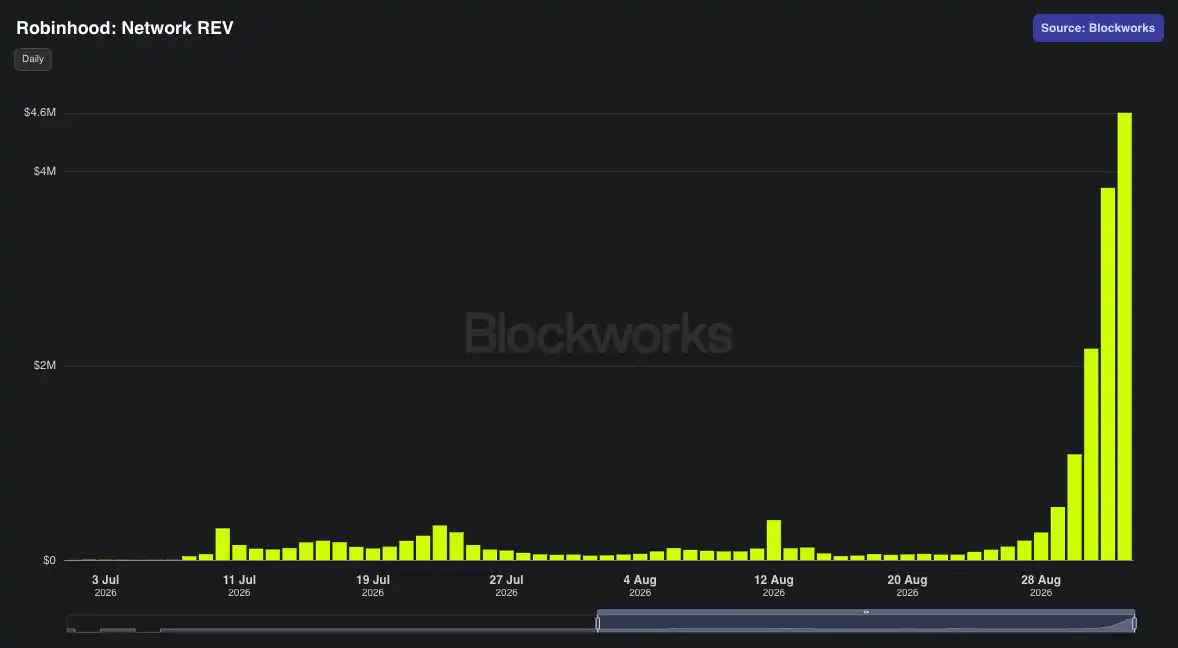
Block space demand on the Robinhood Chain is recovering, with REV breaking $4.6 million yesterday. This marks 11 consecutive days of rising demand on this young L2, bringing it to 97% of total L2 profits and 42% of all on-chain network revenue. One can't help but annualize that number and imagine even greater implications for HOOD stock and the network's applications.
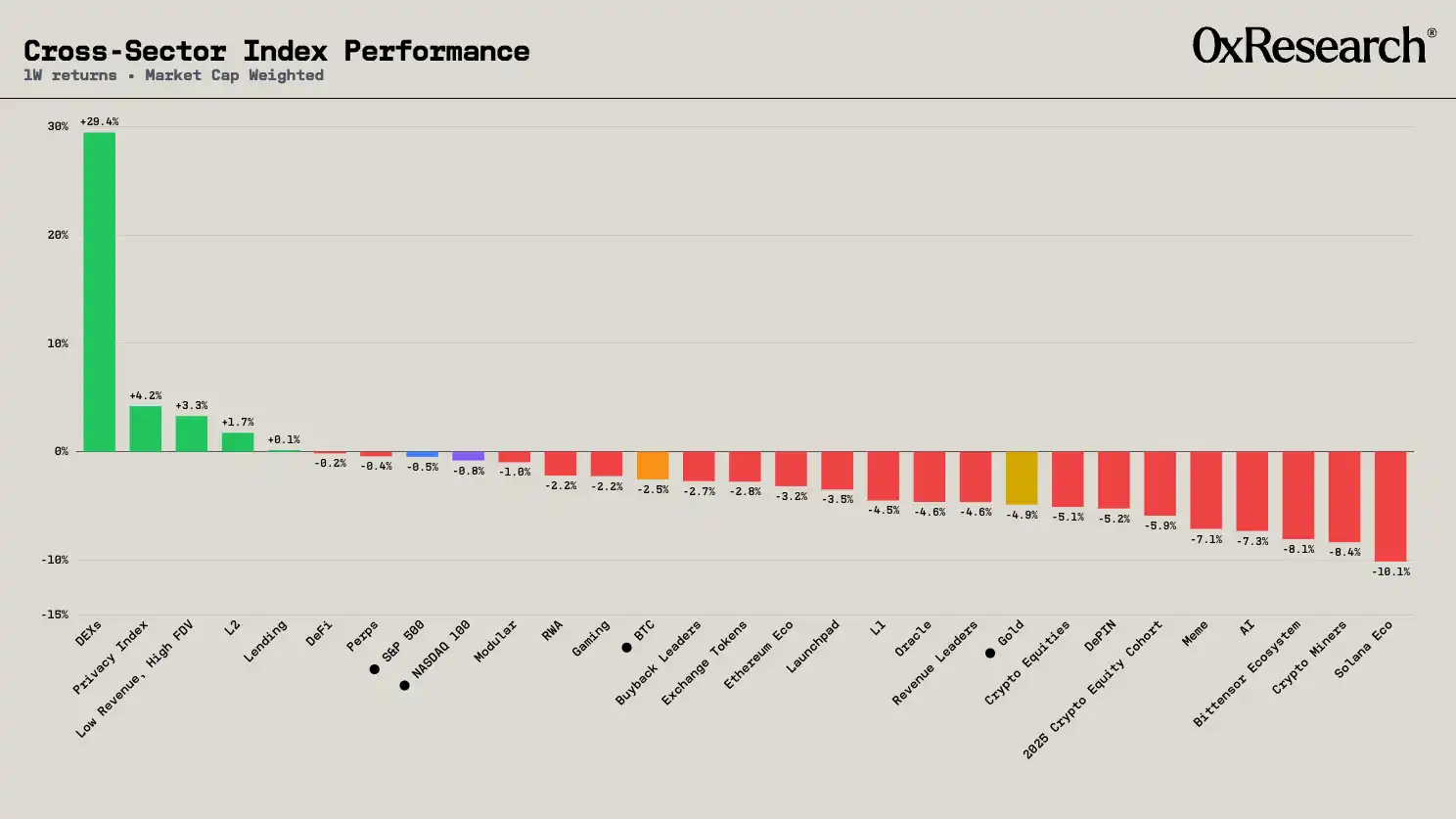
Uniswap is one such winner, being the largest DEX on the Robinhood Chain. Recent token incentive adjustments and a breakthrough deployment on Robinhood drove the token up 33% this week, leading index gains during a week of sideways movement for major coins and a stock market dip. Index data confirms this, with the DEX sector up 29% this week, a clear divergence from overall price action. UNI drove that outperformance.
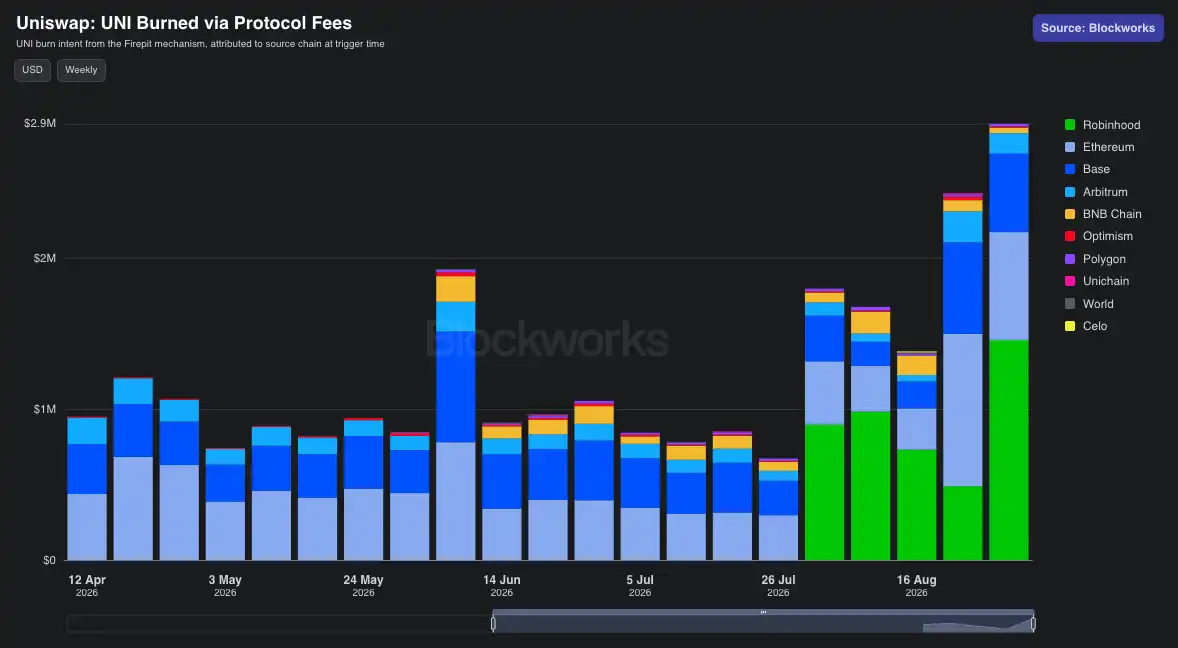
The launch of Robinhood Chain represents a "growing the pie" scenario. It's not taking volume from existing platforms but bringing incremental demand to the entire on-chain economy. For Uniswap, this is evident in the UNI burned via protocol fees, which are at weekly highs, with over 50% of the burn originating from Robinhood Chain. Similarly, over the past 30 days, Robinhood Chain accounted for more than 50% of all on-chain Uniswap total volume. Looking at recent activity, deployment volume on Robinhood exceeded the combined activity of all other chain deployments, including the ETH mainnet.
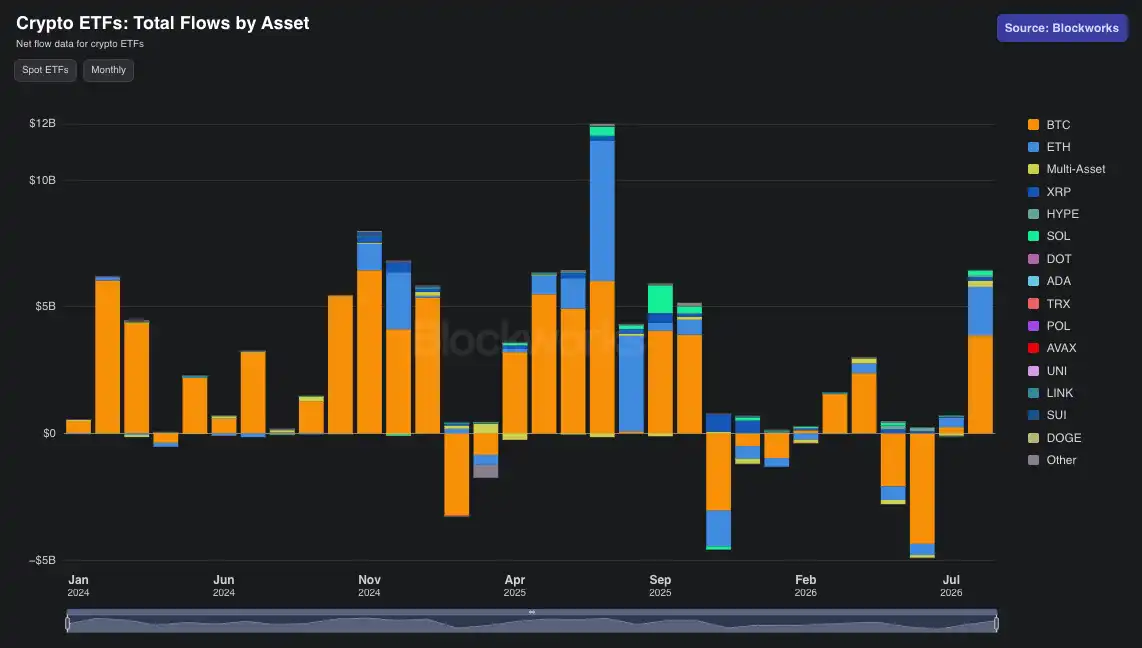
Beyond the on-chain battlefield, ETFs appear to be bottoming in AUM, suggesting major tokens might be forming a higher time frame low. In August, BTC ETFs added $3.871 billion, and ETH ETFs added $1.911 billion. SOL and HYPE products also saw demand, albeit far less than their predecessors.
Taken together, flows, fundamentals, and price action all support an optimistic outlook for year-end and beyond.
Anatomy of the Helium Short Squeeze
HNT hit a multi-year low of $0.167 on August 15, with a market cap nearing $31 million. Two weeks later, the token touched $0.96 intraday, a 5.7x rally from trough to peak. As of this morning, it trades around $0.50, still up over 125% this week with a market cap of about $95 million. This rally warrants dissection because the catalysts were real, positioning amplified them, and the on-chain record is more interesting than either narrative.
The news unfolded in four steps. Helium published HIP-150 on August 21, proposing to redirect Mobile subDAO issuance to deployers carrying paid data traffic. On August 28, Helium announced Celina, Texas had switched its public Wi-Fi to operator coverage on the network. Shorts got crushed over that weekend, the community passed HIP-150 on August 31 with 96.2% voting power in favor, and Helium followed on Tuesday with the launch of HeliumOS, a B2B platform giving operators and MVNOs tools to lease coverage rather than build it themselves.
The US Census Bureau listed Celina as the fastest-growing US city among those with over 20,000 residents. The city layered Helium's operator offload onto its existing Wi-Fi in public libraries, senior centers, and downtown stores, with phones connecting via Passpoint credentials on their SIM cards. Helium's oracle showed the entire Mobile network transmitted 78,000 GB on the day of the announcement, with Celina accounting for roughly 0.1%.
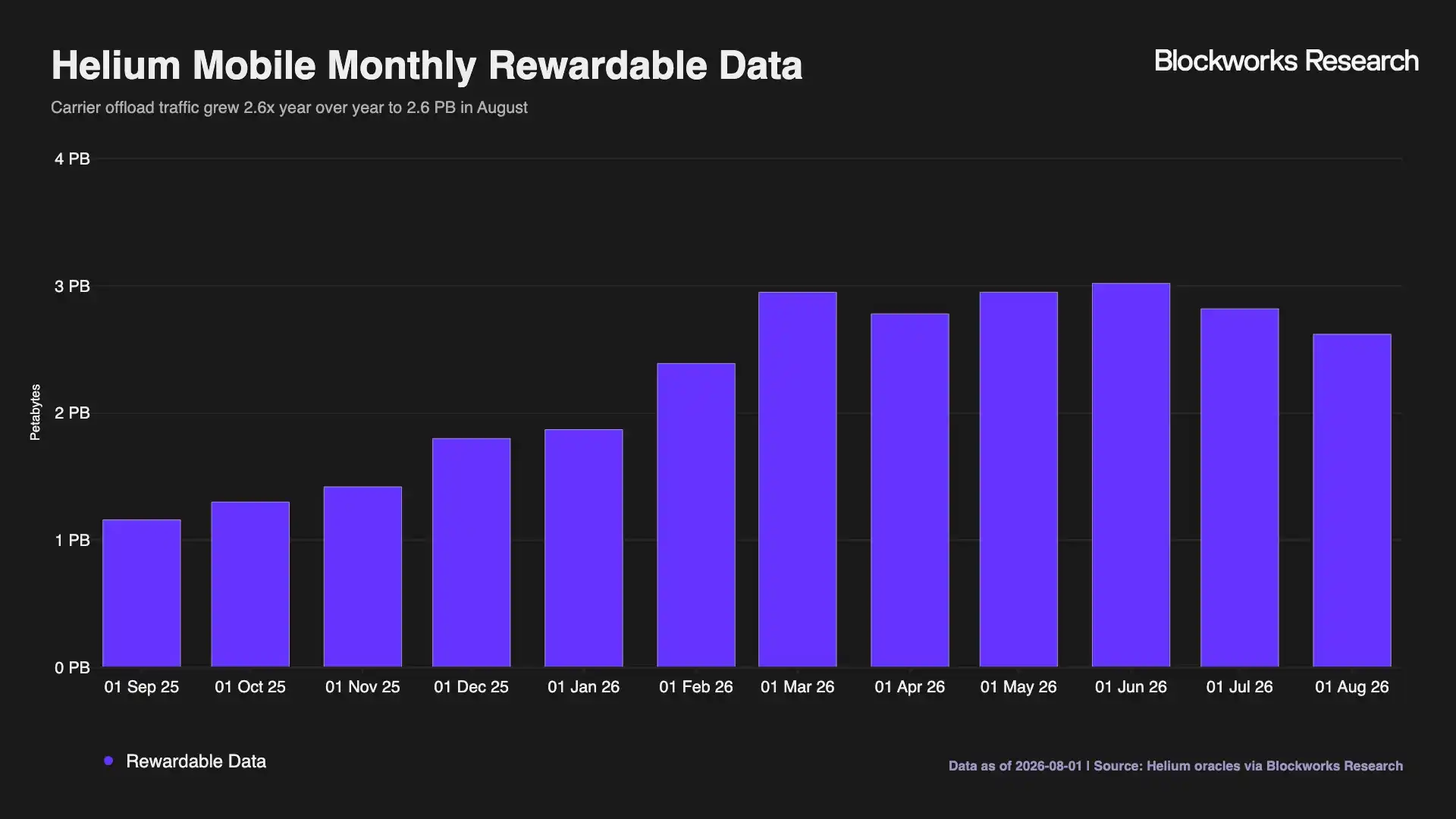
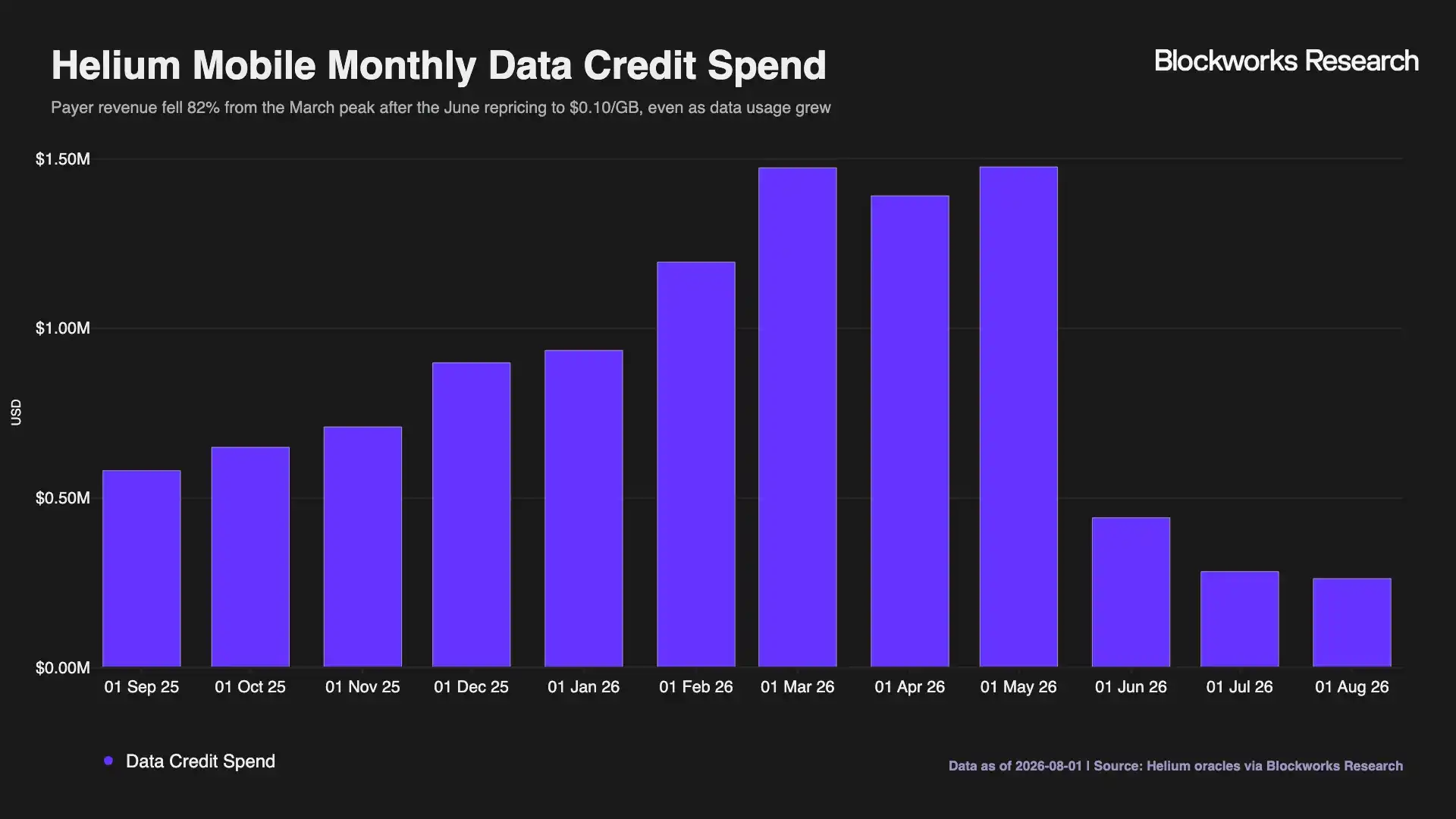
Zooming out, fundamentals diverge in two directions. Usage looks strong, with rewardable operator offload data up 2.4x year-over-year from 1.26 PB in August 2025 to 3.06 PB last month, and daily traffic holding the trend through the rally without an inflection. Revenue goes the other way. Payors spent $263,000 in Data Credits on mobile traffic in August, down 82% from a $1.47 million peak in March.
As we reported in June, the $0.50/GB rate behind that peak was subsidized by Nova Labs, burning its own HNT as a stopgap while operators negotiated location-based pricing ranging from zero in low-value sites to over $0.50 in airports. HIP-143 brought the nominal rate to about $0.10/GB, a level operators could accept at scale, and oracle data shows the subsidy tapered off in June. The March peak measured Nova's balance sheet as much as operator demand. August's DC burn is the first clean read of operators' organic spend.
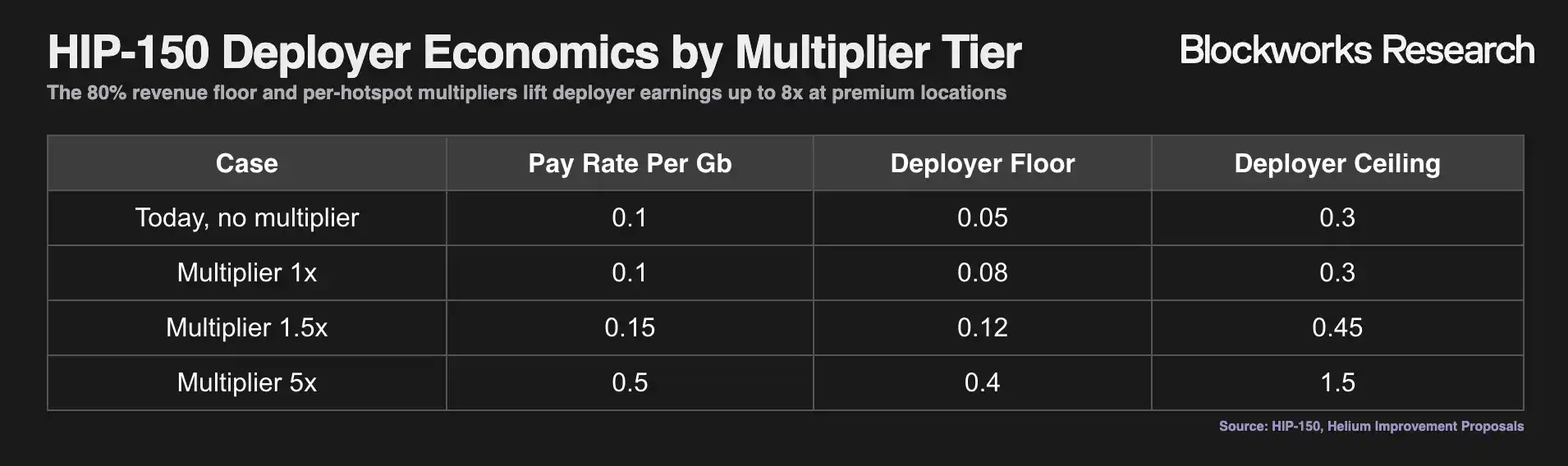
The subsidy's removal explains the urgency of HIP-150. HIP-149, passed in July, set deployer floor prices at 50% of the new operator rate, or $0.05/GB. August's proposal restored their economic incentive, raising floors to 80% ($0.08/GB) with multipliers up to 5x per hotspot, formalizing location-based pricing that operators had already negotiated off-chain, while redirecting Backstop mints directly to the deployer data rewards pool, plugging a leak where the DAO minted $1.60 worth of HNT for every $1.00 that reached deployers. Nova Labs will provide its service provider rewards through July 2027, raising the Mobile data bucket's share of the subDAO from 70% to 94%.
The valuation math remains harsh. August's Data Credit spend annualizes to ~$3.1 million against a $95 million market cap, or about 30x payor revenue, and the supply side works against holders.
HIP-149's growth subsidy mints ~5.96 million HNT per month for the first year into a Nova-managed treasury. That lifts the effective max supply from 206 million to 347 million tokens. So at current rates, operator burn runs at less than a tenth of monthly issuance.
Positioning filled the gap. HNT perpetual funding rates dropped below -1.2%, with $1.6 million in short liquidations over the weekend against less than $200,000 for longs. Volume hit $248 million on August 30, exceeding the entire market cap.
The tape describes a short squeeze that found a good story.
This squeeze has repriced HNT to a level where growth bets must pay off.
Nova sold the consumer business, ended the subsidy, and now funds operator expansion via the HIP-149 treasury. So value accrual can only come from operator offload burn growth, at a pace that exceeds new issuance.
Management set its own target in June: an inflection point at 7 to 10x current traffic. That's when Helium's roaming share from partner operators reaches double digits and pricing leverage flips.
HIP-150 keeps deployers solvent on the way there. HeliumOS is the platform layer promised in Di Dio's roadmap, though its launch customer Affinity Ventures owns Noble Mobile and recently acquired Helium Mobile.