Cantor Fitzgerald faces Senate Democrat’s questions over Tether ties

cointelegraphPublished on 2026-10-09Last updated on 2026-10-09

Abstract

US investment bank Cantor Fitzgerald is facing scrutiny from Senator Richard Blumenthal, a Senate Democrat, over its partnership with stablecoin issuer Tether. Blumenthal has demanded records on the firm's monitoring of Tether's compliance with banking and sanctions laws, all related communications involving former Cantor CEO Howard Lutnick, and details of Lutnick's financial gains. The senator alleges Cantor's 5% stake in Tether, for which it custodies billions in Treasury reserves, surged in value from $600 million to $10 billion after Donald Trump returned to office, with Howard Lutnick receiving over $250 million. Blumenthal links the inquiry to a Senate report alleging Tether's USDT is used by Iran's shadow banking network, calling the partnership a national security concern. Tether stated it has frozen nearly $550 million in Iran-linked assets this year. Blumenthal has given Cantor until Oct. 23 to respond to questions covering the partnership terms, independent audits, and any reviews of terminating the relationship.

US investment bank Cantor Fitzgerald is facing scrutiny from a Senate Democrat over its ties to Tether, with Senator Richard Blumenthal demanding records on the firm’s partnership with the stablecoin issuer and how much Commerce Secretary Howard Lutnick’s family has made from the arrangement.

In a letter on Thursday, Blumenthal, the ranking Democrat on the Senate’s Permanent Subcommittee on Investigations, asked Cantor chairman Brandon Lutnick to explain how it monitors Tether’s compliance with banking and sanctions laws, along with all communications involving Howard Lutnick about Tether, including after he left Cantor.

“Disturbingly, Cantor Fitzgerald’s lucrative business arrangements with Tether come at the expense of America’s national security,” Blumenthal wrote.

The inquiry puts Cantor’s lucrative partnership with Tether under scrutiny. Cantor Fitzgerald acquired rights to a 5% stake in Tether in 2024 and reportedly custodies tens of billions of Tether’s US Treasury bill reserves. Blumenthal alleges that Cantor’s stake in Tether increased in estimated value from $600 million to $10 billion since Trump returned to office, and that Howard Lutnick received more than $250 million in that period, including a $192 million distribution from Cantor Fitzgerald.

The letter follows a report by the Democratic investigators on the Senate Permanent Subcommittee on Investigations last month alleging Tether’s USDt (USDT) has become a key tool for Iran’s shadow banking network.

Blumenthal called on the US Treasury and Justice Department to investigate potential sanction violations. Tether responded with a statement saying it has been working with law enforcement for years and has frozen nearly $550 million in Iran-linked USDT this year.

“Just as Tether has made untold millions in interest and investments from the stablecoins used in these illicit activities, so has Cantor Fitzgerald profited from its relationship with Tether,” Blumenthal wrote in his latest letter to Cantor.

Cointelegraph reached out to Cantor Fitzgerald and Tether but did not receive an immediate response.

Cantor-Tether ties date back to 2021

Cantor’s relationship with Tether began in 2021, when it started acting as a custodian for a portion of the US Treasuries backing the stablecoin issuer’s reserves.

Howard Lutnick oversaw Cantor as chairman and CEO during that period and helped negotiate its investment in Tether in April 2024.

Lutnick stepped down from Cantor after the Senate confirmed him as commerce secretary in February 2025. The firm then named his son Brandon chairman and his other son vice chairman.

Related: Securitize, Cantor target tokenized IPOs for public markets

Beyond earnings and compliance records, Blumenthal is seeking the terms of Howard Lutnick’s divestiture from Cantor and details of any other loan or financing Tether provided to Lutnick or his family to facilitate the transfer of ownership to his children.

The senator has also asked whether Cantor requires independent audits of Tether, whether it has ever reviewed terminating the partnership, and what steps it has taken to investigate allegations of illicit finance and sanctions evasion.

Blumenthal has asked Cantor to respond by Oct. 23.

Magazine: China’s P2P stablecoin wallets surge 43x, Korea’s $450B crypto economy: Asia Express

Trending Cryptos

Related Questions

QWhy is Cantor Fitzgerald facing scrutiny from Senator Richard Blumenthal?

ACantor Fitzgerald is facing scrutiny from Senator Richard Blumenthal due to its business ties to Tether, the stablecoin issuer. The senator is questioning the partnership, its potential impact on national security, and how much money the family of former Cantor CEO and current Commerce Secretary Howard Lutnick has made from the arrangement.

QWhat specific records and information has Senator Blumenthal demanded from Cantor Fitzgerald?

ASenator Blumenthal has demanded records on Cantor's partnership with Tether, including how it monitors Tether's compliance with banking and sanctions laws, all communications involving Howard Lutnick about Tether, the terms of his divestiture from Cantor, and details of any loans or financing Tether provided to the Lutnick family for the ownership transfer.

QWhat are the core allegations Senator Blumenthal makes about the Cantor-Tether partnership?

ASenator Blumenthal alleges that Cantor's lucrative partnership with Tether, which includes custodied T-bill reserves and a 5% ownership stake, comes at the expense of U.S. national security. He also states that Cantor's stake in Tether's value increased from $600 million to $10 billion after Trump returned to office, with Howard Lutnick receiving over $250 million in that period.

QWhat specific concerns about Tether did a recent Senate report highlight?

AA recent Senate report alleged that Tether's USDt (USDT) stablecoin has become a key tool for Iran's shadow banking network, facilitating potential sanction violations.

QHow did Tether respond to allegations about its use for illicit activities in Iran?

ATether responded to the allegations by stating it has been working with law enforcement for years and that it has frozen nearly $550 million in Iran-linked USDT stablecoins during the current year.

Related Reads

Conversation with Macro Analyst Jordi Visser: Micron Has 60%-80% Upside, the Longevity Economy Is a High-Confidence Main Theme

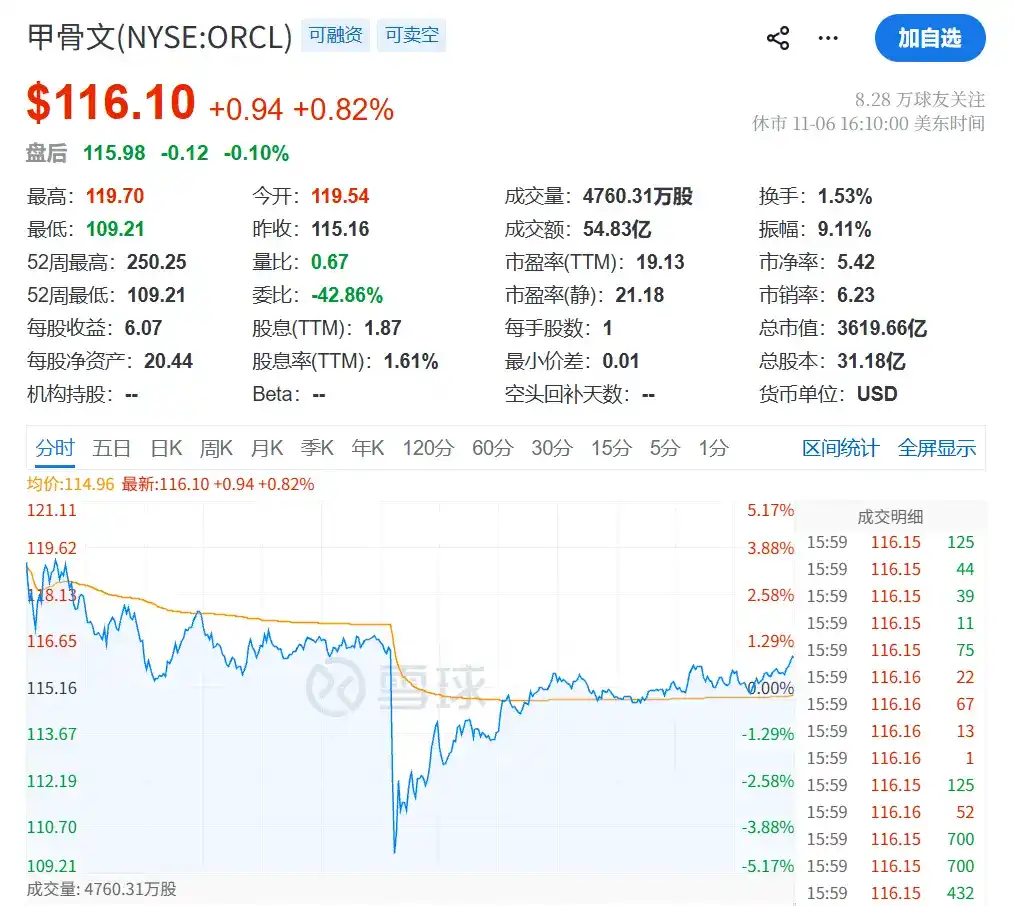
Macro analyst Jordi Visser argues that AI is the sole real driver of the economy today, with traditional GDP metrics failing to capture its value—AI-driven productivity shows up in corporate profit margins instead, as large firms grow revenue while hiring freezes. He attributes rising Treasury yields to AI-related capex and debt issuance, not Fed policy, and views credit default swap widening as a concentration-risk hedging issue rather than an AI bubble. He expects hyperscaler external financing to peak as data centers come online and free cash flow turns positive (citing Oracle's guidance). On labor, he sees Microsoft's buyout of 27% of its workforce as a template: AI-driven revenue-per-employee surges will push governments toward redistributing profits from capital to labor via tax restructuring, since personal income tax bases erode. He warns the market is discounting risks like labor turmoil, political gridlock, memory/data center bottlenecks, and cybersecurity. His key themes are agentic compute and the longevity economy. He is bullish on Eli Lilly as the purest longevity play, predicting it will become the S&P 500's largest company by 2030, and on Micron, which he re-entered around $800 with only ~10% downside and 60-80% upside, citing humanoid robot RAM demand, SpaceX's 10GW compute plan, and long-term supply agreements through 2030. He also holds crypto as his largest allocation, expecting 2027 to mark a breakout year for blockchain commercial applications and payment networks.

marsbit1h ago

Conversation with Macro Analyst Jordi Visser: Micron Has 60%-80% Upside, the Longevity Economy Is a High-Confidence Main Theme

marsbit1h ago

Michael Saylor: Four Centuries of Digital Credit Evolution

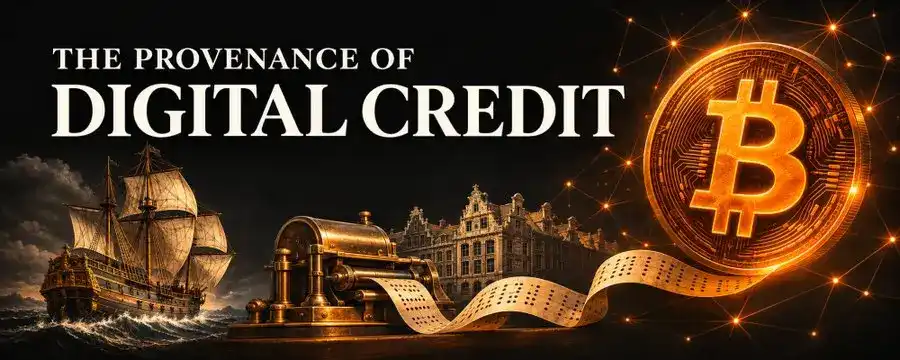
Michael Saylor traces the four-century evolution of digital credit, showing how centuries of financial infrastructure paved the way for Bitcoin-based corporate treasuries. The story begins in 1602 with the Dutch East India Company, which separated a company's capital duration from investors' holding periods through transferable shares. Preferred stock followed, exemplified by the Baltimore and Ohio Railroad's 6% perpetual preferred dividend in 1836 and Delaware's 1899 recognition of distinct share classes. Exchanges and tickers—from the 1792 Buttonwood Agreement to the 1867 stock ticker and 1971 Nasdaq—gave ownership a public market. U.S. securities and commodities law (1922–1974) established the distinction between assets a company holds and securities it issues. The 1940 Investment Company Act's "40% test" still shapes how bitcoin treasury companies use common stock, preferred stock, and debt. Tax law dating to 1921–1954 distinguishes return of capital from income, allowing preferred dividends to reduce cost basis before gains are realized. Shelf registration (Rule 415, 1982–1983) and at-the-market programs (1982, 2005) let companies prepare financing in advance and raise capital at market prices. Buybacks, recognized since 1828 with the 1982 Rule 10b-18 safe harbor, let firms manage capital in both directions. Bitcoin, launched in 2008–2009 and classified as a commodity by the CFTC in 2015, provides a new reserve asset, while companies supply capital structure, dollar liquidity, and distribution policy. Digital credit thus combines over 400 years of corporate ownership transfer, roughly 190 years of U.S. preferred stock, more than a century of tax cost-recovery rules, and four decades of modern shelf and ATM regulation into a familiar framework for investors.

marsbit3h ago

Michael Saylor: Four Centuries of Digital Credit Evolution

marsbit3h ago

The Hidden Risks Behind Anthropic's Nearly $1 Trillion Bet

Anthropic's IPO filing reveals a fragile, high-risk financing mechanism behind its AI ambitions. The company has committed to up to $895.4 billion in data center spending through 2045, with profits squeezed by rising compute costs. Rather than paying upfront for hardware, Anthropic relies on supplier-backed financing: Broadcom arranged a $63 billion equipment financing deal under which it absorbs losses if Anthropic defaults—up to roughly $43 billion once equipment is delivered. Google and AMD similarly tie funding to hardware leases or deployments. This shifts risk onto chipmakers' balance sheets, and because custom TPUs serve a narrower ecosystem than Nvidia GPUs, resale risk is higher. Analysts warn that while individual loans appear safer, risk concentration across the system is rising and harder to assess. Anthropic also can issue up to $42 billion in convertible notes to Broadcom to cover rent, with interest rates rising from 9% to 13% and conversion terms worsening if revenue targets are missed. Despite holding $146.6 billion in liquidity as of September 30, its massive forward obligations and tangled partnerships could limit access to investment-grade financing. Key concerns: whether revenue growth can outrun compute costs and cover future commitments, and whether drawing on credit lines signals distress. Anthropic's Direct initiative—separating data center leasing from chip purchases—and IPO proceeds could give it more flexibility, but ultimately debt repayment depends on end-customer revenue.

marsbit13h ago

The Hidden Risks Behind Anthropic's Nearly $1 Trillion Bet

marsbit13h ago

Trading

Spot

Hot Articles

What is $BANK

Bank AI: A Revolutionary Step in the Future of Banking Introduction In an era marked by rapid advancements in technology, Bank AI stands at the intersection of artificial intelligence (AI) and banking services. This innovative project seeks to redefine the financial landscape, enhancing operational efficiency, security measures, and customer experiences through the power of AI. As we embark on this exploration of Bank AI, we will delve into what the project entails, its operational dynamics, its historical context, and significant milestones. What is Bank AI? At its core, Bank AI represents a transformative initiative aimed at integrating artificial intelligence into various banking operations. This project harnesses the capabilities of AI to automate processes, improve risk management protocols, and enhance customer interaction through personalized services. The primary objectives of Bank AI include: Automation of Banking Functions: By leveraging AI technologies, Bank AI aims to automate routine tasks, reducing the burden on human resources and enhancing efficiency. Enhanced Risk Management: The project utilises AI algorithms to predict and identify risks, thereby fortifying security measures against fraud and other threats. Personalization of Banking Services: Bank AI focuses on offering tailored financial products and services by analysing customer data and behaviours. Improving Customer Experience: The implementation of AI-driven solutions, such as chatbots and virtual assistants, aims to provide users with more human-like interactions, revolutionising the way customers engage with banks. With these goals, Bank AI positions itself as a crucial player in rendering banking more efficient, secure, and user-centric. Who is the Creator of Bank AI? Details regarding the creator of Bank AI remain unknown. As such, no specific individual or organisation has been identified in the available information. The anonymity surrounding the project's inception raises questions but does not detract from its ambitious vision and objectives. Who are the Investors of Bank AI? Similar to the project's creator, specific information regarding the investors or supporting organisations of Bank AI has not been disclosed. Without this information, it is challenging to outline the financial backing and institutional support that might be propelling the project forward. Nevertheless, the importance of having a robust investment foundation is pivotal for sustaining development in such an innovative field. How Does Bank AI Work? Bank AI operates on several innovative fronts, focusing on unique factors that differentiate it from traditional banking frameworks. Below are key operational features: Automation: By applying machine learning algorithms, Bank AI automates various manual processes within banks. This results in reduced operational costs and allows human workers to redirect their efforts towards more strategic activities. Advanced Risk Management: The integration of AI into risk management practices equips banks with tools to accurately predict potential threats such as fraud, ensuring that customer information and assets remain secure. Tailored Financial Recommendations: Through continuous learning from customer interactions, the AI systems develop a nuanced understanding of user needs, enabling them to offer tailored advice on financial decisions. Enhanced Customer Interactions: Utilizing chatbots and virtual assistants powered by AI, Bank AI enables a more engaging customer experience, allowing users to have their queries resolved quickly, thus reducing wait times and improving satisfaction levels. Together, these operational features position Bank AI as a pioneer in the banking sector, establishing new benchmarks for service delivery and operational excellence. Timeline of Bank AI Understanding the trajectory of Bank AI requires a look at its historical context. Below is a timeline highlighting important milestones and developments: Early 2010s: The conceptualization of AI integration into banking services began to gain attention as banking institutions recognised the potential benefits. 2018: A marked increase in the implementation of AI technologies occurred when banks started using AI tools like chatbots for basic customer service and risk management systems for improved security handling. 2023: The sophistication of AI continued to advance, with generative AI being introduced for more complex tasks such as document processing and real-time investment analysis. This year marked a significant leap in the capabilities afforded to banks by AI technology. 2024-Current Status: As of this year, Bank AI is on an upward trajectory, with ongoing research and developments poised to further enhance capabilities in banking operations. Continued exploration of AI applications hints at exciting developments yet to come. Key Points About Bank AI Integration of AI in Banking: Bank AI focuses on adopting artificial intelligence to streamline banking processes and improve user experiences. Automation and Risk Management Focus: The project strongly emphasizes these areas, aiming to shift the burden of routine tasks while enhancing security frameworks through predictive analytics. Personalized Banking Solutions: By harnessing customer data, Bank AI enables tailored banking services that cater to individual user needs. Commitment to Development: Bank AI remains committed to ongoing research and development efforts, ensuring its adaptability and ongoing relevance as technology continues to evolve. Conclusion In summary, Bank AI exemplifies a crucial step forward in the banking industry, leveraging artificial intelligence to reshape operational paradigms, enhance security, and promote customer satisfaction. Despite gaps in information surrounding the creator and investors, the clear objectives and functional mechanisms of Bank AI provide a strong foundation for its ongoing evolution. As AI technology continues to advance and merge with the banking sector, Bank AI is well-positioned to significantly impact the future of financial services, enhancing the way we understand and interact with banking.

3.8k Total ViewsPublished 2024.04.06Updated 2024.12.03

What is $BANK

How to Buy BANK

Welcome to HTX.com! We've made purchasing Lorenzo Protocol (BANK) simple and convenient. Follow our step-by-step guide to embark on your crypto journey.Step 1: Create Your HTX AccountUse your email or phone number to sign up for a free account on HTX. Experience a hassle-free registration journey and unlock all features.Get My AccountStep 2: Go to Buy Crypto and Choose Your Payment MethodCredit/Debit Card: Use your Visa or Mastercard to buy Lorenzo Protocol (BANK) instantly.Balance: Use funds from your HTX account balance to trade seamlessly.Third Parties: We've added popular payment methods such as Google Pay and Apple Pay to enhance convenience.P2P: Trade directly with other users on HTX.Over-the-Counter (OTC): We offer tailor-made services and competitive exchange rates for traders.Step 3: Store Your Lorenzo Protocol (BANK)After purchasing your Lorenzo Protocol (BANK), store it in your HTX account. Alternatively, you can send it elsewhere via blockchain transfer or use it to trade other cryptocurrencies.Step 4: Trade Lorenzo Protocol (BANK)Easily trade Lorenzo Protocol (BANK) on HTX's spot market. Simply access your account, select your trading pair, execute your trades, and monitor in real-time. We offer a user-friendly experience for both beginners and seasoned traders.

9.9k Total ViewsPublished 2025.05.09Updated 2026.06.02

How to Buy BANK

Discussions

Welcome to the HTX Community. Here, you can stay informed about the latest platform developments and gain access to professional market insights. Users' opinions on the price of BANK (BANK) are presented below.

活动图片