Franklin Templeton Explores SEC Exemptions for Tokenized Funds

cryptonews.ruPublished on 2026-10-10Last updated on 2026-10-10

Abstract

Franklin Templeton has engaged with the SEC regarding regulatory questions about trading tokenized money market funds and ETFs via on-chain liquidity pools. The firm's agenda addressed its digital asset business and the potential need for regulatory exemptions for innovation. Specifically, it inquired whether investors could exchange blockchain-based fund shares for tokenized NMS securities on a blockchain platform and if service providers could charge fees for such transactions. The core legal issue involves exemptions from Investment Company Act rules—particularly Section 22(d) and Rule 22c-1—which govern the pricing of fund share sales and redemptions. These rules typically mandate sales at the published offering price and require transactions at the next calculated net asset value. The firm seeks clarity on whether exemptions are necessary for its proposed blockchain trading model.

Trading tokenized money market funds and exchange-traded funds (ETFs) through blockchain liquidity pools raises regulatory questions that Franklin Templeton (NYSE: BEN) brought to the attention of U.S. Securities and Exchange Commission (SEC) staff on October 9. This global investment manager reported preliminary assets under management (AUM) of $1.79 trillion as of September 30. Its proposed agenda covered its digital assets business and its perspective on the agency's innovation exemption.

Regarding money market funds, the proposed agenda examined whether investors can exchange blockchain-based fund shares for tokenized shares of National Market System (NMS) securities via a blockchain platform trading pair. The company also inquired whether providers supplying assets for such trades could charge a servicing fee. NMS securities include exchange-listed stocks and ETF shares subject to national trade reporting rules.

The legal question pertains to rules governing the price at which investors buy and sell a fund's redeemable shares. Section 22(d) of the Investment Company Act of 1940 generally requires sales to be made at the price stated in the fund's prospectus. Rule 22c-1 generally requires trades to occur at the next computed net asset value per share after the order is received. This value reflects the fund's assets minus liabilities, divided by the number of shares outstanding. The agenda asks whether exemptions from these rules are necessary for the proposed trading pairs and provider fees.

Related Questions

QWhat is the main regulatory issue that Franklin Templeton raised with the SEC regarding tokenized funds?

AThe main regulatory issue is whether tokenized money market and ETF shares traded on a blockchain can be exchanged for traditional National Market System (NMS) securities through a blockchain trading pair, and whether service fees can be charged for such transactions, potentially requiring exemptions from Sections 22(d) and Rule 22c-1 of the Investment Company Act of 1940.

QWhat specific regulations under the Investment Company Act of 1940 did Franklin Templeton's agenda inquire about for potential exemptions?

AThe agenda inquired about potential exemptions from Section 22(d) and Rule 22c-1 of the Investment Company Act of 1940. Section 22(d) generally requires fund share sales at the public offering price stated in the prospectus, and Rule 22c-1 generally requires transactions to occur at the next calculated net asset value (NAV) after the order is received.

QWhat was Franklin Templeton's preliminary assets under management (AUM) as of September 30, as mentioned in the article?

AFranklin Templeton reported a preliminary assets under management (AUM) figure of $1.79 trillion as of September 30.

QWhat are National Market System (NMS) securities, according to the article?

AAccording to the article, National Market System (NMS) securities include exchange-listed stocks and ETF shares that are subject to national trade reporting rules.

QWhat is the 'Innovation Hub exemption' mentioned in the context of Franklin Templeton's discussion with the SEC?

AThe 'Innovation Hub exemption' refers to a provision by the SEC that Franklin Templeton's agenda covered. It represents the firm's perspective on seeking potential regulatory exceptions or no-action relief to facilitate innovative activities, such as trading tokenized funds on a blockchain, within the SEC's framework for engaging with new financial technologies.

Related Reads

This Bitcoin Developer's Proposal Makes Quantum Hackers Lose Money When Stealing Coins

Bitcoin developer Cory Fields has proposed a novel game-theoretic defense against future quantum attacks called "quantum landmines," designed to make stealing vulnerable bitcoin unprofitable rather than relying on hard forks or blanket asset freezes. The threat stems from quantum computers potentially using Shor's algorithm to derive private keys from exposed public keys, affecting early addresses and any address that has already spent coins. Under the scheme, an owner of vulnerable coins pre-commits a small quantum-safe output containing a hidden proof of ownership. When a quantum hacker tries to move the old coins, they must post an equal-sized anti-quantum bond. The coins and bond are locked in a challenge period (e.g., 30 days). If the true owner reveals the hidden proof, the network awards both the original coins and the hacker's bond to the owner's quantum-safe address. Since hackers cannot tell which wallets are trapped, attacks become risky and potentially loss-making. However, the same rule means legitimate owners must also post a bond to move their own old coins. For lost or abandoned coins where no owner can respond, Fields proposes a staking auction: anyone can pre-commit anti-quantum bitcoin to challenge a theft attempt, with successful challengers taking part of the hacker's bond while the vulnerable coins are destroyed. A third "sat auction" requires no pre-locking; any attempt to move high-risk coins triggers a bidding war where the top bidder receives the coins (minus their bid) and the second-highest bidder loses everything, echoing the "dollar auction" trap. Fields frames these as thought experiments, not a finalized upgrade. The approach avoids one-size-fits-all freezing that would permanently lock out inactive legitimate holders, but imposes real costs: honest holders need large bonds, offline owners may miss challenge windows, and some coins could be destroyed in auctions. Implementation would require quantum-safe wallet support, consensus rules enforcing bonds, waiting periods, recovery transactions, and auctions, plus community agreement on activation timing and parameters. No code, timeline, or finalized fund distribution has been provided, and none of these protections currently exist on Bitcoin.

marsbit5m ago

This Bitcoin Developer's Proposal Makes Quantum Hackers Lose Money When Stealing Coins

marsbit5m ago

ChatGPT Draws Out Personal Secrets in One Second, Whole Internet Frenzies Over the 'Empty Room' Test

A viral "empty room" experiment has users asking ChatGPT to fill a blank room image with everything it knows about them—and the results are unsettlingly accurate. One user found a jar containing a silverfish, recalling a casual question he'd asked a year earlier, proving how much the AI retains. Users report the outputs are startlingly precise, with some requesting exaggerated versions that turn the room into a full personality showcase. Analyst Patrick Moorhead compared multiple models, finding ChatGPT best and Claude worst. The experiment highlights ChatGPT's memory features: saved memories (names, preferences, goals) and reference to chat history. A paper accepted to ACM Web Conference 2026 analyzed data from 80 real users who exported their ChatGPT data under GDPR. Researchers traced "Model set context updated" log entries back to triggering user messages, extracting 2,050 memories from 65 people's 1,058 conversations and over 20,000 exchanges, dubbing these "algorithmic self-portraits." Key findings: 96% of memories were saved by ChatGPT itself without explicit user instruction (only 84 of 2,050 matched "remember" or "forget" keywords); 52% involved psychological profiling, mostly about desires (73%), intentions (16%), emotions (14%), and beliefs (11%); and 28% contained GDPR-defined personal privacy, with names in 41% and sensitive categories like health, religion, and politics in 7% (health over 60%). Overall, 91% of users had personal data stored and 54% had highly sensitive privacy recorded—contradicting OpenAI's public promise not to proactively save sensitive information. A simulation showed always-extracting memory would raise sensitive data to 31–35% and profiling to 55–59%. OpenAI's June "Dreaming" update lets ChatGPT silently review chats and rewrite memories (e.g., updating travel plans), boosting accuracy from 41.5% (2024) to 82.8% (V3) while cutting compute costs to one-fifth. Critically, deleting a conversation doesn't delete derived memories. A September arXiv paper analyzing 180,000 chat segments from 1,057 users found 21.31% discussed health issues, with over 95% of profiles recorded without user awareness—nearly matching the 96% figure—risking temporary symptoms being permanently mislabeled as conditions. The article concludes that users believed they were training a helpful "second brain," only to realize they themselves were being fully exposed, reduced to monetized "context" in the algorithm's eyes.

marsbit9m ago

ChatGPT Draws Out Personal Secrets in One Second, Whole Internet Frenzies Over the 'Empty Room' Test

marsbit9m ago

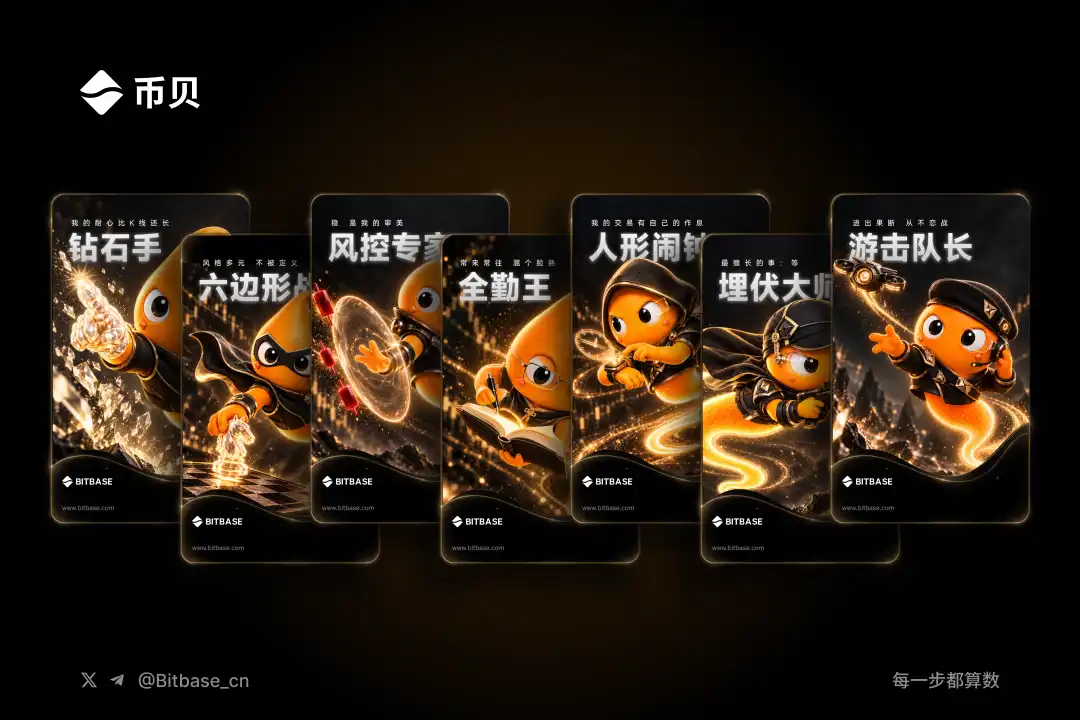
Bitbase Points' First Phase "Origin" Launches Trading Personality Cards, Seven Types Generated Weekly

Bitbase has launched trading personality cards in the first phase of its Bitbase Points program, "ORIGIN." The cards are automatically generated by the system based on each user's trading characteristics over the past week and update every Monday at 00:00 UTC. The first batch was generated on November 9 and can be viewed on the Points page. The personality cards are designed to align with ORIGIN's 26-week focus on sustained user participation rather than short-term concentrated trading. While Points record user participation and contribution, personality cards record how users trade, allowing users to track changes in their trading habits week by week throughout the ORIGIN period. There are seven types of personality cards: the "Diamond Hands" representing long-term holding, the "Guerrilla Captain" for short-term trading, the "Human Alarm Clock" for those who trade at fixed times, the "Risk Control Expert" for those focused on risk management, the "Ambush Master" for those primarily using limit orders, the "Full Attendance King" for continuous participation, and the "Hexagon Warrior" for balanced trading styles. Each card features a personality name, a description, and a corresponding image, all derived from Bitbase's brand IP character BENIE. Personality cards are regenerated weekly, so the same user may receive different card types in different weeks. When a card has not yet been generated, the page displays "Generating." Users who continue trading and accumulate more data may receive personality cards in subsequent weekly updates. Users can share their cards on the Points page. Bitbase plans to introduce more personality types during the ORIGIN period. Bitbase is a global digital asset trading platform offering spot, contracts, TradFi, and wealth management services to individual and institutional users, with the brand proposition of "focusing on value amid change."

marsbit20m ago

Bitbase Points' First Phase "Origin" Launches Trading Personality Cards, Seven Types Generated Weekly

marsbit20m ago

Trading

Spot
活动图片