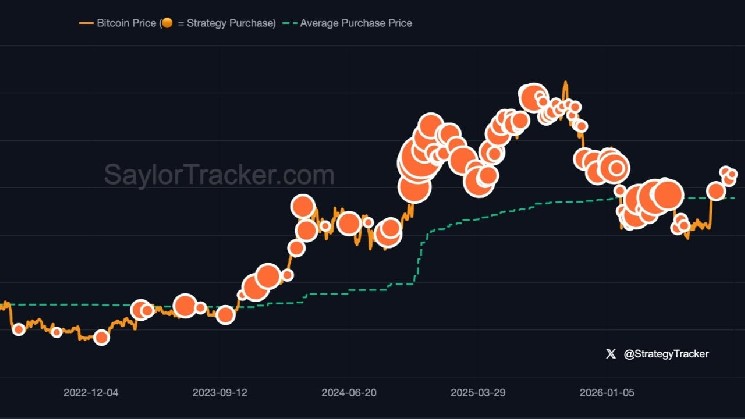
Bitcoin approached mid-September under pressure after a decline of approximately 6% from its local high. The cryptocurrency retreated to around $77k after rising above $82k at the beginning of the month. The asset's dynamics are influenced by expectations surrounding the US Federal Reserve's decision and shifts in institutional investor interest. Izvestia was told this on September 11th by Kirill Komalenkov, Director of Strategic Communications at Bitbanker.
According to the expert, the main factor pressuring the crypto market remains the situation in the American economy. Producer inflation in the US grew by 0.4% month-on-month and 5.4% year-on-year in August, while oil prices remain above $100 per barrel. These factors have heightened fears of a new inflationary impulse and increased the likelihood of a more hawkish stance from the Fed at its September 15-16 meeting.
Additional pressure on risk assets is being exerted by rising US bond yields. The yield on ten-year government securities approached 5%, which, combined with a strong dollar, traditionally reduces investor interest in more volatile instruments.
Support from spot Bitcoin ETFs has also weakened. After an inflow of $730.9 million on September 3rd, the funds recorded net outflows of $46.6 million and $120.2 million on September 8th and 9th, respectively.
"An important benchmark for the market will be new US inflation statistics. Softer data could reduce expectations of Fed policy tightening and revive demand for Bitcoin. In that case, the cryptocurrency could first recover to the $79-80k levels. If the positive scenario holds, the next target would be consolidation above $82-83k," said the expert.
However, if inflation indicators prove stronger than expected, Bitcoin could continue its decline towards the $75-76k area. From a technical perspective, this zone is currently key support. A breach below it could open the path to a drop to $71-72k.
For Bitcoin to return to sustainable growth, it not only needs to overcome the $80k mark but also consolidate above the $82-83k range. After that, the market could consider a move towards $85-86k, and then the $90k level.
According to the expert, additional support for the cryptocurrency could come from more dovish rhetoric from the Fed, a resumption of inflows into Bitcoin ETFs, and the further development of clear rules for regulating crypto assets. A drop in oil prices and bond yields could also be a positive factor, reducing pressure on risk assets.
Komalenkov considers increased Bitcoin volatility within the $75-82k range as the baseline scenario until the Fed decision. In his assessment, a break above this level would require an improvement in the macroeconomic backdrop and a return of interest from large investors, while consolidation below $75k would increase the risk of a deeper correction.
The Bitcoin (BTC) price rose to $80k on August 24th for the first time since May of this year. Later, on August 25th, the price of Bitcoin exceeded $81k for the first time since May 15th.
end-content