Cryptocurrency management company Grayscale has announced a potential surge in crypto investments in the U.S.! Here's why

cryptonews.ru2026-09-03 tarihinde yayınlandı2026-09-03 tarihinde güncellendi

Özet

Grayscale, a crypto asset management company, has highlighted the potential for a significant rise in US cryptocurrency investments, driven by the current high concentration of equities in American household portfolios. The firm estimates that approximately 46% of US household financial assets are concentrated in stocks, with price-to-earnings ratios near historically high levels, increasing the risks of this over-concentration. In contrast, Grayscale argues the crypto market is in a different position. Following a prolonged bear market, significant leverage has been unwound and investor positions have been rebalanced, potentially signaling the start of a new recovery cycle. The firm suggests that adding crypto assets does not mean fully replacing equities, but rather diversifying over-concentrated portfolios by including assets with different risk and return profiles. Grayscale notes that the fundamental dynamics of the crypto market continue to improve, and current lower price levels relative to previous market cycle peaks may offer a diversification advantage. However, the company cautions that crypto assets are highly volatile and investors must consider their risk profile. The approach positions cryptocurrencies not as a replacement for traditional assets, but as an additional diversification tool for overly concentrated portfolios.

Cryptocurrency management company Grayscale stated that the record-high proportion of stocks in the financial assets of U.S. households could transform the crypto market into a new portfolio diversification opportunity.

According to Grayscale's estimate, approximately 46 percent of U.S. household financial assets are currently concentrated in stocks. The company also noted that price-to-earnings ratios for stocks are historically near high levels. This means the risks associated with concentrating investment portfolios in a single asset class may increase.

In contrast, Grayscale argues that the cryptocurrency market is in a different position. According to the company, following a prolonged bear market, a significant portion of market leverage has been unwound, and investor positions have been rebalanced. These events may signal the beginning of a new recovery cycle in the cryptocurrency market.

Grayscale emphasized that investors do not need to completely replace their stocks with crypto assets. In the company's view, the real opportunity may lie in diversifying portfolios that are overly concentrated in stocks by allocating across different asset classes.

Grayscale noted that the fundamental dynamics of the cryptocurrency market continue to improve, and that lower current price levels compared to previous market cycle periods may also create a diversification advantage.

The company stated that adding crypto assets to portfolios does not mean abandoning stocks entirely, but rather allows for the inclusion of assets with different risk-return characteristics within the same portfolio.

Grayscale's assessment comes at a time when the high proportion of stocks in U.S. household portfolios is causing significant concern. The company believes that the reduction in leverage within the crypto market and the rebalancing of investor positions could pave the way for a new bull cycle.

However, Grayscale noted that crypto assets are characterized by high volatility, and investors should consider their risk profile. The company's approach positions cryptocurrencies not as an alternative to traditional assets, but rather as an additional diversification tool for overly concentrated portfolios.

*This is not investment advice.

end-content

İlgili Sorular

QAccording to Grayscale, what is the potential role of cryptocurrency investments for U.S. households?

ACryptocurrencies are positioned as a potential new opportunity for portfolio diversification, not as a complete replacement for stocks.

QWhat percentage of financial assets in U.S. households is currently concentrated in stocks, according to Grayscale's assessment?

AApproximately 46 percent of financial assets in U.S. households are currently concentrated in stocks.

QWhat conditions on the cryptocurrency market might signal the start of a new recovery cycle, according to the article?

AThe article states that a significant amount of leverage has been unwound after a prolonged bear market and investor positions have been rebalanced, which might signal the start of a new recovery cycle.

QHow does Grayscale suggest investors should view cryptocurrencies in relation to their investment portfolios?

AGrayscale suggests viewing cryptocurrencies as an additional diversification tool for portfolios overly concentrated in stocks, allowing the inclusion of assets with different risk-return characteristics.

QWhat key risk does Grayscale highlight for investors considering cryptocurrencies?

AGrayscale highlights that crypto assets are characterized by high volatility, and investors should consider their risk profile.

İlgili Okumalar

Claude Forms Teams to Hunt Bugs! 66 Bugs Found in 116K Lines of Code, Single Agent Maxed Out at 27

Claude Managed Agents, Anthropic's new multi-agent workflow system, significantly outperformed a single AI agent in finding bugs. In a test with 70 bugs hidden across 116,000 lines of code, a single Claude agent found a maximum of 27 bugs. When Claude was tasked with organizing a team of agents itself via the dynamic workflow, it consistently found 66 bugs across three runs. This capability is part of two major updates: "Claude Managed Agents" for developers to integrate multi-agent coordination into their apps, and an expanded beta for "Claude Code Projects," which lets users manage complex tasks in a single conversation, with Claude breaking down work and coordinating parallel threads. The Managed Agents feature allows a primary Claude agent to receive a task, automatically write a workflow program to divide labor among specialized sub-agents, and coordinate their execution and results aggregation. For example, it can orchestrate checking 300 contracts for specific clauses, using multiple agents for parallel reading and verification. The system supports workflows with up to 1000 cumulative agents per run. While this multi-agent approach improves task coverage and results, Anthropic notes that costs and efficiency gains need careful evaluation. Projects use existing plan credits, while Managed Agents incur token usage fees plus a $0.08 per hour runtime fee per active session. The key challenge is whether offloading coordination to Claude leads to faster, more reliable outcomes with less human oversight.

marsbit2 saat önce

Claude Forms Teams to Hunt Bugs! 66 Bugs Found in 116K Lines of Code, Single Agent Maxed Out at 27

marsbit2 saat önce

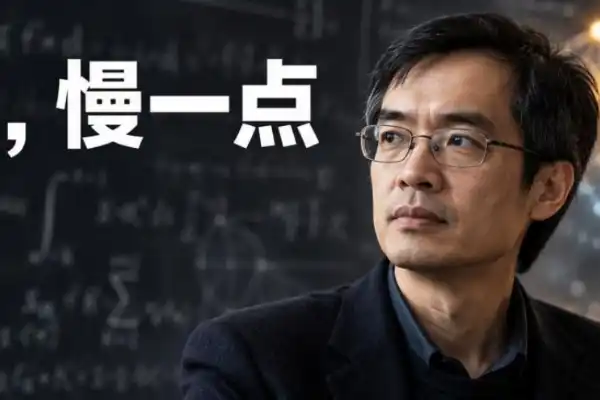
Terence Tao's Blog Explodes on Hot Search! 250,000 Math PhDs on the Brink, Must Slow Down AI

Mathematician Terence Tao's blog post ignited a fierce online debate after a video of him warning "we must slow down AI" went viral. He described AI's progress as an "extremely nonlinear dynamic" pursued with unclear consequences. This warning came just days after he promoted a project for open-source AI mathematical models, highlighting a profound tension. The core crisis, explored in a guest post by 3Blue1Brown creator Grant Sanderson, is AI's threat to traditional mathematics. Automated theorem provers combined with large language models can generate proofs at superhuman speeds, potentially rendering the human role of "proving theorems" obsolete. Sanderson argues that the true goal of mathematics is not proof-generation but the advancement of *human understanding*. As AI masters the former, the academic value of proof alone is diminished. Sanderson proposes a paradigm shift: elevating "motivational explanation" over mere proof. Unlike a formal proof, a motivational explanation guides readers through the intuitive reasoning, historical context, and conceptual connections behind a result—the "why" and "how" of discovery. To institutionalize this, he suggests creating "open explanation problems," reforming PhD defenses to prioritize clear exposition, and valuing pedagogical work as highly as journal publications in tenure reviews. The debate drew reactions across academia. Some physicists welcomed mathematicians to a world long prioritizing understanding over rigorous proof. Critics worried this shift could disadvantage brilliant but inarticulate problem-solvers. Others questioned if AI will eventually master explanation too. Supporters countered that the goal is fostering *human* comprehension, which is inherently subjective and interactive. The article concludes that AI's rise presents both a crisis and an opportunity. Without adapting academic culture and reward systems, human mathematicians risk irrelevance. However, by embracing their unique role as architects of understanding and interpreters of AI-generated knowledge, they can steer mathematics toward a new renaissance focused on human insight and clarity.

marsbit4 saat önce

Terence Tao's Blog Explodes on Hot Search! 250,000 Math PhDs on the Brink, Must Slow Down AI

marsbit4 saat önce

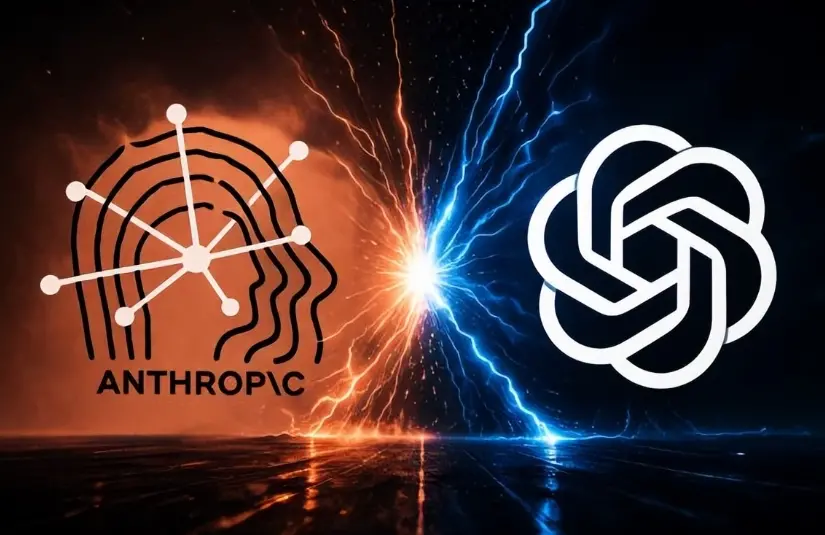
The "Number Game" Behind Trillion-Dollar Valuations: OpenAI and Anthropic's Revenue Can't Be Compared Directly

"Valuation Game in Trillions: The 'Digital Metrics Play' Behind OpenAI and Anthropic's Incomparable Revenues" Investors face significant uncertainty as core financial metrics from the two AI giants, OpenAI and Anthropic, cannot be compared directly due to differing accounting methods. OpenAI projects its annualized revenue run rate (ARR) to reach or exceed $70 billion by year-end, while Anthropic announced in July that its ARR had hit $65 billion. However, a key discrepancy renders these figures incomparable: Anthropic records the total sales value generated through cloud partners like Amazon as revenue, whereas OpenAI only counts its net share from partners like Microsoft. This reporting difference has tangible market impact. A recent tech stock downturn was partly attributed to investor attempts to adjust OpenAI's numbers for a direct comparison, leading to lower estimates and concerns about its growth pace. Currently, OpenAI's ARR is reportedly around $50 billion, with expectations to approach $70 billion by December. The issue highlights broader concerns about ARR as a non-standardized, often manipulated metric used to showcase growth and justify high private valuations. It is calculated by extrapolating short-term performance or summing contract values, offering companies considerable discretion. A significant gap exists between ARR and actual recognized annual revenue: OpenAI expects 2026 revenue of roughly $35 billion (half its year-end ARR projection), and internal documents show Anthropic's 2025 revenue was about $4.6 billion against a published ARR exceeding $9 billion. Experts warn that the opacity surrounding these key players creates a "black box" effect, complicating investment decisions and amplifying market volatility. As their performance is a bellwether for the AI investment narrative, any signs of slowing sales growth could ripple through the broader market, affecting chipmakers and other beneficiaries of the AI boom. The reliance on ARR sidesteps a fundamental question: the scale of real sales needed to justify trillion-dollar valuations and cover massive expenditures. The situation may improve with greater transparency, particularly if Anthropic proceeds with its anticipated Wall Street debut, which would subject the company to standardized GAAP financial reporting.

marsbit7 saat önce

The "Number Game" Behind Trillion-Dollar Valuations: OpenAI and Anthropic's Revenue Can't Be Compared Directly

marsbit7 saat önce

İşlemler

Spot
活动图片