Справочный обменный курс предназначен только для справки и не является фиксированным. Окончательный курс определяется на основе фактической цены исполнения.
Текущая статистика W
Реальлная цена Wormhole (W) сейчас составляет $0.0097 USD и текущая рыночная капитализация составляет $-- USD.
Получайте обновления по W/USD в реальном времени на HTX. Оставайтесь в курсе последних данных и тенденций рынка, чтобы принимать разумные торговые решения. HTX – ваш надежный источник точной информации о ценах на криптовалюты.
Основные данные по Wormhole
Объем за 24ч (USD)
$--
Изменение цены сегодня
--
Оборотное предложение (W)
6.24B
Зарегистрируйтесь и торгуйте, чтобы выиграть вознаграждения на сумму до 1,500 USDT.Участвовать
Динамика цены W
Отслеживайте движение цены Wormhole, просматривая графики за периоды в 1 день, 30 дней, 60 дней, 90 дней, 1 год и за весь период с момента листинга на HTX.Просматривайте еще больше данных о ценах Wormhole
Время
Изменение
Изменение в %
Самая высокая цена
Самая низкая цена
No data
Рыночная информация по W
Получайте последнюю информацию о цене Wormhole на HTX: ценовые максимумы и минимумы за 24 часа, исторический максимум (ATH), и ежедневный процент изменения цены.
24ч Мин
$0
24ч Макс
$0
Исторический максимум
$0
Рыночная капитализация
$0.00
Объем за 24ч (USD)
$--
Объем в обращении
--
Что такое W?
Wormhole является ведущей платформой для взаимодействия, которая обеспечивает мощность крупномасштабных многоцепных приложений и мостов. Wormhole предоставляет разработчикам ликвидность и доступ к более чем 30 ведущим блокчейн - сетям, реализуя варианты использования через DeFi, NFT, управление и т. Д.
Для получения более подробной информации, пожалуйста, прочтите: Что такое Wormhole?
Как купить W
Купить W на HTX очень просто. Нажмите здесь, чтобы ознакомиться с полным руководством по покупке Wormhole.
Рынки W в реальном времени
Обзор цен Wormhole в реальном времени на спотовых рынках HTX. Переключайтесь между спотовым и фьючерсным рынками, чтобы мгновенно сравнивать текущие цены и изменения цен за 24 часа.
Основываясь на исторических показателях Wormhole, наш инструмент прогнозирования предполагает, что цена Wormhole (W) может достигнуть -- к -- году.
Прогноз цены W за -- год
Наш самый последний прогноз говорит о том, что цена Wormhole (W) вырастет до -- к -- году, а изменение цены составит --% и совокупный ROI составит приблизительно --%.
Купите свои первые W на HTXРегистрация
Часто задаваемые вопросы о W
Какая сегодня цена Wormhole (W)?
Текущая цена Wormhole (W) составляет $0.0097 USD.
Какая рыночная капитализация Wormhole (W)?
Текущая рыночная капитализация Wormhole (W) составляет $0.00 USD, рассчитанная путем умножения его оборотного предложения на текущую цену.
Каково оборотное предложение Wormhole (W)?
Текущее оборотное предложение Wormhole (W) составляет -- W.
Каким был исторический максимум Wormhole (W)?
На 2026-08-22, исторический максимум Wormhole (W) составляет $0 USD.
Каков 24-часовой объем торгов Wormhole (W)?
24-часовой объем торгов Wormhole (W) на HTX составляет -- USD.
Могу ли я купить Wormhole (W) на HTX?
Да, HTX предлагает лучшие в отрасли торговые комиссии и высокую ликвидность, обеспечивая бесперебойную и безопасную торговлю Wormhole (W).
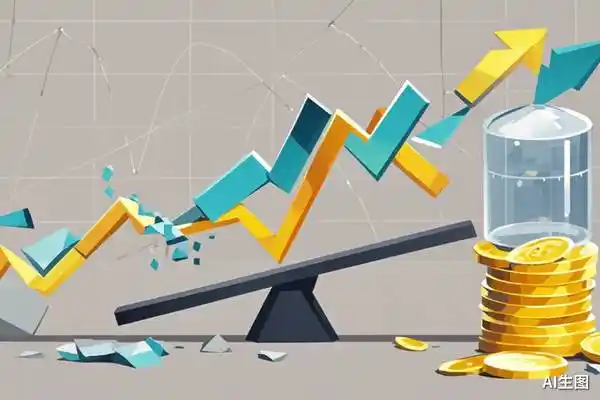
In 2026, the South Korean stock market, propelled by the AI boom's demand for high-performance memory chips, witnessed a dramatic rally and subsequent crash, illustrating the perils of excessive leverage, structural market flaws, and retail investor frenzy.
The initial surge was driven by soaring share prices of memory giants Samsung Electronics and SK Hynix. This "once-in-a-lifetime" wealth creation story captivated local Korean retail investors, many of whom invested heavily using leverage, and attracted global capital through products like Hong Kong-listed leveraged ETFs. However, the market's heavy reliance on these two stocks and widespread leverage created systemic fragility.
The turning point came in June 2026. A series of circuit-breaker halts triggered a vicious cycle of forced liquidations, leading to a steep market plunge. The collapse erased fortunes, leaving many leveraged retail investors in debt. It also exposed a high-profile case in Hong Kong where a 26-year-old trader, using unauthorized company funds and double leverage on a SK Hynix ETF, incurred massive losses of HKD 150 million.
Analysis points to key factors behind the extreme volatility: the overwhelming dominance of two stocks in the KOSPI index, a culture of rampant retail leverage, and a fundamental mispricing where investors treated cyclical semiconductor stocks as perpetual growth stories. As the market entered a volatile consolidation phase, seasoned investors emphasized core risk management principles: avoiding leverage, understanding industry cycles, maintaining a margin of safety, and being wary of extreme market consensus. The episode serves as a stark reminder that high returns are inextricably linked to high risk, especially when amplified by leverage.
Dmitry Isakov, founder of the investment platform Lender Invest, warned on August 12 about the risks inexperienced investors face when dealing with cryptocurrencies in Russia. He emphasized that cryptocurrency remains a high-risk asset, and its legalization does not guarantee protection from fraudsters.
According to the expert, the lack of restrictions on cryptocurrency purchases for non-qualified investors creates danger, as many may view it as an alternative to bank deposits. However, the difference in risk levels between these instruments is vast.
He explained that while deposits are primarily for capital preservation, cryptocurrency requires investors to be prepared for significant price volatility (around 45-60% per year) and potential losses. Legalization does not change the inherent nature of this volatile asset.
Isakov advised that private investors should not chase the highest potential returns but instead build a personal financial strategy systematically. This includes first establishing a safety net of 3-5 months of expenses, then investing in understandable instruments with predictable risk levels. Only after that should high-risk assets like cryptocurrency be considered.
He recommended allocating only about 10-15% of an investment portfolio for experimenting with such new instruments, with the remainder in more traditional assets like stocks, mutual funds (ZPIF), and bonds. High-risk assets can be part of a diversified portfolio but not a replacement for classic instruments with clearer economics and more predictable returns.
This warning comes as the Central Bank of Russia recently authorized public trading of Bitcoin, Ethereum, and Tether USDT on exchanges. Qualified investors will be able to purchase all cryptocurrencies traded on exchange and over-the-counter markets without restrictions. This follows President Vladimir Putin signing a law on August 4 establishing the legal framework for cryptocurrency circulation in the country.
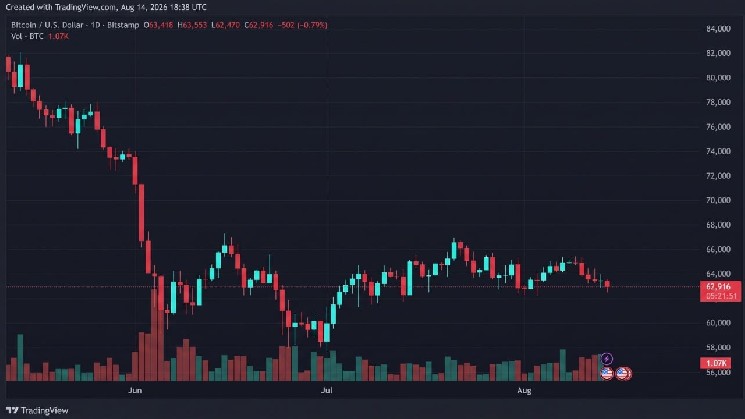
Bitcoin's price fell below $63,000 for a second consecutive day on Friday, hitting an intraday low of $62,470. The cryptocurrency later recovered to trade just above $63,000, leaving it nearly flat for the past 24 hours and for August overall, with a weekly loss of 2.6%.
The volatility triggered significant liquidations, with $26 million of leveraged long Bitcoin positions liquidated over 24 hours. Market sentiment was further dampened by data showing over $131 million in outflows from spot Bitcoin ETFs for a second straight day, signaling a potential pullback by institutional investors.
Adding to the negative pressure, index provider MSCI has proposed new criteria for "non-operating companies" in its global indexes, which could lead to the exclusion of firms holding significant digital assets like Bitcoin on their balance sheets. Companies such as Strategy and Metaplanet could be affected, potentially forcing index-tracking funds to sell their shares. Strategy publicly criticized the proposal, arguing digital assets are legitimate assets and index providers should not dictate what companies can own.
Public consultations on MSCI's proposal end September 30, with a final decision expected by October 16. If approved, exclusions could begin in November, potentially triggering sustained institutional selling and damaging a key bridge for Bitcoin adoption in the corporate sector.
Edward Zimbardi, the alleged mastermind behind a $165 million crypto Ponzi scheme, has been deported from Fiji to the U.S. to face federal charges. Prosecutors allege that from June 2022 to August 2023, he promoted "The Crypto Program," promising 25% monthly returns from advertising-package investments. Instead, Zimbardi allegedly used over $34 million for risky forex trades, used new investor funds to pay earlier ones, and spent at least $10 million on personal expenses like a house and luxury cars. He was indicted on multiple counts of wire fraud and money laundering and fled to Fiji upon learning of the FBI investigation.
The U.S. Financial Accounting Standards Board (FASB) has proposed new guidance outlining when companies can classify certain stablecoins as cash equivalents under U.S. Generally Accepted Accounting Principles (GAAP). The proposed update adds illustrative examples to the current definition to address inconsistencies in accounting for digital assets, including stablecoins, without changing the definition itself.
According to the guidance, a qualifying digital asset must provide a contractual right to redeem for a predetermined amount of cash directly from the issuer upon demand. It must also be backed 1:1 by reserves held separately in short-term, highly liquid assets. The FASB clarifies that an active secondary market is insufficient if holders lack a direct redemption right from the issuer. Furthermore, reserves consisting of cryptoassets or gold would disqualify a token from this classification due to valuation risks.
Companies retain the discretion to classify eligible assets as cash equivalents, subject to applicable laws and regulations. The FASB is accepting public comments on the proposal until November 19, and the effective date will be determined after reviewing stakeholder feedback.
cryptonews.ru3天前
Треды
Приветствуем вас в Сообществе HTX. Здесь вы можете быть в курсе последних новостей платформы и получите доступ к профессиональной рыночной аналитике. Мнения пользователей о цене Wormhole (W) представлены ниже.