Panoramic Research Report: Is the Crypto World Ready for Quantum Attacks, and How Prepared Is Everyone?
This report assesses how prepared the crypto world is for quantum attacks, concluding that readiness has improved over the past year but remains inadequate—very few post-quantum protections are actually live on mainnets.
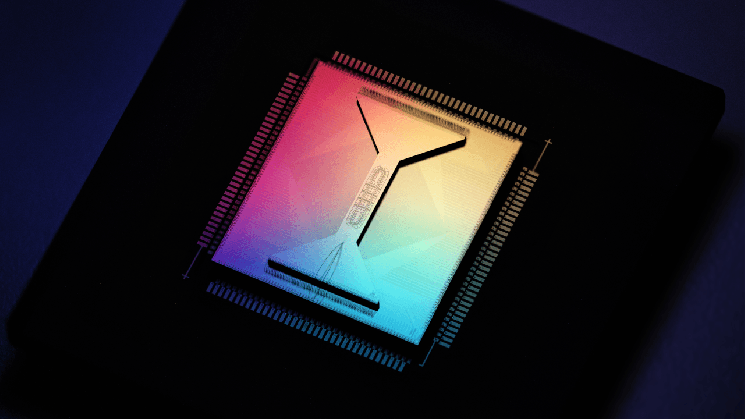
**The threat:** Blockchain security rests on elliptic-curve discrete logarithms; a sufficiently large, error-corrected quantum computer running Shor's algorithm could derive private keys from public keys and forge signatures. Google Quantum AI's 2026 white paper estimates breaking secp256k1 needs under 1,200–1,450 logical qubits, or fewer than 500,000 physical qubits, with a full run of 18–23 minutes—and as little as ~9 minutes once a public key is broadcast, giving attackers roughly a 41% chance of front-running a transaction. Hardware remains far off (Google's Willow has 105 qubits; the largest demo cracked only a 15-bit key vs. Bitcoin's 256-bit). Expert estimates for Q-day cluster in the early-to-mid 2030s, with some risk before 2030.
**Exposure:** Roughly 6.9 million BTC (~32% of supply) have exposed public keys—~1.7 million in early P2PK addresses (including Satoshi-era coins) and ~5 million from address reuse. XRP is far less exposed (0.03%).
**Readiness by chain:** QRL, Algorand (native Falcon accounts), NEAR (ML-DSA live), and Starknet (unaudited Falcon accounts) lead on actual deployment. Ethereum (target ~2029), XRPL (2028), Sui (Q1 2027), Stellar and Hedera (around 2027) have dated roadmaps; Solana picked Falcon but set no timeline; Bitcoin's BIP-360/BIP-361 remain drafts with no activation path; Cardano is still researching; Monero, Avalanche, and BNB Chain have no formal plans.
**Key hurdles:** NIST standards (FIPS 203–206) exist, with deprecated algorithms banned by 2035, but post-quantum signatures are 10–40x larger, bloating blocks and costs. Governance is the real obstacle—coordinating forks and deciding whether to freeze, revoke, or leave unmigrated coins (including ~1.7 million Satoshi-era BTC). Account abstraction gives some chains a structural edge by letting users migrate individually. Institutions like BlackRock and VanEck now flag quantum risk in filings, and Coinbase's advisory board and Project Eleven are pushing the issue into mainstream diligence.
marsbit11/05 09:26