# Processor Related Articles

HTX News Center provides the latest articles and in-depth analysis on "Processor", covering market trends, project updates, tech developments, and regulatory policies in the crypto industry.

From Minting to Tape-Out: A First-Timer’s Guide to TapeOut

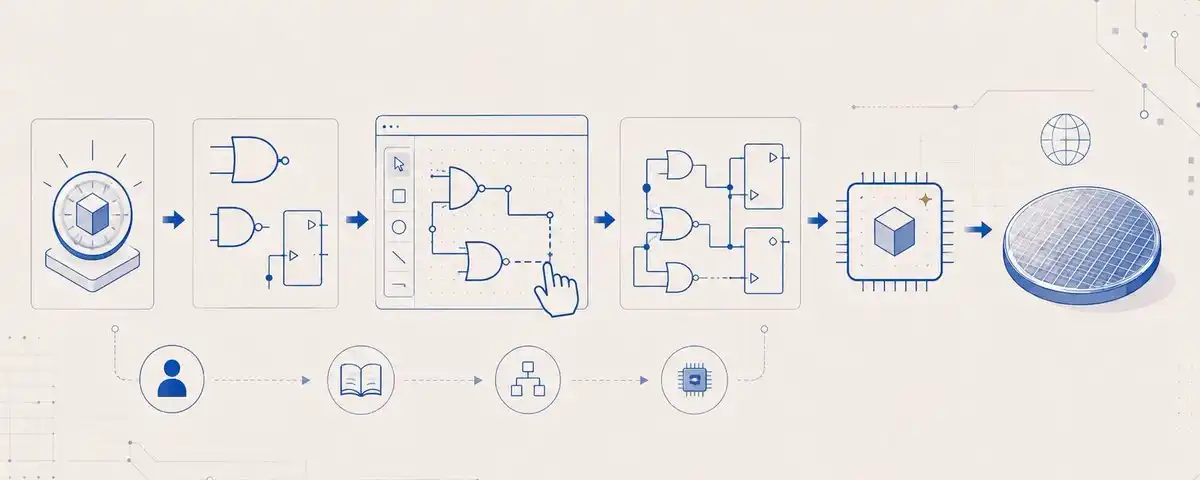
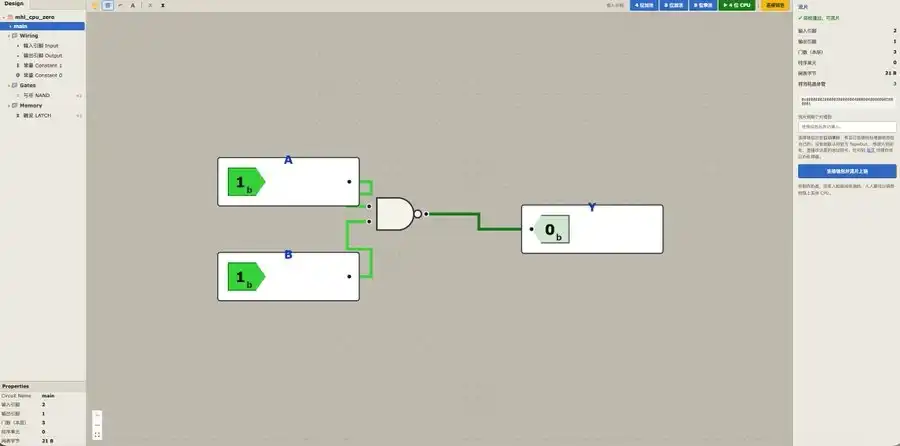
Title: From Mint to Tapeout: A First-Timer’s Guide to TapeOut **Summary:** This guide provides a risk-conscious, step-by-step introduction to TapeOut, a platform where users can mint logic components (NAND, LATCH) and use them to "tape out" on-chain circuits. It emphasizes a fundamental shift in mindset: instead of focusing first on prices or speculation, users should first understand how to use the platform's core functionality. The recommended path begins with preparation: use a separate, low-fund wallet on BNB Smart Chain for experimentation. The first step is to choose a "Processor"—the foundational unit for components and circuits—by examining its details (supply, mintage, creator) rather than chasing trends. If a Processor has remaining supply, users can mint a small number of components. The guide stresses that minting acquires specific components for a specific processor, not a generic asset. For sold-out Processors, trading occurs on an order book market. Users must carefully understand order prices, quantities, and the 1% fee, and always verify transactions on a block explorer. The core "play" experience is in the Canvas, where users can build and test logic circuits without a wallet. Before proceeding to tapeout—the irreversible, on-chain act of finalizing a circuit which consumes components—users must verify their design, component costs, and target processor. After taping out a circuit, the guide encourages users to interact with it, for example by calling its functions via BscScan's read contract feature, completing the "components -> circuit -> verification" loop. It concludes with critical safety checks to perform before any wallet signature, and cautions against misinterpreting demo pages (like the "on-chain BTC miner") as profit-generating services. The goal is to approach TapeOut as a hands-on lesson in on-chain logic, minimizing financial risk while learning its unique mechanics.

marsbit08/19 07:21

From Minting to Tape-Out: A First-Timer’s Guide to TapeOut

marsbit08/19 07:21

Deciphering TapeOut: A Child Built a CPU On-Chain

**Title: Understanding TapeOut: A Kid Built a CPU On-Chain** **Summary:** The article explores a remarkable experiment where a young developer named Blonskr has used blockchain technology to build a functional, on-chain CPU. Named "Behemoth," this CPU is based on the 1971 Intel 4004 processor specification. It runs on the BNB Chain, uses block production as its clock (running at a glacial 2.22 Hz), and is perhaps the slowest CPU in existence, yet it represents a novel and intriguing concept in the on-chain space. The core concept is the TapeOut protocol, named after the final "tape out" stage in semiconductor manufacturing. It treats the blockchain as a silicon wafer, with tokens representing fundamental logic components. The protocol's atomic unit is an ERC-1155 token representing a single NAND gate, the fundamental building block of digital logic. Users can visually design circuits on a "canvas," connecting these logic tokens. Once a design is finalized, the underlying tokens are burned, and an ERC-721 NFT representing the permanent, immutable circuit is minted. Blonskr used 2,300 such tokenized NAND gates to construct the Behemoth CPU. Key features of this and any TapeOut circuit include **permanent operation** (running as long as the chain exists), **free, permissionless evaluation** (anyone can query it without gas), and **safe composability** (circuits cannot call external contracts or modify state, making them inherently safe to use). This enables a new form of open, collaborative hardware design, where anyone can build upon and integrate components created by others. While highly niche, TapeOut reimagines the foundations of computation using blockchain's properties of permanence and openness. It pushes the boundaries of what can be built on-chain, potentially enabling future applications like custom mining circuits or decentralized, specialized processors. The experiment demonstrates an exciting combination of extreme technical vision and creative curiosity.

marsbit08/17 13:51

Deciphering TapeOut: A Child Built a CPU On-Chain

marsbit08/17 13:51

活动图片