Expert Analyst Warns About Bitcoin! 'Seller Exhaustion Indicator Sounds Alarm'

cryptonews.ruPublished on 2026-10-12Last updated on 2026-10-12

Abstract

After Bitcoin's recent surge above $85,000, an indicator known as the "Seller Exhaustion Indicator" has re-emerged. According to analyst Darkfost, this indicator, which assesses the supply of profitable assets as well as market volatility, has reached a point where potential selling pressure is rapidly increasing. The change in the indicator has been particularly notable among short-term Bitcoin investors. The current level coincides with a critical zone previously observed in the current market cycle, as well as with a local price peak. However, this does not necessarily mean Bitcoin investors are actively selling now. Analysis shows the number of coins available to take profits has increased alongside the rising price.

Following Bitcoin's recent surge above $85,000, an indicator known as the 'Seller Exhaustion Indicator' has reappeared. According to analyst Darkfost, this indicator, which assesses both the supply of profitable assets and market volatility, has reached a point where potential selling pressure is rapidly increasing.

The change in the metric has been particularly notable among short-term Bitcoin investors. The current level coincides with a critical zone previously observed in the current market cycle, as well as with the local peak. However, this does not necessarily mean that Bitcoin investors are actively selling at present. Analysis shows that the number of coins that could be used to lock in profits has increased as the price has risen.

Related Questions

QWhat is the 'Seller Exhaustion Indicator' mentioned in the article?

AThe 'Seller Exhaustion Indicator' is a market indicator that assesses both the supply of profitable assets and market volatility. It signals when potential selling pressure is rapidly building up.

QAccording to analyst Darkfost, what did the indicator signal when Bitcoin surged above $85,000?

AAccording to analyst Darkfost, the indicator reached a point where potential selling pressure is rapidly increasing.

QAmong which group of Bitcoin investors was the change in the indicator particularly noticeable?

AThe change in the indicator was particularly noticeable among short-term Bitcoin investors.

QDoes the current level of the indicator automatically mean Bitcoin investors are actively selling now?

ANo, the article states that the current level of the indicator does not necessarily mean Bitcoin investors are currently selling actively.

QWhat has increased alongside the rising Bitcoin price, according to the analysis?

AAccording to the analysis, the number of coins that could be used to take profits has increased alongside the rising Bitcoin price.

Related Reads

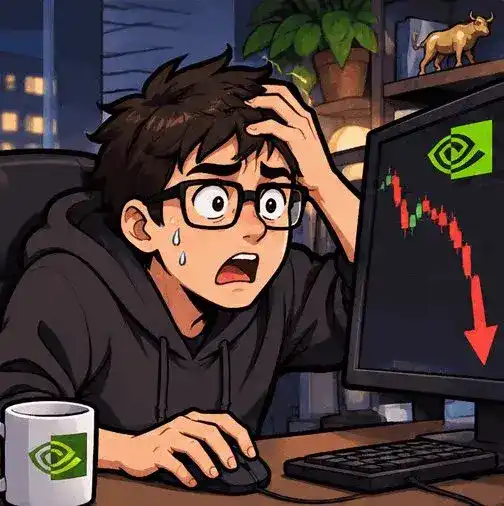
Bernstein: Why You Absolutely Should Not Buy the Dip on Nvidia Right Now

Bernstein downgraded Nvidia from "Outperform" to "Market Perform," cutting its price target from $400 to $200, not due to deteriorating fundamentals but because of an ongoing management scandal at the highest levels of the company. Reports of CEO Jensen Huang's inappropriate relationships—first with Alice Huang, which Huang publicly acknowledged, and subsequently with a direct subordinate, reportedly Kimberly Powell, VP of healthcare—have prompted the board to launch an independent investigation, and The Wall Street Journal reports the company is preparing to dismiss him. Bernstein analyst Stacy A. Rasgon argues the board will almost certainly not retain Huang given the new allegations, and even if he stays, the risk of continued negative exposure remains significant. Despite Nvidia's stock now trading at what Bernstein calls "almost absurdly undervalued" levels, the firm strongly advises investors to stay on the sidelines. Fundamentals remain intact—Bernstein projects data center revenue of about $378.3 billion in FY2026, rising to $657.8 billion in FY2027 and over $918.2 billion in FY2028, with total revenue growing nearly 70% annually and non-GAAP EPS averaging $19.04 for FY28/29, supporting the $200 target at roughly 11x forward P/E, down from 21x. However, the succession question—internal promotion or external hire, and who could replace Huang—remains unanswered, and any resolution will introduce new variables. Bernstein uses a "cockroaches in the kitchen" analogy: finding two implies there are likely more. The analyst suspects the current scandal is just the tip of the iceberg, with more internal allegations, potential government investigations, and uncertainty over strategic supply-chain investments and guarantees possibly to come, while some competitors' shares have already risen on the news. Though Rasgon admits to being torn and understands the buy-the-dip logic, his instinct says the well's depth hasn't been fully plumbed—so Bernstein chooses to step aside and watch from the sidelines.

marsbit5m ago

Bernstein: Why You Absolutely Should Not Buy the Dip on Nvidia Right Now

marsbit5m ago

QQQ Reclaims Its 200-Day Moving Average: Ahead of the December Rate Hike, Who Should You Watch in This AI Rally?

QQQ has reclaimed its 200-day moving average, but the real AI story is just entering a differentiation phase. The index has completed its repair; individual stocks now face their exam. Under the same AI theme, the market's answers have diverged sharply: some stocks are back above the annual line with cash flow, while others have rallied 25% yet remain 30% below it. The key question after the index-level repair is who can pass this exam—depending on whether earnings delivery can outrun valuation pressure. QQQ closed at $690.38 on Nov 11, 1.27% above its 200-day line, recovering most of its losses within days. Two hurdles remain: Nvidia, the largest weight, is still 15% below its annual line and reports earnings on Nov 17, with board governance concerns unresolved; and the 10-year Treasury yield closed at 4.998%, pressing the 5% threshold that anchors valuation for long-duration growth stocks. AI names now fall into three tiers relative to their 200-day lines: AMD is 31.6% above (high expectations priced in), Micron 6.5% above (fundamentals delivering, up 11.89% in a day), QQQ 1.27% above, while Nvidia is 15.0% below and CoreWeave 32.1% below despite a 24.71% single-day jump. The takeaway: the index returning to its annual line may not mean a broad AI rally—capital may be rotating from "buying AI" to "buying delivery." Nvidia's Nov 17 earnings must address both results and governance, with consensus Q3 revenue near $108.8 billion. Micron trades at roughly 10.8x earnings after 379% revenue growth; whether that's undervaluation or cycle-top pricing hinges on HBM pricing and HBM4 supply from Samsung and SK Hynix. CoreWeave's rally prices relief over near-term solvency fears, not financing risk. AMD's challenge is converting revenue into cash, with free cash flow falling to $554 million from $1.56 billion. A December rate hike is already priced in (about 87% odds per CME FedWatch), making the 10-year Treasury the real valuation switch. If yields fall and QQQ holds above its annual line, AI assets could re-rate; if the 10-year breaks 5%, pressure returns. Five signals will determine which AI names keep running. QQQ back at its annual line does not mean AI is back to a broad rally—the index has finished repairing, and the stocks have begun their exam.

marsbit10m ago

QQQ Reclaims Its 200-Day Moving Average: Ahead of the December Rate Hike, Who Should You Watch in This AI Rally?

marsbit10m ago

EU DeFi proposals could push users to riskier platforms, says Coinbase exec

Coinbase's head of EU policy, Roeland Van der Stappen, warned that the EU's efforts to tighten DeFi oversight could push crypto users toward platforms with fewer investor protections. He told Cointelegraph that regulated platforms might respond by limiting or dropping access to DeFi services, arguing that "rules designed to protect investors would end up pushing activity towards the places with the least protection." In its September response to the European Commission's consultation on MiCA, the European Securities and Markets Authority recommended creating a new category of regulated crypto services for firms giving customers access to DeFi protocols. The European Banking Authority also urged the Commission to study new rules for crypto lending and borrowing, listing suitability tests as one option. Van der Stappen said extending such tests to other DeFi services could mean treating a simple stablecoin swap like leveraged lending despite different risks. Lending, liquidity provision and on-chain swaps would be most exposed, and some providers may narrow offerings or withdraw DeFi access entirely. He called for a proportionate approach allowing crypto-asset service providers to continue offering access with safeguards matched to the activity. He warned that restricting access through regulated platforms could fragment DeFi liquidity into smaller pools, worsen prices for EU users, encourage "walled gardens," and steer users toward providers outside the EU with fewer safeguards. A 2026 Adan-Ipsos survey found 49% of French crypto buyers preferred accessing DeFi through exchanges versus 14% favoring personal wallets. A Chainalysis report attributed a modest decline in German crypto activity largely to falling decentralized exchange activity, while EU-wide crypto activity grew 2.2% in the 12 months through June 2026.

cointelegraph21m ago

EU DeFi proposals could push users to riskier platforms, says Coinbase exec

cointelegraph21m ago

South Korea Moves to Let Crypto Exchanges Block Withdrawals Before Hacks Are Confirmed

South Korea’s Financial Services Commission (FSC) will allow crypto exchanges to suspend customer deposits and withdrawals when a hack is suspected, even before asset theft is confirmed. Announced on November 12 after a security meeting chaired by Vice Chairman Shin Jin-chang, the measure will be supported by a no-action letter letting exchanges take preventive action under specified conditions, addressing uncertainty in existing rules that generally bar blocking transactions without legitimate grounds. The FSC is also urging exchanges to maintain 24/7 security monitoring and incident-response systems, with responsible staff ready to act on unusually large or suspicious transactions. Platforms unable to run continuous monitoring must process deposits and withdrawals only during hours when security arrangements function normally, inform customers in advance, and keep enough staff to handle requests. The regulator wants a higher share of customer assets in cold wallets; current rules require at least 80%, while the industry-wide ratio already exceeds 95%. Exchanges are also asked to keep hot-wallet balances minimal and strengthen insurance coverage and financial reserves for compensating customers affected by security incidents. The FSC plans to expand security inspections through the Financial Security Institute, of which only five of South Korea’s 28 registered virtual asset businesses are currently members, with updated exchange-specific inspection standards due by the end of 2026. Separately, the upcoming Digital Asset Law is expected to introduce IT security obligations and compensation responsibilities for crypto businesses comparable to those imposed on traditional financial institutions.

TheNewsCrypto25m ago

South Korea Moves to Let Crypto Exchanges Block Withdrawals Before Hacks Are Confirmed

TheNewsCrypto25m ago

Shanghai Analog Chip Leader: Not for Sale, Going Public Independently

Shanghai-based analog chip maker Chuantu Microelectronics has filed for IPO coaching with the Shanghai Securities Regulatory Bureau, with CITIC Construction Investment Securities as advisor. Founded in May 2016 in Qingpu District, Shanghai, the company focuses on R&D and sales of high-end analog chips centered on isolation technology. Its four product lines—isolation and interface, driver and power, high-performance analog, and μMiC strategic products—serve industrial control, new energy power, intelligent computing centers, and automotive electronics. Its second-generation "three-in-one" isolated interface products integrate an isolated DC-DC converter, digital isolator, and interface into a single compact LGA16 package, 69% smaller than the first generation. The company holds about 123 patents, has passed AEC-Q100 automotive certification and TÜV Rheinland ISO 26262 ASIL D certification, and by August 2025 had over 100 product models deployed in vehicles, with cumulative automotive chip shipments reaching 200 million units. It ranks in the first tier of domestic isolation chip vendors alongside NOVOSENSE. Founder, Chairman and CEO Chen Dongpo, born in 1980, earned his bachelor's and doctoral degrees from Zhejiang University and taught at Shanghai Jiao Tong University before founding the company in 2016. The company has completed about 11 financing rounds, with BYD, SAIC, Geely, and Changan all becoming shareholders. Previously, in November 2025, Mengtian Home's plan to acquire control of the company via share issuance and cash was terminated after negotiations failed on core terms. The global analog IC market is projected to grow from 478.1 billion yuan in 2021 to 927 billion yuan by 2030, with China's market rising from 158 billion yuan to 389.4 billion yuan over the same period.

marsbit50m ago

Shanghai Analog Chip Leader: Not for Sale, Going Public Independently

marsbit50m ago

Trading

Spot
活动图片