Cardano (ADA) Developers Have Made an Important New Announcement!

cryptonews.ruPublished on 2026-09-11Last updated on 2026-09-11

Abstract

The Cardano development team has announced ODATANO, a new tool designed to simplify integration between the SAP enterprise software ecosystem and the Cardano blockchain. SAP is a leading platform for enterprise resource planning and business software, widely used by large corporations globally to manage key processes like finance, supply chain, and HR. As explained by ODATANO founder Maximilian, the project abstracts Cardano's blockchain infrastructure behind a standard OData V4 API. This allows enterprise developers familiar with the SAP environment to integrate Cardano without needing to learn underlying blockchain technical details, such as the UTxO model, transaction serialization, or key management. ODATANO consolidates these complex processes into a service layer, presenting Cardano as a standard OData service to SAP applications. The tool currently offers 31 entities and functions, enabling operations like data querying (blocks, addresses, UTxOs), and creating, signing, and submitting transactions. It can run as an SAP CAP plugin or a standalone service. Several reference applications have been built on ODATANO, including QUANTIX, a B2B raw material procurement and payment app using oracle data, which won the 2026 Charli3 Oracle Hackathon. ODATANO is currently funded through the Cardano Catalyst Fund 14.

Developers in the Cardano ecosystem have introduced a new tool called ODATANO, designed to simplify integration between SAP, one of the world's largest enterprise software ecosystems, and the Cardano blockchain.

SAP is known as an enterprise resource planning and business software platform that enables companies to manage core business processes such as finance, accounting, supply chain, human resources, manufacturing, and customer management through a unified enterprise software infrastructure and is used by many large companies worldwide.

In an interview published on the Cardano developer portal, Maximilian, the founder of ODATANO, explained that the project abstracts the Cardano blockchain infrastructure behind a standard OData V4 API, allowing enterprise developers familiar with the SAP development environment to integrate with Cardano without learning the technical details of blockchain technology.

According to Maximilian, a traditional SAP developer would need to learn many blockchain concepts, such as the UTxO model, transaction building, CBOR serialization, transaction fee calculation, assurance mechanisms, and key management, to directly integrate with Cardano. ODATANO, on the other hand, packages these complex processes into a service layer, allowing Cardano to connect to SAP applications as a standard OData service. Currently, the project offers 31 different entities and functions, including data reading, transaction creation, and signing. Blocks, addresses, UTxOs, entities, and protocol parameters can be queried through the system, and transactions can be created, signed, and submitted to the Cardano network. ODATANO can also run as an SAP CAP plugin or be installed as a standalone service.

Several reference applications have also been developed based on the ODATANO infrastructure, including TRACE, QUANTIX, FINCA, and x402. QUANTIX stands out as a B2B raw material procurement and payment application utilizing oracle data, and this project won the Charli3 Oracle Hackathon in 2026. According to the Cardano developer portal, ODATANO is currently funded through the Cardano Catalyst Fund 14.

*This is not investment advice.

Trending Cryptos

Related Questions

QWhat is the name of the new tool announced by Cardano ecosystem developers, and what is its primary purpose?

AThe new tool is called ODATANO. Its primary purpose is to simplify integration between SAP, a major enterprise software ecosystem, and the Cardano blockchain.

QHow does ODATANO help traditional SAP developers integrate with the Cardano blockchain according to the founder Maximilian?

AODATANO abstracts the Cardano blockchain infrastructure behind a standard OData V4 API. This allows SAP developers familiar with that environment to integrate Cardano without needing to learn complex blockchain technical details like the UTxO model, transaction building, CBOR serialization, or key management.

QWhat specific blockchain-related entities and functions can be accessed or performed through the ODATANO system?

AThe ODATANO system allows querying of blocks, addresses, UTxOs, entities, and protocol parameters. It also enables creating, signing, and submitting transactions to the Cardano network.

QName one of the reference applications built on ODATANO mentioned in the article, and describe its use case.

AOne reference application is QUANTIX. It is a B2B raw material procurement and payment application that utilizes Oracle data, and it won the Charli3 Oracle hackathon in 2026.

QHow is the ODATANO project currently funded according to the article?

AThe ODATANO project is currently funded through the Cardano Catalyst Fund 14.

Related Reads

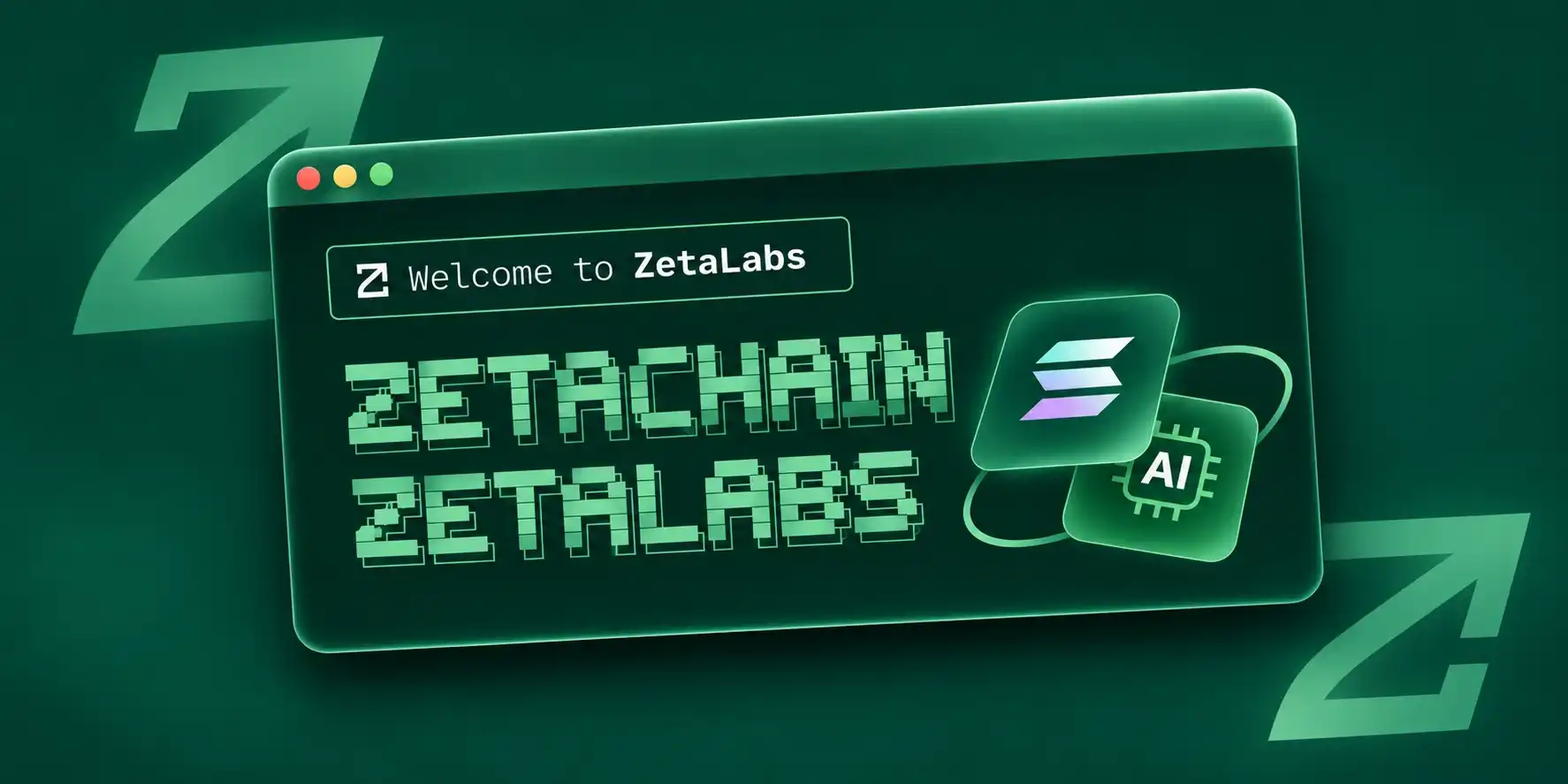
Countdown to Solana Migration: ZetaChain to Launch Financial AI Platform ZetaLabs

ZetaChain is shutting down its native Layer 1 and migrating ZETA to Solana. At block height 20,755,000 (expected December 9, 2026), the original chain will halt, and ZETA will migrate 1:1 to Solana as SPL tokens. Holders can claim new tokens via the official ZetaHub page by connecting their wallet and signing a message with a Solana receiving address—no fees or SOL required, with a 10 ZETA minimum. Staked assets, pending unstakes, and unclaimed rewards are automatically included in the snapshot; exchange-held tokens are converted by the exchanges themselves. Wrapped ZETA and LP positions must be unwrapped or withdrawn before the snapshot. Assets in ZRC-20 form can be returned to their original chains starting December 9 (minimum $5 per asset). The Ethereum ERC-20 version of ZETA is unaffected. A second governance proposal restructures ZETA's supply: roughly 55 million unissued validator-reward tokens will be burned monthly through 2027 (~4.6M per month), and the planned 2.5% annual inflation is cancelled. Investor and core contributor allocations (~94.4% unlocked) finish unlocking by January 1, 2027, and the foundation commits not to sell new releases from its growth, ecosystem, treasury, and liquidity pools in 2027. Minting authority on Solana will be revoked after issuance. ZetaChain's focus now shifts to ZetaLabs, a crypto-native financial AI platform evolving from Anuma Chat. Launching December 9 with Chat, Radar, Bloom, and ZETA Dashboard, it combines real-time market tracking (Radar) with private, wallet-linked on-chain memory (Bloom), plus a planned Lens transaction-explainer and Zeta Intelligence/MCP tools in Q1 2027. A Private Memory Layer keeps user data encrypted and user-controlled. ZETA's new utility covers AI service payments with discounts, Premium membership via token locking, and product governance voting, though services remain accessible via USDC or credit cards—positioning ZETA as an optional benefits and payment layer rather than a mandatory gateway.

marsbit31m ago

Countdown to Solana Migration: ZetaChain to Launch Financial AI Platform ZetaLabs

marsbit31m ago

Nebius Takes the Earnings Baton Tonight, CoreWeave Delivers Q3 First: How Much Cash Flow Can $133 Billion in Orders Actually Convert Into?

CoreWeave reported strong Q3 results, with revenue up 168% year-over-year to $3.661 billion and adjusted operating margin rising to 10%, sending shares up 24.7% in a single day. However, its unsecured bond yields approached 15%, revealing a sharp divergence between equity and credit markets. The article argues this gap reflects concerns not about profitability but about refinancing risk ahead of 2027 debt maturities and the challenge of converting its $133 billion backlog into actual shareholder cash flow. While the backlog grew by about $29 billion in the quarter, contracts do not translate into cash immediately. CoreWeave must fund data centers and GPUs upfront, with 2026 cash capex guidance of $37-39 billion, while interest expense of $846 million in Q3 exceeded adjusted operating profit of $379 million. The company relies on three funding pillars: customer prepayments (about 70% of contracts), project-level DDTL financing, and operating cash flow. WACD has fallen to 7.9%, and renewal pricing for older GPUs is up 30-50%, supporting margins. The article frames Nebius's earnings, released the same day, as a comparison test: Nebius trades at roughly 16x forward sales versus CoreWeave's 5x, reflecting differences in who bears capital expenditure risk. If Nebius can expand with lighter financing and stronger investment-grade customer commitments, CoreWeave's valuation discount has a solid commercial basis; if not, the gap is largely sentiment. The key signals to watch are prepayment inflows, WACD trends, interest coverage, and whether 2027 GPU renewal prices hold above original contract levels. Ultimately, the $133 billion backlog is not cash—what matters is how much free cash flow remains after financing costs, and whether order growth outpaces funding capacity.

marsbit31m ago

Nebius Takes the Earnings Baton Tonight, CoreWeave Delivers Q3 First: How Much Cash Flow Can $133 Billion in Orders Actually Convert Into?

marsbit31m ago

Trading

Spot

Hot Articles

Discussions

Welcome to the HTX Community. Here, you can stay informed about the latest platform developments and gain access to professional market insights. Users' opinions on the price of ADA (ADA) are presented below.

活动图片