Asia's Largest XRP Conference "XRP Seoul 2026" Concludes Successfully with Over 5,000 Attendees

marsbitPublished on 2026-10-06Last updated on 2026-10-06

Abstract

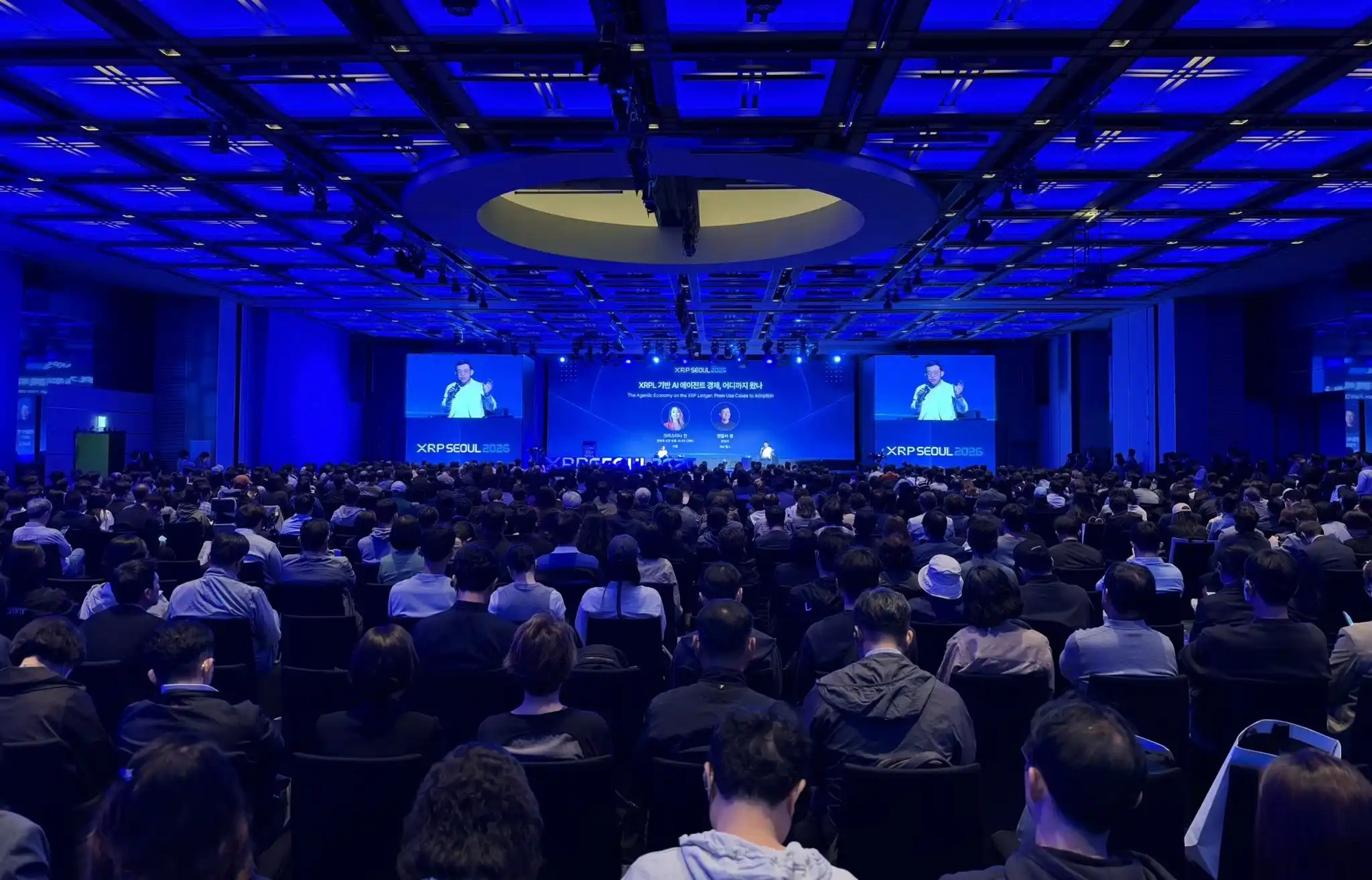
The "XRP Seoul 2026" conference, Asia's largest XRP event, concluded successfully on October 3rd at the Grand Hyatt Seoul in Yongsan-gu. Hosted by XRPL Korea and title-sponsored by Ripple, the event saw attendance surge to over 5,000 participants, a significant increase from the previous year's 3,000. The conference featured keynote speeches from major ecosystem figures. Ripple President Monica Long announced a forthcoming credit pilot program using XRP as collateral. Ripple's engineering leadership also previewed upcoming XRP Ledger features, including confidential transfers and AI agent infrastructure. A key announcement was the launch of XRP Asia, a Singapore-based organization backed by Ripple and the XRP Ledger Foundation, aimed at supporting developer education and community growth across the Asia-Pacific region. Multiple panel discussions explored financial institution adoption of blockchain for cross-border payments, tokenized deposits, stablecoins, and real-world asset tokenization, with participation from major Korean banks and securities firms. Robinhood's senior executive discussed the transformative potential of tokenized stocks for 24/7 trading. The event included an exhibition area for sponsor demonstrations and concluded with a celebratory light show at the N Seoul Tower. Organizers stated the growing attendance reflects strong market interest in the XRP ecosystem and reaffirmed their commitment to fostering global connections and partnerships.

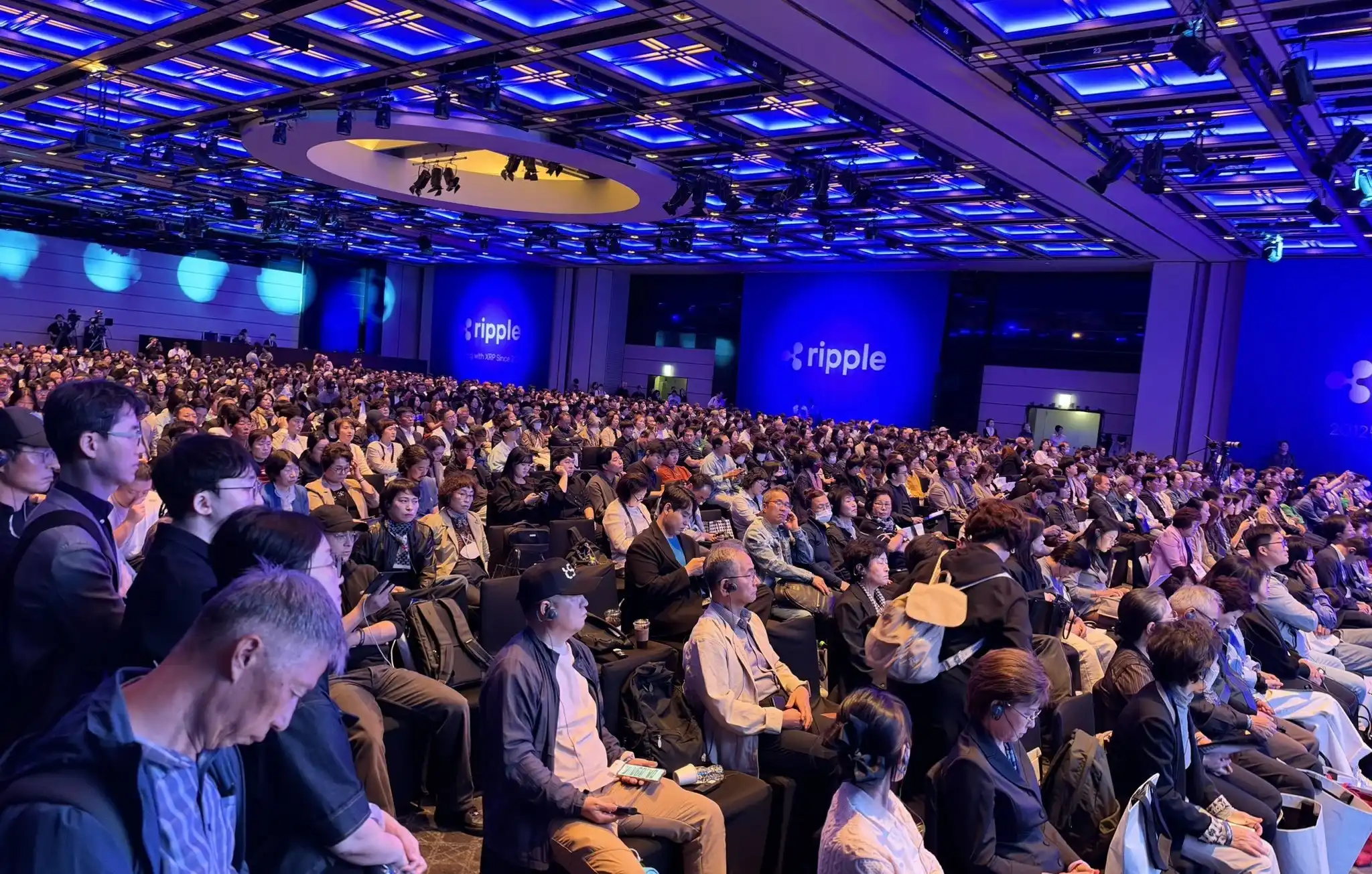
XRPL Korea announced on October 6th that Asia's largest XRP conference, "XRP Seoul 2026," has concluded successfully. The conference was held on October 3rd at the Grand Hyatt Seoul in Yongsan District, Seoul, attracting over 5,000 attendees. The event coincided with the "2026 Korea Blockchain Week (KBW2026 with Upbit)," showing significant growth from last year's event which had about 3,000 participants. Attendees gained entry using NFT tickets issued on the XRPL.

The event was hosted by XRPL Korea, with Ripple as the title sponsor. Additionally, a total of 18 Korean and global companies provided sponsorship support, with Doppler Finance and Kweather serving as Platinum Sponsors. Other sponsors included t54 Labs, Flare, Tria, Datavault AI, Evernorth, Variational, SOIL, Squid, Biconomy, Girin Wallet, Surf AI, RiskX, Firelight, Creder, Axelar, and RedStone.

Several leaders from the XRP ecosystem took the stage as speakers. Ripple President Monica Long led a contingent of Ripple executives, including Senior Director of Ecosystem Growth Christina Chan and Senior Director of Engineering Ayo Akinyele. Numerous leaders from the global finance and blockchain sectors also delivered speeches, including Robinhood Senior Vice President Johann Kerbrat, Evernorth CEO Asheesh Birla, and SC Ventures Executive Director Alex Toh. Representatives from Korean financial institutions such as Woori Bank, Kakao Bank, K Bank, Kyobo Securities, Meritz Securities, and JB Bank also participated, bringing the total number of speakers to approximately 40.

In a fireside chat with Chan, Long stated that Ripple is running a credit pilot project with the goal of an official launch next year. The project will use XRP as collateral to finance a portion of customers' payment flows. Following this, Akinyele delivered a keynote outlining upcoming features for the XRP Ledger, including confidential transfers powered by zero-knowledge proofs and dedicated infrastructure for AI agents.
The conference also announced the official establishment of XRP Asia. XRP Asia is an independent organization supported by Ripple and the XRP Ledger Foundation, headquartered in Singapore, and will provide support for developer education, hackathons, and startup funding. XRP Asia President Sabrina Tachdjian outlined plans, including supporting existing communities like XRPL Korea and XRPL Japan while establishing new ones across the Asia-Pacific region.

Subsequently, various sponsors delivered keynote speeches. In a Kweather session, Sunghwan Kim, CEO of Wellbian Labs, discussed new opportunities in the weather data business. Following that, t54 Labs Founder Chandler Fang spoke about the agent economy on XRPL, while Flare Co-founder Hugo Philion explored making XRP programmable capital. Datavault AI CEO Nathaniel T. Bradley and Tria Chief Strategy Officer John Lilic discussed a tokenized asset operating system and Tria's XRP neo-digital banking strategy, respectively.

Multiple panel discussions focused on how financial institutions can apply tokenized deposits, stablecoins, and real-world asset tokenization. In a session featuring Ripple, K Bank, Kyobo Securities, JB Bank, and Woori Bank, participants explored introducing blockchain technology into cross-border payments and deposit services. In a stablecoin panel, Leo Lee from Kakao Bank outlined the bank's plan to integrate fundamental digital asset services into its core banking operations starting in 2027. In a tokenization panel, Samuel Shim, Global Head of Digital Assets at Meritz Securities, stated that growth in the Korean Won stablecoin market requires a clearer regulatory framework. Other panels covered topics such as XRP utility and tokenized assets with Evernorth, Flare, SOIL, and Firelight; on-chain financial infrastructure, real-world XRPL use cases, and XRP ecosystem growth strategies.

In a session titled "The Next Wave of On-Chain Innovation," Robinhood shared its perspective on tokenized stocks. Kerbrat pointed out that 70% of the company's trading volume occurs on weekends and at night, calling the move to 24/7 trading with tokenized stocks a phenomenal shift. He explained that blockchain could solve settlement delays in traditional finance and improve trading infrastructure.

In the exhibition area, sponsors engaged attendees through booths with interactive experiences. These projects allowed participants to experience various services within the XRPL ecosystem firsthand, beyond the conference agenda, and were met with an enthusiastic response.

In the evening, the N Seoul Tower was lit up in celebration of the XRP Seoul conference. The tower displayed the XRP logo, along with brand logos for Kweather, Doppler Finance, Datavault AI, and Evernorth via light beam projection.

A representative from XRPL Korea stated, "Following last year's event with about 3,000 attendees, having over 5,000 community members gather this year fully confirms the strong market interest in the XRP ecosystem." The representative added, "Through XRP Seoul, we will continue to foster connections between the global XRPL ecosystem and Korean financial institutions, companies, and developers, and translate these exchanges into tangible partnerships and services."

XRPL Korea plans to release a highlight video of the event in the coming days.

Related Questions

QWhat was the main event and its significance mentioned in the article?

AThe main event was 'XRP Seoul 2026,' the largest XRP conference in Asia. It was significant for gathering over 5,000 participants, showcasing the growing interest in the XRP ecosystem, and featuring announcements like Ripple's credit pilot project and the launch of the new organization XRP Asia.

QWho were the keynote speakers at the XRP Seoul 2026 conference, and what major announcements did Ripple executives make?

AKeynote speakers included Ripple President Monica Long, Ripple's Senior Director of Ecosystem Growth Christina Chan, and Senior Director of Engineering Ayo Akinyele, among other global finance and blockchain leaders. Ripple executives announced a credit pilot project using XRP as collateral, aiming for a full launch next year, and previewed new XRP Ledger features like confidential transfers and dedicated infrastructure for AI agents.

QWhat is the purpose of the newly announced organization, XRP Asia, and who supports it?

AXRP Asia is an independent organization headquartered in Singapore, supported by Ripple and the XRP Ledger Foundation. Its purpose is to support developer education, hackathons, startup grants, and build new communities across the Asia-Pacific region while supporting existing communities like XRPL Korea and XRPL Japan.

QWhat key topic did the panel discussion involving Robinhood focus on, and what insight did the Robinhood executive share?

AThe Robinhood panel focused on 'The Next Wave of On-Chain Innovation.' Johann Kerbrat, a Senior Vice President at Robinhood, discussed tokenized stocks, noting that 70% of their trading volume occurs on weekends and at night. He highlighted the transformative potential of tokenized stocks for 24/7 trading and how blockchain can solve settlement delays in traditional finance.

QWhat evidence of the event's scale and community engagement is provided in the article?

AThe evidence includes the attendance of over 5,000 participants, a significant increase from the previous year's 3,000; the use of NFTs issued on the XRP Ledger as event tickets; and the illumination of the N Seoul Tower with the XRP logo and sponsor logos. Additionally, the exhibition area allowed for direct interaction with ecosystem services, and the event was held concurrently with the '2026 Korea Blockchain Week (KBW2026 with Upbit).'

Related Reads

Monad's $909 Million Credit Economics: How a High-Performance Public Chain Breaks Through via Lending

Monad, developed by former Jump Trading quant engineers, has seen its on-chain revenue model shift dramatically from high-frequency trading to lending interest. Over the ten months to September 2026, global DeFi TVL fell from $111.4B to $95.5B, yet Monad's market share rose from 0.14% to 1.09%—an nearly eightfold increase—ranking tenth among all chains by DeFi TVL. Lending now dominates fee revenue: in September, lending apps contributed 71% of application fees versus just 16% from trading, with borrowers paying roughly 6.2% annualized interest on an average $903M loan book. Monad's capital efficiency is notably high, with every $1 of TVL generating $0.89 in borrowings versus 42% on Ethereum and 45% on Base. Institutional credit vaults hold $287M in uncollateralized loans—second only to Ethereum mainnet—with Accountable at 33% and Aave at 29% of lending balances. Aave's Monad market became its third-largest fee-generating deployment globally within 46 days. Spot trading fees fell to 1.2 basis points as monthly volume surged to $4B. MON trades at just 0.25x its DeFi TVL versus 7–12x for peers like AVAX, SUI, SOL, and SEI, and has outperformed competitors since its first full trading day. Annualized interest income stands at about $56.5M at current levels, with each additional $100M in loans adding $6.2M yearly—upside supported by upcoming Aave V4, infiniFi Prime, StraitsX stablecoins, and Category Labs' institutional clearing domain.

marsbit19m ago

Monad's $909 Million Credit Economics: How a High-Performance Public Chain Breaks Through via Lending

marsbit19m ago

BTC Short-Term Bottoming and Gathering Momentum, HYPE Triple Support Faces Critical Test | Guest Analysis

Last week, the crypto market was driven by news. On Nov 4, midterm election news sparked a 3.92% Bitcoin rally above $80K, but a day later, US stock declines triggered a 5.48% drop to ~$75,222, a new low since Sept 21, with fear index near 25. HYPE also fell 15.19% weekly, erasing prior gains and returning to ~$75. Key points: Bitcoin has held above the 52-week MA for eight weeks, satisfying the "price breakout principle," but the pullback confirmation signal is not yet issued and the 52-week MA (~$76,110) remains downward-sloping. The rebound from the July 1 low of $57,820 is still classified as an oversold bounce, not a confirmed bull market. On the daily chart, price remains in a descending channel, has broken below the key MA crossover (~$77,200), but holds above the 0.382 Fibonacci level ($76,130). The correction (wave i) has run 48 trading days with a max drawdown of 15.9%; a wave ii rebound is expected but not yet started. The "Shijie Ribbon" model still signals a long market. Strategy: mid-term stay in cash; short-term use 30% position for range trading, favoring buying dips near $72,500–73,500 with strict stops. HYPE: the weekly bearish engulfing candle was driven by external shocks, not fundamentals. Three support layers: the ribbon upper band (~$74.05, lower ~$71), the box lower edge (~$75, which triggered a 20% bounce on Oct 24), and the long-term uptrend line (~$68). Key support zones: $74–75 (ribbon upper + box bottom), $71 (ribbon lower), $68 (long-term trendline). Strategy: if price stabilizes at $74–75 or $68–71, consider light long positions (≤30%) with strict stops. Special rules: set initial stop at entry; move to breakeven at +1% profit; trail stop 1% per 1% gain. All analysis is personal technical opinion, not investment advice; markets carry risk.

Odaily星球日报34m ago

BTC Short-Term Bottoming and Gathering Momentum, HYPE Triple Support Faces Critical Test | Guest Analysis

Odaily星球日报34m ago

Canton Foundation Launches Official Daml 3 Certification, Expanding Developer Access and Establishing Institutional Finance Standards

Canton Foundation has launched the Canton Developer Certification, an official certification program for Daml 3, the smart contract language of the Canton Network. Combining a self-paced course with a certification exam, it offers developers worldwide a structured path to building applications for regulated financial markets. Canton Network is a public, permissionless blockchain designed for regulated finance, with over $6 trillion in on-chain assets processed by its supported applications. Daml is built to manage who may act on a contract and who may access its terms; the certification validates practical mastery of these authorization and privacy principles, establishing a recognized standard intended to strengthen institutional confidence in applications built on the network. The program is based on Daml 3 and Canton 3.x, the current technology underlying the network, letting newcomers start on the latest stack, helping production engineers deepen expertise, enabling institutional architects to design and integrate Canton deployments, and allowing existing Daml 2 developers to migrate their skills and codebases to Daml 3, unifying the community on a single, current platform. For ecosystem partners—financial institutions, application providers, system integrators, and validators—the certification provides a common technical foundation and a consistent way to assess developers' understanding of authorization and privacy requirements. Canton Foundation COO Amanda Martin said financial institutions need confidence that the applications they rely on are built by developers who understand regulated market requirements, and that the program both opens opportunities for developers globally and establishes a shared professional standard, building a stronger foundation for Canton's future growth by bringing the community together on Daml 3. The certification is now live at certification.canton.foundation; the course is self-paced and free to all developers, and the exam costs $150 per attempt. Canton Foundation is an independent nonprofit responsible for the governance and long-term development of Canton Network's shared infrastructure, supporting transparent and decentralized governance, ecosystem coordination, and broad participation by Global Synchronizer operators and network stakeholders, while working with financial institutions, technology providers, developers, and other participants to support the network's continued global growth and adoption.

marsbit45m ago

Canton Foundation Launches Official Daml 3 Certification, Expanding Developer Access and Establishing Institutional Finance Standards

marsbit45m ago

Nvidia Faces Independent Investigation, Bernstein Maintains $400 Target Price

Nvidia's board has launched an independent investigation following reports about CEO Jensen Huang's contacts with Megaspeed executive Alice Huang, though it says there is no reason to believe U.S. national security or company secrets were compromised. Three Republican House committee chairs have requested Huang attend a closed-door briefing on November 18 to explain the contacts and Nvidia's internal procedures for countering foreign intelligence activities, and Democratic Senator Chris Coons said Congress will investigate. Some reports suggested Alice Huang may have influenced Huang's lobbying to ease chip export restrictions to China, a claim Bernstein doubts, noting Huang has long publicly pushed to expand sales in China and that revenue from mainland China and Hong Kong has fallen sharply since export controls. Only H20 and limited H200 chips were approved for China sales, well behind Nvidia's most advanced products, and Bernstein sees limited room for recovery as Chinese customers prioritize domestic alternatives. Regulatory pressure may persist, with hawkish lawmakers potentially revisiting export limits. Bernstein maintains an Outperform rating and a $400 target price, about 114% above the November 6 close of $186.64, citing data center demand and earnings growth. It projects adjusted EPS of $4.77 for FY2026, $9.20 for FY2027 and $15.80 for FY2028. The target is based on average FY2028-2029 non-GAAP EPS of $19.04 at about 21x. Bernstein also flags Huang's succession as a key risk, given his central role and roughly 60 direct reports.

marsbit55m ago

Nvidia Faces Independent Investigation, Bernstein Maintains $400 Target Price

marsbit55m ago

Trading

Spot
活动图片