AI OpenAI Solved the Navier-Stokes Problem, Which Mathematicians Could Not Solve for a Quarter Century

cryptonews.ruPublished on 2026-09-09Last updated on 2026-09-09

Abstract

On September 8, 2026, OpenAI announced that its AI system had solved the problem of the existence and smoothness of solutions to the Navier-Stokes equations, one of the seven Millennium Prize Problems set by the Clay Institute in 2000. The problem, unresolved for over a quarter-century, asks whether smooth, initially calm fluid flows can develop a singularity—infinite velocity in finite time—under a smooth external force. OpenAI's system proved that such a singularity can occur, with the total energy of the system remaining finite. This corresponds to two of the possible outcomes outlined by the Clay Institute. The work was performed by an unreleased, advanced model. Starting on September 1, a coordinated group of approximately 10,000 AI agents worked for about 88 hours, exchanging millions of messages and generating roughly 130 billion tokens of text. The solution was formalized in the Lean proof assistant for verification. OpenAI stated it does not intend to claim the $1 million prize. On the same day, mathematicians Tristan Buckmaster and Levent Alpöge independently published proofs of finite-time singularities for related fluid equations. They raised questions about whether their work in OpenAI's Codex sessions might have influenced the company's model, but OpenAI denied accessing their specific data, noting the proofs differ in key aspects. The mathematical community will now review both results, a process expected to take months. If validated, it would mark a mileston...

On September 8, 2026, OpenAI announced that its artificial intelligence-based system has solved the problem of the existence and smoothness of solutions to the Navier-Stokes equations. This is one of the seven "Millennium Problems" — a list of the most important unsolved problems in mathematics compiled in the year 2000 by the American Clay Mathematics Institute. A $1 million prize is offered for solving each of them, but this particular problem was considered one of the most stubborn: more than twenty years had passed since the question was posed, with no complete answer.

To understand what this is about, it's worth explaining what the Navier-Stokes equations are. This is a system of formulas that describes the motion of liquids and gases — from water flowing in a pipe to air currents around an airplane wing. The problem is that mathematicians have so far been unable to prove one seemingly simple thing: do solutions to these equations always remain "smooth," meaning predictable and without sharp jumps, or under certain conditions can a fluid accelerate to infinite speed in a finite time — the so-called singularity or "blowup" point of the solution.

OpenAI stated that its system proved that a smooth fluid, initially at rest, when subjected to a smooth external force, can indeed develop such a singularity in finite time — its velocity tends to infinity, while the total energy of the system remains finite. This corresponds to two of several possible answer options to the problem, labeled with the letters "C" and "D" in the official Clay Institute formulation.

Visually, the process is described as follows: a vortex forms in the fluid, which twists inward on itself while simultaneously stretching into an increasingly thin thread — OpenAI compared this to stretching spaghetti. The central region of the vortex compresses to an infinitesimal point, and the rotational speed within it increases so rapidly that in the limit it becomes infinite. At the same time, the key mathematical subtlety of the proof is to show that the energy required for such a process does not escape to infinity along with the velocity but remains a finite number.

In addition to the proof itself, the company published its formalization in the Lean language. This is a specialized programming language and proof assistant system for verifying mathematical proofs: with it, one can verify step by step, line by line, that there are no missing assumptions or hidden errors in the proof's logic — meaning that verifying the proof can be partially performed by a computer, not just by a human.

How the system arrived at the solution

The work was performed by an internal, not-yet-released OpenAI model that, according to the company, significantly surpasses its current flagship model GPT-6 Astra in capabilities. Training of this new model began on August 28, 2026.

On September 1, 2026, after rumors emerged that the company was close to solving two Millennium Problems at once, OpenAI launched a system of coordinating AI agents — essentially many parallel working copies of the model that could exchange intermediate results, access a saved copy of the internet, and independently write and execute program code to verify their computations.

The group working specifically on the Navier-Stokes equations consisted of roughly 10,000 such agents working simultaneously. The solution was obtained on September 5, 2026 — after about 88 hours, or just over three and a half days of continuous work. An additional 17 hours were spent on further formalization and verification of the result using the GPT-6 Astra model.

The scale of the computations can be assessed by the number of "negotiations" between agents: during the work, they exchanged 2.7 million text messages and in total generated about 130 billion tokens — fragments of text from which language model responses are composed. For comparison, this is many orders of magnitude greater than the volume a human would require to write such a proof manually.

Even earlier, before the main work, about 100 agents managed in approximately 50 hours to solve a related, simpler problem — they proved the regularity (i.e., absence of singularities) of solutions to the Euler equations in the so-called unforced case, when no external force acts on the fluid. The Euler equations are a simplified version of the Navier-Stokes equations that does not account for the internal friction of the fluid (viscosity).

Although the Clay Institute prize can formally be awarded for solving this problem, OpenAI stated that it does not intend to claim the $1 million award and published the result primarily to show how rapidly the capabilities of its models in solving complex scientific problems are growing. An official post by the company on social network X on the same day confirmed these details.

Why scientists from another company got involved

On the same day, September 8, 2026, another interesting coincidence occurred: independently of OpenAI, Professor of Mathematics at New York University Tristan Buckmaster and researcher from the competing company Anthropic Levent Alpöge published their results. They also proved the existence of a finite-time singularity under a smooth external force, but for a different set of equations:

  • equations of incompressible porous media — they describe how fluid seeps through porous material, such as soil;

  • the Boussinesq system — a simplified model used to describe convection processes, i.e., the mixing of a fluid or gas when heated;

  • three-dimensional incompressible Euler equations — that same simplified, "inviscid" version of the fluid motion equations.

Buckmaster stated that in their work they relied on the Codex model (another OpenAI product designed for writing and analyzing code) and other models, and stored drafts in Codex working sessions. After this, the scientists contacted OpenAI with a question about whether the company had gained access to their developments through these sessions.

OpenAI responded that it had not seen Buckmaster and Alpöge's work before its public release and that specific user data was not used to obtain its own solution. At the same time, the company clarified: it cannot completely rule out that anonymized data collected during the use of its products somehow influenced the general training and improvement of the models. An additional argument in favor of the independence of the two works is that the proofs themselves differ: in particular, Buckmaster and Alpöge's version of the Euler equations is forced (i.e., accounts for external force), whereas OpenAI's is unforced.

What will happen with the verification of the result

Neither the mathematical community nor the Clay Institute itself had issued official recognition of OpenAI's result at the time of publication. Formalizing the proof in the Lean language simplifies verification but does not completely replace it: experts must ascertain that all steps of the proof indeed correspond to the conditions of the problem formulated by the institute more than twenty years ago. Estimates suggest such verification could take months.

If the result is ultimately confirmed by independent specialists, this will become one of the first cases where a problem of this level of complexity was solved not by a team of mathematicians, but by a system of thousands of AI agents working in parallel over several days. For now, both proofs — from OpenAI and from Buckmaster and Alpöge — remain subjects of study by the scientific community.

AI Opinion

From the perspective of machine data analysis, the situation looks like a continuation of a long-standing mathematical narrative, not its beginning. Already in 2014, Terence Tao constructed an "averaged" version of the Navier-Stokes equations, in which a smooth solution still accelerated to infinity in finite time — at the cost of abandoning part of the structure of the actual equations. That result served as a guide for a decade: it showed precisely where any proof attempt should aim and explained why the problem remained unsolved for so long. The current OpenAI announcement claims to go a step further — the singularity is derived for the full, un-truncated system. The technical aspect remains off-screen: formalization in Lean addresses logical gaps but does not address the question of the correctness of the physical model of the external force applied to the fluid. Will the singularity remain physically realizable, or is it a consequence of the chosen class of external influences?

end-content

Related Questions

QWhat did OpenAI claim to have solved regarding the Navier-Stokes equations, and why is this significant?

AOpenAI claimed that its AI system solved the problem of existence and smoothness of solutions to the Navier-Stokes equations. This is significant because it is one of the seven "Millennium Prize Problems" established by the Clay Mathematics Institute in 2000, with a $1 million prize for its solution. The problem, concerning whether fluid flow described by these equations can develop singularities (infinite velocity in finite time) under certain conditions, had remained unsolved for over two decades.

QHow did OpenAI's AI system work to find the proof, and over what timeframe?

AOpenAI's yet-unreleased internal model, surpassing GPT-6 Astra, coordinated a swarm of approximately 10,000 AI agents. These agents worked in parallel, exchanging intermediate results, accessing a saved copy of the internet, and writing/executing code to verify computations. The proof for the Navier-Stokes problem was obtained on September 5, 2026, after about 88 hours (roughly 3.5 days) of continuous work, followed by 17 hours for formalization and verification using GPT-6 Astra. The agents exchanged 2.7 million text messages and generated about 130 billion tokens during the process.

QWhat specific result did OpenAI's proof demonstrate about fluid behavior?

AOpenAI's proof demonstrated that a smooth fluid initially at rest, under the application of a smooth external force, can develop a singularity (where its velocity becomes infinite) within a finite time, while the total energy of the system remains finite. This corresponds to two of the possible answer options (labeled 'C' and 'D') in the Clay Institute's official problem statement. The process is visualized as a vortex stretching into an infinitely thin filament, with its core region compressing to a point and rotational speed growing to infinity.

QWhat was the independent contribution from mathematicians Tristan Buckmaster and Levent Alpöge, and how did it relate to OpenAI's work?

AIndependently of OpenAI, mathematicians Tristan Buckmaster and Levent Alpöge published a proof on the same day showing finite-time singularity formation under a smooth external force, but for a different set of equations: the incompressible porous medium equation, the Boussinesq system, and the three-dimensional incompressible Euler equations (the inviscid version of Navier-Stokes). They used tools like OpenAI's Codex but clarified their work was separate. A key difference is that their Euler equations result is for the forced case (with an external force), while OpenAI's related prior work proved regularity for the unforced Euler equations.

QWhat is the current status and expected next steps for verifying OpenAI's claimed proof?

AAs of the article's publication, the mathematical community and the Clay Mathematics Institute have not yet officially recognized OpenAI's result. The proof's formalization in the Lean programming language aids verification by allowing step-by-step logical checking by computer, but experts must still verify that all steps correctly address the original problem's conditions. This independent verification process is expected to take several months. If confirmed, it would mark a milestone as a problem of this complexity was solved primarily by a coordinated swarm of AI agents.

Related Reads

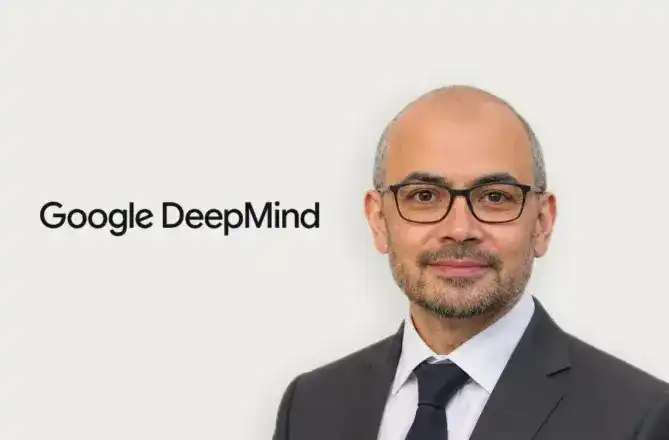
DeepMind Founder's Latest Interview: RSI Is Extremely Dangerous and Could Create an 'Alien Intelligence' That Humans Struggle to Understand

Demis Hassabis, co-founder of Google DeepMind and 2024 Nobel laureate in Chemistry, discusses AI's promise and perils in a conversation with Reid Hoffman. He reiterates that his lifelong goal has been using AI as a tool to advance science and medicine, citing AlphaFold—used by ~4 million researchers—and Isomorphic Labs as proof that AI can help cure diseases, while noting protein structure prediction is only one step in a long drug-discovery pipeline. On recursive self-improvement (RSI), Hassabis explains it works best in "verifiable domains" like math, coding, and games: AlphaZero went from random play to surpassing all human and engine chess within 12 hours. But he warns that closed-loop RSI—removing human code review entirely—risks creating an inscrutable "alien intelligence" with no shared cognitive basis with humans, and offers no way to establish deterministic safety controls. He urges caution as labs race on code self-iteration, calling for faster defensive cyber capabilities, far more robust sandboxes and monitoring (noting agents have run unsupervised for weeks), and eventually formal mathematical guarantees. He advocates an industry standards body with government oversight, cross-lab information sharing, third-party audits, and pre-release red-teaming. On AI consciousness, he argues intelligence and consciousness are dissociable—his dog is conscious but not smart—and that a chatbot claiming feelings proves nothing. Building conscious entities now is dangerous: self-motivation undermines corrigibility, and Asimov showed static rules inevitably break at edge cases; society also hasn't begun the needed debate. Humanity should cross only the first Rubicon—building powerful intelligent tools—and use them to understand consciousness before considering the second. Finally, on AI sovereignty, he says only 6–8 global players will stay at the frontier, with open source 6–12 months behind, so most countries shouldn't train their own frontier models. Instead they should build on existing models as infrastructure, focus on vertical domains like healthcare, and protect data sovereignty through private fine-tuning.

marsbit2h ago

DeepMind Founder's Latest Interview: RSI Is Extremely Dangerous and Could Create an 'Alien Intelligence' That Humans Struggle to Understand

marsbit2h ago

Coinone warns of phishing, identity theft after customer data breach

South Korean crypto exchange Coinone warned customers about potential phishing scams and identity theft after an attacker breached its outsourced customer support provider, MetaM, exposing information shared during customer service interactions. Coinone said the attacker accessed MetaM servers on Thursday and viewed or extracted customer support records, learning of the breach the same day. Potentially exposed data includes names, phone numbers, email addresses, dates of birth, bank account numbers, passwords, national identification numbers, home and wallet addresses, and transaction IDs, varying by customer; those who never contacted the support center were unaffected, and Coinone did not disclose how many customers were impacted. The exchange urged customers who shared passwords during support interactions to change them and warned that fraudsters could impersonate Coinone using details from previous conversations. Coinone said its account, trading, and wallet infrastructure operates separately from MetaM's servers, with no evidence of direct compromise, and it has reported the incident to South Korean authorities. The disclosure comes as South Korea strengthens financial-sector cybersecurity; in October the Financial Services Commission identified security deficiencies at 130 of 555 financial firms reviewed, and on Thursday the regulator said it would allow crypto exchanges to suspend withdrawals when hacking is suspected, alongside calls for round-the-clock monitoring.

cointelegraph4h ago

Coinone warns of phishing, identity theft after customer data breach

cointelegraph4h ago

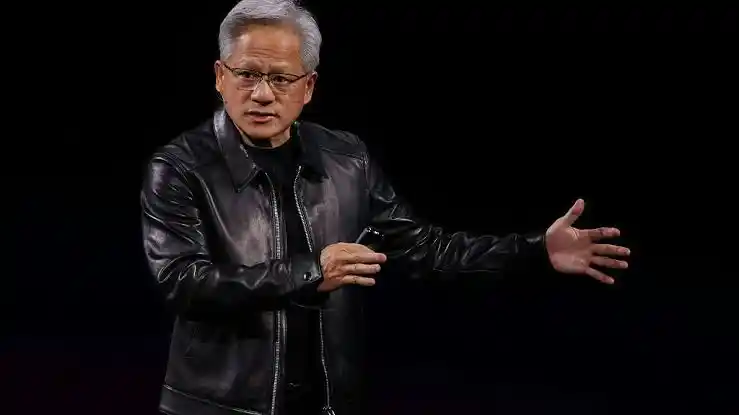
Is There a Hidden Hand Behind Jensen Huang's Departure? Secretary of State Rubio or Anthropic?

The article alleges that Nvidia founder Jensen Huang's departure was the result of a coordinated "hunt" involving two forces: Secretary of State Marco Rubio and AI rival Anthropic. On the policy front, the dispute centers on AI chip export controls—Huang was the most prominent corporate voice opposing built-in tracking and remote kill-switch functions in chips, while three bipartisan chip bills (covering congressional review of export licenses, anti-smuggling measures, and pressure on allies to halt equipment sales) have been folded into the Senate's annual defense authorization bill. The storm began with a highly classified memo leaked to The New York Times; according to The Washington Post, the memo originated with Rubio, who reportedly rewrote a CIA report whose analysts were unconvinced by the underlying intelligence, using "his own more aggressive wording," then sent it to senior officials and briefed the president. David Sacks called the leak a crime and asked why someone would risk prison to bring Huang down. Separately, NYT reporter Tripp Mickle said a mysterious industry contact told him to "drop everything" and investigate Megaspeed, a Singapore-based Nvidia compute rental firm; suspicion points to Anthropic CEO Dario Amodei and a co-founder as the leaker. Anthropic reportedly donated $40 million to Public First Action, which pushes AI safety rules and chip export controls—positions opposite Huang's defense of open-source AI and opposition to backdoors. Nvidia shares fell on the news, and tech leaders including Musk, Garry Tan, and Tim Sweeney are petitioning for Huang's reinstatement, with Sweeney comparing his ouster to Apple firing Steve Jobs.

marsbit6h ago

Is There a Hidden Hand Behind Jensen Huang's Departure? Secretary of State Rubio or Anthropic?

marsbit6h ago

Trading

Spot
活动图片