After Losing Tens of Millions of Dollars, Abstract Announced Shutdown. Is a Wave of L2 Exits Coming?

marsbitPublished on 2026-10-08Last updated on 2026-10-08

Abstract

Layer 2 blockchain project Abstract, backed by the Pudgy Penguins team (Igloo Inc.), has announced its shutdown scheduled for December 15th, after nearly two years of operation. The project, which positioned itself as a "consumer-grade blockchain network," reportedly incurred tens of millions of dollars in operational losses. The closure has sparked debate within the crypto community. Supporters commend the team for responsibly winding down without a token launch (TGE) to potentially "cash out." Critics, however, argue that users who invested significant time and money into the ecosystem—through activities like badge systems and network interactions—are left with nothing, feeling misled by earlier optimistic promises from leadership. Analysis points to several key reasons for Abstract's failure: 1) Underdeveloped DeFi ecosystem with low TVL and trading volume, limiting fee-based revenue; 2) Lack of institutional participation and liquidity, missing major trends like RWA; 3) High operational costs for infrastructure, partnerships, and marketing; 4) Unclear product-market fit, as the network failed to attract either a vibrant meme culture like Solana or significant institutional capital flows. The article suggests Abstract's shutdown, following similar moves by other L2s like Blast, may signal the beginning of a broader consolidation wave for unsustainable Layer 2 networks. This trend highlights the intense competition and challenges projects face in achieving viable economi...

Original|Odaily Planet Daily(@OdailyChina)

Author|Wenser(@wenser 2010)

On October 7th, Abstract, the L2 project under Igloo, the parent company of Pudgy Penguins, officially announced it will shut down on December 15th of this year. This "consumer-grade L2 public chain," once placed with high hopes by the Pudgy Penguins team and numerous NFT players, is concluding its nearly two-year operation, ending in a somewhat regrettable manner.

After the announcement, market opinions diverged sharply. One faction believes that the Pudgy Penguins team did not choose to "conduct a final round of token distribution (TGE) and cash out" as some other L2 teams have, showing integrity from start to finish. However, another faction strongly disagrees. They argue that the tens of millions of dollars in operational losses mentioned by Pudgy Penguins CEO Luca Netz in his lengthy announcement, as well as Abstract's previous operational activities like the badge system which were somewhat "PUA-style," were largely paid for by users. Many had pinned their hopes on Abstract's potential token launch to recoup losses, a hope now completely dashed.

Behind Abstract's shutdown, the hype surrounding Robinhood Chain's launch has cooled, and Blast has also announced its shutdown. Following the wave of some CEX closures, perhaps more unsustainable L2s will face a wave of shutdowns.

"Consumer-Grade Blockchain Network" Finds No Takers: DeFi, Meme, and Institutional Capital All Fail to Gain Traction

Looking back at Abstract's development, its positioning as a "consumer-grade encrypted blockchain network" might not have been a good business idea from the start.
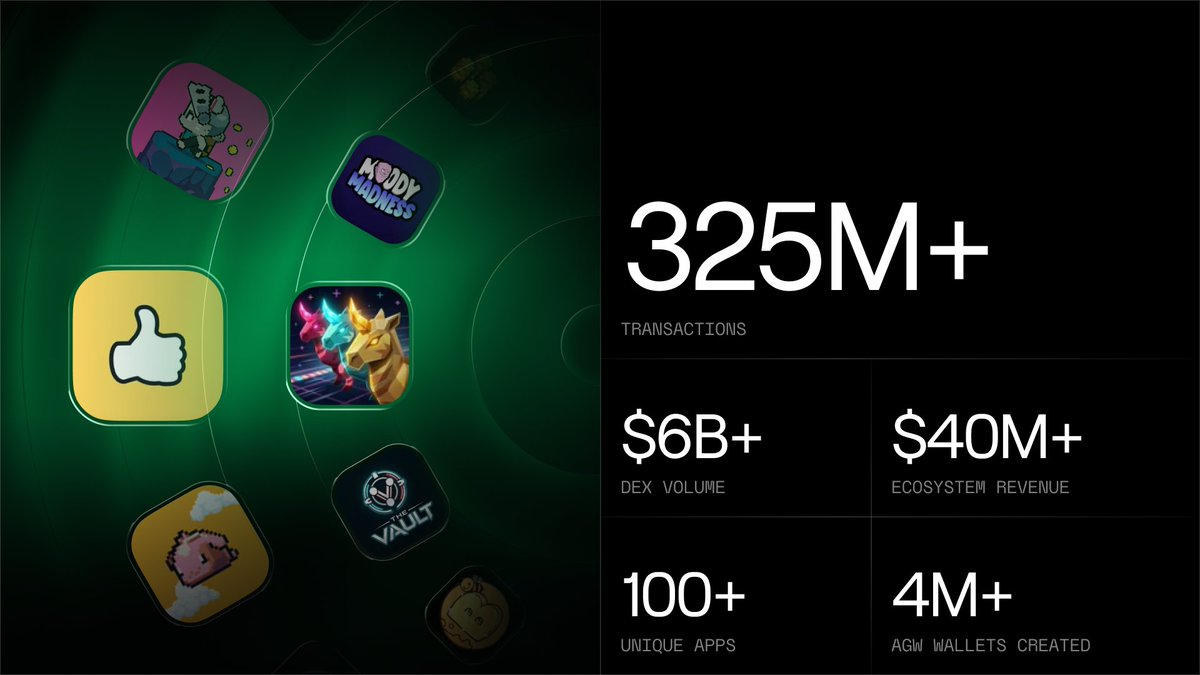
According to Abstract's official statements, the L2 network had attracted over 400,000 cumulative users and deployed more than 144 applications. Pudgy Penguins CEO Luca Netz also stated that Abstract had processed over 325 million on-chain transactions, launched Portal and AGW, and attracted global brands like Disney and Red Bull. On the surface, Abstract's performance seemed decent. However, what ultimately led it into an "operational dead end" might be similar to a strategic miscalculation made by Base in recent years regarding "crypto-social + on-chain consumption"—it neither followed the grassroots route like Solana and Robinhood Chain to develop its own Meme ecosystem, nor did it deeply cultivate DeFi around institutional and large investor needs to attract liquidity and complete its business self-sufficiency loop.

Main Reasons for Shutdown: Insufficient DeFi Ecosystem, Lack of Institutional Involvement, High Operational Costs, and Unclear PMF

Based on official announcements from Abstract and posts by Pudgy Penguins CEO Luca Netz, we can glimpse the "main causes of death" for this L2 network:

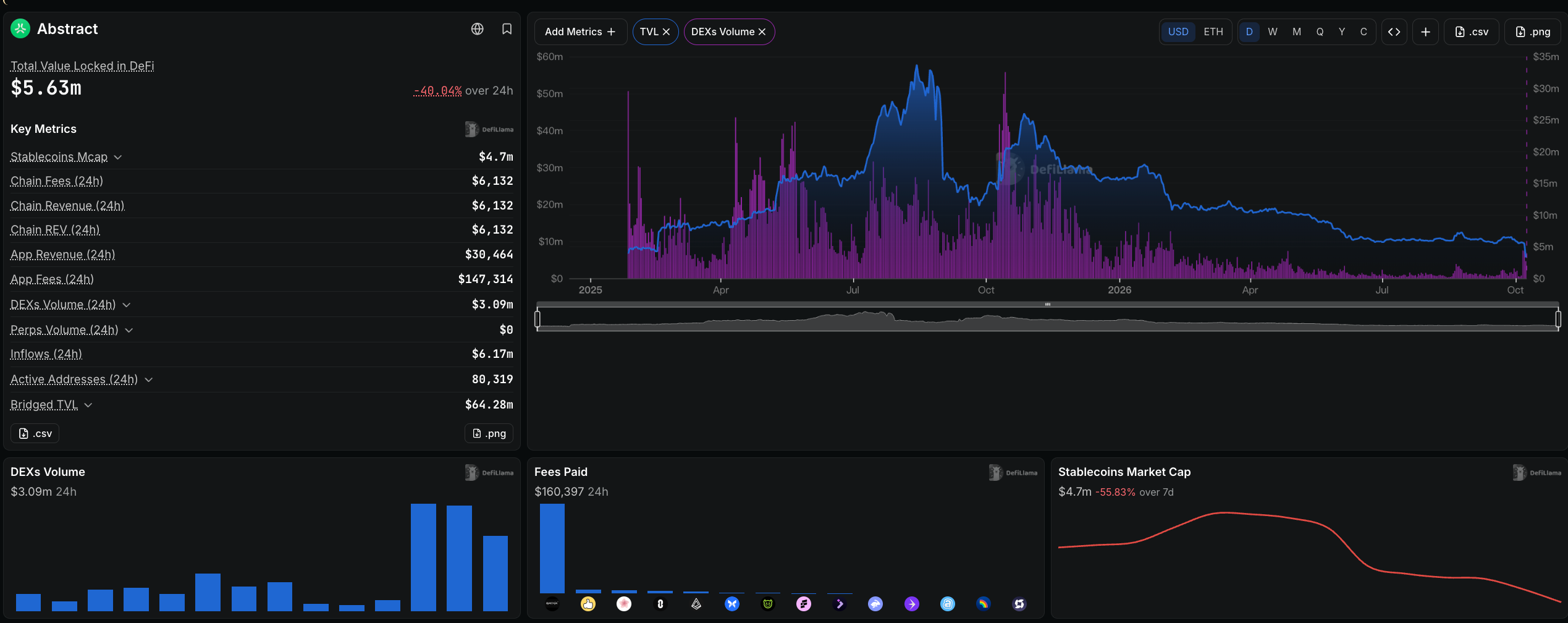
First, insufficient DeFi ecosystem; Although Abstract claimed its DEX trading volume reached $6 billion, considering its nearly two-year operational period, this is hardly an impressive figure. According to Defilama data, Abstract's DeFi TVL is currently around $5.6 million, ranking 90th among major L1 and L2 networks, with a 24-hour drop of about 40%. While heavily impacted by the shutdown news, its DEX trading volume had long fluctuated between $300k-$1 million; its stablecoin market cap saw a nearly 60% drop over 7 days, now standing at only $4.7 million.

For an L2 network, a failed DeFi ecosystem development almost inevitably means limited ecological activity, limited real user base, and difficulty in generating revenue and achieving self-sufficiency through fees.
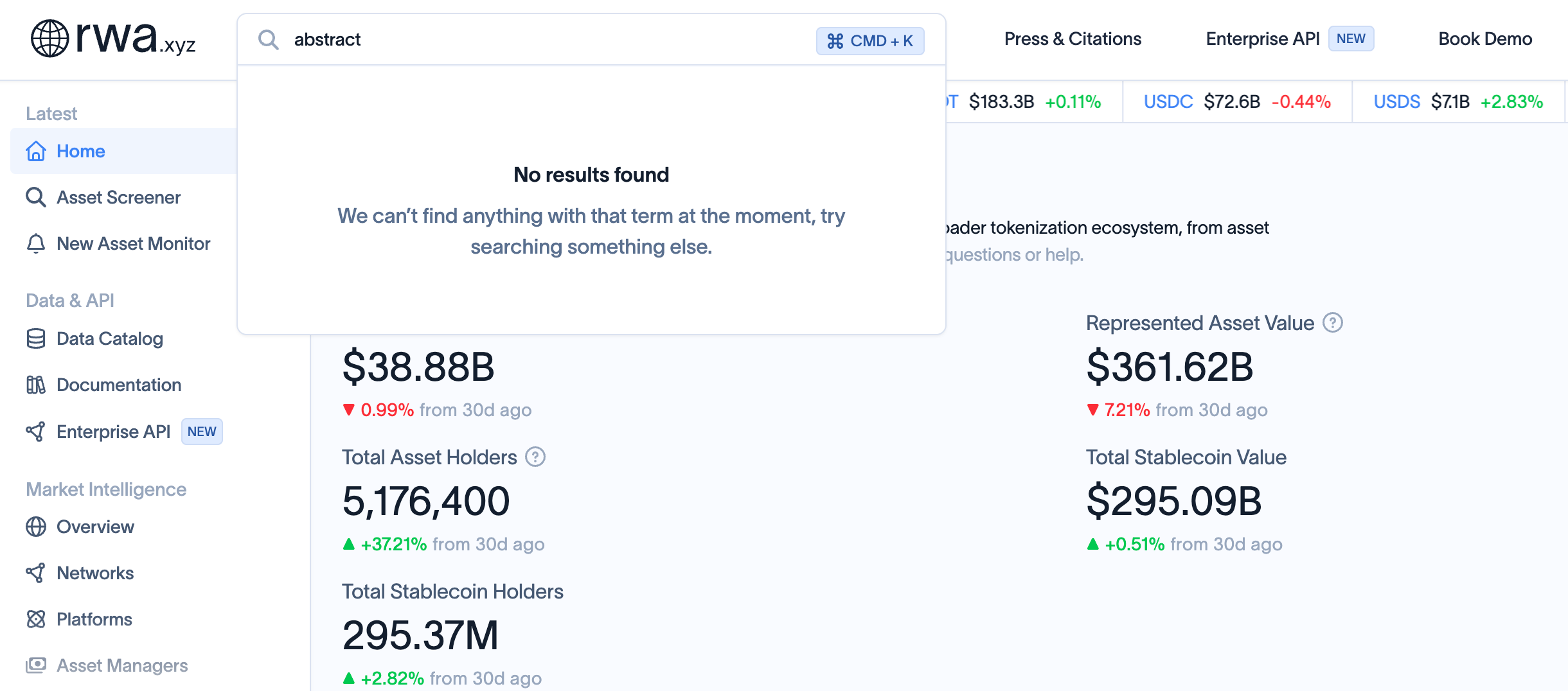
Second, low institutional participation and limited liquidity. This is one of the important reasons for Abstract's shutdown. Taking RWA asset data as an example, Abstract is essentially "absent" on RWA asset TVL network rankings. It also largely missed out on the major crypto and traditional finance trends of the past two years, such as institutional investment channels, the RWA asset wave, and stock tokenization trading. From this perspective, it represents an extremely serious strategic misjudgment.
Third, excessively high operational costs. Beyond the fixed operating expenses of an L2 (Odaily Planet Daily Note: including sequencer operations, ZK-related data availability and proof costs, bridging and front-end maintenance, infrastructure development, team operational costs, ecosystem incentives/developer support, etc.), Abstract's collaborations with traditional brands, partnerships, and offline events also required significant spending. The seemingly glamorous L2 path is not as low-cost as many imagine. Early technical development, mid-term growth operations, and long-term ecosystem building all require continuous capital investment. Abstract's shutdown also carries a sense of cutting losses in time.

Fourth, declining demand for related products and unclear PMF. Unlike the favorable situation Pudgy Penguins previously enjoyed due to its NFT community, physical toy IP, PENGU token launch, and a favorable crypto bull market, the current crypto market's demands on L2 networks, and even L1 public chains, are no longer limited to small-scale project prosperity. Instead, it requires "ecosystem-level hubs" like Hyperliquid and Robinhood Chain, which enable pre-pricing of traditional financial assets and introduce liquidity and institutional capital from traditional financial markets, thereby reaping the benefits of "fee harvesting." This is precisely the market that Abstract and numerous other L2 networks have been unable to tap into.

Beyond these reasons, homogeneous competition among L2 networks and the rapid alternation of crypto market bull and bear cycles are also contributing factors to Abstract's reluctant shutdown. And following Abstract's closure, heated debates have emerged in the market.

Praise vs. Criticism: No Intent to Cash Out or "PUA to the End"?

After Abstract's official shutdown announcement, the crypto community engaged in fierce debate. Here are some representative viewpoints:

Yuga Labs VP 0xQuit posted: "Abstract did a decent thing. They could have followed Blast's model and directly launched a token (TGE) to raise a massive amount of money. Instead, they admitted failure, choosing to wind down the project without a TGE. Sure, people still lost money, but it could have been much worse. Respect."

Community member Loki agreed: "Abstract could have done a TGE at any point before shutting down, like countless L2 projects with no users, but they didn't. Pudgy Penguins co-founder and CCO @chefgoyardi and CEO @LucaNetz bought the project with their own money and never cashed out from the community. Now, with Abstract, they've shown their integrity again. The best news: refocusing on the Pudgy Penguins project." His words express continued confidence in the Pudgy Penguins team.

However, others expressed extreme dissatisfaction, particularly users who invested real money, time, and effort into Abstract's ecosystem and network interactions.

Abstract power user Micka posted on X: "I participated in @AbstractChain during the testnet in July 2024. I built the French community, posted thousands of tweets about Abstract, and streamed over 1500 hours of Abstract mainnet content in 2025. I spent thousands of dollars over one year and ten months, accumulating 4 million Abstract interaction XP." Now, Abstract has fallen even before completing the first phase of its three-stage roadmap. He is "speechless" and "will no longer trust Luca."

Another community member, Chris, criticized sharply: "I sold all my PENGU tokens. That Space they used to announce the shutdown of Abstract services was awful, like they hadn't discussed it beforehand and hastily threw it together last minute. I somewhat understand their move because they didn't want to shut down after launching the ABS token via TGE. But what I really dislike is the overall narrative framework. Their response was a cold 'badges are useless anyway' and 'you supported our startup project.' The worst blow was when someone asked Luca if any Abstract users would receive any rewards from the Pudgy Penguins ecosystem, he immediately said no without hesitation, basically stating that what users can currently access in the ecosystem is it. This went on for far too long, completely unnecessarily. As a streamer, someone who diamond-handed tokens to zero for engagement, who invested massive time and effort weekly for six months, creating content series around this vision, I'm deeply disappointed in how this turned out."

Others even dug up an interview video of Luca from last year's Paris NFT conference, where he expressed full confidence in Abstract's future, claiming "Abstract will become the biggest L2 network in the future," and asked everyone to wait and see. Now, many received the official notice of Abstract's shutdown.

The brutal reality checks in the crypto market seem to keep happening. Often, you can't foresee that the project you invest heavily in will definitely be the winner at the table, just as you can't guarantee you'll reach the South Pole as long as you keep walking.

Conclusion: After the CEX Shutdown Wave, the L2 Shutdown Wave Has Arrived

After years in the space, I've seen too many failures—in sectors like NFT, GameFi, SocialFi, and the recent wave of CEX closures. Earlier, I even interviewed Luca Netz around January 2025. Back then, similar to his state at the NFT Paris conference, he was full of grand ambitions for the future of Abstract, Pudgy Penguins, and the Igloo group, placing high hopes on PENGU's prospects.

However, the development of things often doesn't follow individual will. The success or failure of a crypto project depends on numerous factors: beyond the usual track, strategy, and direction, there's also funding, business model, ecosystem building. It relies on the participation of institutions, market makers, and retail investors, and sometimes requires a bit of time and luck.

Just as I wrote numerous articles last year discussing "L2 is a detour for Ethereum," the shutdowns of Abstract and Blast are not the end of the exodus for these "ghost town" L2s. In the current climate where various models and projects are being proven unviable, projects unable to connect with traditional financial markets may need to reconsider their future direction and path forward.


Related Questions

QWhat is the main reason given for the shutdown of the Abstract L2 network?

AThe main reasons include insufficient DeFi ecosystem development, lack of institutional participation and liquidity, high operational costs, unclear product-market fit (PMF), intense homogenized competition among L2s, and the fast-paced shifts between crypto bull and bear markets.

QHow did some community members, like Yuga Labs VP 0xQuit, view Abstract's decision to shut down?

AYuga Labs VP 0xQuit viewed Abstract's shutdown as a decent move. He stated that the team could have chosen to conduct a TGE (Token Generation Event) to raise significant funds but instead admitted failure and chose to wind down the project without issuing a token, showing integrity.

QWhat was a major point of criticism from users like Micka regarding Abstract's shutdown?

AUsers like Micka criticized the shutdown because they had invested significant time, money, and effort into the Abstract ecosystem since the testnet phase, building communities and creating content. They felt betrayed that the project shut down before completing its roadmap, rendering their contributions and hopes for rewards meaningless.

QAccording to the article, what strategic misjudgment did Abstract make regarding institutional participation?

AThe article states that Abstract made a severe strategic misjudgment by largely missing out on major trends like institutional investment channels, the RWA (Real World Assets) wave, and stock tokenization trading over the past two years, failing to attract institutional liquidity.

QWhat broader trend does the article suggest might follow the shutdown of Abstract and Blast?

AThe article suggests that after the wave of CEX (Centralized Exchange) shutdowns, a wave of L2 (Layer 2) network shutdowns may have begun, indicating that projects unable to establish meaningful connections with traditional finance might struggle to survive.

Related Reads

Nomura Research Report Interpretation: US Stock ETFs Absorb $6.9 Billion in a Single Week, Stock-Bond Divergence Continues to Intensify

Nomura's FX Insights report, dated November 16, 2026, notes that although foreign inflows into U.S. equity ETFs and mutual funds rose to $6.9 billion in the week of November 9–13, up from $5.4 billion the prior week, the dip-buying momentum slowed somewhat in the latter half of the week. Nearly 39% of the weekly total (about $2.5 billion) flowed in on November 9 alone, extending the bargain-hunting seen after the previous week's selloff, when $2.1 billion entered on November 6. Daily buying stayed above $1 billion (November 11: $1.6 billion; November 12: $1.4 billion), but Nomura says the overall pace has begun to ease slightly. Divergence between equities and bonds is intensifying. U.S. bond ETFs and mutual funds saw $287 million of net outflows during the week, extending the prior week's $182 million outflow. Emerging-market thematic ETF inflows fell to $1.4 billion from $2.2 billion, with the split again favoring equities: $1.9 billion into stock funds versus $425 million of net outflows from bond funds. Asia-Pacific cross-border flows showed clear signs of braking. Net purchases of U.S. portfolio assets by previously active Korean retail investors plunged to $768 million from $2.6 billion, driven mainly by a sharp contraction in Korean retail buying of U.S. stocks. Taiwanese investors continued selling dollar assets, offloading another $439 million of USD-denominated bonds after net sales of $697 million the prior week.

marsbit1h ago

Nomura Research Report Interpretation: US Stock ETFs Absorb $6.9 Billion in a Single Week, Stock-Bond Divergence Continues to Intensify

marsbit1h ago

Goldman Sachs Research Report Interpretation: S&P 500 Seen Rising to 8,700 by End of Next Year, AI Investment Shift Spawns Four Major Themes

Goldman Sachs' 2027 US equity outlook, dated November 17, 2026, argues the bull market isn't over but has entered its middle phase. Healthy economic fundamentals and sustained AI investment should lift the S&P 500 to 8,700 by end-2027, implying roughly 17% upside. However, as AI capex growth peaks, market focus shifts from infrastructure spending to practical monetization. Earnings growth will cool: S&P 500 EPS growth slows from about 30% in 2026 to 11% in 2027 (core growth around 18% excluding tech giants' investment income). Valuation looks relatively safe—the 12-month forward P/E contracted 19% in 2026 to about 18x, near the 10-year average. The 8,700 target is derived from 2028 earnings estimates at 18x P/E; with high rates and AI uncertainty, systemic multiple expansion is unlikely, so gains must be earnings-driven. The AI relay baton is passing. Hyperscaler capex contributed 12 percentage points of 2026 index earnings growth, but its year-over-year growth is expected to plunge from 105% to 73% in 2027, with depreciation pressure eroding profits—by 2028, cloud capex could be a 5-point net drag on S&P 500 earnings. Goldman favors companies that can genuinely monetize AI or use it to boost productivity, especially asset-heavy, physical-economy productivity beneficiaries. Corporate leverage is rising: investment-grade and high-yield issuance could reach $2.8 trillion in 2027, with cloud providers borrowing heavily on and off balance sheet. Buyback growth stalled in Q3, with the buyback yield at 1.4%—a 20-year low outside recessions. "Buyback aristocrats" with strong free cash flow and sustained share reduction are scarce assets. With earnings growth near single digits, style tilts toward self-sustaining growth. Goldman likes secular growth stocks, favoring energy infrastructure (rare earnings acceleration) and transportation (cyclical upside). Defense matters too: high earnings concentration is a risk, so cheap healthcare and some consumer staples offer protection, while mid-caps—with underextended earnings and low P/Es—help diversify mega-cap risk. This is a summary of third-party research; ratings, targets and forecasts are the analyst's views, not investment advice. Markets carry risk; decisions should be independent.

marsbit1h ago

Goldman Sachs Research Report Interpretation: S&P 500 Seen Rising to 8,700 by End of Next Year, AI Investment Shift Spawns Four Major Themes

marsbit1h ago

Gold Rush 2027: Wall Street Giants Predict Bull Market Endures, Opportunities Hidden in Structural Trends

Global markets enter 2027 at a crossroads, balancing AI-driven FOMO against bubble fears, lingering inflation, and geopolitical risk. Major Wall Street outlooks converge on one theme: AI remains the dominant investment thesis, but storytelling alone no longer justifies valuations. Morgan Stanley upgraded global equities to overweight with an S&P 500 target of 8,700 by end-2027, citing EPS growth from $369 to $420. Goldman Sachs sees roughly 16% total return for the S&P 500 over 12 months, though it warns of a "Great Halving" in earnings growth—S&P 500 EPS growth falling from 36% to 11%. Stocks can still rise because tech valuations have compressed to the 20th percentile of the past two decades. AI capex is projected at $1.8 trillion in 2027, but hyperscaler spending growth is peaking and depreciation pressures are mounting, challenging AI "shovel sellers." China assets are being re-rated, with Goldman overweight Hong Kong and Morgan Stanley preferring A-shares. Energy and infrastructure emerge as hard constraints: the world faces a $106 trillion infrastructure gap, and grid upgrades, transformers, and storage are high-conviction plays. Oil could fall to $78/barrel, but Middle East escalation is the biggest tail risk. In asset allocation, the Beta era is ending. Goldman favors "growth scarcity"—overweight US and Japan, underweight Europe. Morgan Stanley stresses quality and recommends overweight US Treasuries as a hedge. Bonds are back, with global aggregate yields at 5.3%, a two-decade high, and negative stock-bond correlation likely to return. Alternatives gain ground; JPMorgan estimates 30% in diversified alternatives lifts expected returns to 7.5% and Sharpe ratios by 21%. It also quantified Bitcoin for the first time—10% base-case annualized return, 55% volatility—but excluded it from strategic allocation. Overall, 2027 rewards discipline: dancing with volatility and locking in genuine value as growth becomes scarce.

marsbit1h ago

Gold Rush 2027: Wall Street Giants Predict Bull Market Endures, Opportunities Hidden in Structural Trends

marsbit1h ago

All Four Lines of Defense Broken: How Many Cards Does Bitcoin Have Left to Play?

Bitcoin fell from $74,000 to $61,900 in five days, triggering over $300,000 liquidations and wiping more than $100 billion from total crypto market value. The fear index hit 10, a level last seen in June. The selloff was triggered by October CPI at 0.4% month-over-month versus 0.3% expected, pushing December rate-hike odds to nearly 90%. Bad news piled up: BlackRock's IBIT saw its longest outflow streak, MSCI announced removing Strategy from US indexes (potentially $2.8 billion in passive selling), Nvidia's CEO resigned, and Middle East tensions escalated. The Fed's September rate cut cycle has reversed into tightening, with officials warning of further hikes, while the Bank of Japan may raise rates again in December, risking yen carry-trade unwinds. All four major cost baselines are broken: ETF average cost ~$81,500, market average ~$77,500, short-term holder cost ~$75,600, and Strategy's ~$75,400. About 4 million BTC bought between $85,000 and $118,000 are underwater. MVRV fell to ~1.2, still above the below-1.0 level historically seen at bear-market bottoms. Both 2018 and 2022 saw lower second bottoms. Galaxy's base case targets $40,000–46,000. However, mid-sized wallets and Strategy keep accumulating, spot volume rose 24.5%, and some argue leverage has cleared with most macro bad news priced in. December brings the Fed meeting, BOJ meeting, and Deribit options expiry; ETF flows, stablecoin supply, and MVRV will determine direction.

marsbit1h ago

All Four Lines of Defense Broken: How Many Cards Does Bitcoin Have Left to Play?

marsbit1h ago

Trading

Spot
活动图片