Losing Retail Traders Keep Trading, Winning Retail Traders Know When to Rest

深潮Опубликовано 2025-12-09Обновлено 2025-12-09

Введение

Stop Losing Money in Crypto: Why Day Trading is a Structural "Scam" for Retail Investors The author, drawing from personal trading experience since adolescence, argues that day trading is fundamentally rigged against ordinary investors. Retail traders lack critical advantages like real order flow data, liquidity maps, or execution speed. While infrequent trading might be survivable, high-frequency trading almost guarantees eventual ruin due to mathematical inevitability, even with strong discipline and risk management. The key insight isn't about winning—it's about keeping the money. Major losses often follow big wins when traders don't step back. The author transformed his results by becoming a low-frequency swing trader who pauses after profitable trades. The piece warns that the current social media-driven day trading culture misleads young people (e.g., on TikTok or Discord) into believing it's a learnable skill, not gambling. This false sense of control is dangerous—it prevents them from quitting. Unlike a casino, which is openly a gamble, day trading is disguised as a legitimate "system," making it harder to recognize the risk. In reality, most profitable retail traders are simply lucky, catching a trend and having enough discipline to stop temporarily. True success lies not in making money, but in preserving it.

Author:Pickle Cat

Compiled by: Deep Tide TechFlow

Want to stop losing money in the cryptocurrency market? First, stop your day trading!

Because for the average investor, day trading is structurally a "scam."

This article is long, but if you're willing to spend 120 seconds reading it, I guarantee you'll thank yourself years from now.

I started trading when I was a teenager.

I've had wins that made me feel like "Batman," and I've had painful failures that shattered me inside—wounds I'm still healing from today.

I've tried every trading strategy an average investor can find.

There was even a whole year when I was obsessed with day trading, thinking it would finally turn things around for me, but I failed so miserably that it still stings every time I look back.

My profit and loss (PNL) was so bad that my grandma's automated Bitcoin buying plan made more money than I did.

Later, I transformed into a low-frequency swing trader, rarely adjusting my positions. After making a profit, I would decisively exit and then take a break from trading for a while.

It was only then that my life started to improve, and everything began to make sense.

I'm no saint. I'm writing this to save my younger, foolish, naive, and impulsive self.

First, as an average day trader, you're engaging in high-frequency trading with no informational edge (no order flow data, no clear liquidity maps, no market maker position insights, no execution advantages, nothing).

If you only trade a few times per quarter, you might survive.

But what if you trade more than 10 times a week?

Even if you have the strongest "discipline" and "risk management" skills in the world, the math will eventually make you lose everything.

The reason average investors fail isn't that they never win; it's that they never stop. The only outcome of high-frequency trading is one: ruin.

That's why I set up a "penalty system" for myself—if I exceed my quarterly trading limit, I face consequences.

Every major loss I've experienced came after a big win, when I kept trading instead of stepping away.

And all my big wins (the ones where I actually held onto the money for a long time) happened because I caught a major trend and then chose to rest and cool off.

The pattern is so obvious it hurts.

"Winning" isn't just about making a lot of money suddenly; real "winning" is being able to keep that money instead of losing it all the next year.

Now I see 14-year-olds on TikTok calling themselves day traders, drawing a few lines on TradingView, thinking that buying some "guru's" course or joining a Discord group means they've mastered some daily executable trading system.

It makes me sick. If they knew they were gambling, I wouldn't mind—at least they'd know they're playing a game.

But the current day trading craze is even bigger than the "drop-shipping hype" of 2016 and 2017. And we all know how that ended.

People underestimate the difficulty of trading and severely overestimate their own abilities.

The problem isn't just mathematical. Yes, the more you trade and the less you stop, the harder it is to sustain profits.

The real issue is that young retail traders genuinely believe that with "discipline" and "risk management," they're not gambling at all. They think day trading is a "skill" that can be executed like a daily habit.

This doesn't just apply to cryptocurrency day trading; it's the same for the U.S. stock market and almost every other market.

High-frequency trading is only for institutions.

Take the U.S. stock market, for example.

Do you know what institutional traders don't even look at? Candlestick charts and TradingView.

They use Bloomberg terminals, which contain data retail investors will never see.

Sure, you might already know this. But 14- to 18-year-olds don't. They think their indicators are the tools everyone uses.

That's the real danger.

If you know you're gambling, at least part of you will know when to stop.

But once you believe it's a "system," you'll never quit.

You'll keep clicking until the market empties you out.

Day Trading: A Casino Disguised as a Café

It really is like a casino in plain sight.

When you walk into Las Vegas or Macau, you know what kind of place you're entering. You see the lights, the tables, the dealers, the noise. Your brain immediately recognizes: this is gambling.

But day trading today is like a casino disguised as a coffee shop.

New traders walk in thinking they're there to "learn a skill," unaware that they've already sat down at a table designed to slowly drain them.

So they don't stop.

That's the essence of the tragedy, not the losses themselves.

The truly sad part is that they truly believe they're not gambling, and it's that belief that keeps them going until they lose everything.

As for those retail traders who seem to be "making money" (like I once was)... honestly, most of them just caught a wave.

They had good luck at the right time, combined with a little discipline learned from previous losses, and finally learned to stop after winning.

Even so, such lucky ones make up less than one percent of all retail traders.

Making money in trading isn't actually that hard; what's truly difficult is keeping it.

Связанные с этим вопросы

QWhy does the author believe that day trading is structurally a 'scam' for retail investors?

AThe author argues that retail day traders operate without any informational advantages (such as real order flow, liquidity maps, or market maker positioning), execution edge, or other institutional tools, making consistent profits mathematically improbable and leading to inevitable ruin through frequent trading.

QWhat key realization helped the author start improving their trading results?

AThe author improved their results by transitioning to low-frequency swing trading, taking profits decisively after wins, and then pausing trading for extended periods, which allowed them retain gains and avoid subsequent losses.

QAccording to the author, what is the true danger for young retail traders engaged in day trading?

AThe true danger is that young traders genuinely believe day trading is a skill-based system reliant on discipline and risk management, not gambling. This false belief prevents them from stopping even as losses accumulate, unlike in a casino where the gambling nature is obvious.

QHow does the author describe the environment of modern day trading for newcomers?

AThe author compares modern day trading to a casino disguised as a café—newcomers think they are learning a skill but are actually at a table designed to slowly drain their funds, unaware they are gambling.

QWhat does the author identify as the hardest part about making money in markets?

AThe hardest part is not making money, but keeping it. True winning is defined by the ability to retain profits over time, rather than giving them back in subsequent trades.

Похожее

SociFi Dream Shattered? Farcaster Pivots to Bet on Wallet Track

Farcaster, a decentralized social network protocol, has announced a major strategic shift after 4.5 years, abandoning its "social-first" approach to adopt a "wallet-first" growth model. Co-founder Dan Romero acknowledged that despite initial success—such as a surge to 100,000 daily active users (DAU) in early 2024 driven by features like Frames and the DEGEN airdrop—user engagement and revenue sharply declined later that year. By October 2025, monthly revenue had dropped 99% from its peak. The platform will now prioritize building a high-quality wallet within its official app, Warpcast, focusing on the intersection of wallets and social interaction. The new user journey emphasizes wallet funding and utility as key activation points. Farcaster is also enhancing its financial infrastructure through the acquisition of token launch platform Clanker and offering incentives like a 10% reward on USDC deposits. Frames, interactive mini-apps within the social feed, enable "content as transaction" capabilities, allowing users to mint, trade, and pay directly in their feeds. Despite raising $150 million in a 2024 Series A round at a $1 billion valuation, the move has drawn criticism. Some argue it signals the end of the SocialFi dream and a return to a transaction-focused model reminiscent of the 2017 ICO era. Others note challenges in a competitive wallet market and potential feature bloat. Farcaster remains an open protocol, and users can choose alternative clients, but the shift underscores a broader industry reality: pure Web3 social networks may struggle without integrating high-value financial tools to drive user engagement and retention.

marsbit4 мин. назад

SociFi Dream Shattered? Farcaster Pivots to Bet on Wallet Track

marsbit4 мин. назад

12.9 Today's Market: Why the Drop? BTC\SOL\ETH\BNB\RDNT\STABLE\TRUMP\Horse to Success\bibi Trading Advice

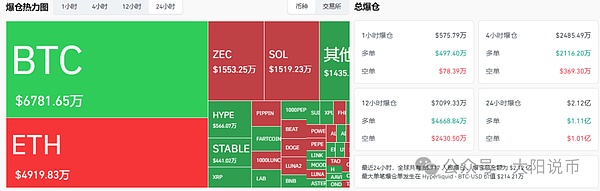
The cryptocurrency market experienced significant volatility, with $212 million in liquidations over 24 hours, including a single $2.14 million Bitcoin liquidation on Hyperliquid. Market sentiment remains nervous, with high turnover reflecting short-term bearishness, though long-term holders remain steady. The Federal Reserve's upcoming meeting is a key focus, as interest rate decisions may influence market direction. Bitcoin’s support is near $88,100, with a potential dip to $85,200–85,900 offering a buying opportunity. Resistance is at $93,400. SOL may see support at $125.8 and $124, with potential accumulation near $120. ETH has supports at $2,955, $2,865, and $2,805, with resistance at $3,282. BNB’s key level is $898; holding above may lead to a bounce toward $939. Meme coins are highly risky, with many projects on BSC and SOL facing extreme volatility and potential scams. High-cap tokens like BIBI are relatively safer. Patience and strict stop-losses are advised. Specific tokens: - 马到成功 (Horse to Success): Accumulating near $2M market cap with strong community support. - ZEC: Showing strength, possibly entering a major upward trend if it holds key levels. - RDNT: Avoid chasing pumps—likely a temporary bounce. - TRUMP: Unlikely to rally this cycle due to locked supply; may perform in the next bull market if Trump remains politically relevant. - STABLE: Bearish due to high fully diluted valuation and lack of catalysts; consider shorting. Overall, December is to accumulate during consolidation while preserving capital for larger opportunities in Q1 2026.

金色财经14 мин. назад

12.9 Today's Market: Why the Drop? BTC\SOL\ETH\BNB\RDNT\STABLE\TRUMP\Horse to Success\bibi Trading Advice

金色财经14 мин. назад

Financial On-Chain Transformation: A Blueprint for the Overhaul of the U.S. Capital Market

The article "Financial On-Chaining: A Blueprint for the Transformation of U.S. Capital Markets" explores the potential systemic overhaul if the U.S. financial system migrates to blockchain technology, as suggested by SEC Chair Paul Atkins. It outlines seven key structural shifts: 1. Market Dynamics: Transition to T+0 settlement, enabling 24/7 trading and real-time regulatory oversight by the SEC, increasing capital velocity but eliminating traditional market buffers. 2. Banking Sector: Banks would operate with near-transparent balance sheets, reducing risks like asset-liability mismatches but potentially accelerating bank runs. Programmable collateral could unlock new financing efficiency. 3. Real Economy: Democratization of assets through fractional ownership and "micro-IPOs" for SMEs, injecting liquidity premium into U.S. assets. 4. Geopolitics: Digital reinforcement of dollar dominance via tokenized Treasuries and money market funds, attracting global capital through efficiency and transparency. 5. Risk Evolution: Systemic risks would shift from human-driven panics to technical failures (e.g., smart contract bugs, oracle manipulation), making crises faster and more technical. 6. Winners and Losers: Infrastructure builders, new asset managers, and hybrid talent would thrive; traditional intermediaries and opaque industries would decline. 7. Realistic Timeline: Full adoption in two years is unlikely due to technical, legal, and political hurdles, but gradual implementation (e.g., in Treasuries, repos) is inevitable as efficiency drives change.

比推26 мин. назад

Financial On-Chain Transformation: A Blueprint for the Overhaul of the U.S. Capital Market

比推26 мин. назад

Торговля

Спот
Фьючерсы
活动图片