SoftBank's Son, Bankrupted by Good Stories, Awaits His Next Alibaba

marsbitОпубликовано 2026-06-09Обновлено 2026-06-09

Введение

Masayoshi Son is back. After years defined by Vision Fund's massive losses and costly missteps like WeWork—which shattered market confidence and led to billions in write-downs—Son has found redemption through AI. His early, high-conviction bets are paying off handsomely. Arm, acquired for $32 billion in 2016 and once a heavily leveraged burden, has become a gold mine amid the AI compute boom, delivering roughly a 10x return for SoftBank after its 2023 IPO. More crucially, SoftBank has made an enormous, concentrated bet on OpenAI, committing over $64 billion for a roughly 13% stake. This investment is already showing massive paper gains, contributing significantly to SoftBank's soaring valuation and propelling Son back to the top as Asia's richest person. The narrative has shifted from the "fool" who fell for grandiose stories to the visionary who endured a brutal downturn and is now being rewarded for his early faith in artificial intelligence.

Masayoshi Son is back.

In recent years, when people mention SoftBank, they no longer talk about him being Jack Ma's 'benefactor'. More often, they think of the failed investment in WeWork, the massive losses of the Vision Fund, and the Japanese investor who was repeatedly humbled by the market during the tech bubble.

But today, AI assets are being repriced. The value of Son's shares in Arm and OpenAI is rising. SoftBank's stock price has surged, Son's fortune has climbed back to the top, and he is once again Asia's richest person.

Evaporating $70 Billion

People fear the unknown, so someone who hasn't experienced a bubble bursting might be afraid.

But not Masayoshi Son. At 67, he has experienced the peak of the internet 20 years ago and was left bruised when the bubble burst.

Son was first chosen by fortune in the late 1990s. Back then, the internet was like a newly discovered magic. Yahoo, portals, e-commerce, online trading—anything related to the web was believed by the capital markets to be rewriting the world. SoftBank also changed during that time. It was no longer just a Japanese software company but became a massive basket filled with internet stocks. Son bet on Yahoo and Yahoo Japan, and SoftBank's stock price was pushed to dizzying heights by the bubble.

In early 2000, Son's wealth became unreal. At that time, his net worth could increase by about $10 billion in a week, even briefly surpassing Bill Gates to become the world's richest person for three days. A Japanese entrepreneur of Korean descent from Kyushu, relying on extreme belief in the internet, suddenly stood at the pinnacle of global wealth.

After the dot-com bubble burst, SoftBank's stock plummeted, and Son's personal wealth evaporated by about $70 billion from a peak of roughly $76 billion. However, Son wasn't written off as a failure of that bubble era because he still held Alibaba. In the autumn of 2014, Alibaba listed on the NYSE. With the huge success of this single investment, Son's personal wealth exceeded $58 billion. That's equivalent to Warren Buffett's total investment gains over 70 years.

It was the most important and successful venture capital investment in the history of China's internet. This investment forged Alibaba and also made Masayoshi Son.

Around 2017, the Vision Fund was established with a size close to $100 billion. Son became the person tech startups worldwide most wanted to meet and the most powerful money bag in Silicon Valley.

Armed with funds from the Middle East, Apple, Qualcomm, and others, he traveled through Silicon Valley, China, India, and Southeast Asia, pouring money into ride-sharing, food delivery, fintech, autonomous driving, and co-working spaces. Those companies all talked about scale, network effects, winner-takes-all, and changing the world.

Son Felt He Was Getting Old

Son's fall from grace this time started with WeWork.

An ordinary failed investment at most hurts profits, but WeWork damaged the market's trust in Son's judgment and his acumen.


In early 2019, WeWork's valuation was still as high as $47 billion. Its founder, Adam Neumann, was charismatic and wildly ambitious. He never described his company as just an office rental business but as a lifestyle, a community, a future work order.

Son liked this kind of person because he was one himself. He spent his life searching for founders who framed business on a human scale.

But not everyone bought it.

In August 2019, WeWork filed its IPO prospectus. Details previously obscured in the private financing market by grand visions were now under the spotlight, laid bare before investors.

The company was burning massive cash, weighed down by heavy leases, plagued by governance chaos, and had a founder with excessive power. It claimed to be a tech company, but the more Wall Street looked, the more its core business appeared to be leasing office buildings and subdividing and subletting them. This business could hardly support a $47 billion valuation.

The market began to doubt Son's own abilities, forcing him to reflect on his investment style: Were those who could articulate grand visions more likely to get Son's money? Did he value founder charisma too much and financial discipline too lightly? Why was SoftBank willing to give such high valuations? Why believe a company that hadn't proven profitability could burn cash into a future? Could a founder who was good at saying 'change the world' make Son overlook due diligence, valuation, and business models?

Months later, WeWork withdrew its IPO. Adam Neumann resigned as CEO. The valuation plummeted from $47 billion to around $8 billion.

But by then, SoftBank and WeWork were in the same boat, unable to disembark. SoftBank had no choice but to bail it out.

Heaven abhors excess; human affairs avoid perfection. The company once lifted to the clouds by Son suddenly became the most glaring loss on SoftBank's books.

In November 2019, SoftBank posted its first quarterly loss in 14 years. The Vision Fund alone lost nearly $9 billion in a single quarter. Son admitted his misjudgment and that he had turned a blind eye to WeWork's governance issues. Because he wanted so desperately to find the next Alibaba, to replicate that victory of betting early when everyone else couldn't see.

In 2020, the wounds widened. The pandemic hit global markets. Uber underperformed its original myth. Oyo fell into layoffs and governance controversies. OneWeb filed for bankruptcy. Wirecard imploded, and later Greensill collapsed.

The money Son scattered had basically turned into shattered fragments.

Then, in 2021, fortune briefly glanced his way again. DoorDash, Coupang, and others went public. SoftBank's stock surged, and buybacks pushed the price higher. That year, Son returned to the top of Japan's wealth list. For a while, the outside world thought WeWork was just an ugly interlude, and the Vision Fund could eventually cover its losses with a few big wins. Son seemed about to prove once more that he wasn't wrong, just early to the market again.

But it was just a brief recovery. Starting in the second half of 2021, the winds changed. China tightened internet regulations, US inflation heated up, interest rates rose, and global tech stocks receded. The market was no longer willing to pay infinite money for 'will be big in the future.' Companies reliant on financing, scale, and imagination to support their valuations suddenly had to answer the same old question: When exactly will you make money?

Heaven and Earth have cycles; life has its ups and downs. Observing the way of Heaven and acting accordingly—that is all.

In 2022, Son truly fell into the biggest trough of his life.

The SoftBank Vision Fund lost about $27.5 billion in the 2021 fiscal year. In August 2022, SoftBank announced a net loss of about $23.4 billion for a single quarter.

He said he cried for two whole weeks. "For two weeks, I cried every day. I did nothing. I was anxious, didn't know what to do."

Recalling that period later, Son left a sincere monologue: "I thought about how I am already old, my remaining life is limited, but I haven't achieved anything. I cried a lot. I asked myself, am I really going to grow old like this and then die? People call me a successful businessman? Entrepreneur? Business guru? But I really felt sorry for myself."

SoftBank also began to shrink. New investments slowed dramatically. The Vision Fund team faced layoffs. Assets were continuously monetized. Alibaba, the功臣 that once helped Son turn his fortunes, was also gradually sold off by SoftBank to improve its financial structure. Son's business empire was under siege from all sides, and his father was taken by cancer.

In recent years, the companies that excited Son became strings of write-downs and losses. He said, "I would rather accept my own stupidity and ignorance, accept the wrong decisions I made, so I can learn from them." He admitted that he was too happy when he saw huge profits in the past and now felt ashamed. He also said that if he had been more selective and invested better at the time, the damage wouldn't have been so great.

Many said that Son during those years was not like the Son they knew. He grew quiet and rarely reappeared in the public eye.

He said SoftBank would enter "defense mode," and he would focus on Arm in the coming years.

Looking back today, this was another great investment by Son.

AI Has Forgiven Son

But initially, Arm didn't seem like a destined success; the deal put Son under immense pressure.

In the summer of 2016, SoftBank spent a whopping $32 billion in cash to acquire a 90% stake in Arm, a 40% premium.

Arm was, of course, a good company then. But most of the funds for the acquisition came from bank loans—leverage of 1.5 times raised by an already debt-laden SoftBank. Many investors doubted if Arm was really worth it. Even after being taken private by SoftBank, Arm's increased investments led to falling profit margins and severe performance declines at one point. SoftBank nearly sold Arm to Nvidia.

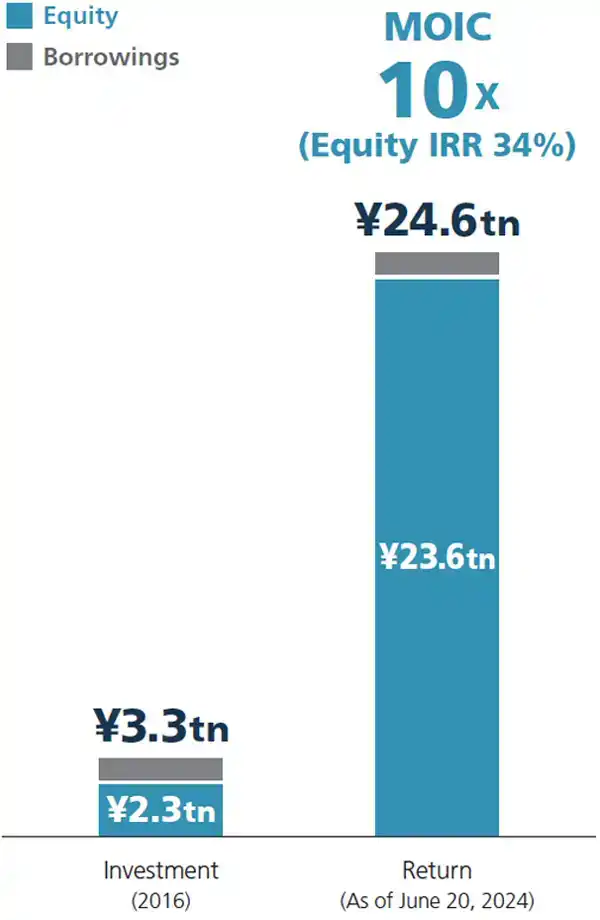
It wasn't until after ChatGPT that the market re-understood computing power. The vast rivers of artificial intelligence made Arm shine brightly. In September 2023, Arm listed on Nasdaq with an IPO valuation of about $54.5 billion. From about 14 trillion yen at the end of March 2023, SoftBank's NAV rose to about 34 trillion yen in June 2024. Arm now constitutes the bulk of SoftBank's shareholding value. SoftBank stated in its annual report that Arm has delivered returns of 24.6 trillion yen to group shareholders, roughly a 10x return.
If Arm gave Son a pull out of the mud, then OpenAI might be his comeback battle.

In January 2025, OpenAI, SoftBank, Oracle, and MGX announced the Stargate project, planning to build large-scale AI infrastructure in the US, with potential investments up to $500 billion over the next four years.

Subsequently, SoftBank's investments in OpenAI became very aggressive.

In 2025, SoftBank completed an investment of about $30 billion in OpenAI. By February 2026, SoftBank signed an additional $30 billion investment agreement with OpenAI. According to SoftBank's announcement, upon completion of the top-up, SoftBank's cumulative investment in OpenAI is expected to reach $64.6 billion for an approximately 13% stake. In April 2026, SoftBank executed the first tranche of this additional investment, amounting to $10 billion.

In March 2026, SoftBank secured a $40 billion bridge loan, primarily for the subsequent OpenAI investment. It is also selling or monetizing other assets, using Arm shares, SoftBank telecom assets, etc., as financing leverage.
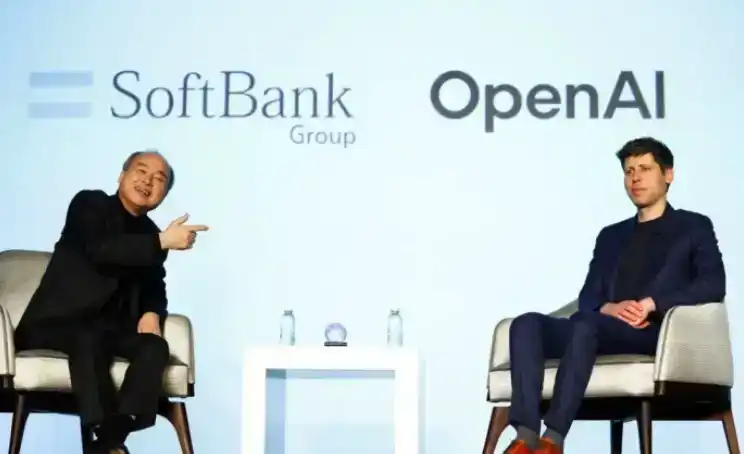
This investment is classic Son. Once again, he is putting SoftBank's most valuable assets on the line to buy a ticket to the next round of the future.

In the internet era, he bet himself on Yahoo and Alibaba; in the mobile internet era, he heavily invested in telecoms, Sprint, Arm; in the Vision Fund era, he scattered money to startups telling huge stories. And in the AI era, he is pushing SoftBank towards OpenAI and AI infrastructure.

At the end of March this year, SoftBank disclosed its OpenAI investment cost at about $34.6 billion, with a fair value of about $79.6 billion, resulting in cumulative investment gains of about $45 billion.

Recently, SoftBank's stock soared, its market cap once surpassing Toyota, making it one of Japan's most sought-after companies. Son also reclaimed his title as Asia's richest person.

Fortune is once again on Son's side.

Связанные с этим вопросы

QWhy did the WeWork failure significantly damage Masayoshi Son's reputation and investment strategy?

AWeWork's failure, from a $47 billion valuation to a collapse before its planned IPO, exposed deep flaws in its business model, financials, and governance. It damaged Son's reputation because it became a symbol of his investment strategy prioritizing grand vision and charismatic founders over rigorous due diligence, financial discipline, and sustainable business models. It led the market to question his judgment and marked the beginning of massive losses for the Vision Fund.

QWhat role did the acquisition and IPO of Arm play in Masayoshi Son's recent financial recovery?

AThe acquisition of Arm in 2016, though initially heavily leveraged and criticized, became a cornerstone of Son's recovery. With the AI boom driving demand for compute power, Arm's value soared. Its successful IPO in 2023 at a $54.5 billion valuation significantly boosted SoftBank's asset value. Arm now constitutes a major part of SoftBank's holdings, delivering an approximately 10x return and helping to restore investor confidence and financial stability.

QHow did Masayoshi Son's investment in OpenAI contribute to his return as Asia's richest person?

ASon made aggressive, large-scale investments in OpenAI, with SoftBank's total commitment reaching around $64.6 billion for a roughly 13% stake. By March 2026, the fair value of this stake was approximately $79.6 billion against a cost of $34.6 billion, generating an unrealized gain of about $45 billion. This massive bet on a leading AI company, coupled with Arm's success, fueled a surge in SoftBank's stock price and market capitalization, propelling Son back to the top of Asia's wealth rankings.

QWhat major factors led to the massive losses of SoftBank's Vision Fund after 2021?

AKey factors include: the collapse of major portfolio companies like WeWork; broader market shifts where rising interest rates and inflation ended the era of cheap capital, forcing unprofitable tech companies to face scrutiny; regulatory tightening in China affecting tech investments; and underperformance or failures of other bets like Uber, Oyo, OneWeb, Wirecard, and Greensill. These combined to create unprecedented losses for the Vision Fund, culminating in a $27.5 billion loss for the 2021 fiscal year.

QHow did Masayoshi Son describe his personal and emotional state during the low point of his career in 2022?

ASon described being deeply distressed, stating he cried for two weeks straight, felt anxious, and did nothing. He questioned his life's achievements, feeling that despite being labeled a successful businessman, he had accomplished nothing meaningful as he grew older. He expressed shame over past mistakes driven by excitement over large profits and acknowledged his 'stupidity and ignorance' in making poor investment decisions, vowing to learn from them.

Похожее

When Doing Cryptocurrency Payment, the First Thing is Licenses, What is the Second?

When launching a crypto payment business, obtaining the necessary licenses is the crucial first step. However, the second, and arguably more critical, step is designing a comprehensive operational framework that forms a coherent business loop. This loop must be clearly understood and executable by all stakeholders: banks, payment partners, exchanges, on-chain analytics providers, regulators, and your internal team. Many projects mistakenly believe a single license permits all operations. Licenses merely grant entry; they don't define how the specific business functions. The real challenge lies in detailing every aspect of the workflow. This involves clarifying the customer base, the flow of fiat and crypto assets, the settlement process, and establishing clear lines of responsibility for risks like AML compliance, sanctions screening, chargebacks, and regulatory inquiries. A robust framework must answer seven core questions: Who are the clients and merchants? Who collects fiat and crypto? Who handles conversion and custody? And who is ultimately accountable for compliance and risk management? Projects often fail not from a lack of licensing, but during due diligence when they cannot convincingly explain these operational details. Therefore, beyond securing licenses, the priority must be constructing a closed-loop system. This system ensures the business model is transparent, risks are managed, responsibilities are delineated, contracts are aligned, and the entire process is comprehensible to partners and regulators. The true competitive edge in crypto payments lies not in acquiring a license quickly, but in integrating licensing, banking, compliance, and operations into a sustainable and executable whole.

marsbit14 мин. назад

When Doing Cryptocurrency Payment, the First Thing is Licenses, What is the Second?

marsbit14 мин. назад

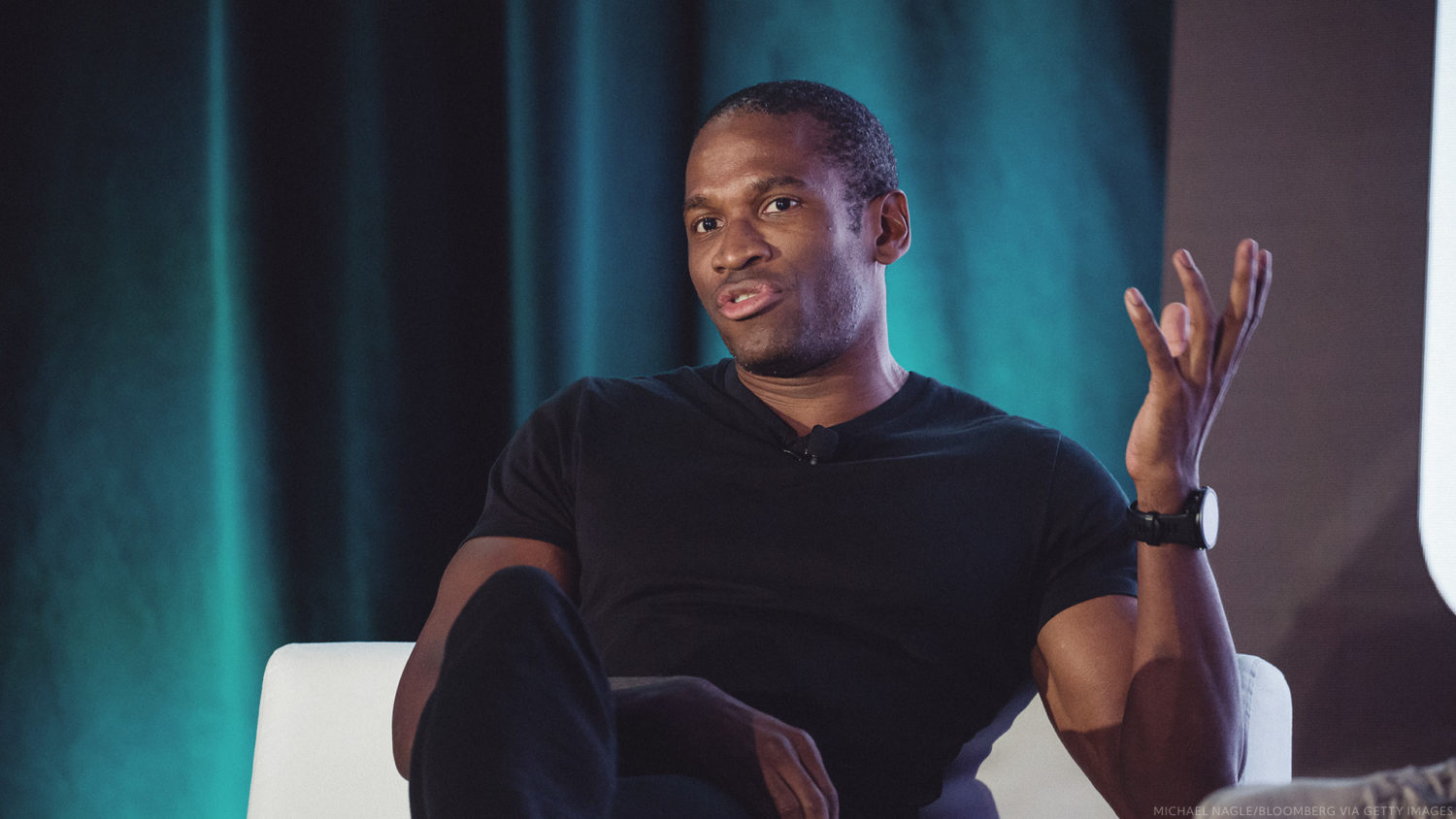
Arthur Hayes Analysis: AI Bubble Nears Burst, Crypto Market Faces Short-Term Pressure

Arthur Hayes argues that the current AI market is a bubble poised to burst, which will exert downward pressure on the crypto market in the near term. The core trigger is rising oil prices due to the US-Iran conflict and a blockade of the Strait of Hormuz. Higher energy costs directly increase the operational expenses of AI data centers, squeezing profit margins for companies like Google, Anthropic, and OpenAI. Hayes predicts that persistent inflation from high oil prices will force Trump, in a bid to win the November election, to turn public sentiment against the AI industry. He may propose regulations and taxes on data centers and AI companies to appeal to voters concerned about costs and job displacement. Such political rhetoric could shatter market confidence. Furthermore, the market is unlikely to healthily absorb the massive concurrent IPOs of SpaceX, Anthropic, and OpenAI, which together seek valuations in the trillions. The combination of soaring energy costs, overwhelming equity supply, and negative political pressure will puncture the AI bubble. Hayes notes that nearly all new USD liquidity since 2022 has flowed into AI, leaving crypto like Bitcoin behind. When the AI bubble bursts, liquidity will contract sharply, pulling down all risk assets, including cryptocurrencies. In response, Hayes's fund, Maelstrom, has sold all AI-related stocks and non-core cryptocurrencies. It maintains core positions in Bitcoin and Ethereum while increasing exposure to energy sector equities, betting on rising oil and gas prices. He expects Bitcoin to bottom after the AI-led market decline, before rallying again with future monetary easing.

Foresight News28 мин. назад

Arthur Hayes Analysis: AI Bubble Nears Burst, Crypto Market Faces Short-Term Pressure

Foresight News28 мин. назад

To C, To B, and the Next Big Thing Called To A

After To C and To B, the Next Wave is To A: Serving AI Agents In a recent quarterly earnings call, Meituan's Wang Xing introduced a new concept: To A (To Agent), signifying that future business services will increasingly target AI Agents as primary clients, not just consumers or merchants. This shift implies that internet giants must now consider how to make their services more appealing for AI Agents to recommend, fundamentally altering traditional distribution logic. This "To A era" is prompting an unusual trend of alliances among major tech companies. Unlike previous competitive battles, firms like Meituan, Tencent, JD.com, Huawei, OPPO, and OpenAI are rapidly forming partnerships. The reason is strategic: as AI Agents become the primary user interface, handling tasks from a single command (e.g., "Book a Japanese restaurant for tomorrow"), the risk for platforms is being bypassed entirely. Companies are positioning themselves within this new value chain. Three primary strategies are emerging: 1. **Super-Entry Points + Service Providers:** Platforms like Tencent's Yuanbao, WeChat, and ChatGPT aim to be the first-stop Agent, integrating various services (food delivery, shopping, travel) from partners like Meituan and JD.com. 2. **Apps as Callable Services:** Companies like Meituan, JD.com, and Uber are ensuring their core services remain accessible and callable by external Agents, shifting from front-end apps to back-end capabilities. 3. **System-Level Agent Entry Points:** Smartphone makers (Huawei, Honor, OPPO) are leveraging their OS-level AI assistants to control the initial user command, redistributing it to relevant service apps. While alliances offer mutual benefit—entry points gain service capabilities, and service providers gain traffic—inherent conflicts of interest exist. A dominant Agent platform could eventually attempt to connect directly with suppliers (restaurants, hotels), bypassing current aggregators like Meituan or Ctrip. Other unresolved challenges include the potential for Agent recommendations to become a new form of paid ranking and unclear accountability for faulty recommendations. The current rush to form alliances is a defensive move by service providers to secure their position before the landscape solidifies. In this To A-driven restructuring, the greatest risk is not losing the race but failing to hear the starting gun.

marsbit36 мин. назад

To C, To B, and the Next Big Thing Called To A

marsbit36 мин. назад

The More Lifelike the Robot, the More Terrifying? Unveiling the 'Uncanny Valley Effect' in the Era of Humanoid Robots

As humanoid robots become increasingly lifelike, they confront a significant psychological barrier known as the "Uncanny Valley Effect," a concept proposed by Japanese roboticist Masahiro Mori in 1970. This phenomenon describes a dip in human comfort and acceptance when robots appear almost, but not perfectly, human. Minor imperfections in facial expressions, eye movements, or skin texture trigger a subconscious sense of unease, as the brain detects something trying, yet failing, to mimic a person. Examples range from the controversial human-like robot Sophia to animated characters in films like *The Polar Express*. The effect poses a key design challenge for robotics companies. Some, like Boston Dynamics, avoid it entirely by creating highly capable but visibly mechanical robots. Others, like Hanson Robotics, push for greater human likeness despite the risk. For consumer robots, especially in homes, most manufacturers opt for stylized or clearly mechanical designs to ensure broader acceptance. While the Uncanny Valley remains a powerful force, its impact may diminish over time through technological advancements that achieve near-perfect realism or through generational familiarity as people grow accustomed to interacting with humanoid machines. Ultimately, navigating this psychological frontier requires as much understanding of human perception as of robotics technology itself.

marsbit37 мин. назад

The More Lifelike the Robot, the More Terrifying? Unveiling the 'Uncanny Valley Effect' in the Era of Humanoid Robots

marsbit37 мин. назад

Торговля

Спот
Фьючерсы

Популярные статьи

Как купить S

Добро пожаловать на HTX.com! Мы сделали приобретение Sonic (S) простым и удобным. Следуйте нашему пошаговому руководству и отправляйтесь в свое крипто-путешествие.Шаг 1: Создайте аккаунт на HTXИспользуйте свой адрес электронной почты или номер телефона, чтобы зарегистрироваться и бесплатно создать аккаунт на HTX. Пройдите удобную регистрацию и откройте для себя весь функционал.Создать аккаунтШаг 2: Перейдите в Купить криптовалюту и выберите свой способ оплатыКредитная/Дебетовая Карта: Используйте свою карту Visa или Mastercard для мгновенной покупки Sonic (S).Баланс: Используйте средства с баланса вашего аккаунта HTX для простой торговли.Третьи Лица: Мы добавили популярные способы оплаты, такие как Google Pay и Apple Pay, для повышения удобства.P2P: Торгуйте напрямую с другими пользователями на HTX.Внебиржевая Торговля (OTC): Мы предлагаем индивидуальные услуги и конкурентоспособные обменные курсы для трейдеров.Шаг 3: Хранение Sonic (S)После приобретения вами Sonic (S) храните их в своем аккаунте на HTX. В качестве альтернативы вы можете отправить их куда-либо с помощью перевода в блокчейне или использовать для торговли с другими криптовалютами.Шаг 4: Торговля Sonic (S)С легкостью торгуйте Sonic (S) на спотовом рынке HTX. Просто зайдите в свой аккаунт, выберите торговую пару, совершайте сделки и следите за ними в режиме реального времени. Мы предлагаем удобный интерфейс как для начинающих, так и для опытных трейдеров.

1.4k просмотров всегоОпубликовано 2025.01.15Обновлено 2026.06.02

Как купить S

Sonic: Обновления под руководством Андре Кронье – новая звезда Layer-1 на фоне спада рынка

Он решает проблемы масштабируемости, совместимости между блокчейнами и стимулов для разработчиков с помощью технологических инноваций.

2.3k просмотров всегоОпубликовано 2025.04.09Обновлено 2025.04.09

Sonic: Обновления под руководством Андре Кронье – новая звезда Layer-1 на фоне спада рынка

HTX Learn: Пройдите обучение по "Sonic" и разделите 1000 USDT

HTX Learn — ваш проводник в мир перспективных проектов, и мы запускаем специальное мероприятие "Учитесь и Зарабатывайте", посвящённое этим проектам. Наше новое направление .

1.8k просмотров всегоОпубликовано 2025.04.10Обновлено 2025.04.10

HTX Learn: Пройдите обучение по "Sonic" и разделите 1000 USDT

Обсуждения

Добро пожаловать в Сообщество HTX. Здесь вы сможете быть в курсе последних новостей о развитии платформы и получить доступ к профессиональной аналитической информации о рынке. Мнения пользователей о цене на S (S) представлены ниже.

活动图片