The First Person to Fly by Mars Will Be a Bitcoin Miner

marsbitОпубликовано 2026-05-24Обновлено 2026-05-24

Введение

The first person to conduct a flyby of Mars will be a Bitcoin miner. In 2026, Wang Chun, co-founder of the F2Pool mining pool, announced from Bouvet Island that he would command a SpaceX Starship on humanity's first crewed interplanetary mission to Mars. His journey began in childhood, fascinated by blank spaces on maps and later by programming and systematic record-keeping. After discovering Bitcoin in 2011, he co-founded F2Pool, which grew to mine over 1.3 million BTC. His wealth from mining and his later PoS venture, stake.fish, funded his ambitions. After traveling to Earth's poles, he conceived and funded a private SpaceX mission, Fram2, achieving the first crewed polar orbit in 2025. Now, he plans a two-year Starship mission to fly by Mars, representing a shift where private individuals, empowered by new wealth like cryptocurrency, can personally define and fund humanity's next frontiers in space.

By: Bibi News

On May 21, 2026, during the global live broadcast of SpaceX's Starship V3 launch, Wang Chun, co-founder of F2Pool, stood on the most remote island in the South Atlantic, Bouvet Island, and announced that he would soon command the Starship to execute humanity's first crewed interplanetary flight mission: a flyby of Mars.

Many people know F2Pool, a mining pool that has cumulatively mined over 1.3 million bitcoins, accounting for more than 9% of all Bitcoin blocks in human history and, at its peak, holding one-third of the network's total hashrate.

The funds heading to Mars primarily came from his mining pool fee income accumulated over more than a decade since starting F2Pool in 2013, as well as wealth generated from his stake.fish PoS business founded in 2018.

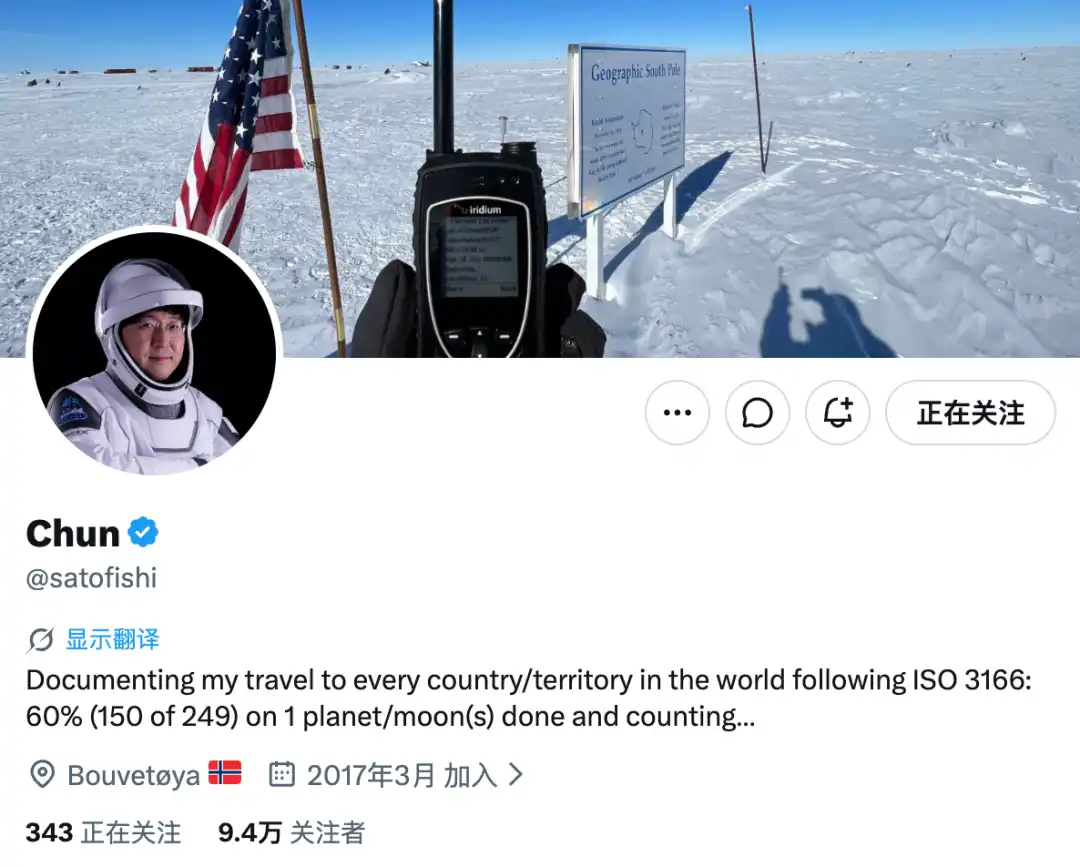
His X profile continues to be updated with records: following the ISO 3166 standard, documenting travels to every country and region in the world, currently having explored 60% of one celestial body (150 out of 249), still updating......
The Vast Blank on the Map

In 1987, Wang Chun's grandfather brought home a found world map. Wang Chun lay down and was captivated by the enormous blank space in the polar regions at the map's bottom. He was five years old then, living mostly with his grandparents, rarely venturing far, yet he was already deeply drawn to those distant and unknown places.

At age 13, upon graduating elementary school, he saved up to buy his first 486SX computer. He wrote himself a planetary gravity simulator and watched the solar system's motion trajectories on the monitor.

On the first day of registering for QQ in middle school, he set his name to 1. The next day he changed it to 2, the day after to 3, incrementing daily like this, persisting for nearly seven years, counting all the way up to 2523, until one day he found it boring and stopped.

No special reason to start, no particular reason to stop, and finally that number remained there forever. The '2' in F2Pool's name later came from this QQ number.

Although this habit stopped, his way of understanding the world did not change. He turned time into something countable, turned progress into a marked scale, stamped every ordinary day with a timestamp, making them a progress bar he could look back on.

He later meticulously recorded every train journey down to the minute and second, numbered every flight, and marked off visited countries one by one on a list. These things seemed laborious to outsiders, but for him, it was just instinct.
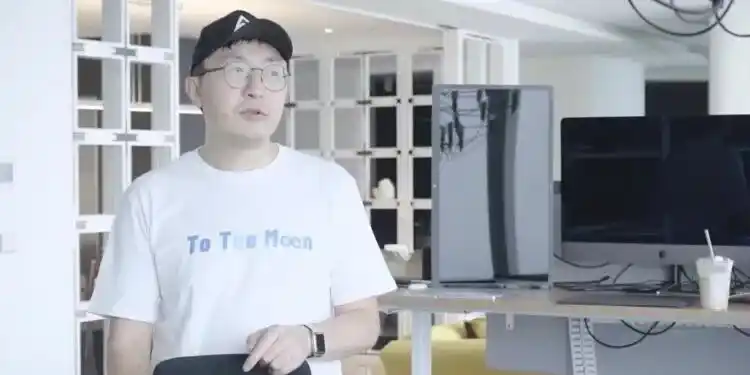
After graduation, he went to a Norwegian software company in Beijing. To save money, he slept on a French colleague's sofa, slept in the office. After work on Friday, he headed straight to the train station, returning Monday morning.

In the year 2007, he traveled 75,900 kilometers by train, equivalent to spending two full months on the road. He recorded every segment of the journey, precise to the minute or even second, posting it on forums. Someone gave him a nickname: Thousand-Trip High-Speed Rail Man.

In 2010, he went abroad for the first time, to Nepal, then India. In India, he boarded the country's longest-running train, the 16317 Himsagar Express, traveling all the way from the southernmost Kanyakumari to Kashmir, spending his entire savings at the time, $1,000.

Launching the F2Pool Bitcoin Mining Pool

In May 2011, he read two articles about Bitcoin on Solidot. That night, he opened the Bitcoin Wiki and read it from start to finish all night long. He described the feeling as if he had discovered a new continent.

On May 28, he bought his first bitcoin at a unit price of $8.70, borrowed $40,000 from his father, went to Zhongguancun to buy two graphics cards, rented four civilian houses, equipped dozens of mining rigs, second-hand motherboards, 512MB RAM, 4GB USB drives installed with Ubuntu, and started mining like that.

In the first two years, he mined 7,700 bitcoins, used 4,000 to pay for electricity, exchanged 660 for an iPhone (which was stolen in the St. Petersburg metro station). He sold the rest in January 2013 at $17 each, repaid his father's money, and made a small profit of over ten thousand dollars.

In April of that year, he and Mao Shixing, online nickname 'Shenyu' (which means 'Magic Fish'), launched F2Pool in Wenzhou, the first Bitcoin mining pool in China, later familiarly known as 'Fish Pool'.

Wang Chun wrote the backend code, Shenyu handled operations. A mining pool is different from a mining farm; a farm mines for itself, while a pool organizes the computing power of global miners, distributes rewards based on contribution, charges a handling fee, more like infrastructure for the Bitcoin network.

After going online, the pool expanded rapidly. This infrastructure business brought continuous cash flow and became an important source of his long-term wealth. Over the past decade-plus, F2Pool has helped global miners cumulatively mine over 1.3 million bitcoins.

In 2015, he used 2,900 bitcoins to buy his first apartment in Pattaya, Thailand. In 2018, he founded stake.fish in Thailand, a PoS staking service. This company later supported over twenty public chains including Ethereum, Solana, Cosmos, managing assets exceeding $3 billion.

The PoW mining pool and PoS validation, two infrastructure businesses based on different technological routes, together formed the foundation of his wealth. It is widely estimated that Wang Chun's wealth has reached hundreds of millions of dollars, but the specific figure has never been disclosed.
Flying into Space, Overlooking the Poles

On-paper wealth grew, but his lifestyle hardly changed: writing code, traveling, counting.

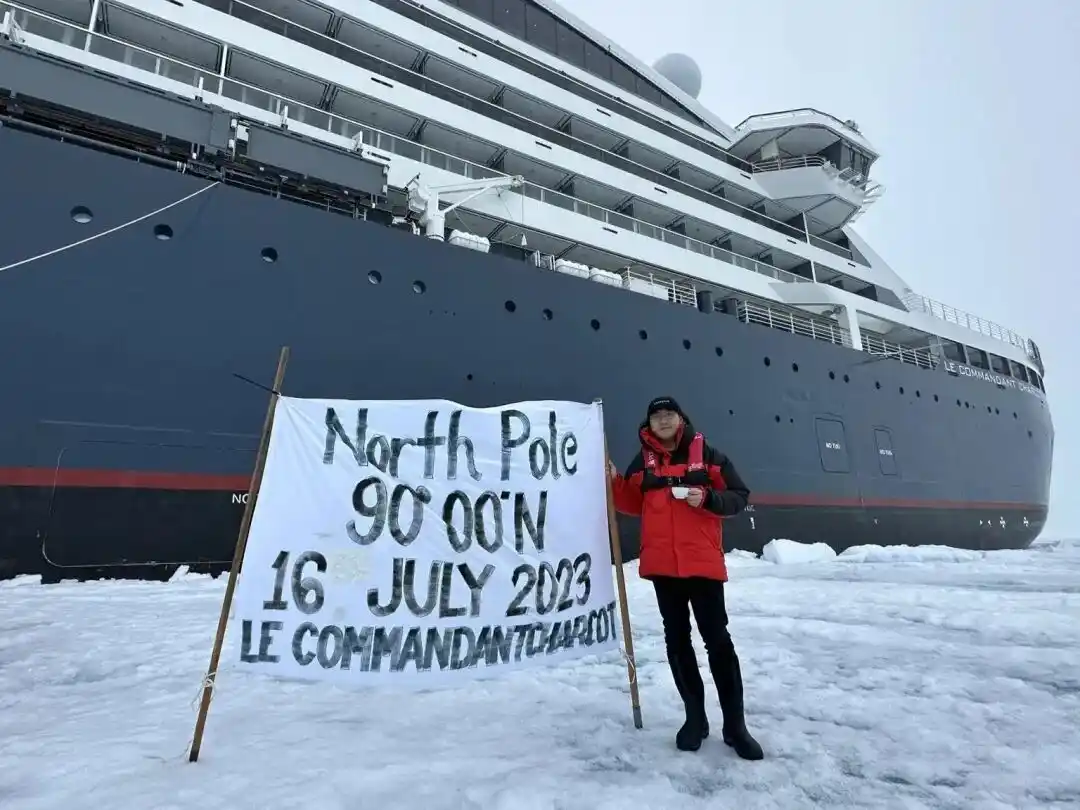
In December 2021, he stood at the South Pole. In July 2023, the North Pole. All geographical poles on Earth had been reached; there were no farther endpoints left, yet the questing heart did not stop.
It was then that he saw SpaceX's Falcon 9 booster landing vertically back on the launch pad. He felt that feeling again, exactly like the first time he heard about computers, the first time he discovered Bitcoin.

On April 23, 2023, lying in a hotel bed in Saudi Arabia, he asked himself: if he could design his own mission, where would he fly? The poles were the final frontier, but since 1961 when humans entered space, almost all crewed spacecraft had operated in mid-to-low inclination orbits. No vessel had ever truly flown over the poles, not because it couldn't be done, but because no one thought to do it, or no one had the resources to do it.

He thought of Darwin's HMS Beagle, the Beagle 2 Mars lander named after it, and then he thought of the Fram, the Norwegian exploration ship that conquered the poles multiple times, meaning 'Forward' in Norwegian.

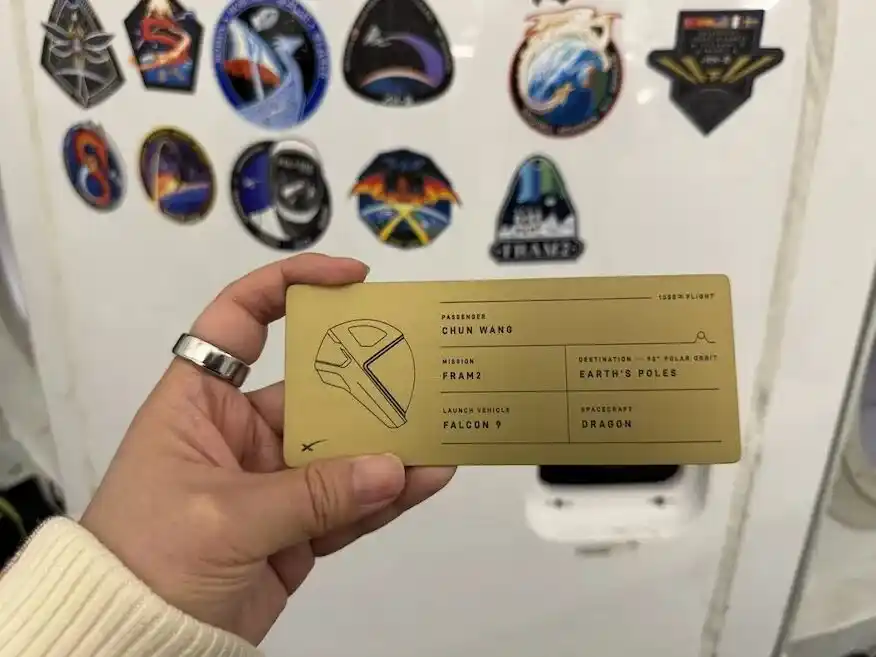
So he planned and designed everything, submitted a private mission proposal to SpaceX, requesting to charter an entire Crew Dragon, enter orbit at a 90-degree polar inclination, and fly over the poles.

The entire mission was fully self-funded, no sponsors. No brokers, no NASA approvals. He treated SpaceX as a charter company, negotiated requirements and costs, became the mission commander himself, fully responsible for overall decisions, coordinating the crew, and interfacing with ground control.

He deliberately chose the crew too: a Norwegian, a German, an Australian, all non-American citizens, because this was a purely private decision.
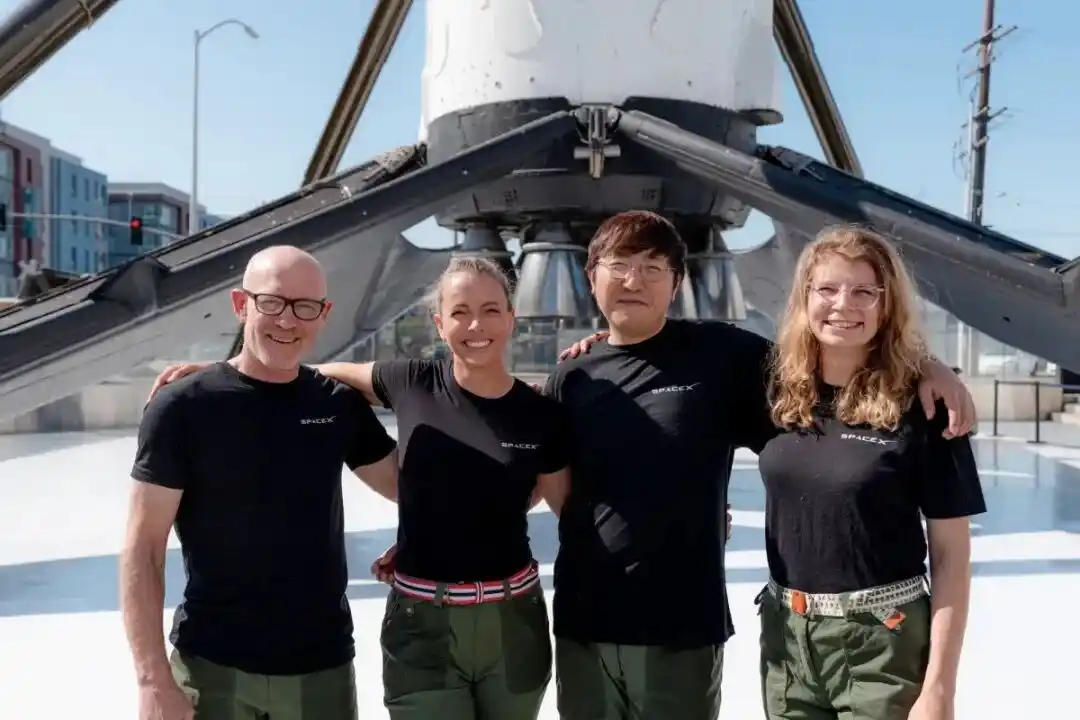
SpaceX sent him 2.8GB of learning materials, including mission procedure manuals, spacecraft system operation documents, guides for 22 scientific experiments, and explanations of polar orbit-specific risks.

Over the next 8 months, he underwent rigorous training: centrifuge high-G training, parabolic microgravity flights, cabin pressure loss simulation, polar survival drills, unassisted autonomous egress training, and more.

On March 31, 2025, the Falcon 9 lifted off from Kennedy Space Center.

Day one, the whole crew experienced space motion sickness. Day two, he wrote: feeling completely fine, like starting over.

The pole came into view, and he sent a message: Hello, Antarctica. Looking down from 430 kilometers high, a pure white expanse, no signs of human activity visible.

Suspended above Earth, he thought of Heisenberg's uncertainty principle, modeling his situation using quantum mechanics.

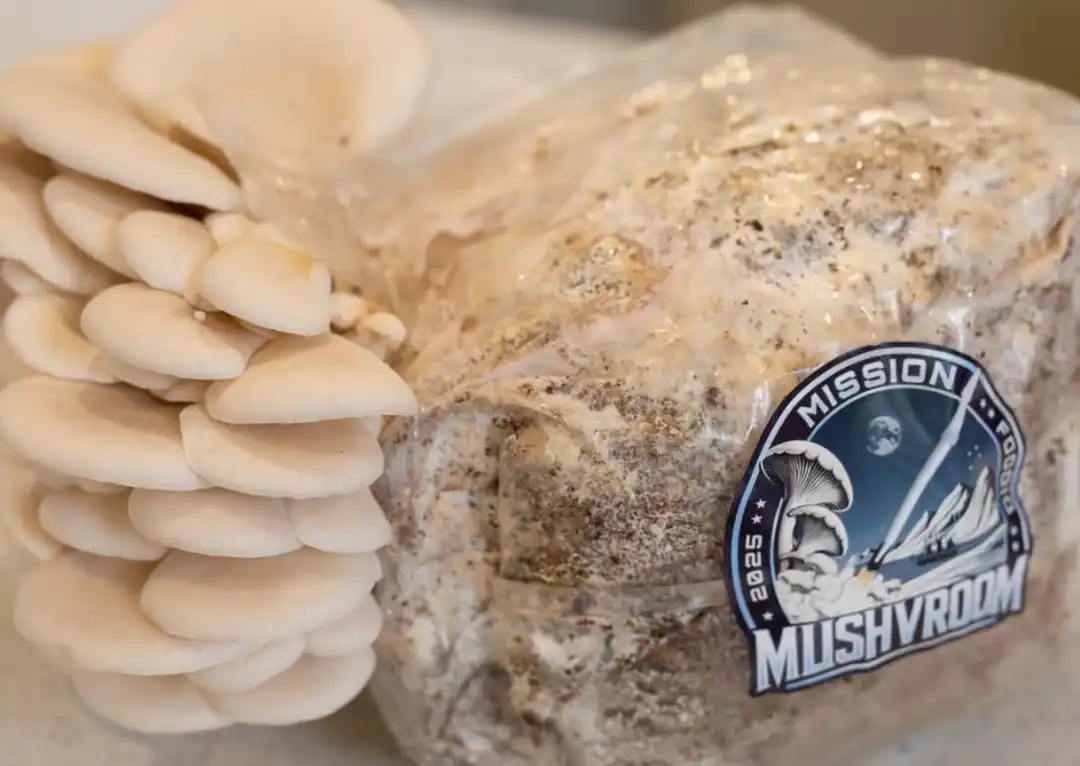
In three and a half days, the Fram2 mission completed 22 scientific experiments, including the first X-ray image taken in space by humans, growing oyster mushrooms in microgravity, monitoring polar radiation data, photographing auroras......

On April 4, 2025, the Crew Dragon splashed down off the coast of California. This was humanity's first crewed polar orbit flight, with an inclination of 90.01 degrees, breaking the 65-degree record set by the Soviet Union's Vostok 6 in 1963.
Mars Flyby

After Fram2's success, Wang Chun was already in line for SpaceX's next, even grander project.

In May 2026, on the eve of SpaceX's live broadcast of the Starship V3's first launch test, the camera cut to Bouvet Island, where Wang Chun formally announced he would command the Starship to execute humanity's first crewed interplanetary flight mission: leaving the Earth-Moon system, flying by Mars, and returning to Earth, expected to take two years.

Before that, he would also complete the first commercial Starship lunar flyby mission with Dennis Tito and his wife, flying by within 200 kilometers of the lunar surface, as a warm-up for the official mission.
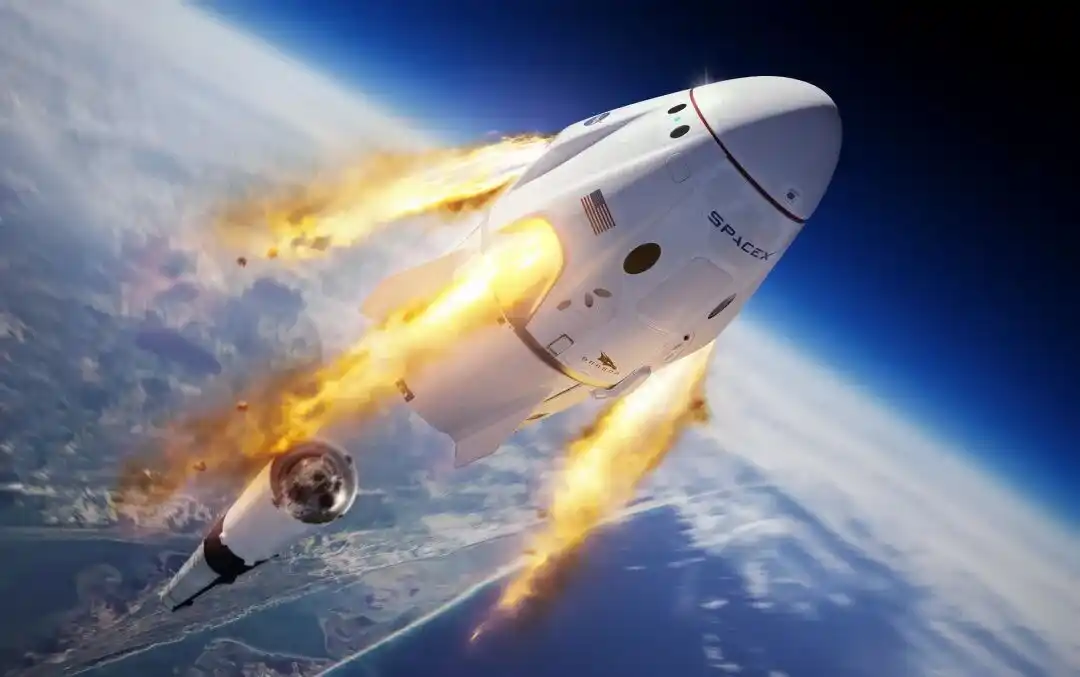
Twenty years ago, ordinary people had no chance to participate in deep space missions. Between 2001 and 2009, only seven extremely wealthy private individuals paid to hitch a ride to the International Space Station via Russian spacecraft, each trip costing around $20 million and requiring strict qualification review.

SpaceX changed the underlying structure of this logic. Reusable rockets lowered costs, private individuals could directly charter an entire spacecraft, mission forms shifted from brief visits to the space station to free-flight, allowing custom orbits, experiments, and crew selection.

Wang Chun's Fram2 was the first privately customized crewed polar orbit mission, and this Starship Mars flyby is humanity's first privately funded crewed interplanetary mission, with communication delays up to 20 minutes, no quick return windows, no possibility of rescue, the entire mission handled by SpaceX, unrelated to NASA.
The Continuously Expanding Map

Bitcoin played a special role in this change, creating a path for wealth accumulation not attached to the traditional financial system, and this wealth is flowing in some way towards the boundaries of civilization's expansion.

Wang Chun used mining-accumulated capital to charter the polar orbit, used mining pool operating profits to wait for Starship. It's not mere wealth consumption, but investing the resources Bitcoin gave him into the direction he's been oriented towards since he was five years old.

Over the past few decades, crewed spaceflight has long been dominated by national systems. Who could go up, where to go, what to do, was basically decided by space agencies.

Now, a programmer from Tianjin can define his own mission, choose his own orbit, be his own commander, and decide to fly by the side of Mars.

The counting continues, just on a map with a larger scale.

Связанные с этим вопросы

QWhat is the source of the wealth that enabled Wang Chun to fund his private space missions?

AThe primary source of his wealth is the accumulated revenue from fees generated by the F2Pool Bitcoin mining pool he co-founded and the PoS staking service provided by stake.fish, which he later established.

QWhat was the name and significance of Wang Chun's first private space mission?

AHis first private space mission was named 'Fram2'. It was the first-ever privately funded, crewed mission to achieve a 90.01-degree polar orbit, flying directly over the Earth's North and South Poles, breaking the 1963 record of 65 degrees set by the Soviet Vostok 6 mission.

QWhat ambitious future mission did Wang Chun announce in May 2026?

AIn May 2026, he announced his plan to command the Starship spacecraft to execute humanity's first crewed interstellar flyby mission to Mars, leaving the Earth-Moon system, flying past Mars, and returning to Earth, with an estimated mission duration of two years.

QHow did Wang Chun first get involved with Bitcoin?

AHe first learned about Bitcoin in May 2011 from articles on Solidot. Intrigued, he read the entire Bitcoin Wiki in one night, describing the feeling as 'discovering a new continent'. On May 28, he bought his first Bitcoin for $8.7 and soon after borrowed money to begin mining.

QAccording to the article, what role has Bitcoin played in the broader context of space exploration?

AThe article suggests Bitcoin has played a special role by creating a path for wealth accumulation independent of the traditional financial system. This new wealth is now being channeled towards the frontiers of civilization expansion, enabling private individuals like Wang Chun to fund and define their own ambitious space missions.

Похожее

a16z: How Tokenization is Transforming the Nature of Assets in 7 Charts

"Tokenized Assets: How Tokenization Changes the Nature of Assets" by a16z Crypto The market for tokenized assets, excluding stablecoins, has grown from under $3 billion two years ago to over $340 billion today. US Treasury bonds are the primary growth driver, allowing investors to hold yield-bearing assets digitally and enabling more efficient settlement. Other key sectors include private credit (growing fastest), commodities (dominated by gold), and niche financial assets. However, the market remains concentrated in tokenized US Treasuries and gold. A critical insight is that most tokenized assets currently lack "composability." While the total market is large, only a small fraction is actively used within DeFi protocols. For instance, only about 5% of tokenized bonds and a low percentage of tokenized gold are utilized on-chain. In contrast, assets like reinsurance and private credit tokens show much higher on-chain usage rates (84% and 33%, respectively). This highlights a divide: many tokenized assets are merely digital records on a blockchain without enabling new, programmable financial applications. The Pantera Capital Token Native Index indicates over 70% of tokenized assets have minimal on-chain native functionality. Ethereum remains the dominant blockchain for tokenized assets (over $150B), but the ecosystem is diversifying across chains like BNB Chain, Solana, and Stellar, based on factors like cost and compliance. Major institutions forecast massive future growth, with predictions for the tokenized asset market ranging from $2 trillion to over $30 trillion by the early 2030s. However, compared to the global financial system (e.g., ~$140T bonds, multi-trillion dollar gold market), tokenized assets currently represent a tiny fraction (0.01% or less). The conclusion is that while tokenization has begun by digitizing and streamlining settlement for simpler assets, the next phase involves bringing more complex financial instruments on-chain and deeply integrating them into composable, internet-native financial infrastructure.

Odaily星球日报3 мин. назад

a16z: How Tokenization is Transforming the Nature of Assets in 7 Charts

Odaily星球日报3 мин. назад

The Revived Codex, Carrying OpenAI's Hopes for IPO

This article analyzes the intense recent development of OpenAI's Codex, positioning it as a crucial component for OpenAI's impending IPO. Over the past two months, Codex has seen a rapid series of major updates focused on integrating into real enterprise workflows. Key new features include enhanced context capture (Appshots, file previews, built-in browser), long-running task execution ("Goal Mode"), remote operation (phone control, lock-screen access), and enterprise management tools (plugin sharing, access tokens, automated risk review). These updates aim to make Codex a comprehensive AI workbench that can "see the scene, push tasks, and manage risks." The author argues that while ChatGPT proves OpenAI's massive user base and API provides foundational revenue, Codex represents OpenAI's clearest path to demonstrating tangible, high-value commercial viability. It targets developers and engineering teams—a segment already accustomed to paying for efficiency gains in costly software development cycles. This is critical because, despite higher overall revenue, OpenAI's adjusted operating margins remain deeply negative, highlighting the challenge of outrunning immense compute costs. The pressure is amplified by competitor Anthropic's success with Claude Code, which has shown that a focused approach on high-value enterprise and developer workflows can lead to a path toward profitability. Codex's aggressive evolution is thus seen as OpenAI's strategic move to capture a similar enterprise-ready, revenue-generating narrative essential for its market debut. In essence, "ChatGPT proved OpenAI has users. Codex needs to prove OpenAI is a business that can make money."

marsbit58 мин. назад

The Revived Codex, Carrying OpenAI's Hopes for IPO

marsbit58 мин. назад

a16z: 7 Charts to Understand How Tokenization Is Changing the Nature of Assets

a16z: 7 Charts on How Tokenization is Transforming the Nature of Assets Tokenized Assets, often referred to as "real-world assets" (RWA), are altering the form, flow, and structure of the financial system. The market recently surpassed $30 billion (excluding stablecoins), driven largely by tokenized U.S. Treasuries. These offer investors digital, yield-bearing assets with efficient settlement. Growth varies significantly by asset class. Asset-backed credit leads in speed, followed by niche financial assets, while venture capital and active strategies took longer to scale. U.S. Treasuries and commodities dominate, holding about two-thirds of the current market share. Within commodities, gold tokenization dominates entirely due to its standardization and historical appeal in crypto. The ecosystem is spread across multiple blockchains. Ethereum holds over half the market, with others like BNB Chain, Solana, and Stellar holding significant shares. However, a key insight is that most tokenized assets currently lack "composability." While the total market is large, only a small fraction (e.g., 5% of tokenized bonds) is used within DeFi protocols. Many tokens are simply digital records of off-chain assets, not natively programmable financial building blocks. In contrast, smaller categories like reinsurance tokens see very high on-chain usage. Looking ahead, forecasts for the tokenized asset market by 2030 range from $2 trillion to over $30 trillion, representing immense potential growth from today's ~$340 billion base. Yet, relative to global markets (e.g., $140T+ in bonds), tokenization's penetration remains minuscule (<0.02%). The current phase focuses on digitizing straightforward assets for efficiency. The next major challenge is bringing more complex financial instruments on-chain and integrating tokenized assets into truly composable, internet-native financial infrastructure.

marsbit1 ч. назад

a16z: 7 Charts to Understand How Tokenization Is Changing the Nature of Assets

marsbit1 ч. назад

Data Theft at Will! Major Vulnerability Exposed in This Popular AI Programming Tool

A critical vulnerability in Anthropic's Claude Code AI programming tool allowed attackers to bypass its network sandbox for over five months, enabling potential data exfiltration. Independent researcher Aonan Guan discovered a second complete bypass exploiting a null-byte injection in the SOCKS5 proxy. This flaw, present since the sandbox's launch in October 2025, let processes inside the sandbox access any host, contrary to user-configured domain whitelists. The attack chain involved manipulating hostnames (e.g., `attacker.com\x00.google.com`). JavaScript's `endsWith()` check would pass `.google.com`, while the underlying C `getaddrinfo()` function would only parse `attacker.com` due to the null byte, creating a parser discrepancy. Combined with a previously disclosed prompt injection method, this could leak API keys, credentials, and internal data. Anthropic silently fixed the issue in April 2026 without a security advisory, CVE, or user notification. The researcher noted that Claude Code itself confirmed the vulnerability's severity when tested. This incident highlights broader industry issues, as similar vulnerabilities found in Google's Gemini CLI and GitHub's Copilot Agent also lacked public disclosures. The report criticizes the false sense of security created by a broken sandbox and emphasizes the need for defense-in-depth and transparency in AI tool security.

marsbit4 ч. назад

Data Theft at Will! Major Vulnerability Exposed in This Popular AI Programming Tool

marsbit4 ч. назад

Торговля

Спот
Фьючерсы

Популярные статьи

Тест по Bitcoin Биткоина

HTX Learn: Изучите Bitcoin halving и Заработаете Токены USDT

3.0k просмотров всегоОпубликовано 2024.04.16Обновлено 2024.04.16

Тест по Bitcoin  Биткоина

Что такое $BITCOIN

ЦИФРОВОЕ ЗОЛОТО ($BITCOIN): Комплексный анализ Введение в ЦИФРОВОЕ ЗОЛОТО ($BITCOIN) ЦИФРОВОЕ ЗОЛОТО ($BITCOIN) — это проект на основе блокчейна, работающий в сети Solana, который стремится объединить характеристики традиционных драгоценных металлов с инновациями децентрализованных технологий. Хотя он носит имя Биткойн, часто называемого “цифровым золотом” из-за его восприятия как средства хранения ценности, ЦИФРОВОЕ ЗОЛОТО является отдельным токеном, предназначенным для создания уникальной экосистемы в ландшафте Web3. Его цель — позиционировать себя как жизнеспособный альтернативный цифровой актив, хотя детали его применения и функциональности все еще развиваются. Что такое ЦИФРОВОЕ ЗОЛОТО ($BITCOIN)? ЦИФРОВОЕ ЗОЛОТО ($BITCOIN) — это токен криптовалюты, специально разработанный для использования в блокчейне Solana. В отличие от Биткойна, который выполняет широко признанную роль хранения ценности, этот токен, похоже, сосредоточен на более широких приложениях и характеристиках. Примечательные аспекты включают: Инфраструктура блокчейна: Токен построен на блокчейне Solana, известном своей способностью обрабатывать высокоскоростные и недорогие транзакции. Динамика предложения: ЦИФРОВОЕ ЗОЛОТО имеет максимальное предложение, ограниченное 100 квадриллионами токенов (100P $BITCOIN), хотя детали о его обращающемся предложении в настоящее время не раскрыты. Утилита: Хотя точные функциональные возможности не описаны, есть указания на то, что токен может быть использован для различных приложений, потенциально связанных с децентрализованными приложениями (dApps) или стратегиями токенизации активов. Кто создатель ЦИФРОВОГО ЗОЛОТА ($BITCOIN)? На данный момент личность создателей и команды разработчиков, стоящих за ЦИФРОВЫМ ЗОЛОТОМ ($BITCOIN), остается неизвестной. Эта ситуация типична для многих инновационных проектов в области блокчейна, особенно тех, которые связаны с децентрализованными финансами и феноменом мем-криптовалют. Хотя такая анонимность может способствовать культуре, ориентированной на сообщество, она усиливает опасения по поводу управления и ответственности. Кто инвесторы ЦИФРОВОГО ЗОЛОТА ($BITCOIN)? Доступная информация указывает на то, что у ЦИФРОВОГО ЗОЛОТА ($BITCOIN) нет известных институциональных спонсоров или значительных венчурных капиталовложений. Проект, похоже, функционирует по модели пирингового взаимодействия, сосредоточенной на поддержке и принятии сообществом, а не на традиционных путях финансирования. Его активность и ликвидность в основном сосредоточены на децентрализованных биржах (DEX), таких как PumpSwap, а не на устоявшихся централизованных торговых платформах, что еще больше подчеркивает его подход, ориентированный на grassroots. Как работает ЦИФРОВОЕ ЗОЛОТО ($BITCOIN) Операционные механизмы ЦИФРОВОГО ЗОЛОТА ($BITCOIN) можно подробно описать на основе его дизайна блокчейна и характеристик сети: Механизм консенсуса: Используя уникальный механизм доказательства истории (PoH) Solana в сочетании с моделью доказательства доли (PoS), проект обеспечивает эффективную валидацию транзакций, что способствует высокой производительности сети. Токеномика: Хотя конкретные дефляционные механизмы не были подробно описаны, большое максимальное предложение токенов подразумевает, что оно может быть предназначено для микротранзакций или нишевых случаев использования, которые еще предстоит определить. Интероперабельность: Существует потенциал для интеграции с более широкой экосистемой Solana, включая различные платформы децентрализованных финансов (DeFi). Однако детали относительно конкретных интеграций остаются неуточненными. Хронология ключевых событий Вот хронология, которая подчеркивает значимые вехи, касающиеся ЦИФРОВОГО ЗОЛОТА ($BITCOIN): 2023: Первоначальное развертывание токена происходит в блокчейне Solana, отмеченное его адресом контракта. 2024: ЦИФРОВОЕ ЗОЛОТО приобретает видимость, когда оно становится доступным для торговли на децентрализованных биржах, таких как PumpSwap, позволяя пользователям обменивать его на SOL. 2025: Проект наблюдает спорадическую торговую активность и потенциальный интерес к инициативам, возглавляемым сообществом, хотя на данный момент не зафиксировано никаких значительных партнерств или технических достижений. Критический анализ Сильные стороны Масштабируемость: Основная инфраструктура Solana поддерживает высокие объемы транзакций, что может повысить полезность $BITCOIN в различных сценариях транзакций. Доступность: Потенциально низкая цена торговли за токен может привлечь розничных инвесторов, способствуя более широкому участию благодаря возможностям дробного владения. Риски Отсутствие прозрачности: Отсутствие публично известных спонсоров, разработчиков или процесса аудита может вызвать скептицизм относительно устойчивости и надежности проекта. Волатильность рынка: Торговая активность сильно зависит от спекулятивного поведения, что может привести к значительной волатильности цен и неопределенности для инвесторов. Заключение ЦИФРОВОЕ ЗОЛОТО ($BITCOIN) является интригующим, но неоднозначным проектом в быстро развивающейся экосистеме Solana. Хотя он пытается использовать нарратив “цифрового золота”, его отход от установленной роли Биткойна как средства хранения ценности подчеркивает необходимость более четкого различения его предполагаемой утилиты и структуры управления. Будущее принятие и усвоение, вероятно, будут зависеть от решения текущей непрозрачности и более четкого определения его операционных и экономических стратегий. Примечание: Этот отчет охватывает синтезированную информацию, доступную на октябрь 2023 года, и с тех пор могут произойти события.

99 просмотров всегоОпубликовано 2025.05.13Обновлено 2025.05.13

Что такое $BITCOIN

Fractal Bitcoin: масштабирование Биткоина с помощью рекурсивной системы

Fractal Bitcoin — масштабное Layer-1-решнение, созданное на базе кода Биткоина, позволяющего достигать бесконечного масштабирования с помощью рекурсивного подхода.

2.3k просмотров всегоОпубликовано 2025.06.30Обновлено 2025.06.30

Fractal Bitcoin: масштабирование Биткоина с помощью рекурсивной системы

Обсуждения

Добро пожаловать в Сообщество HTX. Здесь вы сможете быть в курсе последних новостей о развитии платформы и получить доступ к профессиональной аналитической информации о рынке. Мнения пользователей о цене на BTC (BTC) представлены ниже.

活动图片