Liquid Mercury Announces Initial Closing of ACQUA1 Offering

TheNewsCryptoPublished on 2026-09-04Last updated on 2026-09-04

Abstract

Liquid Mercury announced the initial closing of its ACQUA1 offering on September 1, 2026. ACQUA1 is a subsidiary that licenses Liquid Mercury's technology to companies tokenizing real-world assets, earning fees and equity stakes in return. Verified accredited investors subscribed by exchanging MERC tokens for non-voting units of ACQUA1 at a rate of 10 MERC per unit. As required, all 563,230,000 MERC received were burned on September 2. The offering resulted in 56,323,000 units issued, evidenced on-chain. Two additional closings are planned for late 2026, though terms may change. The announcement clarifies that the offering is for accredited investors only and constitutes a private securities placement.

Chicago, United States, September 4th, 2026, Chainwire

Liquid Mercury today announced that ACQUA1, LLC completed the initial closing of its MERC exchange offering on September 1, 2026.

ACQUA1 is a Liquid Mercury subsidiary that operates Liquid Mercury’s Lab Company program, licensing Liquid Mercury technology to companies primarily tokenizing real-world assets and receiving fees plus a minority equity stake in return. Liquid Mercury is the majority holder and Manager.

“Over the past 18 months, dozens of companies have approached Liquid Mercury seeking to tokenize their assets,” said Tony Saliba, CEO and founder of Liquid Mercury. “Many assumed they would need to raise capital and build this infrastructure from scratch. Licensing Mercury RWA lets them launch on systems that were already live and proven, at a fraction of the time and cost. ACQUA1 token holders now own a slice of the business that earns equity, plus fees from the companies in the Lab Company program.”

Verified accredited investors subscribed by exchanging MERC for non-voting Class B units of ACQUA1 at the initial conversion rate of 10 MERC per unit. Under its operating agreement, ACQUA1 must burn 100% of the MERC it receives at each closing within five business days and may not transfer, trade, lend, stake, pledge, or otherwise deploy it.

On September 2, all 563,230,000 MERC received at the initial closing were burned via a transfer to the dead address, as the offering documents require.

Initial Closing Highlights

  • Initial closing: September 1, 2026
  • MERC burned: 563,230,000
  • Transferred to the dead address September 2, 2026
  • Units issued: 56,323,000
  • Non-voting Class B units of ACQUA1, LLC under Rule 506(c) of Regulation D
  • 10 MERC per unit
  • Evidenced on-chain by ACQUA1-C tokens
  • ACQUA1-C tokens convert one-for-one into ACQUA1 tokens upon issuance
  • Remaining closings: On or about October 30 and December 31, 2026
  • ACQUA1 may skip or terminate at its discretion
  • The conversion rate at subsequent closings may differ

Verification Links

Burn transaction

ACQUA1-C contract

Verified accredited investors can request full terms at acqua1.liquidmercury.com/contact.

About Liquid Mercury

Liquid Mercury powers professional crypto trading and digital asset marketplaces. The company delivers institutional-grade infrastructure, access to deep liquidity, and best-in-class trading tools and workflow automation across its Pro, OTC, and RWA platforms. Through Mercury RWA, Liquid Mercury is extending that infrastructure into tokenized real-world assets, with $MERC serving as the access and platform layer token. For more information, visit www.liquidmercury.com.

Investor Notice

This press release does not constitute an offer to sell or the solicitation of an offer to buy any securities. Class B units of ACQUA1, LLC and the ACQUA1 tokens representing them are offered and sold in reliance on the exemption from registration provided by Rule 506(c) of Regulation D under the Securities Act of 1933, solely to verified accredited investors as defined in Rule 501(a) of Regulation D, and solely pursuant to ACQUA1’s confidential private placement memorandum, as supplemented, and definitive subscription documents, which contain important information, including risk factors. ACQUA1 tokens are restricted securities, are subject to transfer restrictions under ACQUA1’s operating agreement and may remain illiquid indefinitely; investors should not assume that Rule 144 will be available. Statements regarding future revenues, valuations, portfolio performance, and subsequent closings are forward-looking and subject to risks and uncertainties; actual results may differ materially. The MERC contract has no burn function; tokens are removed from circulation by transferring to the dead address. Supply outstanding excluding the dead address is 5,436,770,000 MERC, as of the date of publication.

Contacts

Director
Kent Egan
Liquid Mercury
ke@liquidmercury.com
Director
Ryan Hansen
Liquid Mercury
hansenr@liquidmercury.com


Related Questions

QWhat is ACQUA1, and what is its relationship with Liquid Mercury?

AACQUA1 is a subsidiary of Liquid Mercury. It operates Liquid Mercury's Lab Company program, which licenses Liquid Mercury's technology to companies primarily tokenizing real-world assets. In return, ACQUA1 receives fees and a minority equity stake in those companies. Liquid Mercury is the majority holder and Manager of ACQUA1.

QWhat happened to the MERC tokens received by ACQUA1 during the initial closing of the offering?

AAccording to ACQUA1's operating agreement, 100% of the MERC tokens received at each closing must be burned within five business days. ACQUA1 is prohibited from transferring, trading, lending, staking, pledging, or otherwise deploying them. On September 2, 2026, all 563,230,000 MERC received at the initial closing were burned by being transferred to a dead address.

QHow did accredited investors participate in the ACQUA1 offering, and what did they receive?

AVerified accredited investors subscribed by exchanging MERC tokens for non-voting Class B units of ACQUA1, LLC. The initial conversion rate was 10 MERC per unit. These units are evidenced on-chain by ACQUA1-C tokens, which will convert one-for-one into ACQUA1 tokens upon issuance. The offering is conducted under Rule 506(c) of Regulation D.

QWhat are the key details and figures from the initial closing announced on September 1, 2026?

AKey details from the initial closing include: Date: September 1, 2026. MERC burned: 563,230,000 (transferred to dead address on September 2, 2026). Units issued: 56,323,000 non-voting Class B units. Conversion rate: 10 MERC per unit. Two remaining closings are scheduled for on or about October 30 and December 31, 2026, though ACQUA1 may skip or terminate them, and the conversion rate may differ.

QWhat is Mercury RWA, and what role does the MERC token play according to the article?

AMercury RWA is Liquid Mercury's platform for extending its institutional-grade trading infrastructure into the tokenization of real-world assets. According to the article, the MERC token serves as the access and platform layer token for this ecosystem.

Related Reads

MSCI Confirms Removal of Strategy and Metaplanet From Stock Indexes

MSCI has confirmed that Strategy (NASDAQ: MSTR) and Japan's Metaplanet will be removed from its equity indexes following its November 2026 review, effective at the market close on November 30. Strategy will leave the MSCI USA Index, while Metaplanet will be removed from the MSCI Japan Small Cap Index. The decision follows MSCI's adoption of new eligibility rules for companies classified as non-operating businesses, including firms whose assets are largely held as investments rather than used in traditional operations. Four other companies were also identified for deletion under the screening: UK-based Yellow Cake, Iceland's Skel Fjárfestingafélag, UK-listed Agronomics, and US-based Upexi. Another 19 companies were placed on a watchlist but not confirmed for removal. MSCI's methodology examines operating assets and five financial measures, including operating expenses, cash flow, changes in the value of non-operating assets, and dependence on external financing. Companies whose operating assets exceed 50% of total assets pass the initial test; those below face further screening, and existing index members can be removed if they fail the required tests across their two most recent annual reporting periods. The decision drew attention because Strategy and Metaplanet have built large Bitcoin reserves as core corporate strategies. Strategy previously challenged MSCI's proposed rules, arguing that treating digital asset treasury companies as non-operating businesses was discriminatory. The removals could affect demand for their shares, as index-tracking funds generally adjust holdings when companies leave benchmarks, potentially creating selling pressure around November 30. Strategy warned its exclusion could lead to roughly $2.8 billion in share sales by index-tracking funds, though this remains an estimate. JPMorgan estimated potential selling could reach $8.8 billion if other index providers follow MSCI's approach. The decision does not require either company to sell its Bitcoin holdings; it changes their index eligibility, not their ownership of digital assets.

TheNewsCrypto1h ago

MSCI Confirms Removal of Strategy and Metaplanet From Stock Indexes

TheNewsCrypto1h ago

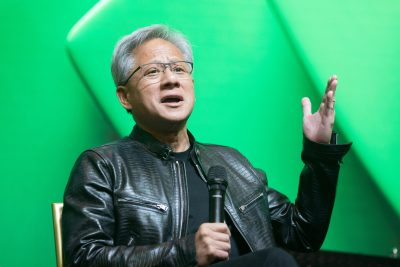
The 10 People Who Decide Jensen Huang's Fate: A Power Map of Nvidia's Board

The article discusses the uncertainty surrounding Jensen Huang's future at Nvidia amid a scandal, and profiles the 10 board members who will decide his fate. The board includes: 1. Stephen C. Neal – Joined 2019; honorary chairman and senior counsel at Cooley LLP, Nvidia's longtime legal counsel; Harvard and Stanford Law graduate. 2. Tench Coxe – Billionaire VC and early Nvidia investor; board member since 1993; former managing director at Sutter Hill Ventures. 3. John O. Dabiri – Joined 2020; Caltech professor of aeronautics and mechanical engineering; National Medal of Science recipient. 4. Dawn Hudson – Board member since 2013; former NFL CMO and CEO of Pepsi-Cola North America. 5. Harvey C. Jones – Joined 1993; former Synopsys CEO; managing partner at Square Wave Ventures. 6. Melissa B. Lora – Joined 2023; former president of Taco Bell International; praised for financial expertise. 7. A. Brooke Seawell – Joined 1997; partner at New Enterprise Associates; former NetDynamics executive. 8. Aarti Shah – Joined 2020; former Eli Lilly SVP and chief information and digital officer; PhD in applied statistics. 9. Mark A. Stevens – Board member 1993–2006 and again since 2008; managing partner at S-Cubed Capital; former Sequoia Capital managing partner. 10. Suzanne Nora Johnson – Newest member, joined July; former Goldman Sachs vice chairman with 21 years at the firm. The board's decision will significantly impact Nvidia's future.

Odaily星球日报1h ago

The 10 People Who Decide Jensen Huang's Fate: A Power Map of Nvidia's Board

Odaily星球日报1h ago

Trading

Spot
活动图片