Rapper Afroman: Doesn't Understand Bitcoin, but Becomes a New Crypto Freedom Fighter

Foresight NewsОпубликовано 2026-06-09Обновлено 2026-06-09

Введение

Joseph "Afroman" Foreman, the rapper famed for "Because I Got High," has become an unlikely symbol for the crypto community's libertarian ideals. Following a 2022 police raid on his Ohio home, which yielded no charges, Foreman used the footage to create viral songs mocking the officers, leading to a lawsuit he ultimately won. His defense of free speech against government overreach resonated deeply with attendees at the Bitcoin 2024 conference in Las Vegas, where he performed. Despite admitting he knows little about cryptocurrency and owns none, event organizers saw his personal fight as embodying Bitcoin's core ethos of individual sovereignty and resistance to centralized control. Foreman, a self-described "icon of weed culture," has long performed for paying crowds but found a new political voice after his legal battle. His platform, which includes federal marijuana legalization and police accountability, aligns with the diverse, anti-establishment crowd at the Bitcoin conference, though he remains unaffiliated with any major party. The event featured an auction of his memorabilia, celebrating him as a modern "freedom fighter." In a final surprise, Foreman used his stage time to announce his candidacy for the 2028 U.S. presidential election, thrilling the remaining audience before launching into his signature hit.


Author: Jessica Klein, Wired

Translation: Saoirse, Foresight News


Joseph Edgar Foreman, better known by his stage name Afroman, is taking a long drag from a blunt. In a makeshift backstage lounge at The Venetian in Las Vegas, partitioned by curtains, the 51-year-old rapper is unhurried, even as thousands wait outside. The joint was rolled by his videographer, a woman in a tight evening minidress and clear sky-high heels. This grand venue is a world away from the dive bars he toured for over two decades.


Foreman is wearing his courtroom suit, an American flag-print outfit he now wears everywhere. In 2022, police, suspecting him of drug-related crimes and kidnapping, raided his Winchester, Ohio home. They found nothing incriminating except a jar of 'green herbal substance,' THC concentrate wax, paraphernalia, and over $5,000 in cash. After the raid, Foreman released songs mocking the officers involved, joking about receding hairlines and their wives, and humiliating them in various ways. Seven officers sued him for defamation and invasion of privacy, seeking $4 million. Foreman won the case, and clips from the trial went viral, earning him widespread public support.


After all, going viral is Foreman's specialty. He claims his 2000 college party anthem "Because I Got High" originally promoted free expression — a debatable point, but he is undeniably skilled at capturing attention. His calm demeanor during the trial and his emphasis on free speech drew millions to his music. Footage from his home security cameras, showing officers entering his house, was used in music videos, further boosting his popularity. The most viral, "Lemon Pound Cake," mocked an officer who seemed overly interested in a cake on the kitchen counter during the search. The video garnered nearly 10 million views on YouTube, and the so-called "Cake Cop" later reported receiving hundreds of lemon pound cakes as harassment.


The rapper's victory cast him as a "freedom fighter" in the public eye, which is why he traveled to Las Vegas to perform for a crowd of libertarian-leaning crypto enthusiasts. Craig Deutsch, the programming director for the Bitcoin conference, said Foreman's "fight for his right to create songs about police who illegally entered his home perfectly aligns with Bitcoin's core ethos." The annual Bitcoin conference attracts a diverse crowd: industry professionals, early Bitcoin adopters, and QAnon followers distrustful of government systems. It has also become a key campaign stop. Donald Trump delivered a keynote in 2024 during his presidential run; JD Vance spoke the following year. Now in its second year in Las Vegas, attendance is up despite Bitcoin's price being about $33,000 lower than last year.


Host Gregg Davis enters the smoky greenroom, finding Foreman surrounded by a small entourage: former pimp Bishop Don "Magic" Juan, an assistant in an emerald suit, men taking turns passing a blunt, and two young women in tight, shiny dresses.


"How should I introduce you?" Davis asks.


"Speak from the heart," Foreman replies. "Talk about the struggle, the hustle, the American Dream — if you remember that word — then just bring out Afroman."


The host jokingly thanks Foreman for "making the room smell so nice." Shortly after, his manager enters, politely informing him that hotel staff have smelled marijuana and are threatening to call the police.
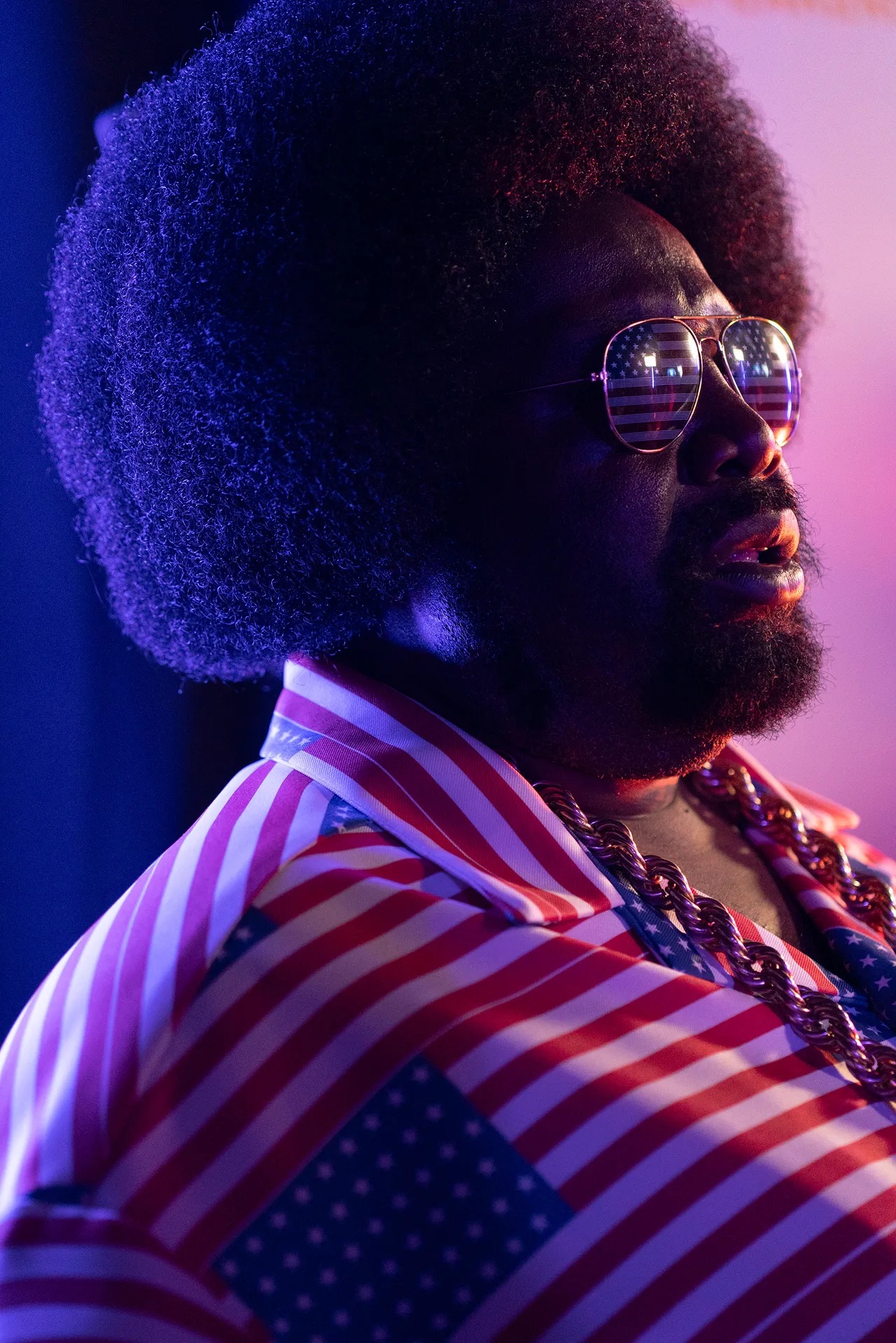

Joseph Edgar Foreman, widely known as rapper Afroman, rose to fame with "Because I Got High," a comedy song about the consequences of smoking marijuana. The song was nominated for a Grammy in 2002. Photo: Gabriella Angotti-Jones


"Okay, okay, I got it," Foreman says, turning to his crew. "They want us to put it out. Everybody, take a few last hits."


He has 20 minutes until he takes the Bitcoin conference's "Satoshi Main Stage," named after Bitcoin's pseudonymous creator. The rapper admits he knows nothing about cryptocurrency, doesn't own a single Bitcoin, and doesn't understand its logic. He pauses briefly, trying to think of something that will resonate with the crypto faithful, then lets it go. "I'm 51," he says. "I'll just wing it. It'll work out."


Foreman learned to sing in church and started writing raps at 12. His first song, he recalls, mocked a bully girl at his new school who had a mustache, with lyrics like, "Hairy Carrie ruins herself, so the hair on her lip gets no breeze." As an adult, back in Mississippi, he recorded "Because I Got High" shortly after quitting his job at a chicken processing plant, distributing 500 copies at a Mardi Gras party in New Orleans. Kids took it home and uploaded it to Napster; within days, Foreman says, it spread globally. In 2001, Universal Records flew to New York to sign him; the song earned a Grammy nomination the next year.


But Foreman's peak was fleeting. He never matched the success of his ode to marijuana-induced slacking. He parted ways with Universal and began self-releasing music online in 2004. For two decades, he's sustained a career performing his hit at college parties worldwide. He never intended to be an activist, but libertarian themes slowly seeped into his work. In an early interview with Time, he said, "I don't want to agitate anybody. I just thought, 'We're all potheads, let's just have some fun.'" In 2014, he partnered with the NORML legalization advocacy group for a positive spin on the song, highlighting medicinal benefits like glaucoma relief.


But these were often business opportunities, not deep convictions. Foreman tours relentlessly, taking gigs for the paycheck. He opened for Snoop Dogg on the 2018 Puff Puff Pass tour; he was paid $2,500 to perform three songs at a Pennsylvania frat party before police shut it down. He's had his own legal troubles: in 2015, he slapped a woman who rushed the stage, resulting in a $65,000 settlement and court-ordered anger management classes. After the Ohio raid but before his trial went viral, he even filed to run for U.S. President in 2024.


Earlier this year, millennials were surprised to see the party-rap icon from their youth re-emerge as a defender of the First Amendment. When a judge asked during the trial if the police entering his home gave him the right to mock them in song, Foreman responded, "They kicked my door down with guns, they searched my premises. Yes, I have freedom of speech. I could be in my backyard having fun, taking a bad situation and making it fun with my expression." He argued that since the officers chose to enter his home and appear on his security footage, using them in his video was fair game. The jury sided with him in just six hours. Foreman says he plans to write 50 to 100 songs about the officers who raided his home.


Overall, as he puts it, he's a "marijuana icon" first, with politics layered on top. This deeply appeals to the Bitcoin community. Rap is protest music, and Bitcoin is often called "the money of rebellion." Foreman fits into a lineage of conference speakers like former NSA whistleblower Edward Snowden and Silk Road founder Ross Ulbricht — the latter pardoned by Trump in 2025 after 11 years in prison for operating the dark web marketplace.


Conference organizer Deutsch says, "Whether Afroman is deep into crypto or not, in my mind, he is a Bitcoiner."


The morning before his performance, Foreman heads to Top Golf on the Las Vegas Strip. His companions include actor Christopher McDonald (who played Shooter McGavin in "Happy Gilmore"), a 19-year-old Amish boy on his Rumspringa (who had performed a cover of Weird Al Yankovic's "Amish Paradise" with Foreman the night before), two men from California, and Don Juan. It's all part of his paid appearance package for the Bitcoin conference. As a professional entertainer, he plays along: coaching the Amish boy on rapping, engaging with crypto fans, even as he's just beginning to grasp their zeal for digital currency.
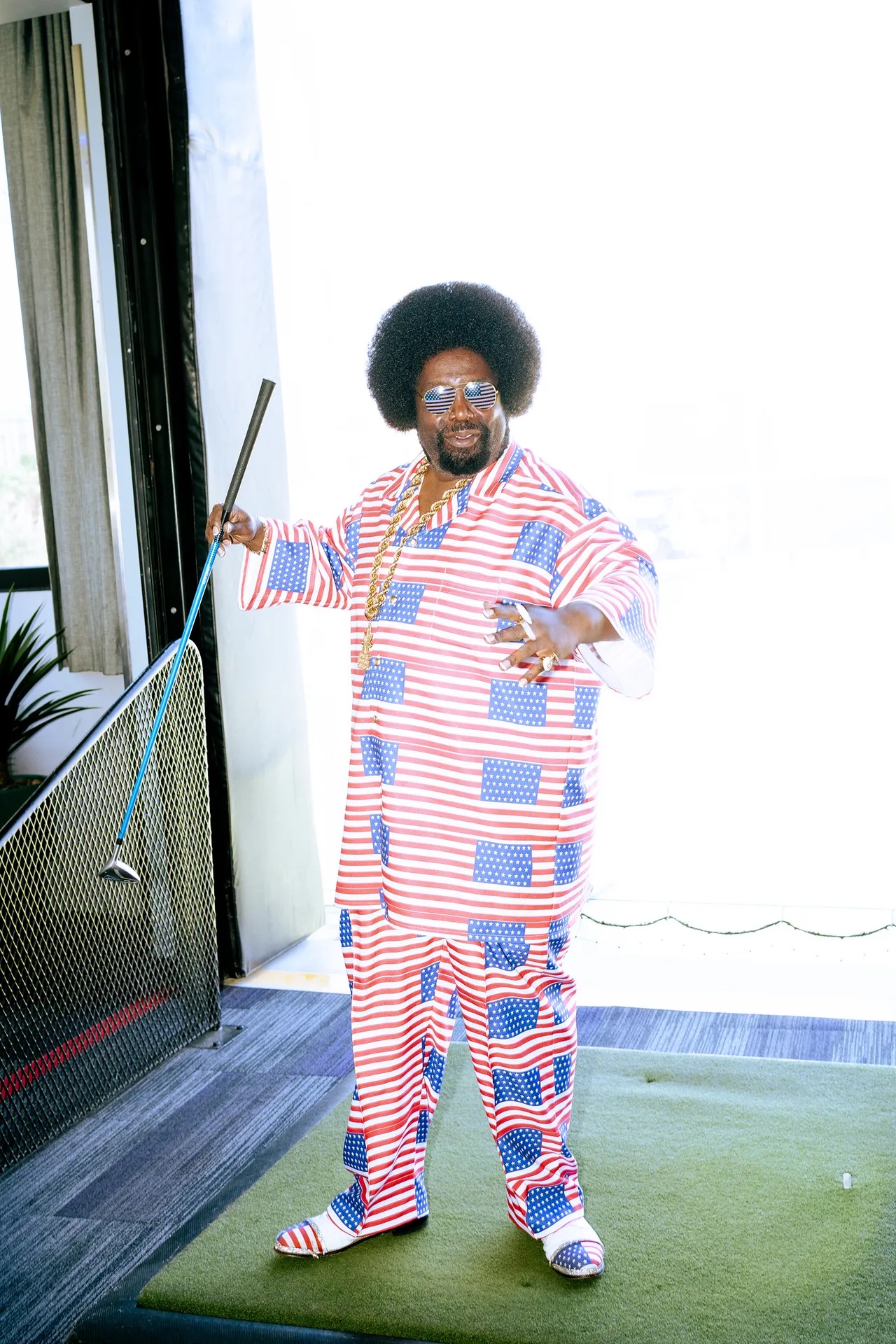

As part of his appearance at the Bitcoin conference, Foreman spent a morning at Top Golf on the Las Vegas Strip. Photo: Gabriella Angotti-Jones


Laken Schafer, 29, is Foreman's videographer. They met at a cannabis-themed wedding where she was filming and he was officiating. Foreman hired her because he "didn't want a sweaty male cameraman." Photo: Gabriella Angotti-Jones


Don Juan tends to Foreman throughout. They met through a mutual friend about 15 years ago and reconnect annually at the "Players' Ball," the pimp convention Don Juan started in 1974 for his birthday. He calls Foreman a "gentle giant," sitting beside him as his videographer tees off in heels. On the table is Don Juan's signature custom cup, featuring a diamond-encrusted silhouette of a woman.


Don Juan explains to Foreman, "Bitcoin keeps going up in value, and most regular people don't understand it." He once bought crypto but lost his private keys. He believes a figure like Afroman can introduce it to people outside the bubble.


Learning that one Bitcoin is worth about $77,000 and that someone once traded 10,000 Bitcoin for two pizzas in 2010 (worth about $41 at the time), Foreman remarks, "It's tough for the average person to get a whole Bitcoin."


He has a realization: "So it's like stocks? You buy it, hold it, and hope it goes up?"


The Bitcoin community, once a small group of cypherpunks wanting financial transactions free from government control, is now filled with political opportunists — many urging the U.S. government to hoard crypto to boost its price. In recent years, the conference has featured crypto-friendly Republican politicians, with MAGA merch everywhere, though political views aren't monolithic. This suits Afroman: he's not aligned with any party, focusing on issues that directly affect him. He supports jury trials in family court (he's divorced), federal marijuana legalization, civilian oversight boards for police (as a Black man, he feels this deeply); he's anti-war, against foreign aid, supports sex work legalization, and wants reparations for descendants of slaves.


Despite Trump's appearance at the conference, Foreman doesn't align with him. "The policy of qualified immunity for police is a deal-breaker for me," he says, also rejecting the glorification of Nazis and Confederate statues. "As a Black man, those are red lines."


Foreman has beliefs, but he advocates most fiercely when they intersect with his self-interest. During his 2024 presidential run, his two main platforms were: recreational marijuana legalization and mandatory body cameras for all police officers.
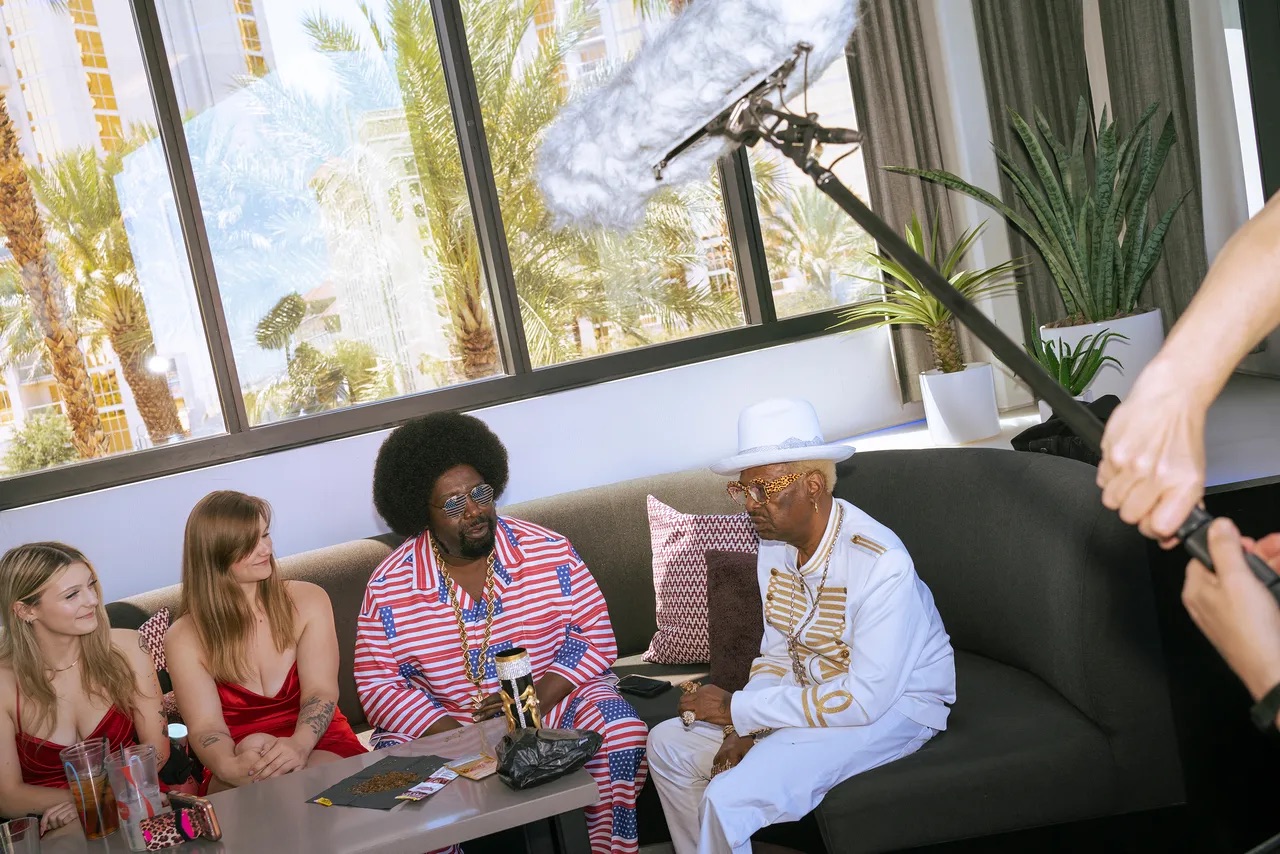

Afroman (from left) with his assistant Lilly Music, Laken Schafer, and Don Juan. Photo: Gabriella Angotti-Jones


Don Juan praises Foreman: "He's powerful now. People want something new. He's not just a rapper; he has a strong personality. Running Afroman for president isn't far-fetched."


Foreman declares, "I guarantee you, if I'm president, all these problems will be solved."


The three-day conference expo hall is filled with Bitcoin mining company booths. Suited professionals mingle with enthusiasts in sailor hats and Bitcoin logo face paint. In one corner, a mannequin sports Afroman's signature afro. A nearby glass case displays auction items: Afroman-signed rolling papers, a used ashtray, and commemorative bills with his portrait.


The items are listed by Scarce City, an auction house specializing in crypto memorabilia like old Bitcoin magazines and a harmonica set owned by crypto promoter and antivirus pioneer John McAfee. Last year, when Ross Ulbricht spoke, Scarce City auctioned three of his prison IDs and sneakers; one ID sold for 5.5 Bitcoin after bidding wars, worth about $371,000.


Scarce City's general manager, Sam Kimbrow, followed Foreman's trial and reached out in January to auction his items, hoping to help with legal fees, including the iconic American flag suit from court. The 40-year-old says assembling this collection fulfills "a millennial fantasy," hoping it shows a younger generation that artists can stand up for their rights.


"The core ethos of what we auction is freedom and personal sovereignty," she says. "Afroman is a living, modern-day freedom fighter."


After the auction, the flag suit sold for about $4,000 worth of Bitcoin, the ashtray for about $230 worth, but the signed rolling papers received no bids.


The auction didn't significantly benefit Foreman. He reveals he was paid a flat fee (undisclosed) to participate in Las Vegas events for three days. But he states his reason plainly: "They said one thing: 'Afroman, there's money involved!'"


On the conference's final day, an hour before his main stage performance, Foreman does an on-stage interview for elite attendees who bought the "Whale Pass" for $12,999 — an event closed to most media. The interviewer is Tracy Hoyos-Lopez, Kraken's head of strategic initiatives, known for influencing Trump's embrace of Bitcoin. All sixty seats fill quickly.


Asked about his mindset during the police raid, Foreman replies, "I'm used to police automatically thinking I'm a criminal. I'm patient. I wait for them to realize they're wrong."


"Through freedom of speech, we can call out corruption in the system," Foreman continues. "Once you see the problem, you can address it. Once it's addressed, you can fix it. I even hope this raid will make me enough money that I'll be glad the police came to my house."


According to Billboard, after winning the case, Foreman's music streams surged over 500%, helping cover the $20,000 in property damage from the raid.


The audience is fully on his side. Under a ceiling of colorful planet decorations, they sing along to "Because I Got High," even if they don't know all the words. They cheer when Foreman explains using footage of the actual officers who wronged him in his videos. Hoyos-Lopez concludes, "The greatest asset in America, in the Constitution, is freedom of speech. And Afroman, you have exercised that right to perfection."
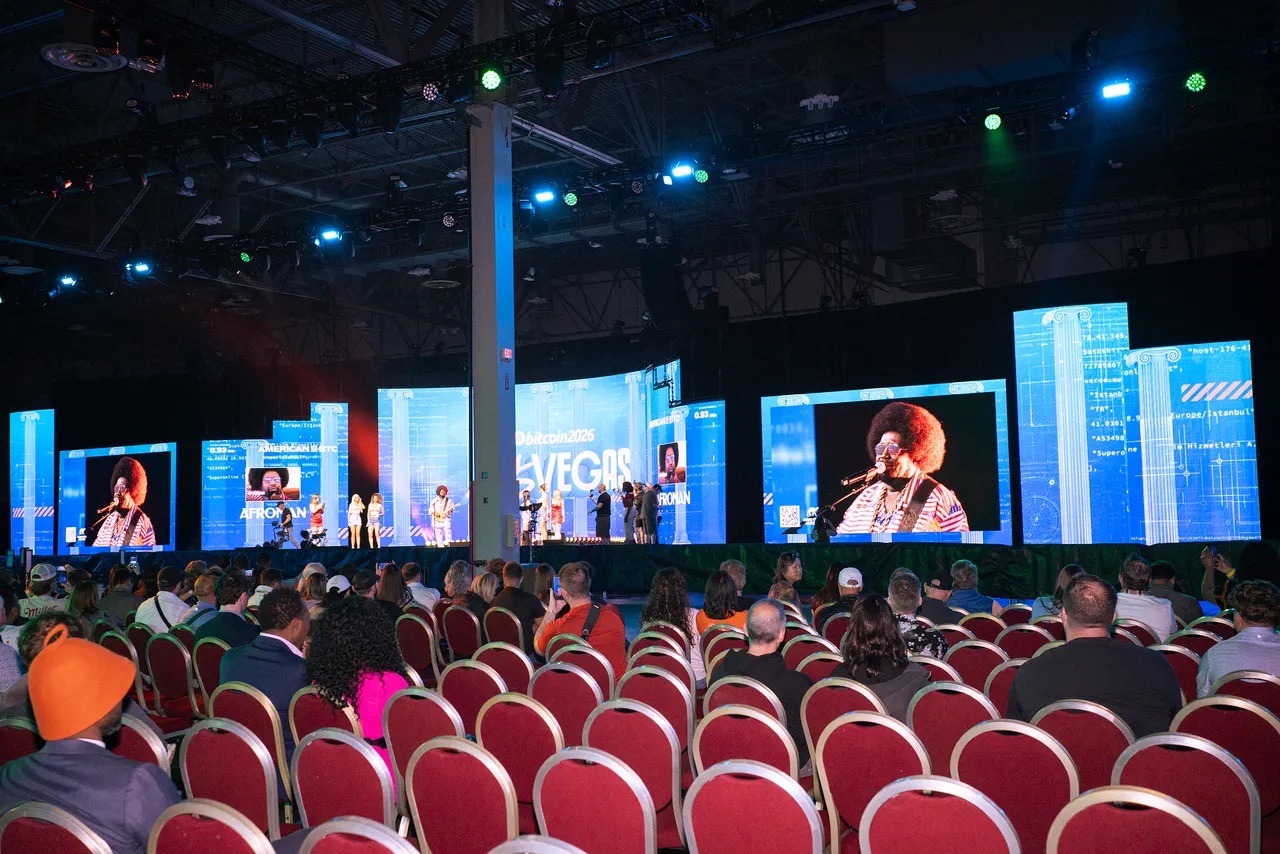

On the final night of the Bitcoin conference, Foreman took the Satoshi stage to perform his most famous song and make a special announcement. Photo: Gabriella Angotti-Jones


On the Bitcoin conference's closing night, Foreman takes the Satoshi stage, performs his hit, and makes a major announcement.


By the third day, the crowd has thinned, and The Venetian ballroom isn't packed. But the remaining audience nearly fills the 8,000 seats, there specifically for Afroman. As the only performer who's lived a protest story, the vibe isn't electric, but a middle-aged white woman in the front row gets up to dance.


Before starting, Foreman almost forgets his announcement. "Damn, I'm high," he says. "I almost forgot to tell y'all: I'm running for president in 2028."


The crowd erupts. Someone yells, "Afroman for president!"


Then, strumming a borrowed guitar shaped like the letter B, he launches into the song that made him famous.


Связанные с этим вопросы

QWho is Afroman and what is he best known for in his music career?

AAfroman, whose real name is Joseph Edgar Foreman, is a rapper best known for his 2000 hit single 'Because I Got High,' a comedic song about the consequences of smoking marijuana, which earned him a Grammy nomination in 2002.

QWhat legal event in 2022 transformed Afroman into a symbol of free speech and a 'freedom fighter'?

AIn 2022, police raided Afroman's Ohio home on suspicion of drug-related and kidnapping offenses. He was not convicted. He later released songs and a music video using footage from the raid to mock the officers. When seven of them sued him for defamation and privacy invasion, he won the case, championing freedom of speech. The legal victory and his response made him a symbol of free speech.

QWhy was Afroman invited to perform at the Bitcoin conference despite not knowing about cryptocurrency?

ABitcoin conference organizers, like program director Craig Deutsch, believed Afroman's fight for his right to create songs about the police raid and his victory in court aligned perfectly with Bitcoin's core pursuit of individual liberty and resistance against the traditional system.

QWhat significant announcement did Afroman make during his performance at the Bitcoin conference's closing night?

ADuring his performance on the Nakamoto Stage, Afroman announced his candidacy for the 2028 U.S. Presidential election.

QAccording to the article, what were some of the items auctioned by Scarce City on Afroman's behalf, and what was the result?

AScarce City auctioned Afroman's personal items, including his signed rolling papers, a used ashtray, and his iconic American flag suit worn during his court appearances. The flag suit sold for the equivalent of about $4,000 in Bitcoin, the ashtray for about $230 in Bitcoin, but the signed rolling papers received no bids.

Похожее

AI Agent Completely Transforms Web3 Gaming: From the Rugpull Bakery Bot Controversy to the New 2026 Agent Paradigm

This article explores how the AI Agent paradigm is fundamentally transforming Web3 gaming, moving from a disruptive force to a core, legitimized element. It begins with the controversy in the competitive baking game Rugpull Bakery, where automated scripts caused fairness issues. Instead of banning them, the developers integrated AI Agents into the official gameplay by providing technical documentation (skill.md, agent.json), marking a shift towards "Agentic Gaming." The piece outlines three primary implementation models for AI Agents in Web3 games by 2026: 1. **Autonomous Competitors & Economic Entities:** AI Agents act as independent players with unique strategies. Examples include TEN Protocol's poker agents, AI Arena's trainable NFT fighters, and Satoshi Strike Force's "Digital Athletes" trained on player data. The Somnia blockchain is highlighted as a dedicated "Agentic L1" infrastructure supporting this model at scale. 2. **Modular Infrastructure & Programmable Environments:** This model, exemplified by EVE Frontier, allows AI Agents to program game world logic itself. Using "Smart Assemblies" (e.g., Smart Turrets, Smart Gates), Agents can modify shared economic and physical rules on-chain, creating dynamic, player/AI-built worlds. The ERC-8183 standard further enables these automated entities to hire other AI services for complex tasks. 3. **Hybrid Companions & Dynamic Adaptation:** Here, AI serves as a collaborative partner. In Parallel Colony, highly autonomous AI Avatars work alongside human players who provide high-level guidance. Illuvium plans to use AI to make NPCs dynamic and responsive, creating personalized, emergent narratives for each player. The conclusion posits that Web3 gaming has reached a "post-human" inflection point. Blockchains' transparency and programmability, combined with new standards and infrastructure like Somnia, make integrating and governing AI Agents not just viable but essential. The future lies in a symbiotic digital order where players transition from manual laborers to commanders and partners of algorithmic intelligence.

marsbit34 мин. назад

AI Agent Completely Transforms Web3 Gaming: From the Rugpull Bakery Bot Controversy to the New 2026 Agent Paradigm

marsbit34 мин. назад

Saylor's Purchase of 1550 Bitcoin Is a Bad Trade

**Title: Saylor's Purchase of 1,550 Bitcoins Was a Bad Trade** The article critically analyzes Strategy's recent move of selling 32 bitcoins followed by a much larger purchase of 1,550 bitcoins. While appearing bullish, the author argues this trade is detrimental to MSTR shareholders. The core argument revolves around the concept of "breakeven modified Net Asset Value (mNAV)," a key metric for Strategy. To increase Bitcoin per share (BPS) for MSTR holders, Strategy must issue new shares at a premium high enough that the funds raised can buy more bitcoin than the bitcoin backing each existing share. Currently, this breakeven mNAV is estimated at 1.30. The recent trade failed on two counts: 1. The shares for the $181 million raise were issued at an mNAV *below* the 1.30 breakeven point. Selling "cheap" shares to buy bitcoin actually *reduces* BPS. 2. Only $101.3 million of the raised funds were used to buy bitcoin; the rest went to boost the company's dollar reserves. The breakeven mNAV calculation assumes *100%* of proceeds are used for bitcoin purchases. Diverting funds, even if mNAV were high, dilutes BPS. The result is an estimated 0.19% decrease in Bitcoin per share for MSTR holders. In exchange, Strategy merely extended its operational runway for its dollar reserves from ~6.3 months to 7 months. The author interprets this as Strategy prioritizing the survival and development of its STRC business over its stated core goal of increasing MSTR's BPS. This constitutes a gamble: if sacrificing MSTR value leads to improved market sentiment and a recovery in STRC's price (and thus mNAV), the whole system could work. If not, Strategy may be forced into a cycle of further diluting MSTR to stay afloat, potentially leading to deferred STRC dividends or corporate decline. The article concludes with a hope for price recovery for Bitcoin, MSTR, and STRC.

Foresight News45 мин. назад

Saylor's Purchase of 1550 Bitcoin Is a Bad Trade

Foresight News45 мин. назад

The AI Bear Market Lasting Two Days Is Over; Why Did Funds Buy Back Storage Stocks First?

After a severe two-day selloff in early June that erased over $1 trillion from U.S. chip stock market value, capital is flowing back first to the memory sector. The correction was not driven by a collapse in AI demand but rather a market reassessment of high expectations. Stocks like Broadcom faced selling pressure despite strong AI revenue guidance, signaling a shift in focus from who has an "AI story" to who can most rapidly translate AI demand into verifiable profits and earnings per share (EPS). Memory companies, such as Micron and SK Hynix, are leading the recovery because their EPS growth is more immediately verifiable. The AI server boom directly increases demand for high-bandwidth memory (HBM) and high-capacity server DRAM, tightening supply and driving up contract prices for conventional DRAM and NAND Flash. This price increase, coupled with a shift to higher-margin products, flows directly into near-term revenue and profitability, as evidenced in recent earnings reports. In contrast, other AI semiconductor segments like GPUs, ASICs, and optical modules, while central to the long-term AI infrastructure story, face longer and less certain paths to EPS validation. Their growth depends more on future product cycles, customer adoption timelines, and capital expenditure plans. The rebound in memory stocks highlights a market preference for assets with shorter, more transparent EPS conversion cycles following the recent de-risking phase. However, this does not negate the potential of other AI hardware segments should they provide clearer near-term order visibility. The episode has raised the validation bar for all AI-related investments.

marsbit45 мин. назад

The AI Bear Market Lasting Two Days Is Over; Why Did Funds Buy Back Storage Stocks First?

marsbit45 мин. назад

Торговля

Спот
Фьючерсы

Популярные статьи

Тест по Bitcoin Биткоина

HTX Learn: Изучите Bitcoin halving и Заработаете Токены USDT

3.1k просмотров всегоОпубликовано 2024.04.16Обновлено 2024.04.16

Тест по Bitcoin  Биткоина

Что такое $BITCOIN

ЦИФРОВОЕ ЗОЛОТО ($BITCOIN): Комплексный анализ Введение в ЦИФРОВОЕ ЗОЛОТО ($BITCOIN) ЦИФРОВОЕ ЗОЛОТО ($BITCOIN) — это проект на основе блокчейна, работающий в сети Solana, который стремится объединить характеристики традиционных драгоценных металлов с инновациями децентрализованных технологий. Хотя он носит имя Биткойн, часто называемого “цифровым золотом” из-за его восприятия как средства хранения ценности, ЦИФРОВОЕ ЗОЛОТО является отдельным токеном, предназначенным для создания уникальной экосистемы в ландшафте Web3. Его цель — позиционировать себя как жизнеспособный альтернативный цифровой актив, хотя детали его применения и функциональности все еще развиваются. Что такое ЦИФРОВОЕ ЗОЛОТО ($BITCOIN)? ЦИФРОВОЕ ЗОЛОТО ($BITCOIN) — это токен криптовалюты, специально разработанный для использования в блокчейне Solana. В отличие от Биткойна, который выполняет широко признанную роль хранения ценности, этот токен, похоже, сосредоточен на более широких приложениях и характеристиках. Примечательные аспекты включают: Инфраструктура блокчейна: Токен построен на блокчейне Solana, известном своей способностью обрабатывать высокоскоростные и недорогие транзакции. Динамика предложения: ЦИФРОВОЕ ЗОЛОТО имеет максимальное предложение, ограниченное 100 квадриллионами токенов (100P $BITCOIN), хотя детали о его обращающемся предложении в настоящее время не раскрыты. Утилита: Хотя точные функциональные возможности не описаны, есть указания на то, что токен может быть использован для различных приложений, потенциально связанных с децентрализованными приложениями (dApps) или стратегиями токенизации активов. Кто создатель ЦИФРОВОГО ЗОЛОТА ($BITCOIN)? На данный момент личность создателей и команды разработчиков, стоящих за ЦИФРОВЫМ ЗОЛОТОМ ($BITCOIN), остается неизвестной. Эта ситуация типична для многих инновационных проектов в области блокчейна, особенно тех, которые связаны с децентрализованными финансами и феноменом мем-криптовалют. Хотя такая анонимность может способствовать культуре, ориентированной на сообщество, она усиливает опасения по поводу управления и ответственности. Кто инвесторы ЦИФРОВОГО ЗОЛОТА ($BITCOIN)? Доступная информация указывает на то, что у ЦИФРОВОГО ЗОЛОТА ($BITCOIN) нет известных институциональных спонсоров или значительных венчурных капиталовложений. Проект, похоже, функционирует по модели пирингового взаимодействия, сосредоточенной на поддержке и принятии сообществом, а не на традиционных путях финансирования. Его активность и ликвидность в основном сосредоточены на децентрализованных биржах (DEX), таких как PumpSwap, а не на устоявшихся централизованных торговых платформах, что еще больше подчеркивает его подход, ориентированный на grassroots. Как работает ЦИФРОВОЕ ЗОЛОТО ($BITCOIN) Операционные механизмы ЦИФРОВОГО ЗОЛОТА ($BITCOIN) можно подробно описать на основе его дизайна блокчейна и характеристик сети: Механизм консенсуса: Используя уникальный механизм доказательства истории (PoH) Solana в сочетании с моделью доказательства доли (PoS), проект обеспечивает эффективную валидацию транзакций, что способствует высокой производительности сети. Токеномика: Хотя конкретные дефляционные механизмы не были подробно описаны, большое максимальное предложение токенов подразумевает, что оно может быть предназначено для микротранзакций или нишевых случаев использования, которые еще предстоит определить. Интероперабельность: Существует потенциал для интеграции с более широкой экосистемой Solana, включая различные платформы децентрализованных финансов (DeFi). Однако детали относительно конкретных интеграций остаются неуточненными. Хронология ключевых событий Вот хронология, которая подчеркивает значимые вехи, касающиеся ЦИФРОВОГО ЗОЛОТА ($BITCOIN): 2023: Первоначальное развертывание токена происходит в блокчейне Solana, отмеченное его адресом контракта. 2024: ЦИФРОВОЕ ЗОЛОТО приобретает видимость, когда оно становится доступным для торговли на децентрализованных биржах, таких как PumpSwap, позволяя пользователям обменивать его на SOL. 2025: Проект наблюдает спорадическую торговую активность и потенциальный интерес к инициативам, возглавляемым сообществом, хотя на данный момент не зафиксировано никаких значительных партнерств или технических достижений. Критический анализ Сильные стороны Масштабируемость: Основная инфраструктура Solana поддерживает высокие объемы транзакций, что может повысить полезность $BITCOIN в различных сценариях транзакций. Доступность: Потенциально низкая цена торговли за токен может привлечь розничных инвесторов, способствуя более широкому участию благодаря возможностям дробного владения. Риски Отсутствие прозрачности: Отсутствие публично известных спонсоров, разработчиков или процесса аудита может вызвать скептицизм относительно устойчивости и надежности проекта. Волатильность рынка: Торговая активность сильно зависит от спекулятивного поведения, что может привести к значительной волатильности цен и неопределенности для инвесторов. Заключение ЦИФРОВОЕ ЗОЛОТО ($BITCOIN) является интригующим, но неоднозначным проектом в быстро развивающейся экосистеме Solana. Хотя он пытается использовать нарратив “цифрового золота”, его отход от установленной роли Биткойна как средства хранения ценности подчеркивает необходимость более четкого различения его предполагаемой утилиты и структуры управления. Будущее принятие и усвоение, вероятно, будут зависеть от решения текущей непрозрачности и более четкого определения его операционных и экономических стратегий. Примечание: Этот отчет охватывает синтезированную информацию, доступную на октябрь 2023 года, и с тех пор могут произойти события.

99 просмотров всегоОпубликовано 2025.05.13Обновлено 2025.05.13

Что такое $BITCOIN

Fractal Bitcoin: масштабирование Биткоина с помощью рекурсивной системы

Fractal Bitcoin — масштабное Layer-1-решнение, созданное на базе кода Биткоина, позволяющего достигать бесконечного масштабирования с помощью рекурсивного подхода.

2.3k просмотров всегоОпубликовано 2025.06.30Обновлено 2025.06.30

Fractal Bitcoin: масштабирование Биткоина с помощью рекурсивной системы

Обсуждения

Добро пожаловать в Сообщество HTX. Здесь вы сможете быть в курсе последних новостей о развитии платформы и получить доступ к профессиональной аналитической информации о рынке. Мнения пользователей о цене на BTC (BTC) представлены ниже.

活动图片