WLFI 与 AAVE 分币引冲突,结局又将不了了之?

Foresight NewsОпубликовано 2025-08-25Обновлено 2025-08-25

Введение

Aave 创始人回应称提案仍有效,或许只是一厢情愿。

撰文:1912212.eth,Foresight News

Crypto 领域「合作」是常态,「冲突」也不例外,近日 World Liberty Financial(WLFI)与 Aave 的提案纷争引市场关注。这一事件源于一个看似互利的 DeFi 合作提案,却因信息不对称和否认声明引发轩然大波,导致 AAVE 代币价格短期跌 8% 以上。

WLFI 作为特朗普家族背书的开放金融项目,本意是借 Aave 的 DeFi 基础设施扩展影响力,但纷争暴露了加密生态中治理透明度的痛点。

代币分成提案成泡影?

WLFI 项目于 2024 年推出,由特朗普家族成员推动。其代币总供应量为 1000 亿枚,作为新兴项目,WLFI 此前寻求与成熟 DeFi 协议合作,以提升流动性。

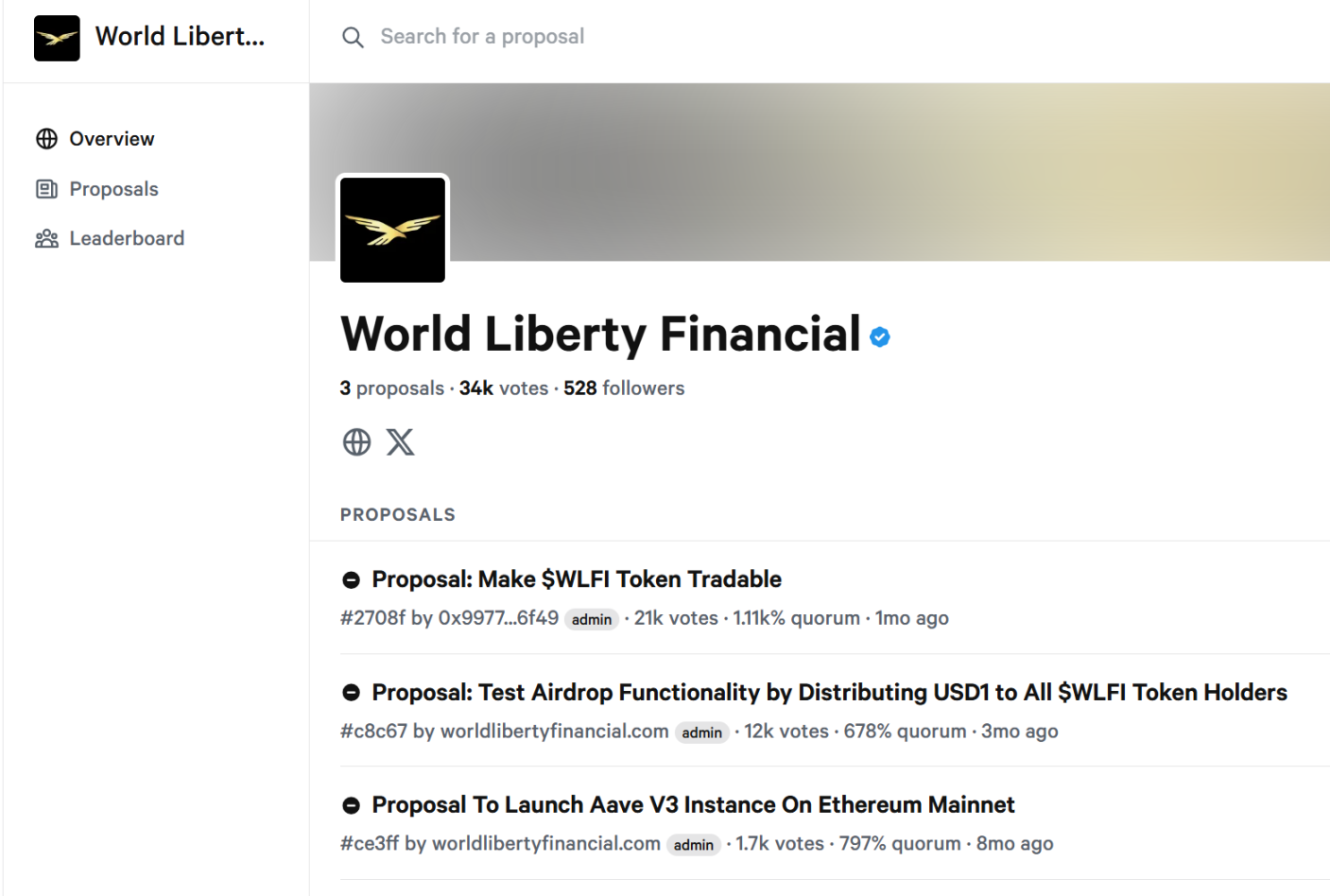
此前,Aave DAO(去中心化自治组织)通过一项提案:WLFI 将在 Aave V3 上部署其平台。作为回报,Aave DAO 将获得 WLFI 协议产生的 20% 费用分成,并分配约 7% 的 WLFI 总供应量(即 70 亿枚代币)。
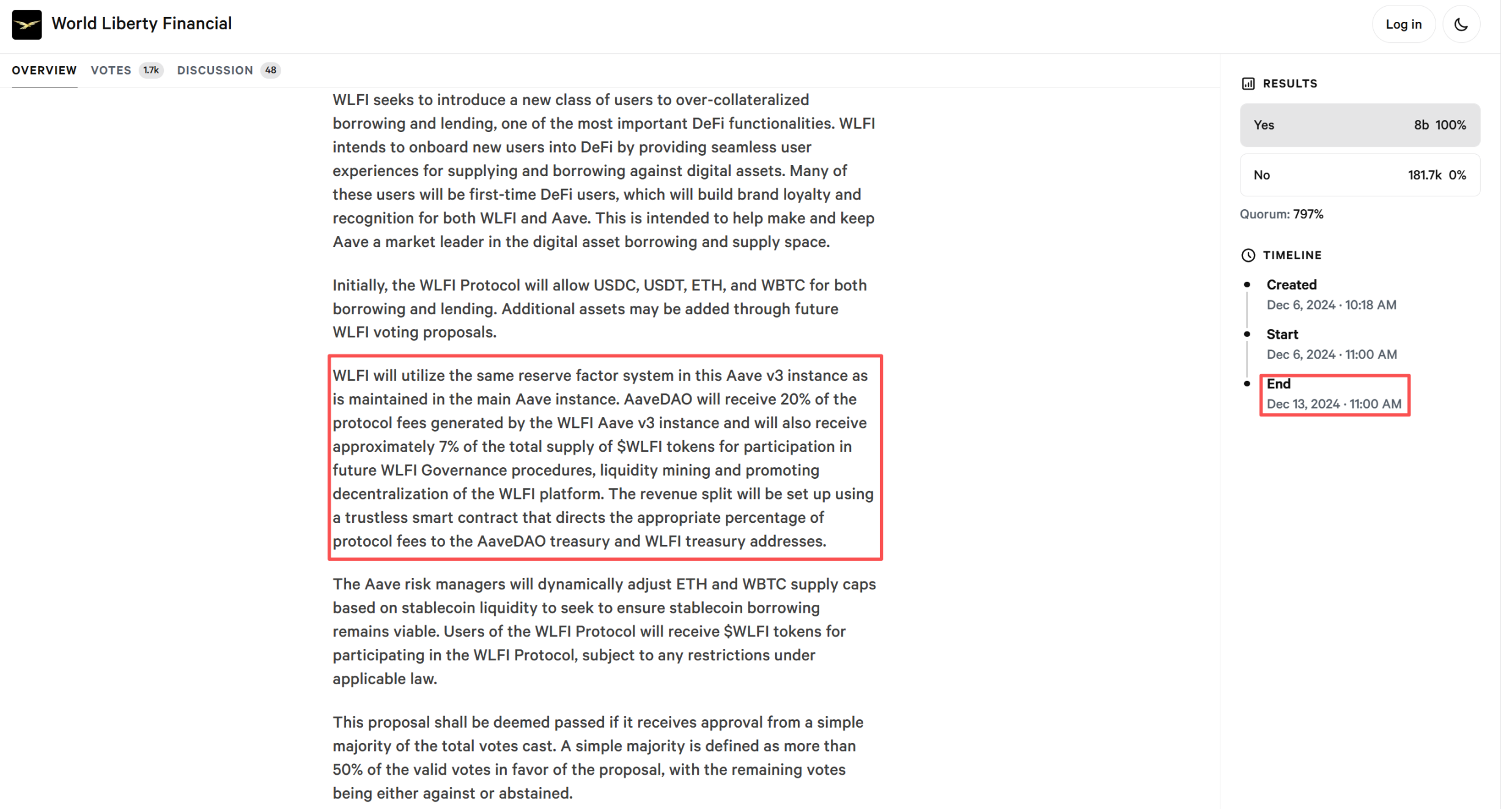
这一条款初时被视为利好——Aave 作为领先的借贷协议,能借此注入新资产提升 TVL,而 WLFI 则借助 Aave 的用户基盘加速采用。

时间来到 8 月 23 日,Aave 创始人 Stani.eth 回应有关「WLFI 与 AAVE 协议还有效吗?他们真的在 Aave 上构建吗?外界有很多不同的传言」疑问时表示,协议仍然有效,并高调转发「按当前价格计算,Aave 国库将获得价值 25 亿美元的 WLFI,使其成为本轮周期中最大的赢家之一」观点,称此为交易的艺术,随后 AAVE 拉升触及 385 美元。

不过,很快疑似 WLFI Wallet 团队成员 Dylan_0x(@0xDylan_)发文否认「Aave 将获得 WLFI 总量 7% 代币」的提案关联消息,AAVE 短时下跌 5%。
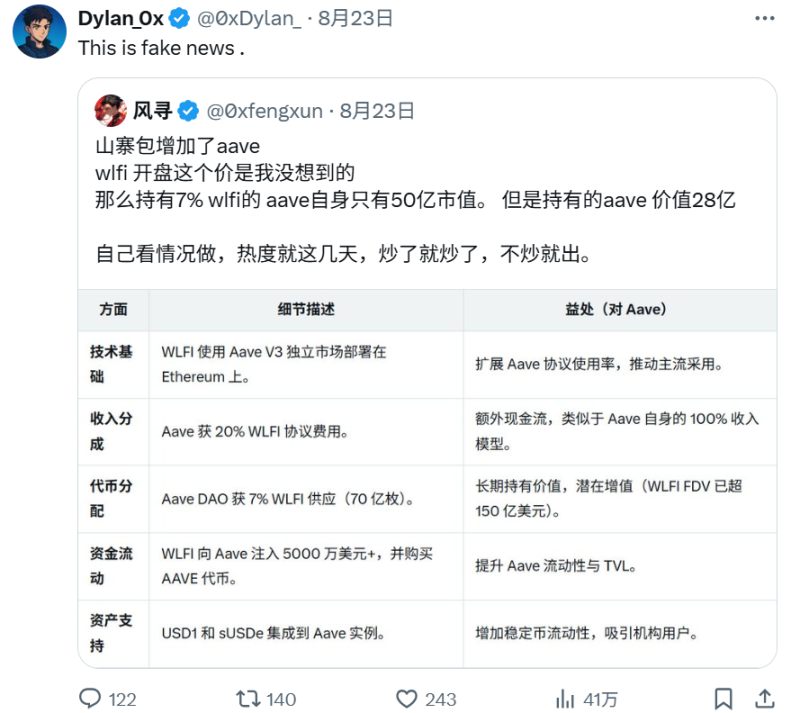
8 月 24 日,WLFI 团队对吴说区块链称否认「7% 代币分配」的真实性,称其为「假新闻」。WLFI 官方表示,提案虽存在,但分配条款并非事实,并强调项目重点在于代币化创新而非外部分成。
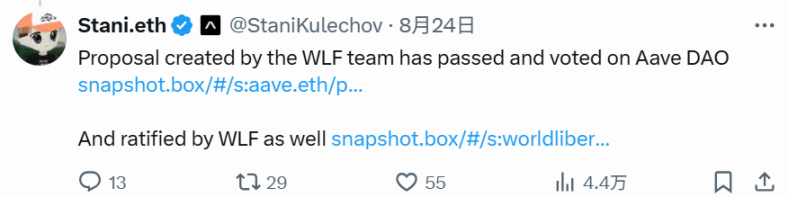
Aave 创始人 Stani.eth 在其推文下方回应表示,WLFI 团队创建的提案已在 Aave DAO 上投票并通过,得到了 WLFI 的批准,并附上了提案链接。

截止目前,WLFI 官方账号并未对此事进行正式回应,也导致其市场众说纷纭。

WLFI 即将于 9 月 1 日在以太坊上线,并开放领取和交易。早期支持者(0.015 和 0.05 美元轮次)将解锁 20%,剩余 80% 将由社区投票决定。创始团队、顾问,以及合作伙伴的代币不会解锁。

9 月 25 日,据 Bitget 行情显示,其盘前价格一度为 0.45 美元,使其 FDV(完全稀释估值)高达数百亿美元,目前回落至 0.25 美元。AAVE 则回落至 350 美元下方。

治理算数吗?

DAO 治理难题从上个周期延续至今。

Aave 创始人 Stani.eth 回应称提案仍有效,或许只是单方面一厢情愿。

dForce 创始人 Mindao 对此事评论表示,该提案「像是 WLFI 实习生写的,完全不像川普家族会签的 deal。Aave 和 Spark 的合作只给了 10% 收入分成。WLFI 有川普品牌加持,合理来说 Aave 还得倒贴点对价才说得过去。即便 WLFI 当时为了公募,也不至于搞出这么差的条款。 再后来,加密新政起飞,WLFI 发行 USD1, 叙事直接从「加密银行」跃迁到 「Aave + Circle」,估值 10x,毕竟川普写过 Art of the Deal,这种 deal 绝对是耻辱性的。」

此外,Mindao 猜测后续剧本「WLFI 完全弃用 aave,这样之前的合约就自然作废。大规模缩减代币分发份额。把分配用在激励 USD1 的借贷铸币,左手右手,也不吃亏,就当定向稳定币铸币运营补贴了。」
推特 KOL Laolu 则表示,若 WLFI 不打算给 AAVE 7% 的代币也不必惊讶,「SPK 违约过 10% 收益最后只给 1%,最后不了了之。WLFI 公募时候说得好听全解锁,现在改成部分解锁」。

Polygon 与 Aave 曾上演类似剧情

2024 年 12 月,Polygon 与 Aave 爆发冲突,起因是 Polygon 社区提案:将桥接资金(约 1.1 亿美元)用于收益策略,如质押收益。

Aave 贡献者 Marc Zeller 反对,称此为「风险策略」,并提议 Aave 放弃 Polygon 支持,以防资金滥用。Aave 甚至调整了 Polygon 借贷平台的参数,LTV 设为 0,意味着存款再多也无法借款。

Polygon 创始人 Sandeep Nailwal 指责 Aave「垄断行为」和「酸葡萄心态」,认为 Aave 试图压制竞争,维护其在借贷市场的霸权。

冲突升级至私信威胁和公开指责,Polygon CEO Marc Boiron 与 Zeller 甚至打赌:若 Aave 退出 Polygon,后者将证明其独立性。

最终,提案调整,Aave 未完全退出,但关系紧张。

值得一提的是,2021 年 4 月,Polygon(市值约 40 亿)拿出价值 4000 万美元的 1% MATIC 激励 Aave(当时市值约 65 亿)。

Похожее

Retail Investors Are Leaving, What Will Drive the Next Bull Market?

A significant market correction has seen Bitcoin drop 28.57% from $126,000 to $90,000, causing panic, liquidity drying up, and widespread deleveraging. However, structural positives are emerging: the U.S. SEC plans an "Innovation Exemption" in January 2026 to ease compliance, and the Federal Reserve is expected to end quantitative tightening and begin rate cuts, potentially boosting risk assets. The previous retail and leverage-driven bull cycle is unlikely to repeat. While over 200 companies hold $115 billion in crypto via Digital Asset Treasury (DAT) strategies, this represents less than 5% of the crypto market and is insufficient to fuel the next bull run. Instead, three key institutional pipelines are being established: 1. **Institutional Entry via ETFs and Infrastructure**: Global Bitcoin and Ethereum ETFs provide a standardized investment channel. Improved custody and settlement solutions (e.g., from BNY Mellon, Anchorage Digital) enable efficient capital deployment. Pension funds and sovereign wealth funds may soon allocate 1-3% to crypto, potentially moving trillions of dollars. 2. **Real World Assets (RWA) Tokenization**: Tokenizing traditional assets (bonds, real estate) onto blockchains could grow the RWA market from $309 billion today to $4-30 trillion by 2030. Protocols like MakerDAO using U.S. Treasuries as collateral bridge DeFi with traditional finance, offering stable yields and reducing volatility. 3. **Infrastructure Upgrades**: Layer 2 solutions reduce transaction costs and times, crucial for institutional scale. Stablecoins, with a $1.66 trillion market cap and $4 trillion in on-chain volume, have become pillars for cross-border payments and liquidity, especially as regulators mandate full reserve backing. Short-term, Fed policy and SEC rules may drive a speculative rebound in early 2026. Medium-term, gradual institutional capital will provide stability. Long-term, RWA integration could structurally anchor crypto to global finance, enabling sustainable, trillion-dollar growth. The market's evolution from speculation to infrastructure marks its path to maturity.

marsbit8 мин. назад

Retail Investors Are Leaving, What Will Drive the Next Bull Market?

marsbit8 мин. назад

Behind Cryptocurrency 'Thefts and Scams': Why Does Civil Relief Frequently Encounter Obstacles?

Behind the surge in cryptocurrency "thefts and scams", why does civil relief frequently hit roadblocks? This article explores the legal challenges through two representative cases. In Case 1, a company paid 800,000 USDT to a Chinese employee of an overseas exchange for a listing service, only to have the employee disappear. Despite cross-border complexities and initial police refusal to accept the report (citing the company’s foreign status and claims that crypto "is not protected by law"), lawyers eventually secured case acceptance by invoking criminal procedure rules and citing regulatory recognition of virtual assets as property. However, formal立案 (case filing) is still pending. Case 2 involved a woman scammed into transferring over RMB 3 million to a USDT exchanger for a fake investment. While police quickly arrested the exchanger, the main scammer remained abroad. The exchanger was released due to lack of criminal intent, and a civil lawsuit against them for unjust enrichment was rejected at filing. The judge indicated that even if accepted, such cases rarely succeed. The analysis highlights key obstacles: the "criminal procedure takes precedence" principle often blocks civil suits until criminal proceedings conclude; if a criminal judgment orders restitution, further civil claims are barred; and bypassing criminal reporting to file civilly usually results in the case being referred back to police, wasting time. Ultimately, when crypto crimes are involved, civil relief is extremely difficult. The more viable path remains criminal prosecution, despite its own challenges, as civil victories are exceptionally rare in practice.

marsbit8 мин. назад

Behind Cryptocurrency 'Thefts and Scams': Why Does Civil Relief Frequently Encounter Obstacles?

marsbit8 мин. назад

Торговля

Спот
Фьючерсы
活动图片