去中心化内容交付网络 Mawari 获得 1080 万美元战略融资,以推动空间计算的发展

深潮Опубликовано 2024-09-27Обновлено 2024-09-27

Mawari 正在为去中心化的空间计算和沉浸式内容交付树立标准。

作者:Mawari

编译:深潮TechFlow
  • Mawari 是一个去中心化的内容交付网络,让创作者能够打造吸引观众的沉浸式体验。

  • 作为 3D 流媒体领域的先驱,Mawari 已获得三项专利,另有 11 项正在申请中,并且拥有包括 KDDI、Netflix 和 BMW 在内的 40 个客户。

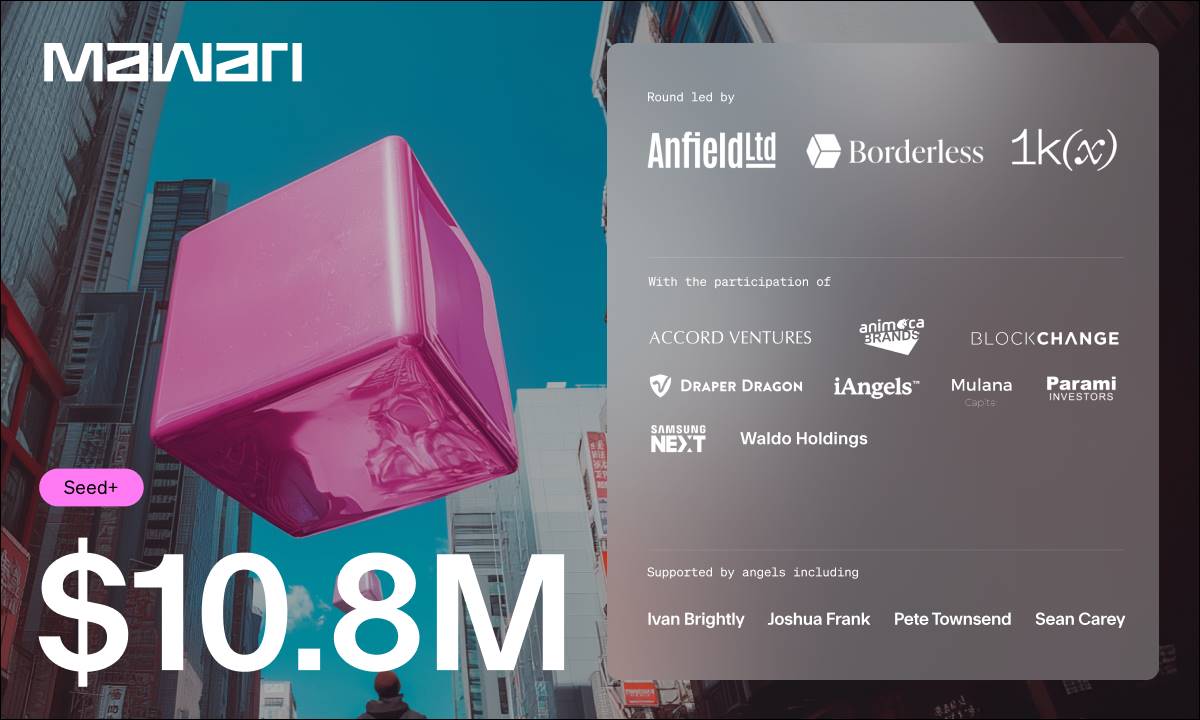
Mawari Network 是一个去中心化物理基础设施网络 (DePIN),在下一代空间计算领域处于领先地位。该公司在由 Anfield LTD、Borderless Capital 和 1kx 领投的战略融资轮中成功筹集了 1080 万美元。此次融资还得到了 Accord Ventures、Animoca Brands Japan、Blockchange Ventures、Draper Dragon、iAngels、Mulana Ventures、Parami Investors、Samsung Next 和 Waldo Holdings 的支持,以及知名天使投资人 Ivan Brightly、Joshua Frank、Pete Townsend 和 Sean Carey 的参与。

来自 Web2 和 Web3 行业的投资者和运营商正在支持 Mawari 在流媒体沉浸式体验方面的七年技术优势,以及他们利用去中心化物理基础设施网络 (DePIN) 快速且经济地将 3D 内容传送到全球设备的大胆愿景。Mawari 通过全球 GPU 网络实现实时 3D 内容流媒体传输到空间计算设备,如 Apple Vision Pro、Meta Quest 3 和 Meta Orion AR 眼镜,利用 Web3 元素如 DePIN 来克服传统集中式网络的局限性。Mawari 独特地定位于解决空间计算行业中的核心挑战,该行业以前被称为扩展现实 (XR),并专注于为实时 3D 应用程序提供可扩展的基础设施。成立于 2017 年的 Mawari,自那时以来推出了 Mawari Network——一个去中心化物理基础设施网络 (DePIN),也是唯一一个提供优化 AR/VR 体验的去中心化计算和存储资源的全栈空间计算平台。

“每次我看到 Mawari 正在构建的项目,我就会想到空间计算的未来将会是多么令人惊叹,”Helium 的联合创始人及 Borderless Capital 的合伙人 Sean Carey 说道。“Luis 和团队在过去七年中默默地开发了真正的技术,拥有一套令人叹为观止的系统。”

“Mawari 不仅是空间计算的早期先锋,也是第一批成功利用区块链和去中心化推动创新、提高效率和改善用户体验的 Web2 企业之一,”1kx 的创始合伙人 Christopher Heymann 说道。“他们深知去中心化计算在未来内容交付中的巨大潜力,我们很高兴能在这个旅程中支持他们。”

Mawari 将利用筹集的资金开拓新市场。团队将继续改进其空间流媒体 SDK,并持续投资于研发,以在提供去中心化空间计算方面保持竞争优势。此外,Mawari 还将扩大其业务发展工作,以便随着亚洲和美洲空间计算设备和编程的增长,接触到更多客户和市场。

“我们的愿景一直是将沉浸式体验带给每一个人,而这笔投资将使我们的平台能够服务于更广泛的社区,让他们与我们一起构建 3D 互联网,”Mawari 的创始人兼首席执行官 Luis Oscar Ramirez 说道。

Mawari 是 3D 流媒体的先驱,已获得三项专利,另外还有 11 项正在申请中。它拥有 40 个现有客户,包括 T-Mobile、Sapporo、KDDI、Netflix 和 BMW 等全球品牌。Mawari 最初通过自筹资金运营,每年平均收入为 150 万美元,计划在 2024 年第四季度进行节点许可销售,以实现去中心化并扩展其空间计算网络。

Mawari 的解决方案由两个关键组件组成:空间流媒体 SDK 和 Mawari 网络。空间流媒体 SDK 是一个强大的工具包,旨在与如 Unity 和 Unreal Engine 等流行开发环境无缝集成。它使创作者能够专注于他们最擅长的事情——制作引人入胜和创新的内容,而不必担心后端的复杂性。

与此同时,Mawari 网络是一个去中心化的、基于 GPU 的内容分发网络,专为空间计算而设计。它利用全球分布的 GPU 节点,这些节点战略性地分布在终端用户附近,以确保低延迟和最佳性能。这种架构使空间内容的高效分发和扩展成为可能,为全球用户提供无缝的高质量体验。
关于 Mawari

Mawari 正在为去中心化的空间计算和沉浸式内容交付树立标准。Mawari 网络通过全球计算节点网络支持沉浸式内容的实时流媒体传输。Mawari 正在优化空间计算,使创作者能够打造令人难忘的体验,彻底改变观众与数字内容的互动方式。

如需更多信息,用户可以访问: Website | X | Discord | LinkedIn

联系方式

Itai Elizur

Market Accross
[email protected]

Похожее

Trillion-Dollar Euphoria for Memory Sellers, Halved Profits for Memory Buyers

Title: The Trillion-Dollar Memory Seller's Carnival vs. The Buyer's Halved Profits On May 26, a stark contrast unfolded. While memory chipmaker Micron's market cap surged past $1 trillion, smartphone maker Xiaomi reported plummeting profits. Xiaomi's Q1 2026 profits fell 43% year-on-year. Executive Lu Weibing cited memory prices quadrupling from last year, adding roughly $210 to a phone's cost. To survive, Xiaomi is cutting entry-level models, sacrificing volume. Micron's stock, however, skyrocketed over 19% in a day, capping an 8x gain in a year. Major banks like UBS and JPMorgan issued bullish reports, raising price targets drastically. Their core thesis: Long-Term Agreements (LTAs) with AI cloud giants (Microsoft, Google, etc.) are eliminating the memory industry's notorious boom-bust cycle. By locking in fixed-price, multi-year contracts for AI-grade memory (HBM, server DDR5), these deals promise stable, utility-like earnings, justifying a higher valuation (20-30x P/E vs. the historical 8-15x). The article reveals a three-tiered memory market in 2026: 1) **AI Storage (HBM/DDR5/Enterprise SSD)**: Extreme shortage, soaring prices, LTAs. This is Micron's story. 2) **Mobile/Embedded Memory**: Also facing sharp price hikes as AI production crowds out capacity, severely pressuring phone makers like Xiaomi. 3) **PC Retail**: Some spot prices are falling due to channel inventory liquidation, creating a divergence from contract markets. The author questions if LTAs truly end the cycle. It hinges on sustained, hyper-growth AI demand. Micron's current profits are at a cycle peak, driven mostly by price hikes, not volume. If AI capital expenditure growth slows, the massive industry capacity expansion (e.g., Micron's $250B+ CapEx plan) could lead to a glut. Historically, using peak-cycle earnings for valuation is a classic trap. While the AI-driven structural shift might be real, the unanimous Wall Street euphoria warrants caution, echoing past bubbles like Cisco's in 2000. The memory seller's trillion-dollar狂欢 (carnival) continues, but the cycle's shadow remains.

链捕手3 мин. назад

Trillion-Dollar Euphoria for Memory Sellers, Halved Profits for Memory Buyers

链捕手3 мин. назад

Agentized OS: It's Not About AI, It's About the Foundation

The Agentic OS: Beyond AI, It's About the Foundational Stack In 2026, major operating systems like Android, iOS, HarmonyOS, and Windows are entering the "Agentic" era, integrating proactive AI assistants deeply into the system layer. However, the real competition lies not in the flashy AI features showcased at events, but in the three-layer foundational stack that enables them: the system-level AI Runtime, proprietary/controllable chips, and the on-device/cloud model matrix. The AI Runtime acts as the central scheduler, managing model inference, resource allocation, and exposing capabilities to apps. Controllable chips (e.g., Apple Silicon, Google Tensor, Huawei Kirin) are crucial for deep hardware-software co-optimization, determining the efficiency and experience limits of on-device Agents. The on-device/cloud model matrix provides the "intelligence," with proprietary, chip-optimized small models (like Gemini Nano, Apple's ~3B model) handling daily tasks locally for low latency, privacy, and reliability, while cloud models tackle complex requests. Deep synergy between these three layers enables key Agent differentiators: ultra-low latency and power efficiency, genuine "on-device first" privacy, access to system-level personal context across apps, and reliable performance as a system service even offline. OS vendors with strong integration across this stack (like Apple, Google, and Huawei) build a deeper moat. Beyond this core stack, long-term competitiveness depends on variables like structured App integration (e.g., App Intents/AppFunctions) for reliable multi-step workflows, and robust privacy frameworks that build user trust. This shift towards Agentic OS extends beyond phones and PCs to IoT, cars, and XR glasses via existing multi-device ecosystems. The race is won not in a keynote, but through generations of meticulously co-developed chips, models, and system software.

marsbit1 ч. назад

Agentized OS: It's Not About AI, It's About the Foundation

marsbit1 ч. назад

Why Sam Altman's 'Water and Electricity Theory' Sparks Copyright Controversy

OpenAI CEO Sam Altman's recent statement that "intelligence will become a utility like electricity or water" has sparked significant controversy, primarily around copyright issues and the nature of AI development. While positioning AI as a utility serves as a compelling narrative for infrastructure investors, critics argue the analogy is flawed in three key areas. First, there's a fundamental "property gap." Traditional utilities like water and power create new, physical infrastructure from scratch. In contrast, major AI models are trained by reorganizing vast amounts of existing human-created content—books, articles, code, etc.—often scraped from the web without explicit permission or compensation to creators. This "free acquisition, paid resale" model is seen by many as ethically problematic. Second, there's a "pricing gap." True public utilities are typically regulated to ensure universal service with non-discriminatory, cost-plus pricing. AI's token-based pricing, however, involves significant price discrimination (e.g., output tokens costing much more than input tokens) and is designed for revenue maximization, not equitable access. Third, a "governance gap" exists. Utilities operate under public oversight, while AI pricing and development are currently controlled by a few private companies. Furthermore, the industry's own shift toward buying licensed training data (e.g., deals with Reddit or news publishers) undermines its previous legal reliance on "fair use" for freely scraped data. In conclusion, while AI is indeed becoming a foundational technology, calling it a public utility remains contentious. The title requires not just scale and a pay-per-use model, but also credible solutions for data provenance, equitable pricing, and public governance.

marsbit1 ч. назад

Why Sam Altman's 'Water and Electricity Theory' Sparks Copyright Controversy

marsbit1 ч. назад

Торговля

Спот
Фьючерсы
活动图片