A taxa de câmbio de referência serve apenas para consulta e não está bloqueada. A taxa final será determinada pelo preço de execução real.
Estatísticas em Tempo Real de WAR
O preço ao vivo de WAR (WAR) é $0.00053 USD e a sua capitalização de mercado atual é de $-- USD.
Receba atualizações em tempo real de WAR/USD na HTX. Mantenha-se informado com os dados mais recentes e as tendências do mercado para tomar decisões de trading inteligentes. HTX, a sua fonte confiável de informações precisas sobre preços de criptomoedas.
Estatísticas Principais de WAR
Volume de 24h (USD)
$--
Variação de Preço Hoje
--
Oferta em Circulação (WAR)
1.00B
Registe-se e negoceie para ganhar recompensas no valor de até 1,500 USDT.Participe Agora
Desempenho do Preço de WAR
Acompanhe as variações de preço de WAR com visualizações de gráfico abrangendo 1 dia, 30 dias, 60 dias, 90 dias, 1 ano e o período desde que foi listado na HTX.Ver mais dados sobre os preços de WAR
Horário
Alterar
Variação (%)
Preço mais alto
Preço mais baixo
No data
Informações de Mercado de WAR
Obtenha os detalhes mais recentes do preço de WAR na HTX: alta e baixa em 24 horas, máxima histórica (ATH) e variação percentual diária do preço.
24h Baixo
$0
24h Alto
$0
Máximo histórico
$0
Capitalização de Mercado
$0.00
Volume de 24h (USD)
$--
Oferta Circulante
--
O que é WAR?
WAR é um projeto de moeda meme baseado na blockchain Solana com temas em torno da geopolítica, resistência financeira e poder americano.
É super fácil comprar WAR na HTX. Basta clicar aqui para ver um guia completo sobre como comprar WAR com facilidade.
Mercados em Tempo Real de WAR
Veja os preços em tempo real de WAR nos mercados à vista da HTX. Alterne entre os mercados à vista e de futuros para comparar instantaneamente os preços ao vivo e as variações de preço em 24 horas.
Com base no desempenho histórico de WAR, a nossa ferramenta de previsão estima que o preço de WAR (WAR) poderá atingir -- até --.
Preço Previsto de WAR em --
A nossa previsão mais recente indica que o preço de WAR (WAR) aumentará para -- até --, com uma variação de preço de --% e um ROI acumulado de aproximadamente --%.
Compre o seu primeiro WAR na HTXRegiste-se Agora
Perguntas Frequentes sobre WAR
Qual é o preço de WAR (WAR) hoje?
O preço atual de WAR (WAR) é $0.00053 USD.
Qual é a capitalização de mercado de WAR (WAR)?
A capitalização de mercado atual de WAR (WAR) é de $0.00 USD, calculada multiplicando a sua oferta em circulação pelo seu preço atual.
Qual é a oferta em circulação de WAR (WAR)?
A oferta em circulação atual de WAR (WAR) é de -- WAR.
Qual é a máxima histórica de WAR (WAR)?
Em 2026-08-21, a máxima histórica de WAR (WAR) é de $0 USD.
Qual é o volume de negociação em 24h de WAR (WAR)?
O volume de negociação em 24 horas de WAR (WAR) é de -- USD na HTX.
Posso comprar WAR (WAR) na HTX?
Sim, a HTX oferece taxas de trading líderes do setor e alta liquidez, garantindo uma experiência de compra de WAR (WAR) suave e segura.
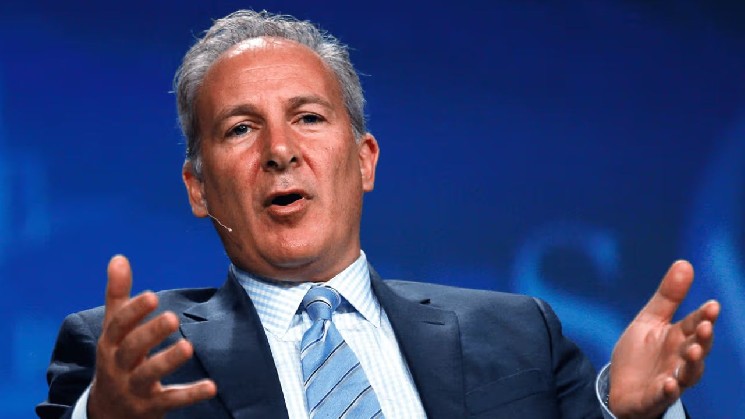
Peter Schiff, CEO of Euro Pacific Asset Management and a long-time Bitcoin critic, argues that Bitcoin is performing as "anti-gold," falling in price while traditional safe-haven assets like gold and silver rise. He points to a yearly performance where gold is up 9% and silver 11%, while Bitcoin is down 11%, citing this divergence as proof that Bitcoin's narrative as "digital gold" is flawed.
Schiff links the surge in precious metals to geopolitical risks, war, and resulting inflationary pressures from higher oil prices, which drive investors to traditional safe havens. In contrast, Bitcoin recently fell below $64,000, extending its period of underperformance against major asset classes he tracks.
This is not the first time Schiff has challenged Bitcoin's correlation with gold, having previously stated the connection "was never real." He has also warned of significant potential losses for corporate Bitcoin holders like MicroStrategy. Bitcoin proponents counter that short-term price divergence during a risk-off period does not settle the long-term debate on Bitcoin's role as a store of value.
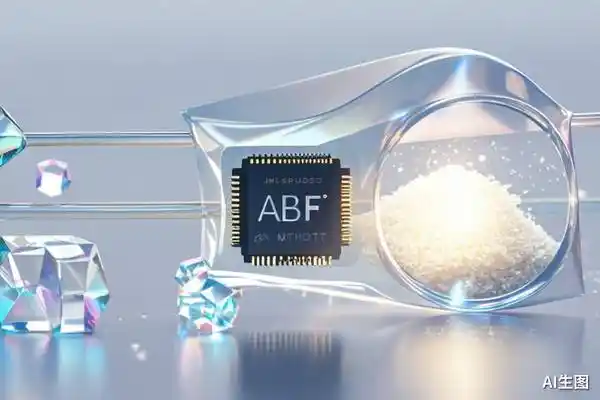
"China's Tech Independence: A Battle from Lithography Machines to ABF Film"
In August 2026, Japan's Ajinomoto announced a 30% supply cut of ABF film to Chinese mainland clients, causing industry-wide shock and fears of price hikes and shortages in the semiconductor supply chain. That same year, Chinese company Lotus Holdings, known for its MSG business, acquired a small domestic ABF film startup for 103 million yuan, aiming to change this passive situation.
ABF film is a core insulating material for advanced CPU, GPU, and AI chip packages. Ajinomoto, originally a food flavoring company, has monopolized over 95% of the global ABF film market for nearly 30 years, deriving its technology from byproducts of monosodium glutamate production. With AI chips consuming 5-10 times more ABF film than traditional chips, the supply-demand gap is widening. Ajinomoto's supply cut to China, where domestic ABF film production accounts for less than 5%, directly threatens the production of domestic high-end AI chips and their substrates.
This incident highlights a crucial but often overlooked truth: the vulnerabilities in China's quest for technological self-reliance extend beyond headline areas like lithography machines to critical but seemingly minor components—insulating films, photoresists, electronic specialty gases, etc.
The article frames China's tech independence as a multi-front war. While major breakthroughs have been achieved in chip design (e.g., Huawei's HiSilicon), foundry (e.g., SMIC), and memory chips (e.g., YMTC), countless smaller "Ajinomoto-style" chokepoints remain. Lotus Holdings' acquisition represents a significant shift: the battle is no longer fought only by tech giants but has become a collective, industry-wide effort involving companies from diverse backgrounds.
Historically, external blockades have often spurred China's technological breakthroughs, as seen with Huawei's Kirin chips and YMTC's 3D NAND flash memory. Ajinomoto's supply cut, while a short-term challenge, may similarly catalyze domestic innovation in ABF film and other critical materials. The path to technological sovereignty is long and arduous, requiring sustained patience and investment to fill every gap in the complex supply chain. Lotus's move is not an immediate solution but a step towards that future, symbolizing a broader, relentless march toward independence.
Optimism Foundation has proposed reallocating the remaining 546.9 million OP tokens from the user airdrop pool into a new "Strategic Ecosystem Fund," a move requiring a governance vote from August 14 to 20. The fund would target institutional partnerships and on-chain growth. While support currently leads with ~9.1 million OP votes versus ~4.26 million opposed, participation falls short of the ~16.54 million quorum. The proposal follows a strategic shift away from broad user airdrops and Retro Funding, with no new airdrops since May and reduced annual token issuance. Critics argue it centralizes control and diminishes user incentives, as highlighted by a major voter's first-ever opposition vote. OP's price hovers around $0.08, with its TVL significantly down from peak levels. The outcome remains uncertain pending final voter turnout.
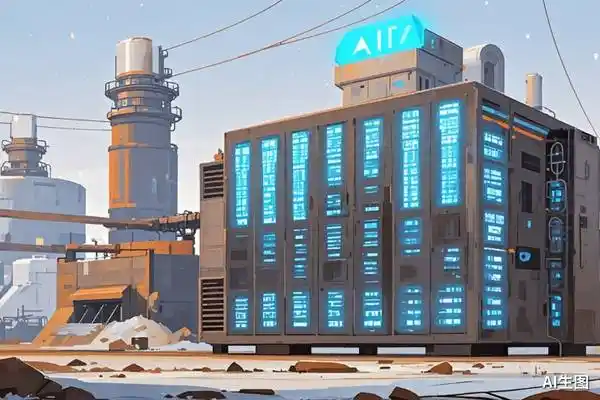
A Cold War-era uranium enrichment site in Ohio, once used for atomic bomb production, is being transformed into the world's largest AI supercomputing facility. NVIDIA, OpenAI, and SoftBank are leading this project, which plans an ultimate power capacity of 8 gigawatts—nearly two-thirds of the total power used by 82 of the world's top AI data centers today.
NVIDIA's CEO Jensen Huang has committed $1.5 billion in funding and a 20-year credit guarantee for the infrastructure. OpenAI has signed a 20-year lease to fully utilize the facility's computing power. SoftBank is investing heavily in land acquisition, construction, and grid upgrades, promising to add 1 gigawatt of new power generation.
Huang argues that the next major bottleneck for AI advancement is no longer chip supply, but the availability of land, power, and data center space—resources that new AI companies often lack the long-term credibility to secure. By leveraging NVIDIA's market position and credit to lock down these critical physical resources for decades, the company ensures a steady, long-term demand for its GPUs within the facility. The infrastructure, with a 20-year lifespan, will host new generations of NVIDIA hardware every few years, creating recurring revenue streams. Analysts estimate this project alone could represent a $600 billion revenue opportunity for NVIDIA from OpenAI by 2030.
This move signifies a strategic shift in the AI race: competition is expanding from semiconductor technology to securing the foundational elements of power and real estate on a massive scale.
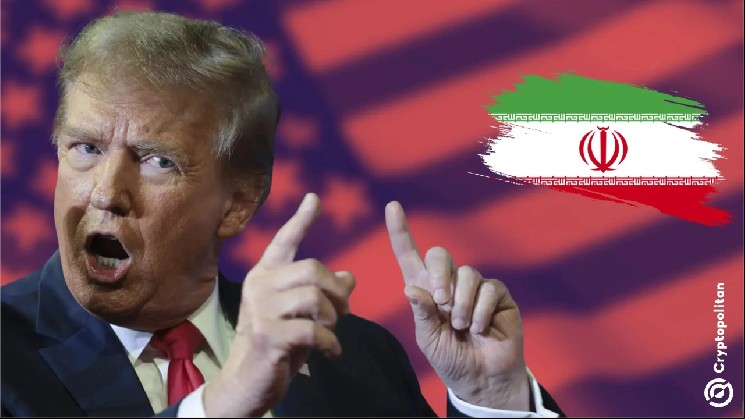
Iran is considering striking U.S. military targets in Europe should former President Donald Trump escalate the ongoing war, with Bulgaria and Cyprus among the potential locations for retaliatory actions. Amid rising tensions, Tehran has also evaluated the possibility of attacking submarine fiber-optic cables in the Strait of Hormuz. Concurrently, major Bitcoin holders have resumed accumulating the cryptocurrency, adding approximately 43,000 BTC, worth $2.75 billion, over the past 60 days.
cryptonews.ru1天前
Threads
Bem-vindo à Comunidade HTX. Aqui, você pode se manter informado sobre os desenvolvimentos mais recentes da plataforma e ter acesso a insights profissionais do mercado. As opiniões dos utilizadores sobre o preço de WAR (WAR) são apresentadas abaixo.
Perguntas Relacionadas
Bem-vindo à FAQ de Cripto. As perguntas e respostas dos utilizadores sobre WAR (WAR) são apresentadas abaixo.