O preço ao vivo de Raydium (RAY) é $0.63 USD e a sua capitalização de mercado atual é de $-- USD.
Receba atualizações em tempo real de RAY/USD na HTX. Mantenha-se informado com os dados mais recentes e as tendências do mercado para tomar decisões de trading inteligentes. HTX, a sua fonte confiável de informações precisas sobre preços de criptomoedas.
Acompanhe as variações de preço de Raydium com visualizações de gráfico abrangendo 1 dia, 30 dias, 60 dias, 90 dias, 1 ano e o período desde que foi listado na HTX.Ver mais dados sobre os preços de Raydium
Horário
Alterar
Variação (%)
Preço mais alto
Preço mais baixo
No data
Informações de Mercado de RAY
Obtenha os detalhes mais recentes do preço de Raydium na HTX: alta e baixa em 24 horas, máxima histórica (ATH) e variação percentual diária do preço.
24h Baixo
$0
24h Alto
$0
Máximo histórico
$0
Capitalização de Mercado
$0.00
Volume de 24h (USD)
$--
Oferta Circulante
--
O que é RAY?
Raydium é um criador de mercado automatizado (AMM) e fornecedor de liquidez construído na blockchain Solana para a exchange descentralizada (DEX) Serum. Ao contrário de outros AMMs, o Raydium fornece liquidez em cadeia para um livro de ordens centralizado, o que significa que os fundos depositados no Raydium são convertidos em ordens limite que ficam nos livros de ordens da Serum. Isto dá aos LPs do Raydium acesso a todo o fluxo de ordens da Serum, bem como à sua liquidez existente.
É super fácil comprar RAY na HTX. Basta clicar aqui para ver um guia completo sobre como comprar Raydium com facilidade.
Mercados em Tempo Real de RAY
Veja os preços em tempo real de Raydium nos mercados à vista da HTX. Alterne entre os mercados à vista e de futuros para comparar instantaneamente os preços ao vivo e as variações de preço em 24 horas.
Com base no desempenho histórico de Raydium, a nossa ferramenta de previsão estima que o preço de Raydium (RAY) poderá atingir -- até --.
Preço Previsto de RAY em --
A nossa previsão mais recente indica que o preço de Raydium (RAY) aumentará para -- até --, com uma variação de preço de --% e um ROI acumulado de aproximadamente --%.
Compre o seu primeiro RAY na HTXRegiste-se Agora
Perguntas Frequentes sobre RAY
QQual é o preço de Raydium (RAY) hoje?
AO preço atual de Raydium (RAY) é $0.63 USD.
QQual é a capitalização de mercado de Raydium (RAY)?
AA capitalização de mercado atual de Raydium (RAY) é de $0.00 USD, calculada multiplicando a sua oferta em circulação pelo seu preço atual.
QQual é a oferta em circulação de Raydium (RAY)?
AA oferta em circulação atual de Raydium (RAY) é de -- RAY.
QQual é a máxima histórica de Raydium (RAY)?
AEm 2026-06-16, a máxima histórica de Raydium (RAY) é de $0 USD.
QQual é o volume de negociação em 24h de Raydium (RAY)?
AO volume de negociação em 24 horas de Raydium (RAY) é de -- USD na HTX.
QPosso comprar Raydium (RAY) na HTX?
ASim, a HTX oferece taxas de trading líderes do setor e alta liquidez, garantindo uma experiência de compra de Raydium (RAY) suave e segura.
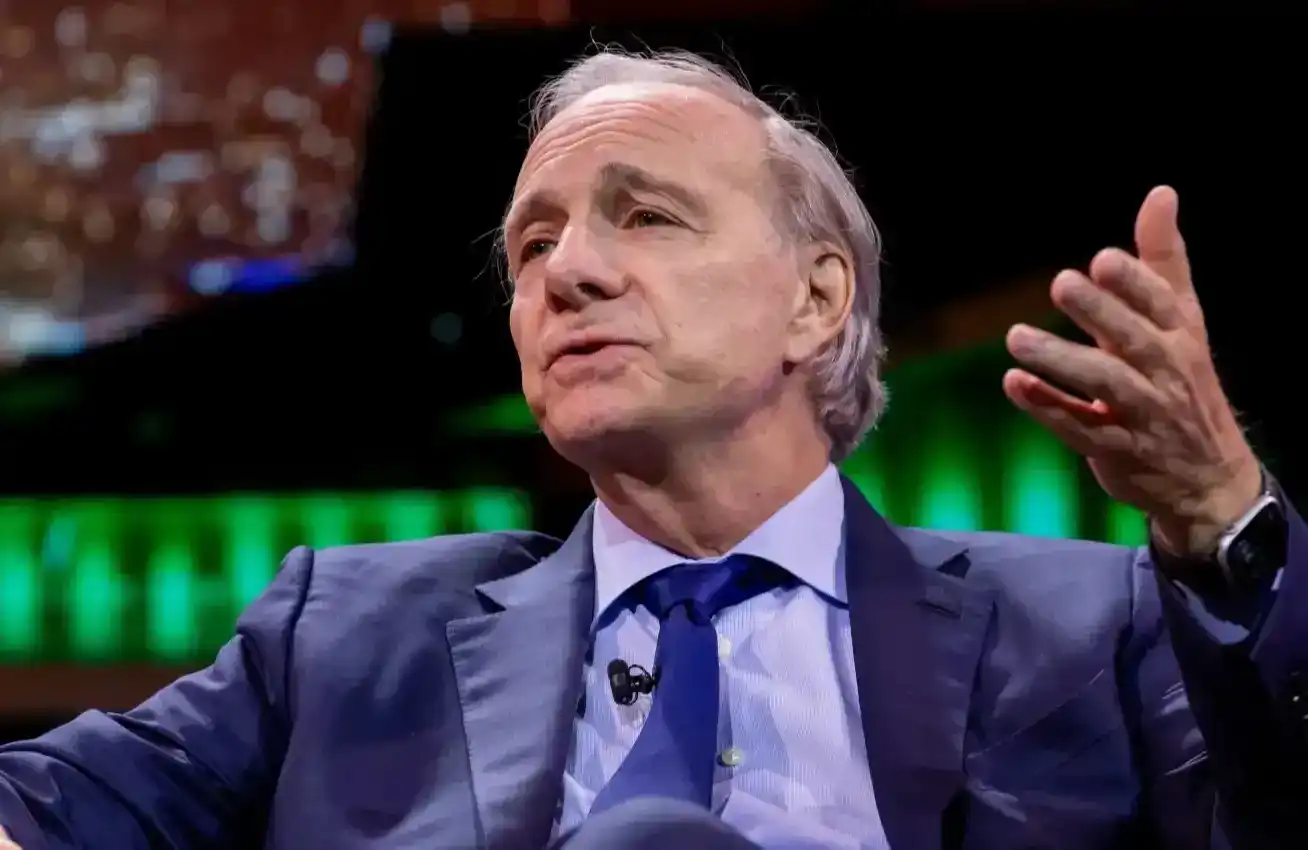
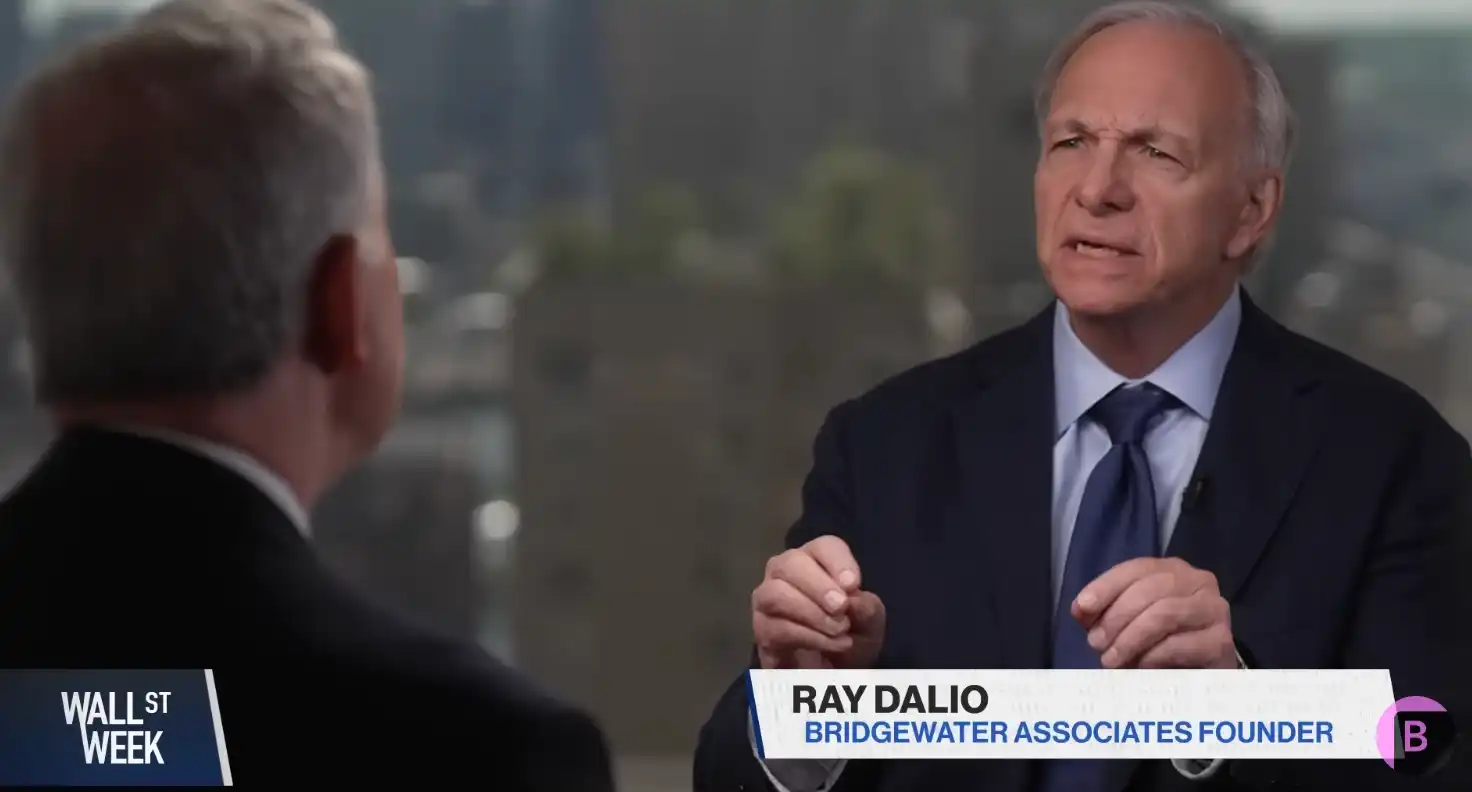
Ray Dalio argues that the world is in the early stages of a prolonged "world war" that is unlikely to end soon. This conflict is not a single declared war but a combination of multiple regional hot wars (e.g., Russia-Ukraine, Israel-Gaza, US-Iran) and non-shooting wars (economic, technological, capital, and geopolitical influence wars). These interconnected conflicts are reshaping global order, driven by shifting alliances, resource competition, and the weaponization of critical trade routes like the Strait of Hormuz.
Key powers are aligning into opposing blocs: China, Russia, Iran, and North Korea versus the US, Israel, Gulf states, Japan, and Australia. Dalio emphasizes that victory in such conflicts depends not on absolute strength but on which side can endure prolonged pain and resource depletion. He warns that the US, while powerful, is overextended globally and may struggle to manage multiple fronts simultaneously.
The current phase resembles historical pre-war periods (e.g., 1913–1914, 1938–1939), where economic and military tensions escalate into broader conflicts. Dalio urges observers to look beyond short-term events and focus on structural shifts: rising debt, internal political pressures, and the erosion of the US-led multilateral order into a "might-makes-right" system. He assesses a >50% probability of at least one major conflict escalating within five years, including scenarios in Ukraine, Korea, or the South China Sea.
In a comprehensive interview, Ray Dalio, founder of Bridgewater Associates, analyzes whether the US can escape its historical "great cycle" of decline. He argues the nation faces a confluence of structural pressures, not a single crisis.
Key points include:
1. **The Debt Cycle:** Unsustainable fiscal deficits and rising debt-to-income ratios are eroding national capacity, constraining spending on defense, welfare, and global commitments.
2. **Internal Political & Social Conflict:** Deep wealth gaps and value differences fuel intense political polarization. Addressing deficits becomes a zero-sum political battle over "who pays and who benefits," making consensus nearly impossible.
3. **Erosion of the World Order:** The post-1945 US-led, rules-based international system is breaking down, reverting to a state of great-power competition and conflict where raw power, not multilateral rules, resolves disputes.
4. **Currency & Safe Assets:** While the Chinese yuan may gain use as a medium of exchange, Dalio doubts it will become a primary global store of wealth. In an era of fiat currency debasement, assets like gold are regaining prominence as safe havens.
5. **AI's Dual Role:** Artificial Intelligence could boost productivity and help manage debt, but it also risks exacerbating wealth inequality, job displacement, and geopolitical tensions.
Dalio concludes the US is in a period of increasing disorder, with debt, domestic strife, and international realignments converging. The critical factors for national recovery are foundational: improving education and civic素养, fostering social cohesion and productivity, and avoiding war—both civil and international. The path forward depends less on markets and more on these fundamental societal choices.
Ray Dalio, founder of Bridgewater Associates, discusses shifting global power dynamics and AI competition between China and the US. Following recent visits to China by world leaders, Dalio observes a decline in the perceived reliability of the US as a global power and a rise in China's influence. He suggests a modern "tribute system" is emerging, where nations acknowledge China's strength, impacting global trade and security. This geopolitical shift creates market uncertainty, leading Dalio to advise investors to diversify assets, including holding gold.
Regarding AI, Dalio contrasts the approaches of the two nations. He states China views AI as a public utility, akin to electricity, aiming for broad workforce accessibility over immediate profitability. Chinese companies focus on widespread adoption and productivity gains, following a strategy similar to their success in the electric vehicle industry. In contrast, US AI firms are more focused on commercialization and subscription models. A Morgan Stanley executive noted the Chinese perspective lacks fear of AI displacing jobs, instead emphasizing its use to drive development and dominate future industries like robotics.
Ray Dalio, founder of Bridgewater Associates, discusses shifting global power dynamics and the AI competition between the U.S. and China. He argues U.S. credibility as a global power willing to fight for its interests is declining, while China is accumulating wealth and influence. Dalio observes a trend where world leaders visit China, which he compares to a modern "tribute system"—not oppressive, but a hierarchy where nations acknowledge China's strength, affecting trade and security. This shift creates market uncertainty, prompting investors to seek asset diversification, including gold.
Regarding AI, Dalio contrasts the U.S. and Chinese approaches. U.S. companies like OpenAI focus on monetization and subscriptions for revenue. In contrast, China treats AI as a public utility, akin to electricity or water, aiming for widespread worker accessibility over immediate profitability. He draws a parallel to China's electric vehicle industry success, where companies like BYD achieved rapid market growth. Dalio and JPMorgan's Mary Callahan Erdoes note China lacks U.S.-style fear of AI displacing jobs; instead, it focuses on leveraging AI for development and dominance in next-generation industries like robotics.
In his latest notes, Ray Dalio addresses a critical question for investors amid the AI-driven stock market surge: how should one allocate assets during a transformative technological revolution? Dalio emphasizes that technological advancement does not automatically make related stocks attractive. Historical tech cycles—marked by excitement, crowding, volatility, and eventual shakeouts—show that even long-term winners like Microsoft and Apple experienced severe drawdowns. Today's AI sector faces similar uncertainties: overinvestment, intensifying competition, geopolitical tensions (e.g., Taiwan's chip supply), tax policy shifts, anti-AI sentiment, and potential disruption from future technologies like quantum computing.
Dalio's core argument focuses on the highly concentrated market structure, where a few tech giants dominate major indices. He warns investors against unknowingly holding concentrated, correlated exposures. Instead of chasing a handful of AI leaders, he advocates for a robust, diversified portfolio of 15 or more high-quality, uncorrelated investments, risk-balanced to match an investor's volatility tolerance. Mathematically, such diversification significantly improves the risk-return ratio—for example, holding 15 uncorrelated assets can boost the ratio by over four times compared to a single concentrated bet.
Dalio cautions that future equity returns appear low, with his bubble indicator suggesting real returns could be negative over the next 5-10 years. He stresses that knowing what you don't know is as important as knowing what you do. In an environment of high uncertainty and concentration, avoiding large, concentrated bets on AI stocks is prudent. The optimal strategy is disciplined diversification—the "holy grail" of investing—to navigate this technologically driven cycle with lower risk and comparable or better returns.
marsbit8小时前
Threads
Bem-vindo à Comunidade HTX. Aqui, você pode se manter informado sobre os desenvolvimentos mais recentes da plataforma e ter acesso a insights profissionais do mercado. As opiniões dos utilizadores sobre o preço de Raydium (RAY) são apresentadas abaixo.
Perguntas Relacionadas
Bem-vindo à FAQ de Cripto. As perguntas e respostas dos utilizadores sobre Raydium (RAY) são apresentadas abaixo.