A taxa de câmbio de referência serve apenas para consulta e não está bloqueada. A taxa final será determinada pelo preço de execução real.
Estatísticas em Tempo Real de HOME
O preço ao vivo de Defi.app (HOME) é $0.0066 USD e a sua capitalização de mercado atual é de $-- USD.
Receba atualizações em tempo real de HOME/USD na HTX. Mantenha-se informado com os dados mais recentes e as tendências do mercado para tomar decisões de trading inteligentes. HTX, a sua fonte confiável de informações precisas sobre preços de criptomoedas.
Estatísticas Principais de Defi.app
Volume de 24h (USD)
$--
Variação de Preço Hoje
--
Oferta em Circulação (HOME)
4.30B
Registe-se e negoceie para ganhar recompensas no valor de até 1,500 USDT.Participe Agora
Desempenho do Preço de HOME
Acompanhe as variações de preço de Defi.app com visualizações de gráfico abrangendo 1 dia, 30 dias, 60 dias, 90 dias, 1 ano e o período desde que foi listado na HTX.Ver mais dados sobre os preços de Defi.app
Horário
Alterar
Variação (%)
Preço mais alto
Preço mais baixo
No data
Informações de Mercado de HOME
Obtenha os detalhes mais recentes do preço de Defi.app na HTX: alta e baixa em 24 horas, máxima histórica (ATH) e variação percentual diária do preço.
24h Baixo
$0
24h Alto
$0
Máximo histórico
$0
Capitalização de Mercado
$0.00
Volume de 24h (USD)
$--
Oferta Circulante
--
O que é HOME?
A "Aplicação Tudo" da Crypto que torna o DeFi tão fácil como usar um iPhone, combinando trocas instantâneas entre cadeias, agricultura de rendimento e negociação de perps com zero taxas de gas, zero pontes e total auto-custódia.
É super fácil comprar HOME na HTX. Basta clicar aqui para ver um guia completo sobre como comprar Defi.app com facilidade.
Mercados em Tempo Real de HOME
Veja os preços em tempo real de Defi.app nos mercados à vista da HTX. Alterne entre os mercados à vista e de futuros para comparar instantaneamente os preços ao vivo e as variações de preço em 24 horas.
Com base no desempenho histórico de Defi.app, a nossa ferramenta de previsão estima que o preço de Defi.app (HOME) poderá atingir -- até --.
Preço Previsto de HOME em --
A nossa previsão mais recente indica que o preço de Defi.app (HOME) aumentará para -- até --, com uma variação de preço de --% e um ROI acumulado de aproximadamente --%.
Compre o seu primeiro HOME na HTXRegiste-se Agora
Perguntas Frequentes sobre HOME
Qual é o preço de Defi.app (HOME) hoje?
O preço atual de Defi.app (HOME) é $0.0066 USD.
Qual é a capitalização de mercado de Defi.app (HOME)?
A capitalização de mercado atual de Defi.app (HOME) é de $0.00 USD, calculada multiplicando a sua oferta em circulação pelo seu preço atual.
Qual é a oferta em circulação de Defi.app (HOME)?
A oferta em circulação atual de Defi.app (HOME) é de -- HOME.
Qual é a máxima histórica de Defi.app (HOME)?
Em 2026-08-20, a máxima histórica de Defi.app (HOME) é de $0 USD.
Qual é o volume de negociação em 24h de Defi.app (HOME)?
O volume de negociação em 24 horas de Defi.app (HOME) é de -- USD na HTX.
Posso comprar Defi.app (HOME) na HTX?
Sim, a HTX oferece taxas de trading líderes do setor e alta liquidez, garantindo uma experiência de compra de Defi.app (HOME) suave e segura.
On July 23, the Fields Medal, the highest global mathematics award, was awarded to two Chinese mathematicians, Wang Hong and Deng Yu, both undergraduate classmates from Peking University's class of 2007. This marks the first time mathematicians who completed their undergraduate studies in mainland China have won the prize, with two laureates in the same year.
Following the announcement, renowned mathematician Shing-Tung Yau publicly invited Wang and Deng to return to China to teach at Tsinghua University's Qiuzhen College. This invitation is the latest episode in a decades-long rivalry between Tsinghua and Peking University (PKU) for supremacy in Chinese mathematics. The competition traces back to a 1952 national university restructuring that transferred Tsinghua's entire mathematics department to PKU, leaving Tsinghua without a math program for nearly 30 years until its reinstatement in 1979.
The rivalry intensified in 2005 with a public falling-out between Yau and his former student, PKU professor Gang Tian. Subsequently, Yau shifted his efforts to building Tsinghua's mathematics program from the ground up. He established the Yau Mathematical Sciences Center in 2009 and founded the Qiuzhen College in 2021, implementing an elite, accelerated "Math Leadership Program" to recruit prodigies as young as middle school students.
The competition spans multiple fronts: recruiting top junior high and high school students from math olympiads, luring renowned scholars from overseas, and securing research funding. A new and fierce battleground has emerged in AI and mathematical reasoning. Both universities are heavily investing in AI research to enhance large language models' mathematical capabilities, with Tsinghua collaborating on projects like the STARE algorithm and PKU developing specialized models for geometry.
Despite the intense competition, this rivalry has arguably elevated China's overall standing in mathematics. Chinese mathematicians now frequently publish in top journals and win major international awards. At the recent 17th Yau College Students Mathematics Contests, PKU students swept the top individual awards. Yau, presenting the awards, emphasized the need for inter-university collaboration to advance Chinese mathematics.
The landscape is now shifting with the rise of AI in mathematical research. As AI begins to generate proofs at an unprecedented rate, the traditional metrics of competition between institutions may become less relevant. The future for mathematicians, as noted by Terence Tao, is navigating an era of "proof surplus" driven by AI, presenting a new common challenge that transcends university rivalries.
"Stock Trading Becomes 'Coin Trading': A Market's Bizarre Reversal"
The global stock market, particularly in tech sectors, is undergoing a radical transformation, increasingly mirroring the volatile, narrative-driven mechanics of the cryptocurrency world. This shift was starkly illustrated by the dramatic crash of South Korea's KOSPI index in July 2026, where leveraged ETFs tied to stocks like SK Hynix triggered massive, rapid liquidations, devastating hundreds of thousands of retail investors, many of them young.
This "crypto-fication" of equities began as disillusioned cryptocurrency traders migrated to stock markets, bringing with them their speculative playbook: chasing high-beta narratives like AI and semiconductor cycles, relying on social media for investment cues, and employing heavy leverage. Ironically, while these traders sought the perceived safety of stocks with fundamentals, their methods turned parts of the equity market—especially in Korea, the US, and Japan—into arenas of extreme speculation. Stocks like SK Hynix experienced price collapses ("halving") in just over a month, a pace even faster than Bitcoin's historical crashes.
The core of this change is the primacy of narrative over traditional valuation. Complex company analysis is reduced to viral slogans about AI's infinite demand, driving concentrated inflows into thematic sectors. This is amplified by leverage, particularly through risky single-stock leveraged ETFs, which create vicious cycles of forced selling during downturns. Meanwhile, social media algorithms promote stories of overnight riches, drawing in inexperienced investors.
In a paradoxical twist, Bitcoin, through institutional adoption and ETFs, is becoming relatively more stable, with its volatility now sometimes lower than major tech stocks. The market has reached an absurd crossover: stocks are acting like speculative crypto assets, while crypto strives for the legitimacy of traditional finance. The article concludes that this represents a "degeneration" of market rationality, where trading a story's heat has supplanted investing in future profits, leaving a trail of financial wreckage in its wake.
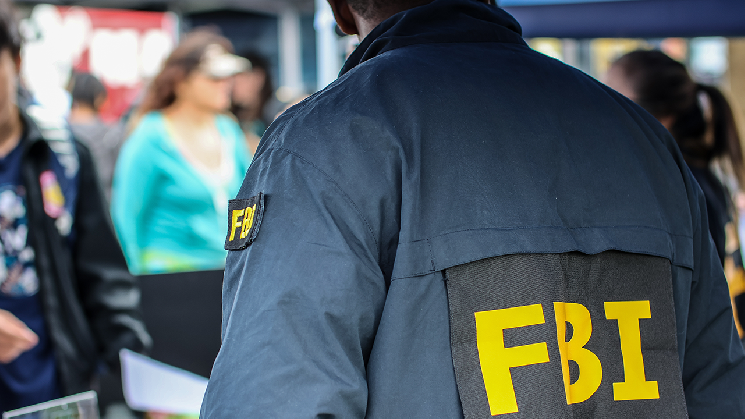
FBI agent Patrick Stephen Yaroch, who specialized in counterintelligence and espionage cases, was arrested for stealing approximately $1.18 million in cryptocurrency from a foreign national security suspect. Yaroch, who had access to high-level intelligence systems, allegedly found the suspect's wallet seed phrases during an investigation in late 2024/early 2025. Using these phrases, he transferred funds to his own controlled wallets over 10-12 transactions. The investigation began when Yaroch confessed his actions to a DOJ official in July 2025, stating poor decisions had "eaten away at him." The FBI tracked the funds to accounts on Kraken and the Suilend DeFi protocol, later seizing about $925,000. Investigators also found ChatGPT discussions on retiring abroad with the money and undisclosed travel plans to Portugal. Yaroch was fired by the FBI and faces federal charges of transporting and selling stolen property.
Chinese home furnishing listed companies are increasingly turning to AI and semiconductor cross-border ventures to revive their fortunes amid declining core businesses.
A prominent example is PVC flooring giant **Elegant Home Furnishing**, whose stock price skyrocketed with 10 consecutive trading limits after announcing a plan to acquire a majority stake in **Ou Kang Nuo**, a semiconductor storage testing equipment and services company. Despite Elegant Home's own financial struggles—including recent losses and tight cash flow—the acquisition, funded through asset sales and loans, has dramatically boosted its market value. The deal involves a cross-shareholding structure with Ou Kang Nuo's controlling shareholder.
This trend is widespread. Over the past year, numerous home furnishing firms with stagnant main operations have seen their stock prices surge after announcing moves into hot sectors like AI, semiconductors, or computing power.
Key cases include:
* **Markor Home Furnishings** ("high-end home furnishing first share"), after years of heavy losses, acquired an AI server high-speed copper cable company and later introduced AI computing power investors.
* **Zhenai Meijia** ("blanket king") became the first A-listed manufacturer controlled by an AI large model company following a takeover.
* **Fasilon** (integrated ceiling) saw its stock soar after establishing an AI subsidiary.
* **Jinlong Decoration** experienced multiple trading limits after being linked to "commercial aerospace" and "AI computing," despite clarifying these segments contribute less than 1% of its business.
Statistics show over 20 A-share companies announced semiconductor crossovers in 2025, with home furnishing and building materials firms being the most active. This shift is largely driven by pressures from the real estate downturn, shrinking overseas demand, and trade tariffs, pushing companies to seek growth through trendy concepts rather than core business improvement.
However, the article warns that such speculative frenzies often end when the hype fades, leaving stock prices to eventually reflect the companies' weak fundamentals, as seen in Jinlong Decoration's subsequent sharp price correction. The repeated attempts to "ride the trend" highlight a desperate struggle for survival in a challenging traditional industry.
Bem-vindo à Comunidade HTX. Aqui, você pode se manter informado sobre os desenvolvimentos mais recentes da plataforma e ter acesso a insights profissionais do mercado. As opiniões dos utilizadores sobre o preço de Defi.app (HOME) são apresentadas abaixo.
Perguntas Relacionadas
Bem-vindo à FAQ de Cripto. As perguntas e respostas dos utilizadores sobre Defi.app (HOME) são apresentadas abaixo.