A taxa de câmbio de referência serve apenas para consulta e não está bloqueada. A taxa final será determinada pelo preço de execução real.
Estatísticas em Tempo Real de HD
O preço ao vivo de Home Depot Inc (Derivatives) (HD) é $0.04 USD e a sua capitalização de mercado atual é de $-- USD.
Receba atualizações em tempo real de HD/USD na HTX. Mantenha-se informado com os dados mais recentes e as tendências do mercado para tomar decisões de trading inteligentes. HTX, a sua fonte confiável de informações precisas sobre preços de criptomoedas.
Estatísticas Principais de Home Depot Inc (Derivatives)
Volume de 24h (USD)
$--
Variação de Preço Hoje
--
Oferta em Circulação (HD)
--
Registe-se e negoceie para ganhar recompensas no valor de até 1,500 USDT.Participe Agora
Obtenha os detalhes mais recentes do preço de Home Depot Inc (Derivatives) na HTX: alta e baixa em 24 horas, máxima histórica (ATH) e variação percentual diária do preço.
24h Baixo
$0
24h Alto
$0
Máximo histórico
$0
Capitalização de Mercado
$0.00
Volume de 24h (USD)
$--
Oferta Circulante
--
O que é HD?
Home Depot Inc (Derivatives) (HD) is a cryptocurrency . Home Depot Inc (Derivatives) has a current supply of 0. The last known price of Home Depot Inc (Derivatives) is 336.36219167 USD and is down -0.21 over the last 24 hours. It is currently trading on 38 active market(s) with $0.00 traded over the last 24 hours.
Com base no desempenho histórico de Home Depot Inc (Derivatives), a nossa ferramenta de previsão estima que o preço de Home Depot Inc (Derivatives) (HD) poderá atingir -- até --.
Preço Previsto de HD em --
A nossa previsão mais recente indica que o preço de Home Depot Inc (Derivatives) (HD) aumentará para -- até --, com uma variação de preço de --% e um ROI acumulado de aproximadamente --%.
Compre o seu primeiro HD na HTXRegiste-se Agora
Perguntas Frequentes sobre HD
Qual é o preço de Home Depot Inc (Derivatives) (HD) hoje?
O preço atual de Home Depot Inc (Derivatives) (HD) é $0.04 USD.
Qual é a capitalização de mercado de Home Depot Inc (Derivatives) (HD)?
A capitalização de mercado atual de Home Depot Inc (Derivatives) (HD) é de $0.00 USD, calculada multiplicando a sua oferta em circulação pelo seu preço atual.
Qual é a oferta em circulação de Home Depot Inc (Derivatives) (HD)?
A oferta em circulação atual de Home Depot Inc (Derivatives) (HD) é de -- HD.
Qual é a máxima histórica de Home Depot Inc (Derivatives) (HD)?
Em 2026-08-26, a máxima histórica de Home Depot Inc (Derivatives) (HD) é de $0 USD.
This article profiles GongShengZhiXing, a startup founded by 1996-born Ding Pengxiang with a core team of Ph.D. students, all in their twenties. They are developing an end-to-end, integrated "brain" (base model) for bipedal humanoid robots, focusing on full-body dynamic coordination rather than the industry's more common modular, layered approach.
The team's stance is that for humanoids to integrate into human environments, an end-to-end model—where a single system handles perception, decision-making, and control directly—is ultimately more efficient and scalable than layered architectures that separate high-level "brain" and low-level "cerebellum" functions. They argue layered systems create information bottlenecks.
A key demo shows their robot driving a go-kart at high speed, demonstrating synchronized hand-eye-foot coordination and multi-contact balance—a complex task highlighting their focus on whole-body dynamics over simple kinematics. Technically, their model outputs commands at the joint level and incorporates a "Motion Expert" module and techniques like DriftDistill to simultaneously learn task completion and physical stability from data.
Acknowledging challenges like severe data scarcity for full-body mobile manipulation, they employ methods like TrajBooster to synthesize training data. Ding Pengxiang believes true "emergence" of new skills at the joint-movement level is the goal, but commercial viability likely requires scaling to millions of training hours. The team aims not to follow Silicon Valley trends but to pioneer and potentially set global standards in this nascent, unconverged field of embodied AI.
Illegal cryptocurrency mining in Russia is becoming increasingly risky, especially in regions where such activity is banned. Energy supply companies detect atypical, sustained electricity consumption in residential areas, triggering checks. They monitor anomalous usage, report data to tax authorities, and forward information to prosecutors. Home mining farms give themselves away through a characteristic load pattern: an apartment consumes electricity evenly and almost around-the-clock, making such deviations obvious in statistics.
Mining remains legal only where not prohibited and when electricity is consumed under a proper contract, metered, and paid for. Income from mining is subject to taxation. To operate legally, registration or notification is required as per regulations.
Current consequences for illegal mining involve applying existing rules: penalties for illegal grid connections, unmetered consumption, causing damage to energy companies, and tax evasion. Equipment may be confiscated. While specific administrative and criminal liability for mining itself is still being finalized, offenders face fines, damage claims, and potential criminal charges.
Key illegal schemes include mining in prohibited regions, using illegal grid connections or unmetered power, and not paying taxes on mining income. The main damages involve losses for energy companies, grid overload, and unpaid taxes.
As of now, bans on crypto mining are in effect in Moscow, the Moscow region, parts of the Kursk region, and several other territories (including parts of the North Caucasus, certain Ukrainian territories under Russian control, and areas in Southern Siberia and the Far East) until at least March 15, 2031, primarily to mitigate electricity deficit risks.
The primary reason home mining is easily detectable is its non-typical power consumption pattern: equipment runs almost constantly, creating a stable load that significantly differs from normal household usage, making concealment difficult.
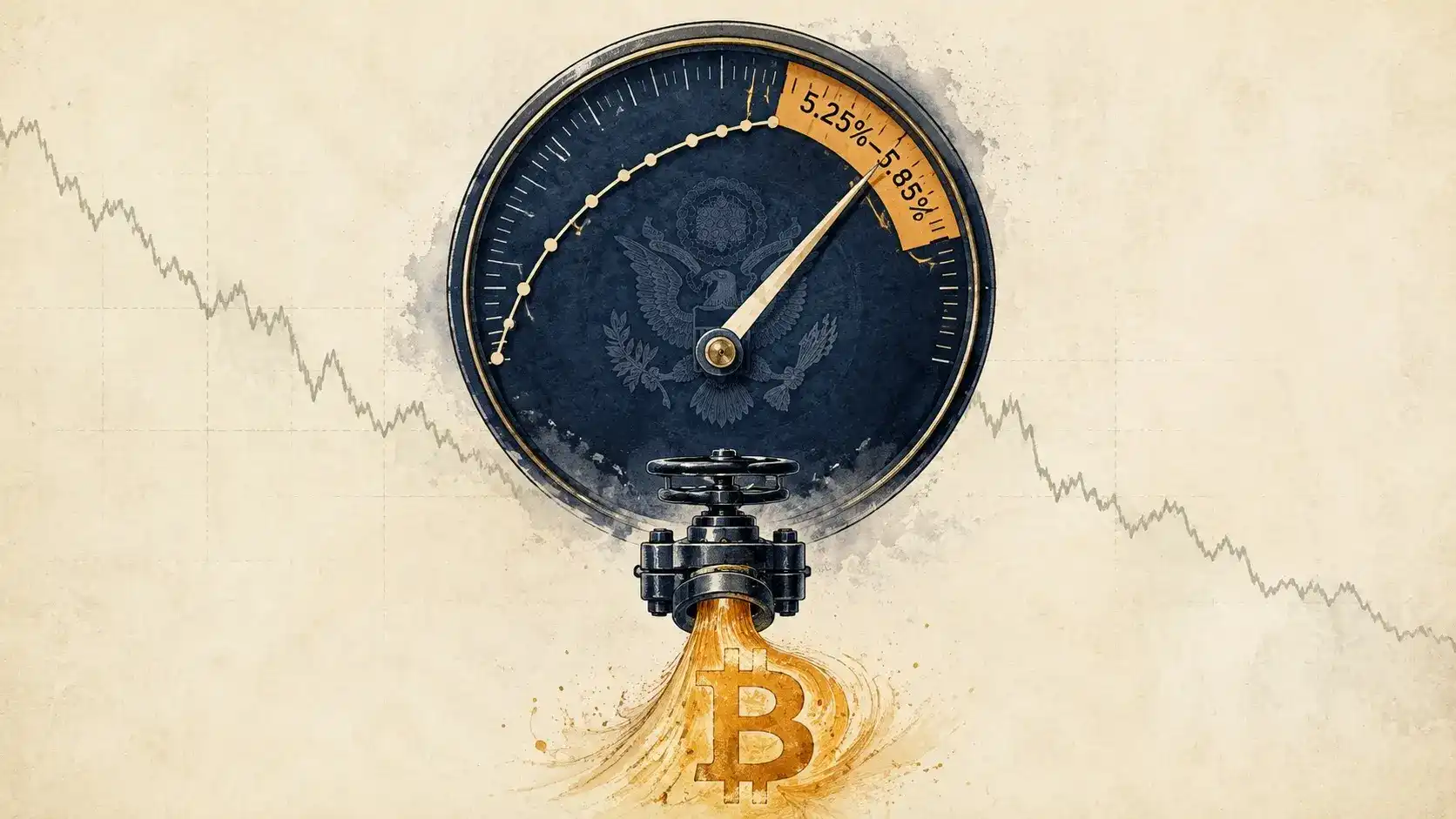
The CEO of Strive argues that the U.S. Treasury market is approaching a critical juncture, setting the stage for a major opportunity in Bitcoin. He highlights that unsustainable U.S. fiscal deficits and expanding entitlement programs are creating fundamental pressure for higher long-term bond yields. However, the political system is unwilling to enact necessary fiscal discipline. Consequently, as the 10-year Treasury yield enters a key resistance zone of 5.25%–5.85%, the narrative will shift to a potential bond market crisis. This will force policymakers (the Treasury or Federal Reserve) to intervene aggressively to suppress yields through tools like large-scale bond buybacks or balance sheet expansion.
Since the underlying fiscal imbalance remains unresolved, the adjustment pressure will be transferred to the U.S. dollar, making it the "pressure release valve" of the system. A trend decline in the dollar, potentially to multi-decade lows, would create a historically unique macro environment for Bitcoin. Bitcoin stands to benefit as a scarce, non-sovereign monetary asset, especially as AI erodes the scarcity of traditional corporate moats. The author concludes that if bond market stress causes a Bitcoin dip, it would be a major buying opportunity; if not, having exposure is still crucial. The overall expectation is that the market is still underestimating Bitcoin's long-term upside potential in this unfolding macro shift.
marsbit16小时前
Perguntas Relacionadas
Bem-vindo à FAQ de Cripto. As perguntas e respostas dos utilizadores sobre Home Depot Inc (Derivatives) (HD) são apresentadas abaixo.