O preço ao vivo de Router Protocol (ROUTE) é $0.0002 USD e a sua capitalização de mercado atual é de $-- USD.
Receba atualizações em tempo real de ROUTE/USD na HTX. Mantenha-se informado com os dados mais recentes e as tendências do mercado para tomar decisões de trading inteligentes. HTX, a sua fonte confiável de informações precisas sobre preços de criptomoedas.
Acompanhe as variações de preço de Router Protocol com visualizações de gráfico abrangendo 1 dia, 30 dias, 60 dias, 90 dias, 1 ano e o período desde que foi listado na HTX.Ver mais dados sobre os preços de Router Protocol
Horário
Alterar
Variação (%)
Preço mais alto
Preço mais baixo
No data
Informações de Mercado de ROUTE
Obtenha os detalhes mais recentes do preço de Router Protocol na HTX: alta e baixa em 24 horas, máxima histórica (ATH) e variação percentual diária do preço.
24h Baixo
$0
24h Alto
$0
Máximo histórico
$0
Capitalização de Mercado
$0.00
Volume de 24h (USD)
$--
Oferta Circulante
--
O que é ROUTE?
Router Protocol é uma plataforma agregadora de liquidez crosschain que foi construída para fornecer de forma integrada uma infraestrutura de ponte entre soluções de blockchain de Layer 1 e Layer 2 atuais e emergentes. O objetivo é permitir que os utilizadores troquem os seus ativos de diferentes redes de forma integrada, quase instantânea e a baixo custo.
É super fácil comprar ROUTE na HTX. Basta clicar aqui para ver um guia completo sobre como comprar Router Protocol com facilidade.
Mercados em Tempo Real de ROUTE
Veja os preços em tempo real de Router Protocol nos mercados à vista da HTX. Alterne entre os mercados à vista e de futuros para comparar instantaneamente os preços ao vivo e as variações de preço em 24 horas.
Com base no desempenho histórico de Router Protocol , a nossa ferramenta de previsão estima que o preço de Router Protocol (ROUTE) poderá atingir -- até --.
Preço Previsto de ROUTE em --
A nossa previsão mais recente indica que o preço de Router Protocol (ROUTE) aumentará para -- até --, com uma variação de preço de --% e um ROI acumulado de aproximadamente --%.
Compre o seu primeiro ROUTE na HTXRegiste-se Agora
Perguntas Frequentes sobre ROUTE
QQual é o preço de Router Protocol (ROUTE) hoje?
AO preço atual de Router Protocol (ROUTE) é $0.0002 USD.
QQual é a capitalização de mercado de Router Protocol (ROUTE)?
AA capitalização de mercado atual de Router Protocol (ROUTE) é de $0.00 USD, calculada multiplicando a sua oferta em circulação pelo seu preço atual.
QQual é a oferta em circulação de Router Protocol (ROUTE)?
AA oferta em circulação atual de Router Protocol (ROUTE) é de -- ROUTE.
QQual é a máxima histórica de Router Protocol (ROUTE)?
AEm 2026-06-17, a máxima histórica de Router Protocol (ROUTE) é de $0 USD.
QQual é o volume de negociação em 24h de Router Protocol (ROUTE)?
AO volume de negociação em 24 horas de Router Protocol (ROUTE) é de -- USD na HTX.
QPosso comprar Router Protocol (ROUTE) na HTX?
ASim, a HTX oferece taxas de trading líderes do setor e alta liquidez, garantindo uma experiência de compra de Router Protocol (ROUTE) suave e segura.
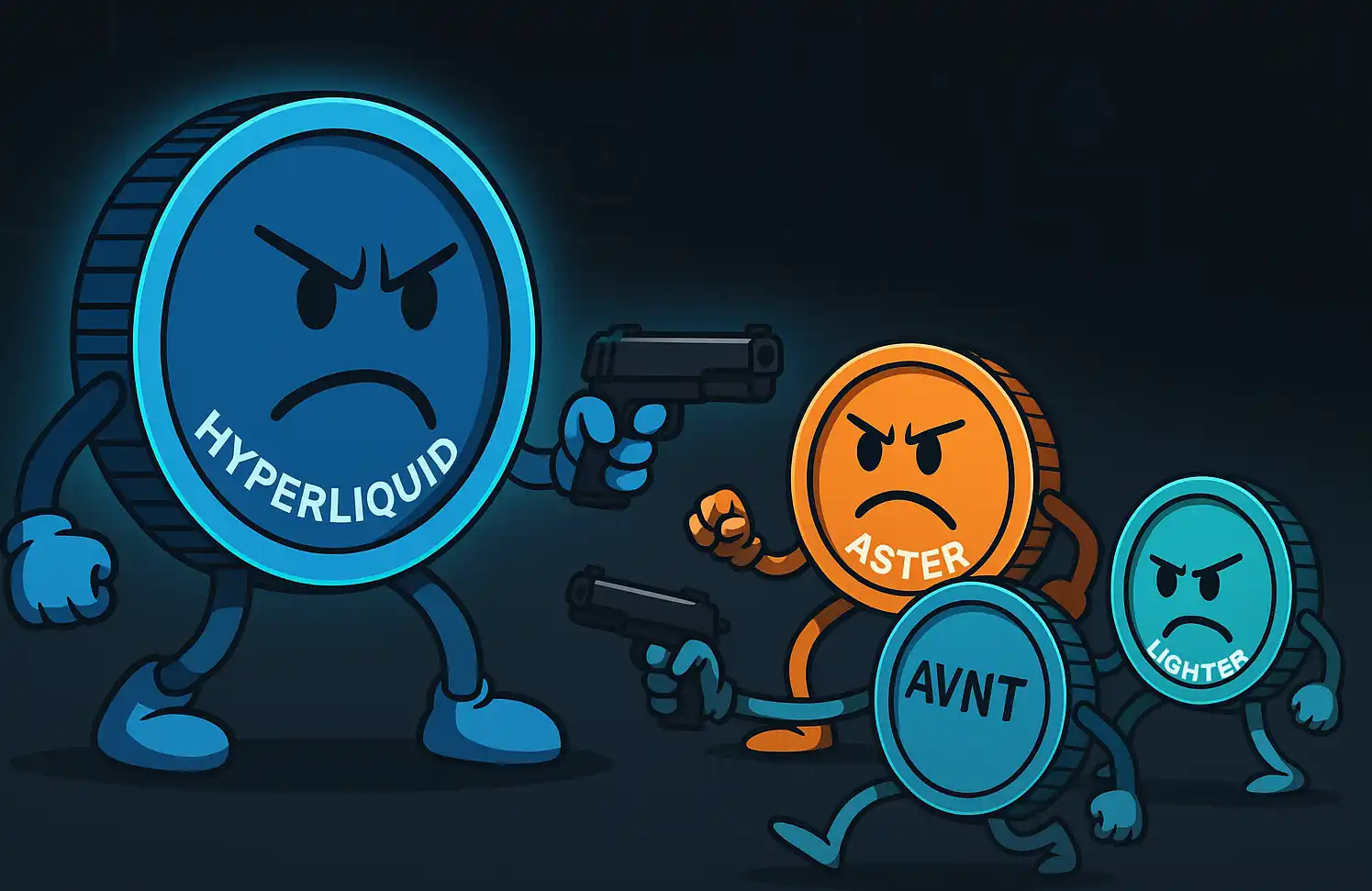
A technical report published on December 20, 2025, accused Hyperliquid, a decentralized exchange, of multiple severe issues—including insolvency and a "God mode backdoor"—claiming it was a centralized platform disguised as a blockchain. Hyperliquid issued a detailed response refuting the claims.
The most serious allegation—a $362M shortfall in user funds—was debunked. The discrepancy arose because the accuser overlooked native USDC on HyperEVM during Hyperliquid’s transition from an L2 to an independent L1. Total reserves across Arbitrum and HyperEVM matched user balances.
Other accusations were partially addressed: some code was testnet-related, limited broadcast nodes were an anti-MEV measure, and chain freezes were part of upgrade procedures. However, Hyperliquid did not fully respond to claims about unqueryable governance proposals and a lack of a cross-chain "escape hatch" for withdrawals.
The exchange also compared itself to competitors like Lighter and Aster, criticizing their reliance on centralized sequencers and lack of transparency, while highlighting its own fully on-chain state verification.
Additionally, Hyperliquid addressed community concerns about insider trading, attributing significant short selling to a former employee.
The incident underscores broader challenges in DeFi transparency as protocols grow more complex, emphasizing the crypto mantra: "Don’t trust, verify."
The article "From the Fringes to the Main Table: Why Compliance is the Inevitable Path" discusses the critical shift toward regulatory compliance in the cryptocurrency and blockchain industry, using key players like Binance, Coinbase, and Hyperliquid as case studies.
It highlights how Binance leveraged regulatory arbitrage to become a global leader by 2017 but faced increasing pressure from regulators, leading to its compliance efforts in jurisdictions like Abu Dhabi (ADGM) by 2025. Meanwhile, Coinbase capitalized on U.S. regulatory frameworks under evolving policies, though its growth in derivatives markets remained limited. Hyperliquid emerged as a significant player by exploiting gaps left by larger exchanges, capturing about 15% of Binance's market share through derivatives and ventures into non-traditional areas like precious metals and prediction markets—yet its long-term sustainability hinges on eventual compliance.
The piece argues that compliance is no longer optional but essential for scalability and legitimacy, especially as Real-World Assets (RWA)—such as tokenized stocks, bonds, and stablecoins—gain traction. Regulatory clarity, particularly from the U.S. and China, is reshaping the landscape, forcing once-"underground" economies to formalize or risk exclusion from major markets. The conclusion underscores that while regulatory arbitrage offers short-term advantages, the future of crypto and DeFi depends on integrating into established financial systems under clear rules.
"Ethereum is facing a dual crisis of market pressure and internal challenges. Its native token ETH is in a mid-term downtrend, with negative sentiment prevailing, weak price action, and significant outflows from ETFs. The ETH/BTC ratio has hit a ten-month low, and institutional holdings have shrunk. Concurrently, the Ethereum Foundation has seen a major exodus of core personnel following its commitment to a neutral, non-commercial development roadmap focused on censorship resistance, openness, privacy, and security (CROPS).
This stance has sparked debate. Critics, including former members, argue that the ecosystem lacks a dedicated, well-funded entity to promote ETH's commercial value and compete with rival chains. Proposals suggest creating a new, independent body to drive adoption and token value, forming a dual-model with the Foundation.
While some investors view the personnel changes as normal turnover and remain bullish on Ethereum's long-term fundamentals, the immediate path forward is unclear. Analysts believe Ethereum must execute its technical roadmap (like upcoming upgrades), clarify governance, and focus on high-value sectors like DeFi and tokenization to convert its technological edge into a compelling investment thesis. The current downturn tests whether its decentralized model can adapt to balance core principles with commercial competitiveness."
A new open-source tool called "guizang-social-card-skill" has emerged, offering a unique workaround for AI content labeling rules on platforms like Xiaohongshu. Instead of using AI models to generate images, it employs AI to make layout decisions, then uses HTML/CSS to render the final graphic. Photographic assets are sourced from libraries like Unsplash. The output is a rasterized browser screenshot, not an "AI-generated image."
This approach is a direct response to platform policies. In early 2026, Xiaohongshu mandated labeling for AI-generated synthetic content and deployed audio-visual recognition models to detect AI-generated pixels based on statistical patterns. This tool bypasses those pixel-level detectors by not using diffusion or GAN models for image generation.
The tool provides 28 predefined layout templates across two visual styles. Users input a topic, and the AI selects a template, positions text, and integrates elements like maps (using OpenStreetMap). The system prioritizes user-uploaded photos before falling back to stock image searches.
The article outlines three divergent technical paths for social media graphic tools: 1) AI models directly generating pixels (highest detection risk), 2) API template engines (risk of anti-spam rules for homogeneity), and 3) this HTML-rendering method. The longevity of this workaround depends on whether platforms broaden their definition of "AI-generated content" to include programmatically rendered, AI-designed graphics.
While effective for structured content like travel itineraries, the tool's 28 templates may be too restrictive for creative fields like fashion or beauty. Its future hinges on an ongoing cat-and-mouse game between platform detection models and tool developers, highlighting the tension between "AI-assisted" creativity and "AI-replaced" mass production.
The article challenges the common narrative of a direct "war" between XRP (representing blockchain-based settlement) and SWIFT (the traditional banking messaging network). It argues this framing is misleading, as SWIFT primarily handles payment instructions and communication, not the actual settlement of funds. Therefore, its newer initiatives don't directly compete with XRP's role as a settlement asset. Instead, blockchain interoperability protocols like Axelar or Chainlink are seen as closer competitors to SWIFT's messaging function.
The piece highlights that major banks involved with SWIFT's latest framework are also exploring or partnering with Ripple and blockchain solutions. This suggests financial institutions are not choosing one system over the other but are building a hybrid model. In this emerging architecture, traditional messaging networks like SWIFT could coordinate transactions and compliance, while separate blockchain-based layers like XRP handle faster, more efficient value settlement. The conclusion is that the future of cross-border payments may involve coexistence and integration, rather than a winner-takes-all battle between XRP and SWIFT.
bitcoinist12天前
Threads
Bem-vindo à Comunidade HTX. Aqui, você pode se manter informado sobre os desenvolvimentos mais recentes da plataforma e ter acesso a insights profissionais do mercado. As opiniões dos utilizadores sobre o preço de Router Protocol (ROUTE) são apresentadas abaixo.
Perguntas Relacionadas
Bem-vindo à FAQ de Cripto. As perguntas e respostas dos utilizadores sobre Router Protocol (ROUTE) são apresentadas abaixo.