A taxa de câmbio de referência serve apenas para consulta e não está bloqueada. A taxa final será determinada pelo preço de execução real.
Estatísticas em Tempo Real de DOT
O preço ao vivo de Polkadot (DOT) é $0.88 USD e a sua capitalização de mercado atual é de $-- USD.
Receba atualizações em tempo real de DOT/USD na HTX. Mantenha-se informado com os dados mais recentes e as tendências do mercado para tomar decisões de trading inteligentes. HTX, a sua fonte confiável de informações precisas sobre preços de criptomoedas.
Estatísticas Principais de Polkadot
Volume de 24h (USD)
$--
Variação de Preço Hoje
--
Oferta em Circulação (DOT)
1.69B
Registe-se e negoceie para ganhar recompensas no valor de até 1,500 USDT.Participe Agora
Desempenho do Preço de DOT
Acompanhe as variações de preço de Polkadot com visualizações de gráfico abrangendo 1 dia, 30 dias, 60 dias, 90 dias, 1 ano e o período desde que foi listado na HTX.Ver mais dados sobre os preços de Polkadot
Horário
Alterar
Variação (%)
Preço mais alto
Preço mais baixo
No data
Informações de Mercado de DOT
Obtenha os detalhes mais recentes do preço de Polkadot na HTX: alta e baixa em 24 horas, máxima histórica (ATH) e variação percentual diária do preço.
24h Baixo
$0
24h Alto
$0
Máximo histórico
$0
Capitalização de Mercado
$0.00
Volume de 24h (USD)
$--
Oferta Circulante
--
O que é DOT?
Polkadot (DOT) é um projeto de blockchain significativo apoiado pela Web3 Foundation. O seu objetivo é estabelecer uma arquitetura multi-chain inovadora que melhora a escalabilidade e a interoperabilidade da blockchain. Polkadot consiste numa cadeia de retransmissão, que serve como a cadeia principal, e cadeias paralelas chamadas parachains, aproveitando o algoritmo de consenso chamado Nominated Proof-of-Stake (NPoS) para garantir a segurança da rede. A arquitetura do Polkadot permite que diferentes blockchains operem em paralelo. Ao mesmo tempo, permite que várias blockchains transfiram mensagens e valor de forma livre de confiança, ligando uma variedade de redes. O token DOT é a criptomoeda nativa da rede Polkadot. Ele serve múltiplos propósitos dentro do ecossistema, incluindo governança e incentivo a validadores, para promover um ecossistema próspero e inovador.
Polkadot incentiva os membros da comunidade a participar ativamente nos processos de desenvolvimento e tomada de decisões da rede através do seu modelo de governança aberto e atualizações tecnológicas contínuas. No ecossistema Polkadot, os detentores de DOT podem participar em votos comunitários, propor mudanças e ter voz no futuro da rede. A abertura e transparência do Polkadot fornecem aos desenvolvedores ferramentas ricas e suporte, facilitando um ecossistema vibrante de desenvolvedores e proporcionando uma base sólida para aplicações descentralizadas (dApps) e projetos de blockchain emergentes inovarem. Polkadot desempenha um papel crucial na condução da evolução e avanço das tecnologias de blockchain.
É super fácil comprar DOT na HTX. Basta clicar aqui para ver um guia completo sobre como comprar Polkadot com facilidade.
Mercados em Tempo Real de DOT
Veja os preços em tempo real de Polkadot nos mercados à vista da HTX. Alterne entre os mercados à vista e de futuros para comparar instantaneamente os preços ao vivo e as variações de preço em 24 horas.
Com base no desempenho histórico de Polkadot, a nossa ferramenta de previsão estima que o preço de Polkadot (DOT) poderá atingir -- até --.
Preço Previsto de DOT em --
A nossa previsão mais recente indica que o preço de Polkadot (DOT) aumentará para -- até --, com uma variação de preço de --% e um ROI acumulado de aproximadamente --%.
Compre o seu primeiro DOT na HTXRegiste-se Agora
Perguntas Frequentes sobre DOT
Qual é o preço de Polkadot (DOT) hoje?
O preço atual de Polkadot (DOT) é $0.88 USD.
Qual é a capitalização de mercado de Polkadot (DOT)?
A capitalização de mercado atual de Polkadot (DOT) é de $0.00 USD, calculada multiplicando a sua oferta em circulação pelo seu preço atual.
Qual é a oferta em circulação de Polkadot (DOT)?
A oferta em circulação atual de Polkadot (DOT) é de -- DOT.
Qual é a máxima histórica de Polkadot (DOT)?
Em 2026-08-21, a máxima histórica de Polkadot (DOT) é de $0 USD.
Qual é o volume de negociação em 24h de Polkadot (DOT)?
O volume de negociação em 24 horas de Polkadot (DOT) é de -- USD na HTX.
Posso comprar Polkadot (DOT) na HTX?
Sim, a HTX oferece taxas de trading líderes do setor e alta liquidez, garantindo uma experiência de compra de Polkadot (DOT) suave e segura.
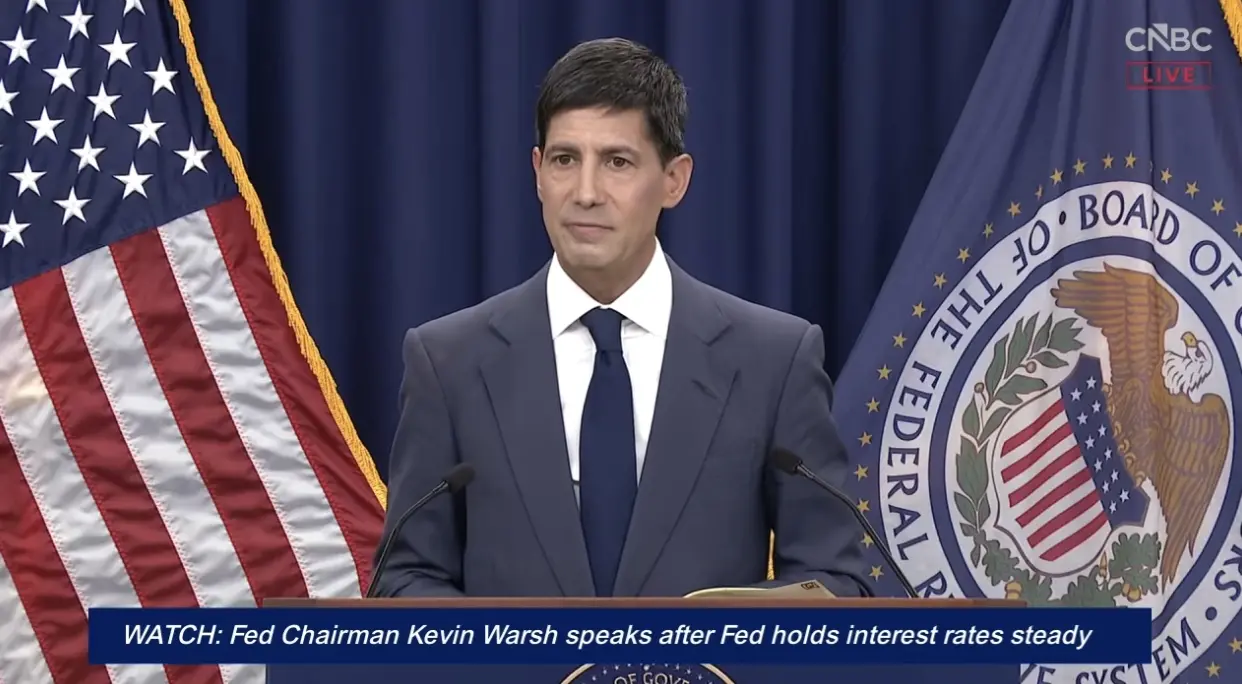
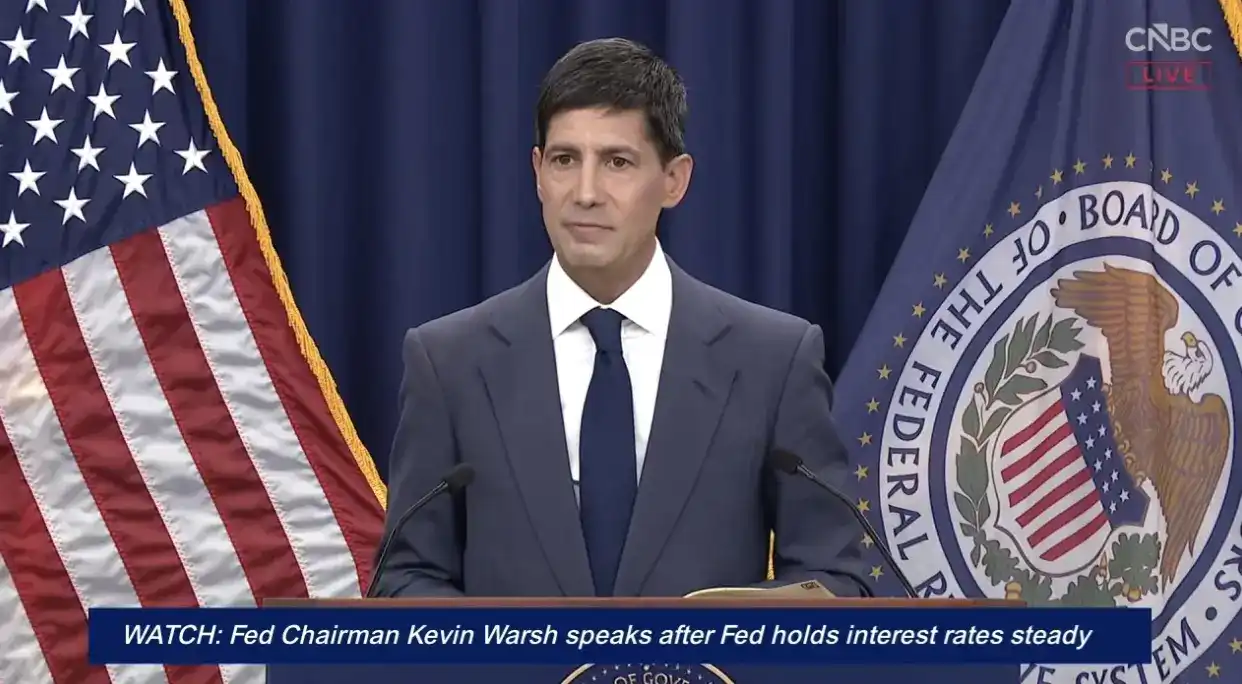
The Federal Reserve, under new Chair Kevin Warsh, held its first FOMC meeting, maintaining the federal funds rate target range at 3.5% to 3.75%. The central bank issued a significantly shortened policy statement, explicitly removing forward guidance. Chair Warsh delivered a strong, unified commitment to achieving the 2% inflation target, stating the FOMC has the "capability and the commitment" to restore price stability and sees no need to review the target itself at this time.
Warsh announced the immediate formation of five special working groups to examine and propose improvements in key areas by year-end: Fed communication, the balance sheet (including a review of the $6.7 trillion portfolio and its role in policy), data sources and methodology, productivity and employment (including AI's impact), and the inflation framework.
In a break from tradition, Chair Warsh did not submit his own economic projections or "dot plot." The submitted Summary of Economic Projections (SEP) showed a split among other officials: half anticipate at least one rate hike this year, while half expect rates to remain steady or fall. The median projection sees the federal funds rate at 3.8% by year-end 2026.
Warsh characterized the current policy stance as "uneven," noting restrictive effects in sectors like housing but less so in financial markets. He emphasized a desire to move away from a market dynamic overly focused on Fed signaling, advocating for markets to react more to economic data. On AI, he called it potentially the most significant economic change in his adult life, driving clear demand but with uncertain timing and scale on the supply side, creating a "race" between the two.
Federal Reserve Chair Kevin Warsh delivered his first FOMC press conference, maintaining the federal funds rate at 3.5%-3.75% and emphasizing the Committee's unanimous and explicit commitment to achieving its 2% inflation target.
Key announcements included significant changes to Fed communication and operations. The policy statement was significantly shortened and, notably, forward guidance was removed. Chair Warsh broke from precedent by declining to submit his own economic forecasts and "dot plot." He announced the immediate formation of five special working groups focusing on: Fed communication, the balance sheet, data sources, productivity and employment (including AI's impact), and the inflation framework. These groups, which will include external experts, are tasked with recommending improvements by year-end. One key group will review the Fed's $6.7 trillion balance sheet to assess the roles of interest rates versus balance sheet tools in monetary policy.
Warsh characterized the current restrictive stance of policy as "uneven," noting its effect on housing but questioning its impact on financial markets where conditions appear less restrictive. He expressed a desire to move away from a "Fed-speak" driven market, arguing that markets should react to economic data rather than Fed commentary to provide better informational signals. On inflation, he stated there is no need to reconsider the 2% target until the Fed re-establishes its commitment and capability to achieve it.
Economic projections (SEP) from other officials showed a split on the rate outlook for 2024, with half expecting at least one hike and half forecasting unchanged or lower rates. The median projection saw the federal funds rate at 3.8% by year-end 2024. Following the announcements, risk assets sold off sharply, Treasury yields rose, and the dollar strengthened.
On August 7, 2026, Grayscale Investments withdrew its S-1 registration filings for proposed ETFs tracking Cardano (ADA), Hedera (HBAR), and Polkadot (DOT). The simultaneous withdrawals, using identical legal language, suggest a strategic portfolio decision rather than a reaction to issues with any single asset or new regulation. Analysts view ADA, HBAR, and DOT as lower-priority assets in the ETF queue compared to Bitcoin, Ethereum, and even other alts like Solana. The move preserves Grayscale's option to refile later without incurring ongoing costs for products where clear market demand has not yet materialized. The market reaction was muted, with minimal price movement for the three tokens, indicating the withdrawal was interpreted as administrative housekeeping. Grayscale's flagship Bitcoin and Ethereum products are unaffected, and other altcoin ETF filings remain in progress.
Grayscale has voluntarily withdrawn its registration statements for Cardano, Hedera, and Polkadot Trust products, halting another set of altcoin ETF ambitions. The withdrawals, filed on Form RW, represent Grayscale's decision not to proceed rather than an SEC rejection. This distinction is crucial; a withdrawal may reflect strategic timing or market conditions, not necessarily regulatory opposition. While this resets near-term expectations for these specific products, it does not eliminate the possibility of future ETF filings by Grayscale or other issuers for these assets. The development underscores the nuanced, multi-stage nature of the ETF approval process and serves as a reminder that filings can move backward, requiring disciplined market speculation.
This article explains how Polkadot's parachains function and their relationship with the DOT token. Parachains are specialized blockchains that connect to Polkadot's Relay Chain, which provides them with shared security and interoperability. This design gives developers more control than typical smart contract applications, allowing for custom transaction rules, governance, and fee structures.
The article emphasizes that increased parachain activity does not automatically translate to higher demand for the DOT token. While parachains can issue their own native tokens for fees, DOT remains crucial for core network functions: staking by validators, on-chain governance, and, most directly, purchasing "Coretime." Coretime is the computational resource on the Relay Chain that parachains must buy to operate, and these purchases involve burning DOT, creating a direct utility link.
The piece details Polkadot's transition from a parachain slot auction system to a more flexible "Agile Coretime" model, where projects can buy bulk or on-demand access to Relay Chain resources. Other key metrics for measuring DOT's utility include cross-chain message (XCM) volume and overall network adoption, though the price of DOT is influenced by broader market factors beyond these fundamentals. The sister network Kusama operates on a similar model with its KSM token.
cryptonews.ru4天前
Threads
Bem-vindo à Comunidade HTX. Aqui, você pode se manter informado sobre os desenvolvimentos mais recentes da plataforma e ter acesso a insights profissionais do mercado. As opiniões dos utilizadores sobre o preço de Polkadot (DOT) são apresentadas abaixo.
Perguntas Relacionadas
Bem-vindo à FAQ de Cripto. As perguntas e respostas dos utilizadores sobre Polkadot (DOT) são apresentadas abaixo.