ZachXBT flags USDC freeze – Why 16 exchange wallets were hit

ambcryptoPublicado em 2026-03-26Última atualização em 2026-03-26

Resumo

ZachXBT's investigation revealed that USDC issuer Circle froze at least 16 exchange-linked hot wallets on March 23, 2026, disrupting transactions across bridges and settlements. These compliance actions, which extended beyond intended targets, raised concerns about systemic reliability and targeting accuracy. The number of blacklisted USDC addresses has grown to 596, reflecting deeper regulatory integration. This has shifted USDC's role from neutral infrastructure to a controlled settlement layer. Consequently, USDC outflows declined 0.9% weekly, with liquidity rotating toward USDT, which now holds 58.29% dominance. The incident exposed centralized control risks, fragmenting trust and reshaping stablecoin capital allocation.

Stablecoins anchored market liquidity, with total supply near $315.85 billion and USD Coin [USDC] accounting for about $78.7 billion.

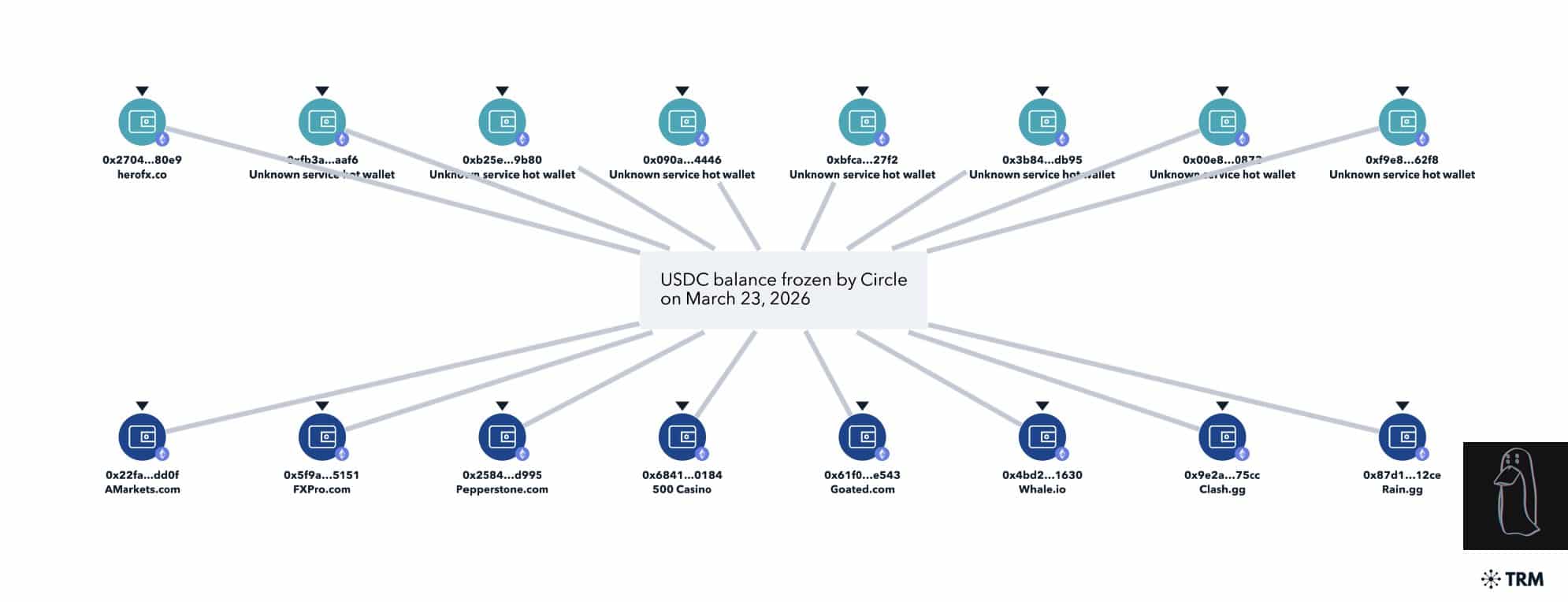
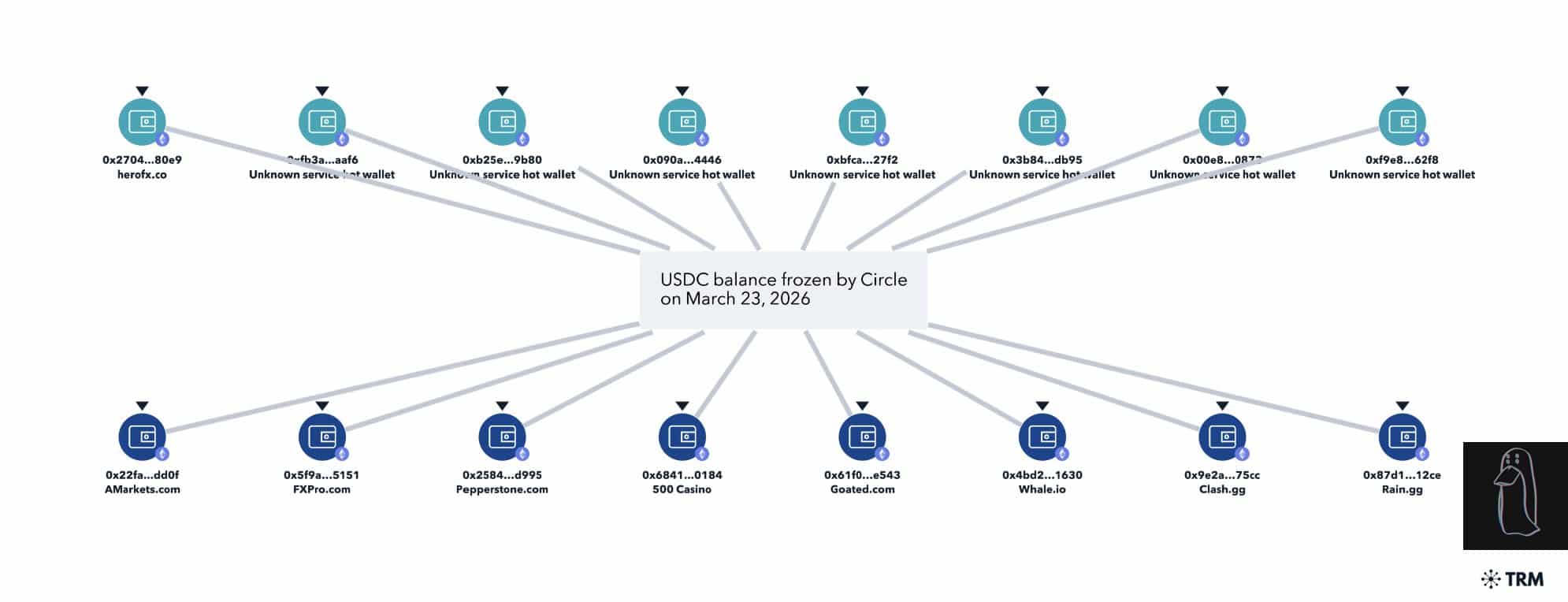
USDC wallet freezes drew scrutiny after on-chain investigator ZachXBT flagged multiple exchange-linked wallets affected on the 23rd of March 2026.

However, recent USDC wallet freezes disrupted that expectation, as compliance actions extended beyond intended targets. Reports suggested at least 16 unrelated hot wallets were frozen, disrupting transactions across bridging and settlement flows.

That shift set up a broader concern. Focus moved from isolated enforcement to systemic reliability risks.

This raised a key question: Why were operational exchange wallets affected?

USDC wallet freezes spill into exchange and bridge flows
Source: ZachXBT/ X

ZachXBT noted that several frozen wallets showed normal operational activity, raising concerns around targeting accuracy.

Reports suggested that exchange-linked hot wallets were flagged alongside intended addresses, extending the impact beyond enforcement targets.

Circle later reversed some freezes, including the Goated wallet, indicating a correction rather than a final decision.

That sequence showed how compliance actions can misfire when applied across interconnected wallet systems.

USDC blacklist count hits 596 as compliance tightens

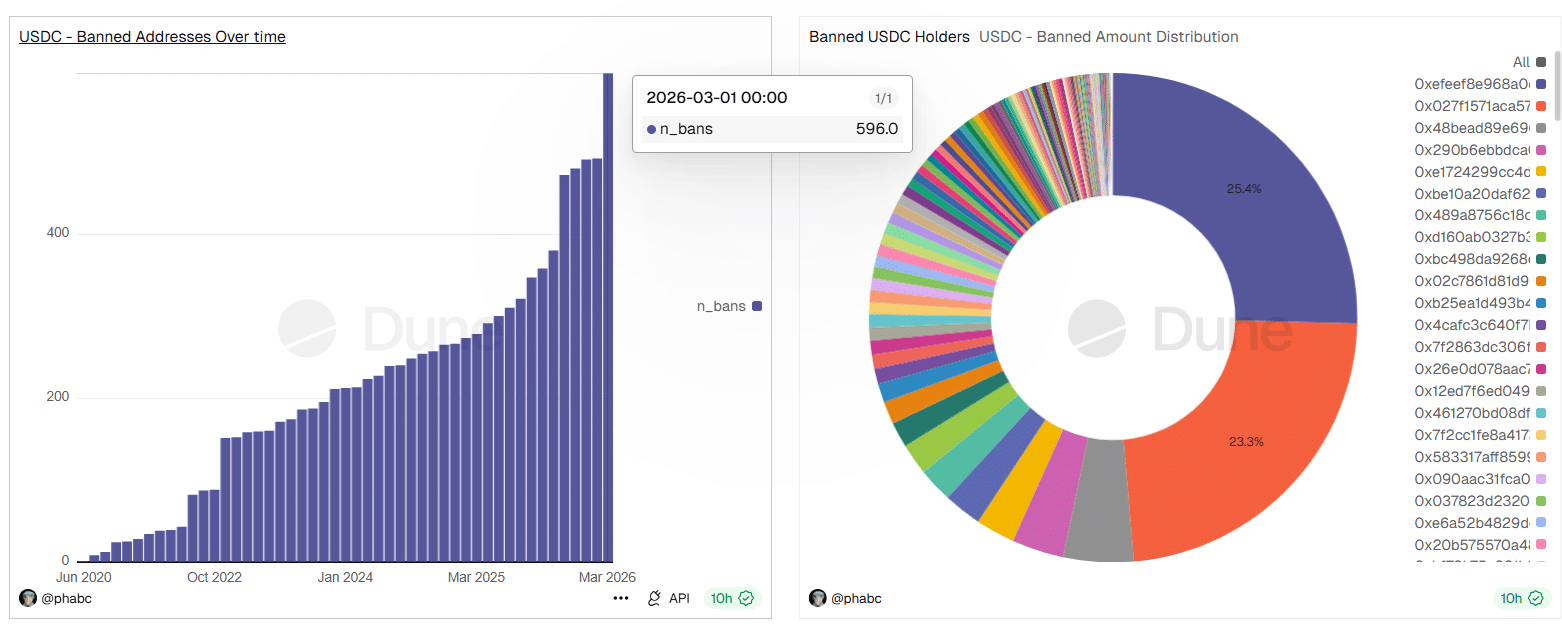
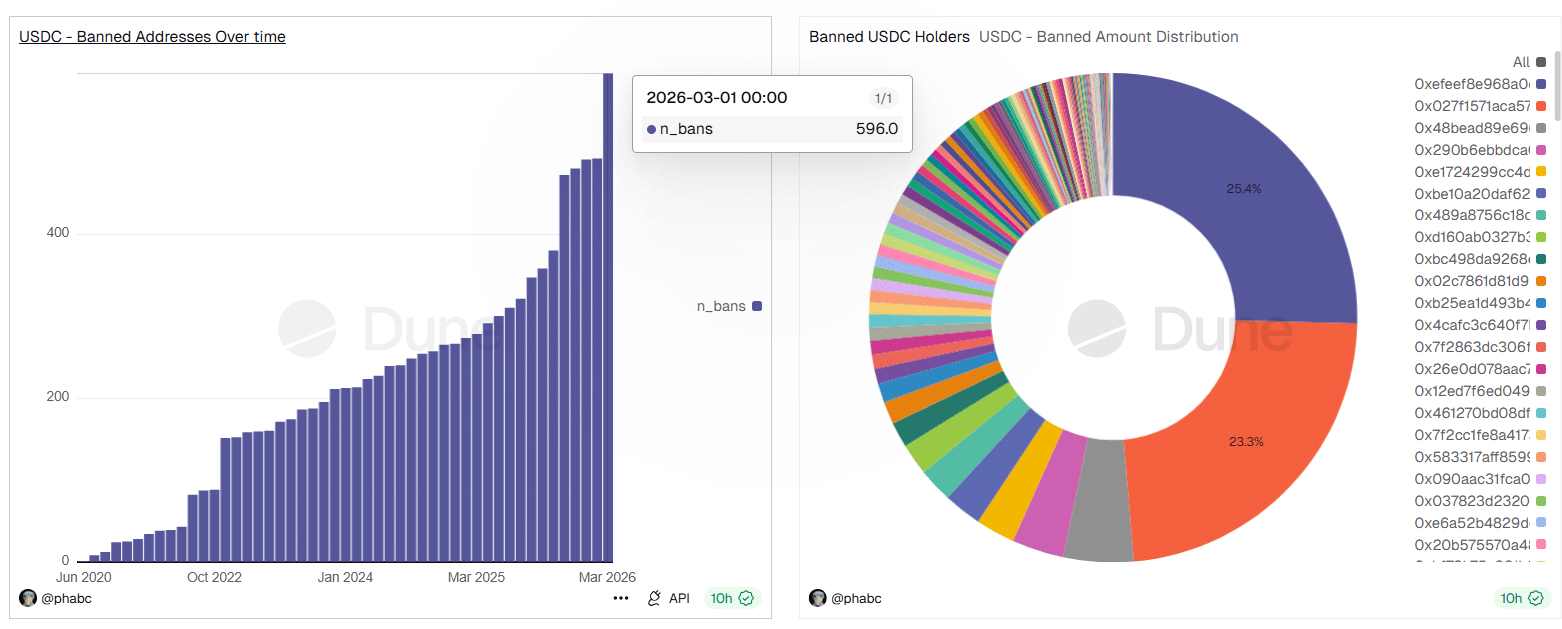
USDC’s control structure became clearer as enforcement activity increased across the network. Blacklisted addresses reached 596, reflecting steady growth rather than isolated actions.
Source: Dune

That move aligned with deeper regulatory integration into stablecoin infrastructure, rising from near zero levels in 2020.

On top of that, distribution data showed concentration among a few large holders. This amplified the impact of each freeze.

When key wallets were affected, liquidity disruptions extended beyond individual users into broader market flows. That explained settlement failures across exchanges and bridges.

This left traders focused on a structural shift. USDC operated less like neutral infrastructure and more like a controlled settlement layer.

USDC outflows drive liquidity shift toward USDT dominance

The market reaction showed a subtle shift beneath stable price action. USDC held near $78.7 billion, yet declined 0.90% weekly, signaling selective capital movement.

At the same time, total stablecoin supply rose 0.04%, showing funds rotated rather than exited.

By contrast, Tether [USDT] expanded its lead to 58.29% dominance at $184.1 billion, absorbing redirected liquidity.

That move reflected a search for perceived stability rather than a rejection of stablecoins entirely.

Confidence remained, yet behavior shifted. Partial reversals exposed operational strain, while unintended freezes raised concerns around exposure.
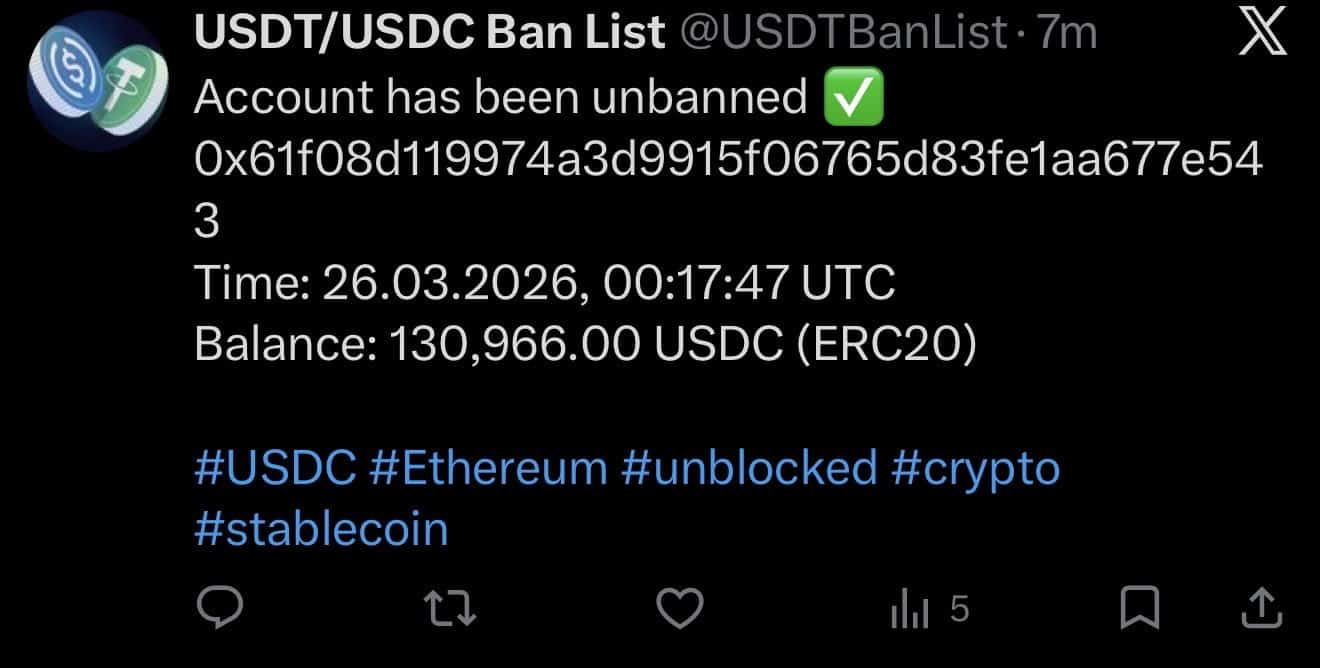
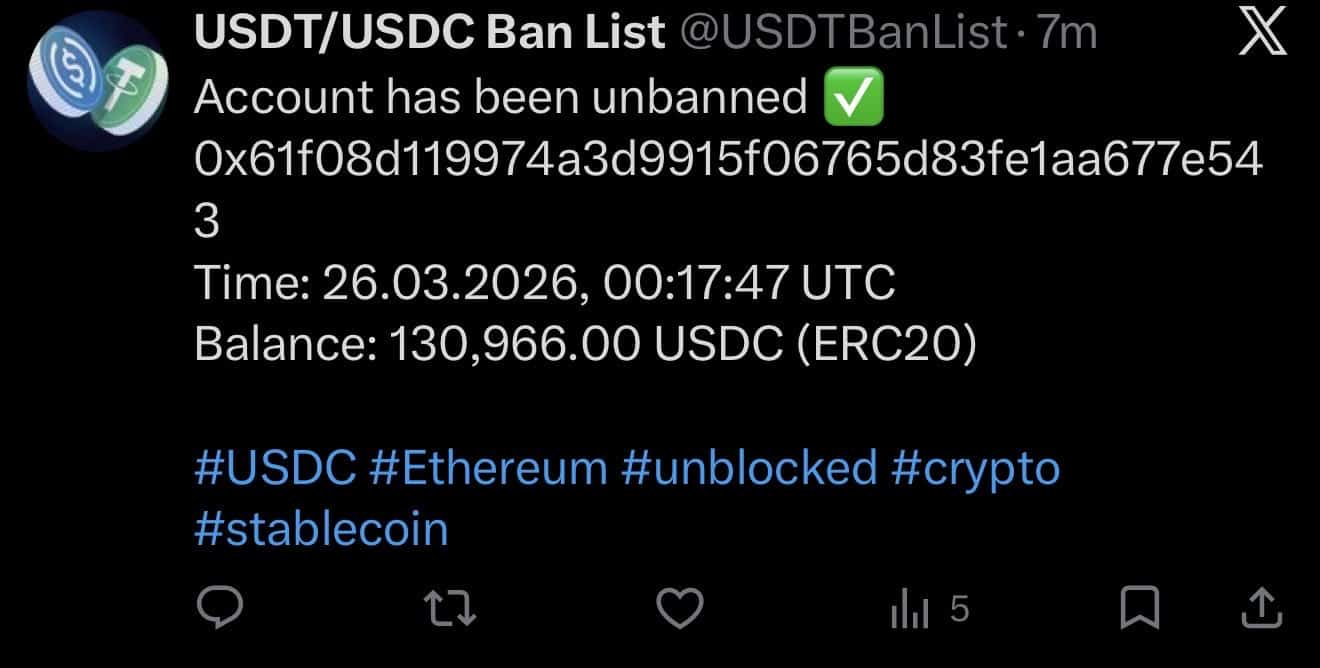
Source: X

This implied trust weakened at the margins, which could fragment liquidity and reshape capital allocation across stablecoin ecosystems.


Final Summary

  • USD Coin [USDC] freezes expose centralized control risks, with rising blacklists and failed settlements weakening neutrality and shaping liquidity flows.
  • Tether [USDT] absorbs rotation with 58% dominance, signaling trust shifts rather than exits, as stablecoin liquidity fragments across ecosystems.


Perguntas relacionadas

QWhat did on-chain investigator ZachXBT report regarding USDC wallet freezes on March 23, 2026?

AZachXBT flagged multiple exchange-linked wallets that were frozen, noting that several showed normal operational activity, which raised concerns about targeting accuracy.

QHow many exchange hot wallets were reportedly frozen in the USDC compliance action, and what was a key consequence?

AAt least 16 unrelated hot wallets were frozen, disrupting transactions across bridging and settlement flows and extending the impact beyond the intended enforcement targets.

QWhat was the total number of blacklisted USDC addresses mentioned in the article, and what does this reflect?

AThe number of blacklisted addresses reached 596, reflecting a steady growth in enforcement activity and deeper regulatory integration into stablecoin infrastructure.

QHow did the market react to the USDC freezes in terms of capital movement between stablecoins?

AWhile the total stablecoin supply increased slightly by 0.04%, USDC saw a 0.90% weekly decline in supply, with liquidity rotating toward Tether (USDT), which expanded its dominance to 58.29%.

QWhat broader concern did the USDC freezes raise about the nature of the stablecoin's operation?

AThe freezes raised concerns that USDC is operating less like neutral infrastructure and more like a controlled settlement layer, weakening trust and potentially fragmenting liquidity across ecosystems.

Leituras Relacionadas

Bitcoin Boom in Full Swing: Saylor's Latest Statement Fuels Buying Speculation

MicroStrategy's Executive Chairman Michael Saylor has fueled speculation about a new Bitcoin purchase by posting "Bitcoin Drive engaged" on August 2, accompanied by the company's customary purchase tracker. This aligns with his pattern of hinting at treasury changes ahead of weekly reports. The accompanying report showed MicroStrategy's Bitcoin holdings at 843,775 BTC, with an average cost of $75,653 per coin and an unrealized loss of -$10.58B. A similar signal preceded the company's July 27 announcement, strengthening expectations for a treasury update on Monday. However, MicroStrategy's real-time ledger reflects two recent Bitcoin sales totaling 3,588 BTC, reducing holdings from 847,363 BTC to the current 843,775 BTC. The company stated these sales funded preferred stock dividends and replenished its U.S. dollar reserve. Recent reports indicate the company made no Bitcoin purchases the week ending July 26 while increasing its dollar reserve to approximately $3.75B. The company faces financial headwinds after reporting an $8.33B operating loss for Q2 2026, including an $8.32B unrealized loss on its digital assets. Management may sell up to $1.25B more in Bitcoin to meet cash obligations. The expected Monday update will reveal if the "Bitcoin Drive" signal marks a return to accumulation as MicroStrategy balances its massive Bitcoin stash against growing cash commitments.

cryptonews.ruHá 1h

Bitcoin Boom in Full Swing: Saylor's Latest Statement Fuels Buying Speculation

cryptonews.ruHá 1h

Trading

Spot
活动图片