Year-End Critical Moment: What the FOMC Decision Means for the Crypto Market

比推Publicado em 2025-12-18Última atualização em 2025-12-18

Resumo

Amid a critical year-end period, Bitcoin hovers around $90,000 with the crypto fear and greed index hitting 25 (extreme fear). The December FOMC meeting delivered an expected 25-basis-point rate cut but adopted a hawkish tone, projecting only one more cut in 2026, causing a brief dip below $90k. However, the Fed also initiated a Reserve Management Purchase (RMP) plan, injecting $40 billion monthly in Treasury liquidity—a form of "stealth QE" that may reshape 2026 market dynamics. On-chain data shows significant capitulation among short-term holders, with realized losses near historic highs, while exchange reserves decline sharply, suggesting accumulation by long-term investors. Seasonal patterns like the "Christmas low-Lunar New Year rally" and increasing institutional adoption—shifting from pure Bitcoin exposure to ETH, altcoins, and tokenized assets—support a potential rebound. Despite short-term volatility and macro uncertainty, indicators like MVRV Z-Score and RHODL Ratio signal a buying opportunity. The convergence of cyclical patterns, improving liquidity, and structural institutional participation frames the current pullback as a mid-cycle adjustment rather than a bear market, offering a strategic entry point for 2026 positioning.

At the end of 2025, the crypto market is at a critical juncture. Bitcoin (BTC) is hovering around $90,000, the market Fear & Greed Index has dropped to 25 (Extreme Fear), and short-term holder capitulation has reached its second-highest level in history, second only to the bottom of the August 2024 Yen carry trade crash. The December 10th FOMC meeting has concluded, with the Federal Reserve (Fed) cutting interest rates by 25 basis points as expected by the market, lowering the federal funds rate to 3.50%-3.75%. However, the forward guidance turned hawkish—only one rate cut is expected in 2026. This caused BTC to briefly fall below the $90,000 mark. The market reaction was muted, showing a "buy the rumor, sell the news" type of correction.

However, the Fed also initiated a "Reserve Management Purchases" (RMP) plan, injecting $40 billion in short-term Treasury liquidity per month. This is seen as a signal of mild easing, a form of "non-QE," which could reshape market dynamics in 2026. In this "year-end final exam," should one "hold coins through the holidays" to welcome a potential rebound, or "take profits off the table" to lock in gains? This article explores allocation strategies and the outlook for 2026 positioning by combining the impact of the FOMC, on-chain data, institutional trends, and historical patterns.

FOMC Decision Analysis
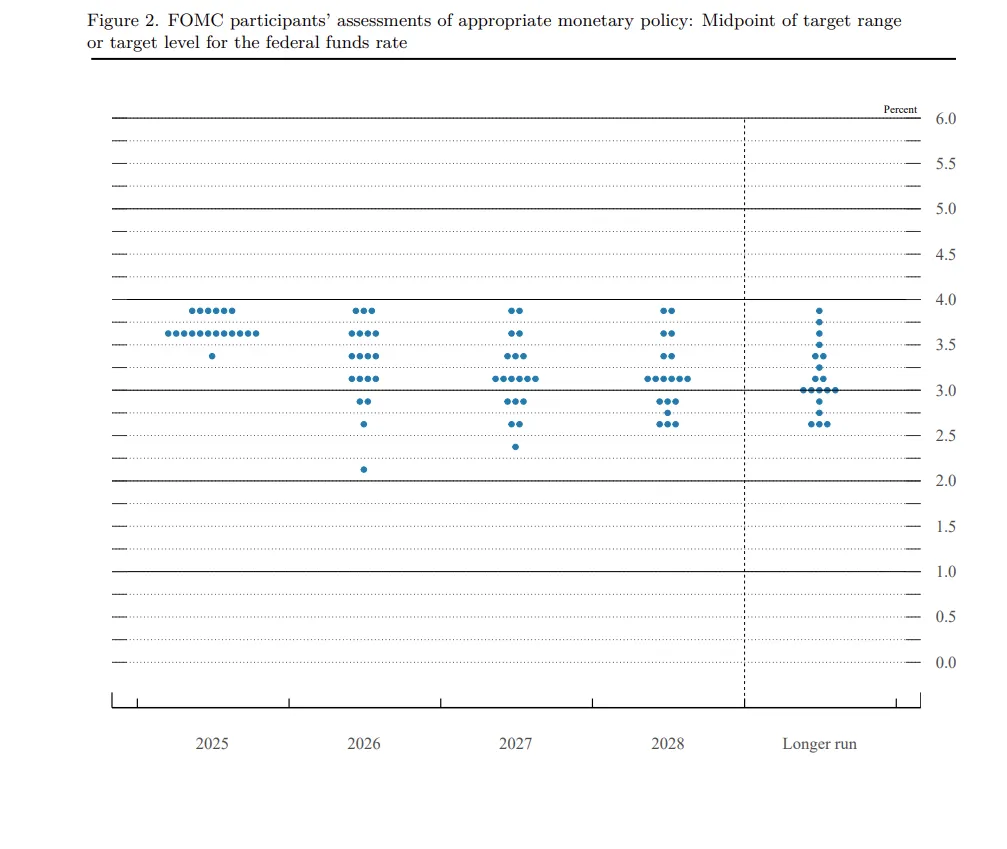
A Liquidity Turning Point Under Hawkish Rate Cuts The FOMC meeting was the final monetary policy decision of 2025. The decision to cut rates was passed with a 9:3 split vote, but the "dot plot" showed a slower path for rate cuts in 2026, with only one 25-basis-point cut remaining.

This reinforces the "hawkish cut" narrative: the Fed is wary of rebounding inflation and is aiming for a soft landing in the job market, unwilling to ease too aggressively in the short term. The market had priced in an 89% probability of a cut, leading to only minor fluctuations in BTC post-event, while ETH consolidated around $3,000.

The impact on crypto is dual:

  • Short-term pressure: Hawkish guidance increases risk aversion. BTC did not rally to the expected high of $94,000 but instead triggered tens of billions of dollars in leveraged liquidations. Thin year-end liquidity (e.g., perpetual open interest down 40%-50% from October), combined with Bank of Japan (BOJ) decisions, makes the market prone to "pump and dump" behavior.

  • Long-term positive: QT (Quantitative Tightening) officially ended on December 1st. The Fed's balance sheet shrank from $9 trillion to $6.5 trillion and has now begun to expand again. The RMP plan is equivalent to "stealth QE," expected to inject trillions in liquidity in 2026, driving a re-rating of risk assets. Historical data shows that liquidity turning points often trigger crypto rallies (e.g., the BTC surge after the Fed's pivot in 2024). Furthermore, explosive growth in global M2 money supply, a weakening DXY US Dollar Index, and stimulus policies from China/the EU will further tilt capital towards risk assets.

The FOMC reinforced the "macro-dominated" narrative. Crypto is no longer driven solely by its own cycles but is increasingly correlated with stocks and AI assets. Short-term volatility is intensifying, but liquidity injections are paving the way for 2026.
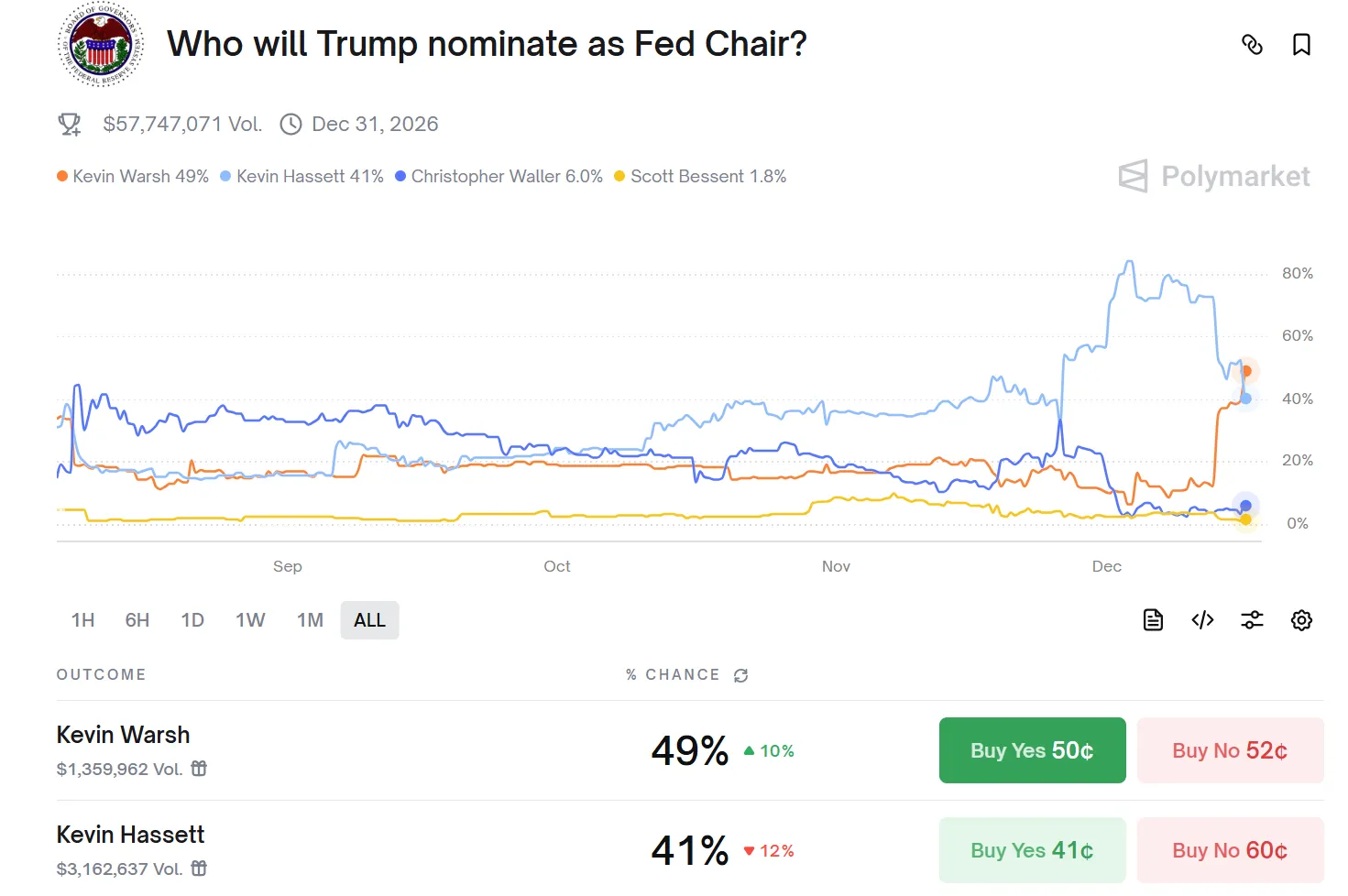
The appointment of the new Fed Chair will also be a key variable for the 2026 liquidity environment. Jerome Powell's term as Chair officially ends in May 2026 (his term as Governor lasts until January 2028). President Trump has indicated he will announce a nominee for his successor in early 2026. Current top candidates focus on the "two Kevins": National Economic Council Director Kevin Hassett (advocates for more aggressive rate cuts) and former Fed Governor Kevin Warsh (recently visited the White House, emphasizing consulting the President on interest rate views).

A Chair more aligned with Trump and more inclined towards accommodative policy could strengthen the 2026 rate cut path and accelerate liquidity injection, resonating with policies like the RMP plan and national Bitcoin reserves, further boosting confidence in risk assets.

Institutional Trends Preview: 2026 Positioning—From "Defense" to "Structural Participation"

2025 is seen as the "Year of Crypto Mainstreaming." Institutional entry is no longer a fringe experiment but a systemic shift. According to a16z's "State of Crypto 2025 Report," traditional financial institutions like Visa, BlackRock, Fidelity, and JPMorgan Chase have fully launched crypto products, while tech-native players like PayPal and Stripe are doubling down on payment infrastructure.

This marks a paradigm shift from "retail-led" to "institution-led": A joint survey by EY-Parthenon and Coinbase shows 83% of institutional investors plan to increase their crypto allocation in 2025. DeFi exposure is expected to jump from 24% to 75%, with a focus on derivatives, lending, and yield opportunities.

Institutional Allocation Trends: From Single BTC Allocation to Multi-Asset Portfolios

  • BTC remains core, but its share is declining: BTC as "digital gold" continues to dominate institutional positions (ETF AUM exceeds $168 billion, accounting for 60-80% of institutional crypto exposure), but institutions view it as a low-correlation diversification tool rather than a single speculative asset.

  • Expansion into ETH, Altcoins, and Emerging Assets: Institutions are increasing exposure to ETH (attracted by staking yields), Solana (high TPS and institutional partnerships), stablecoins (payment infrastructure), and RWA (real-world asset tokenization). A Coinbase report shows 76% of institutions plan to invest in tokenized assets in 2026, focusing on tokenized Treasuries, private equity, and bonds, offering instant settlement and fractional ownership.

  • Pension Funds and Sovereign Wealth Funds Testing the Waters: Although mostly indirect exposure (e.g., the Norwegian fund holds BTC via MicroStrategy), 2026 is expected to see more direct allocations of 0.5-3% (via ETFs or tokenized instruments). Reports from BlackRock and others note that sovereign funds and pension funds are seriously considering crypto as a long-term diversification hedge, with allocation ratios gradually increasing.

Historical Pattern: BTC's Year-End "Spring Festival Effect"
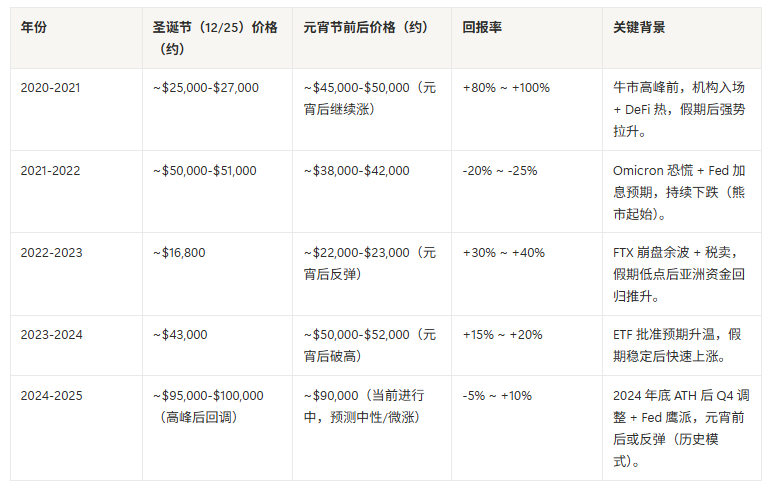
Drivers of the "Christmas Low - Spring Festival Rally" Pattern

Western Liquidity Drain: From December 20th to early January,欧美 (European and American) institutions enter holiday mode, and trading volume plummets. In a low-liquidity environment, any selling pressure amplifies volatility, forming technical lows.

Asian Capital Inflow: Around the Spring Festival (late January to mid-February), year-end bonuses and red packets are distributed in Mainland China, Hong Kong, Singapore, etc., leading retail and high-net-worth individuals to increase allocations to risk assets. Historical data shows that BTC buying volume on Asian exchanges (like Binance, OKX) typically rises in the two weeks before the Lunar New Year.

Portfolio Rebalancing: January marks the start of the new fiscal year for many institutions. Pension funds and hedge funds reassess their asset allocations. If BTC shows relative resilience in December (e.g., only a 5-10% pullback in 2025), institutions tend to add positions in January to catch up with benchmark returns.

On-Chain Data: A Concentration of Bottom Signals

Following the hawkish Fed rate cut, the crypto market has entered a typical "year-end low liquidity" phase. Bitcoin (BTC) is oscillating repeatedly in the $88,000-$92,000 range, and the Fear & Greed Index has dropped to 25 (Extreme Fear). Superficially, this looks like a "sell the news" correction. However, on-chain data reveals more structural signals: deep capitulation by short-term holders, continued accumulation by long-term holders, accelerated outflows from exchange reserves, and bottoming characteristics in medium-to-long-term indicators. This data suggests the current situation is not a simple bear market but rather a "mid-cycle adjustment + washout" phase within a bull market.

1. Short-Term Holder (STH) Capitulation: Pain Nearing an End
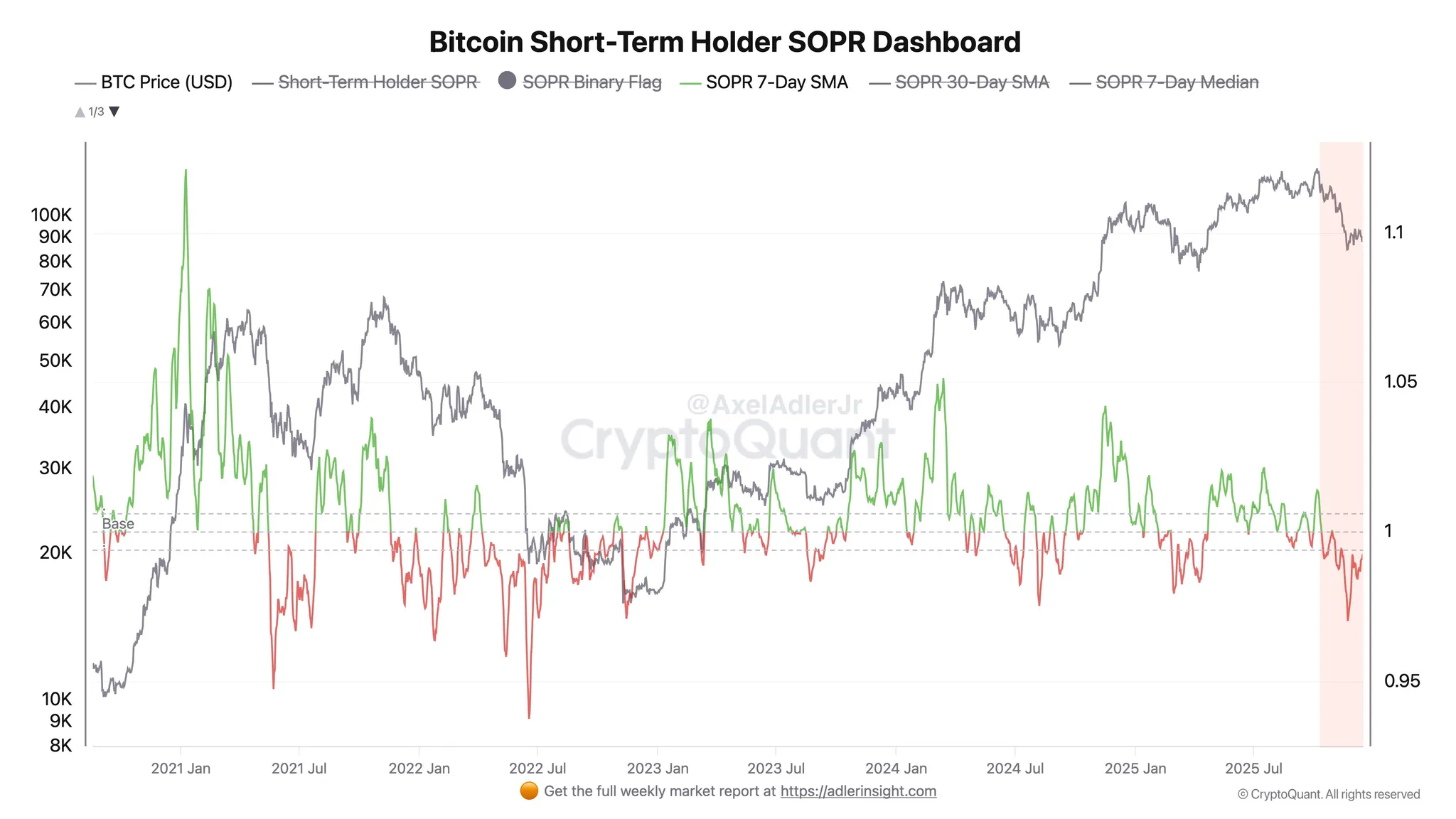
  • Realized Loss Scale: Over the past 30 days, short-term holders (holding <155 days) have realized losses exceeding $4.5 billion, second only to the $5.2 billion during the August 2024 Yen carry trade crash (Glassnode data). This indicates leveraged players and FOMO-driven散户 (retail investors) have largely capitulated.

  • SOPR Indicator: The Short-Term Holder SOPR (Spent Output Profit Ratio) has remained below 1 (indicating average selling at a loss) for over 3 weeks. History shows that after such deep capitulation, BTC often finds a阶段性底部 (stage bottom) within 1-3 months.

2. Exchange Reserves & Withdrawals: Strengthening De-platforming Trend
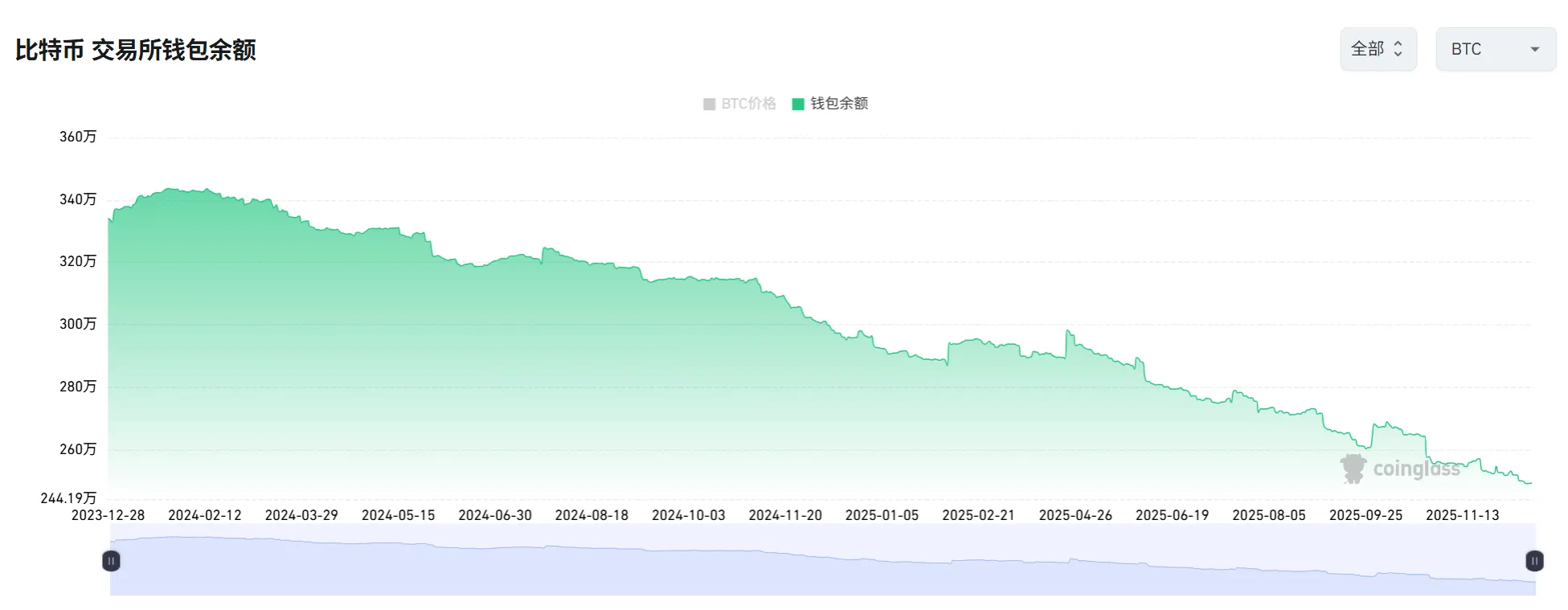
  • Exchange BTC Balance: Over the past 30 days, BTC reserves across all exchanges have decreased by approximately 120,000 coins (about 2.5%), falling below 2.6 million (CryptoQuant), the lowest level since 2018.

  • ETH Exchange Reserves: Decreased by about 1.2 million ETH during the same period, with withdrawal speeds hitting a 2025 high, reflecting strong staking and self-custody demand.

  • Stablecoin Reserves: Exchange balances of USDT/USDC have seen seasonal declines, but active addresses and transfer volumes on-chain remain stable, indicating capital has not left the ecosystem but is moving to cold storage awaiting re-entry.

Capital flowing out of exchanges often预示价格底部 (foreshadows a price bottom), reducing selling pressure while building momentum for a subsequent rebound.

3. Medium-to-Long Term Indicators: Concentration of Bottom Signals
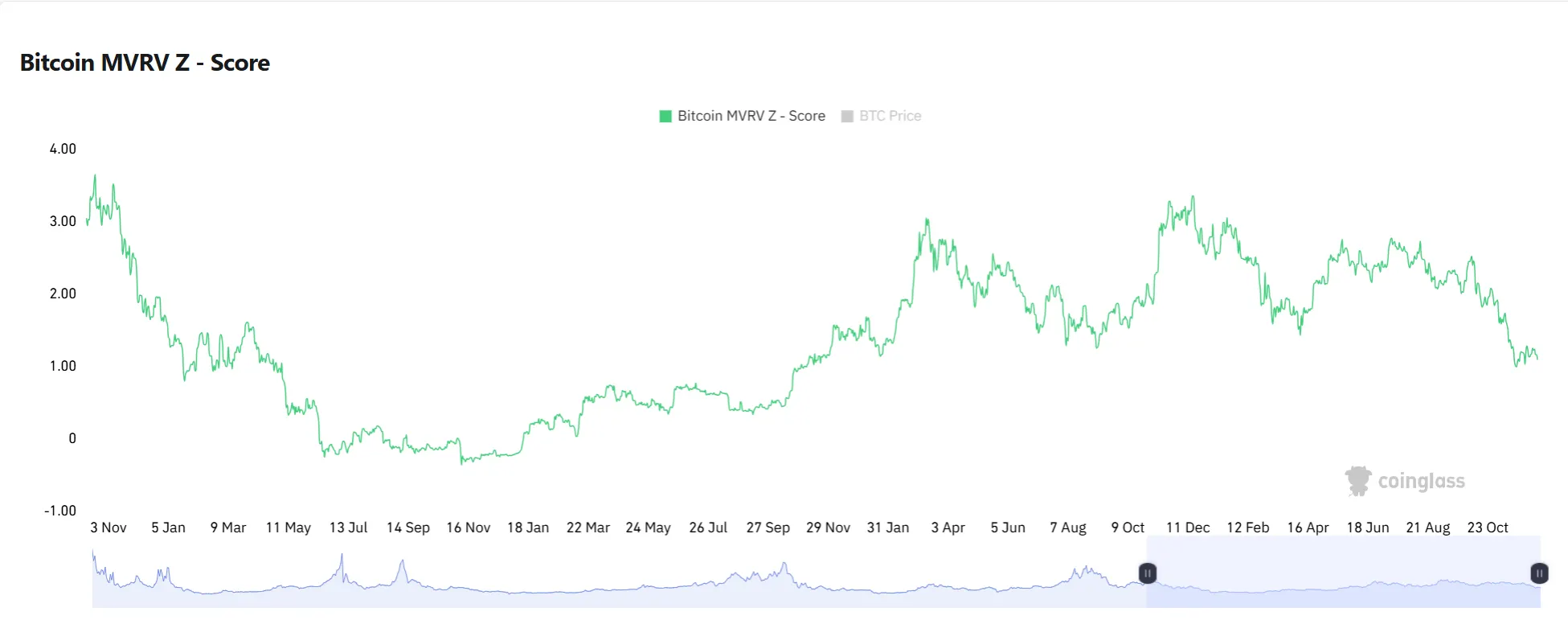
  • MVRV Z-Score: Currently at 1.1, entering the historical "green buy zone."

  • RHODL Ratio: Has fallen to levels seen at the bottom of the 2022 bear market, indicating market fervor has completely cooled.

  • Puell Multiple: The miner revenue indicator has fallen back to 0.6. Historical lows are often accompanied by price reversals following mining capitulation.

  • Active Addresses & Transaction Volume: Although低迷 (sluggish) short-term, the 30-day MA has not experienced a cliff-like drop, unlike the "activity exhaustion" seen at the 2021 bull market top.

Allocation Strategy: Finding Certainty Amid Uncertainty

The market is at a rare confluence:

  • Short-term sentiment is extremely fearful (Fear & Greed Index 25), but on-chain data shows a concentration of bottom characteristics.

  • The historical "Christmas Low - Spring Festival Rally" pattern provides seasonal support, validated successfully three times in the past five years.

  • Macro liquidity is about to turn (QT ended, RMP initiated), but is still suppressed by hawkish guidance in the short term.

  • The institutionalization process is accelerating, transforming the market structure from "speculation-driven" to "allocation-driven."

For investors seeking long-term value, the current environment provides a relatively clear risk-reward framework: deep capitulation by short-term holders, accelerated outflows from exchange reserves, continued accumulation by long-term holders, and valuation indicators like MVRV and RHODL entering historical buy zones—these signals, when they appeared in the past, have marked the opening of medium-to-long term allocation windows. For traders focused on liquidity management, December's liquidity drought period presents both risk and opportunity. Maintaining sufficient flexibility, preserving ammunition during market panic, and acting opportunistically when the Spring Festival effect is validated might be wiser than chasing short-term volatility.

Data for this report was compiled and edited by WolfDAO. Please contact us if you have any questions requiring updates;

Author: Nikka / WolfDAO ( X : @10xWolfdao )


Original link:https://www.bitpush.news/articles/7596651

Perguntas relacionadas

QWhat was the immediate market reaction to the December 10th FOMC decision to cut rates by 25 basis points?

AThe market reaction was muted, characterized by a 'buy the news, sell the fact' pullback, with Bitcoin briefly falling below the $90,000 mark.

QWhat long-term liquidity measure did the Fed announce alongside the rate cut, and what is its potential impact for 2026?

AThe Fed announced the 'Reserve Management Purchases' (RMP) plan to inject $40 billion per month in short-term Treasury liquidity. This is seen as a form of 'stealth QE' that could inject trillions in liquidity by 2026, potentially drive a re-rating of risk assets like crypto, and reshape market dynamics.

QAccording to the article, what key on-chain data signals suggest the market may be nearing a bottom?

AKey on-chain bottom signals include: Short-Term Holder (STH) capitulation with $4.5B in realized losses (2nd highest ever), STH SOPR below 1 for over 3 weeks, exchange reserves dropping to multi-year lows, and valuation metrics like MVRV Z-Score and RHODL Ratio entering historical buy zones.

QHow is institutional involvement in crypto changing, as described in the a16z report cited?

AInstitutional involvement is shifting from a 'retail-dominated' to an 'institution-dominated' paradigm. It's no longer an edge experiment but a systemic shift, with 83% of institutional investors planning to increase crypto allocations in 2025 and a focus expanding from just Bitcoin to ETH, altcoins, stablecoins, and tokenized real-world assets (RWA).

QWhat is the historical 'Christmas Low - Spring Festival Rally' pattern, and what are its main drivers?

AIt's a historical pattern where Bitcoin often forms a technical low around the Christmas holiday period due to low Western liquidity and then rallies around the Chinese Lunar New Year. The main drivers are: illiquid holiday markets amplifying sell pressure, and Asian capital inflows from year-end bonuses and red packets during the Spring Festival, alongside institutional portfolio rebalancing in the new fiscal year.

Leituras Relacionadas

Kicked Out of PayPal, Musk Aims for a Comeback in the Crypto Market

Elon Musk's X (formerly Twitter) has launched its "Smart Cashtags" feature, generating approximately $1 billion in trading volume within days of its April 2026 pilot launch. The feature allows users to click on stock or crypto tickers (or even full Solana token contract addresses) in posts to view real-time price charts and discussions without leaving the app. Initially available to iPhone users in the US and Canada, with a partnership in Canada enabling direct trading via the Wealthsimple app. This move is part of Musk's broader "Everything App" vision, spearheaded by the upcoming X Money platform. Analysts, such as Mizuho's Dan Dolev, see this as a potential disruptor to the US payments market, even prompting a downgrade of PayPal's stock. X Money's beta offers services like 6% APY on deposits, cashback, and P2P transfers, with speculation it may later incorporate crypto trading and stablecoin settlements for faster transactions. However, the ambitious plan faces significant regulatory scrutiny. Senator Elizabeth Warren has questioned the sustainability of the high 6% yield and raised concerns over X's banking partner, Cross River Bank, which has a history of regulatory violations. Additional risks involve the "GENIUS Act," which may create loopholes for stablecoin issuance without full FDIC insurance coverage, potentially leaving users unprotected. The integration of social trading on a platform with over 500 million users could inject new liquidity and retail interest into the crypto market. Yet, it also amplifies risks like herd mentality and the blurring of lines between entertainment and financial speculation. Musk's return to finance, after his ouster from PayPal, hinges on balancing innovation with regulatory compliance.

marsbitHá 19m

Kicked Out of PayPal, Musk Aims for a Comeback in the Crypto Market

marsbitHá 19m

Trading

Spot
Futuros

Artigos em Destaque

O que é BITCOIN

Compreender o HarryPotterObamaSonic10Inu (ERC-20) e a Sua Posição no Espaço Cripto Nos últimos anos, o mercado de criptomoedas assistiu a um aumento na popularidade das moedas meme, cativando não apenas os traders, mas também aqueles que procuram envolvimento comunitário e valor de entretenimento. Entre estes tokens únicos está o HarryPotterObamaSonic10Inu (ERC-20), um projeto intrigante que mistura referências culturais no tecido das criptomoedas. Este artigo explora os principais aspetos do HarryPotterObamaSonic10Inu, examinando os seus mecanismos, a sua ética orientada pela comunidade e o seu envolvimento com o vasto panorama cripto. O que é o HarryPotterObamaSonic10Inu (ERC-20)? Como o nome sugere, o HarryPotterObamaSonic10Inu é uma moeda meme construída na blockchain Ethereum, classificada sob o padrão ERC-20. Ao contrário das criptomoedas tradicionais, que podem enfatizar a utilidade prática ou o potencial de investimento, este token prospera no valor de entretenimento e na força da sua comunidade. O projeto visa promover um ambiente onde utilizadores envolvidos possam reunir-se, partilhar ideias e participar em atividades inspiradas por diversos fenómenos culturais. Uma característica notável do HarryPotterObamaSonic10Inu é a zero taxa sobre transações. Este elemento atraente visa encorajar a negociação e o envolvimento da comunidade, isento de encargos adicionais que podem desencorajar os traders de pequena escala. A oferta total da moeda está fixada em mil milhões de tokens, uma cifra que marca a sua intenção de manter uma circulação substancial dentro da comunidade. Criador do HarryPotterObamaSonic10Inu (ERC-20) As origens do HarryPotterObamaSonic10Inu estão um pouco envoltas em mistério; os detalhes sobre o criador permanecem desconhecidos. O desenvolvimento deste token carece de uma equipa identificável ou de um plano explícito, o que não é raro no setor das moedas meme. Em vez disso, o projeto surgiu de forma orgânica, com o seu progresso a depender fortemente do entusiasmo e da participação da sua comunidade. Investidores do HarryPotterObamaSonic10Inu (ERC-20) No que diz respeito a investimentos externos e apoios, o HarryPotterObamaSonic10Inu também permanece ambíguo. O token não lista quaisquer fundações de investimento conhecidas ou apoio organizacional significativo. Em vez disso, o “sangue vital” do projeto é a sua comunidade de base, que informa o seu crescimento e sustentabilidade através da ação coletiva e do envolvimento no espaço cripto. Como Funciona o HarryPotterObamaSonic10Inu (ERC-20)? Como uma moeda meme, o HarryPotterObamaSonic10Inu opera principalmente fora dos quadros tradicionais que muitas vezes governam o valor dos ativos. Existem vários aspetos distintivos que definem como o projeto funciona: Transações Sem Taxas: Sem taxas sobre transações, os utilizadores podem comprar e vender o token livremente, sem a preocupação de custos ocultos. Envolvimento da Comunidade: O projeto prospera na interação da comunidade, aproveitando plataformas de redes sociais para criar entusiasmo e facilitar a participação. Discussões, partilha de conteúdo e envolvimento são elementos cruciais que ajudam a expandir o seu alcance e a fomentar a lealdade entre os apoiantes. Sem Utilidade Prática: Deve ser notado que o HarryPotterObamaSonic10Inu não oferece utilidade concreta dentro do ecossistema financeiro. Em vez disso, é classificado como um token principalmente para entretenimento e atividades comunitárias. Referência Cultural: O token incorpora de forma inteligente elementos da cultura popular para atrair interesse, conectando-se tanto com entusiastas de memes como com seguidores de criptomoedas. HarryPotterObamaSonic10Inu exemplifica como as moedas meme operam de forma diferente de projetos de criptomoedas mais tradicionais, entrando no mercado como construções sociais inovadoras em vez de ativos utilitários. Linha do Tempo do HarryPotterObamaSonic10Inu (ERC-20) A história do HarryPotterObamaSonic10Inu é marcada por vários marcos notáveis: Criação: O token surgiu de um meme viral, capturando a imaginação de muitos entusiastas de criptomoedas. Datas específicas de criação não estão disponíveis, sublinhando a sua ascensão orgânica. Listagem em Exchanges: O HarryPotterObamaSonic10Inu conseguiu entrar em várias exchanges, permitindo um acesso e negociação mais fáceis pela comunidade. Iniciativas de Envolvimento da Comunidade: Atividades contínuas direcionadas a melhorar a interação comunitária, incluindo concursos, campanhas em redes sociais e geração de conteúdo por fãs e defensores. Planos de Expansão Futura: O roteiro do projeto inclui o lançamento de uma coleção de NFTs, mercadorias e um site de eCommerce relacionado aos seus temas culturais, envolvendo ainda mais a comunidade e tentando adicionar mais dimensões ao seu ecossistema. Pontos-Chave sobre o HarryPotterObamaSonic10Inu (ERC-20) Natureza Orientada pela Comunidade: O projeto prioriza a contribuição coletiva e a criatividade, assegurando que o envolvimento dos utilizadores está na vanguarda do seu desenvolvimento. Classificação como Moeda Meme: Representa o epítome da criptomoeda baseada em entretenimento, destacando-se dos veículos de investimento tradicionais. Sem Afiliação Direta com o Bitcoin: Apesar da semelhança no nome do ticker, o HarryPotterObamaSonic10Inu é distinto e não tem qualquer relação com o Bitcoin ou outras criptomoedas estabelecidas. Foco na Colaboração: O HarryPotterObamaSonic10Inu é projetado para criar um espaço de colaboração e partilha de histórias entre os seus detentores, proporcionando uma via para a criatividade e o fortalecimento da comunidade. Perspectivas Futuras: A ambição de expandir além da sua premissa inicial para NFTs e mercadorias delineia um caminho para o projeto potencialmente entrar em avenidas mais mainstream dentro da cultura digital. À medida que as moedas meme continuam a capturar a imaginação da comunidade cripto, HarryPotterObamaSonic10Inu (ERC-20) destaca-se devido aos seus laços culturais e abordagem centrada na comunidade. Embora possa não se encaixar no molde típico de um token orientado para utilidade, a sua essência reside na alegria e camaradagem fomentadas entre os seus apoiantes, destacando a natureza em evolução das criptomoedas em uma era cada vez mais digital. À medida que o projeto continua a desenvolver-se, será importante observar como as dinâmicas comunitárias influenciam a sua trajetória no panorama em constante mudança da tecnologia blockchain.

1.2k Visualizações TotaisPublicado em {updateTime}Atualizado em 2024.12.03

O que é BITCOIN

Como comprar BTC

Bem-vindo à HTX.com!Tornámos a compra de Bitcoin (BTC) simples e conveniente.Segue o nosso guia passo a passo para iniciar a tua jornada no mundo das criptos.Passo 1: cria a tua conta HTXUtiliza o teu e-mail ou número de telefone para te inscreveres numa conta gratuita na HTX.Desfruta de um processo de inscrição sem complicações e desbloqueia todas as funcionalidades.Obter a minha contaPasso 2: vai para Comprar Cripto e escolhe o teu método de pagamentoCartão de crédito/débito: usa o teu visa ou mastercard para comprar Bitcoin (BTC) instantaneamente.Saldo: usa os fundos da tua conta HTX para transacionar sem problemas.Terceiros: adicionamos métodos de pagamento populares, como Google Pay e Apple Pay, para aumentar a conveniência.P2P: transaciona diretamente com outros utilizadores na HTX.Mercado de balcão (OTC): oferecemos serviços personalizados e taxas de câmbio competitivas para os traders.Passo 3: armazena teu Bitcoin (BTC)Depois de comprar o teu Bitcoin (BTC), armazena-o na tua conta HTX.Alternativamente, podes enviá-lo para outro lugar através de transferência blockchain ou usá-lo para transacionar outras criptomoedas.Passo 4: transaciona Bitcoin (BTC)Transaciona facilmente Bitcoin (BTC) no mercado à vista da HTX.Acede simplesmente à tua conta, seleciona o teu par de trading, executa as tuas transações e monitoriza em tempo real.Oferecemos uma experiência de fácil utilização tanto para principiantes como para traders experientes.

3.8k Visualizações TotaisPublicado em {updateTime}Atualizado em 2025.03.21

Como comprar BTC

O que é $BITCOIN

OURO DIGITAL ($BITCOIN): Uma Análise Abrangente Introdução ao OURO DIGITAL ($BITCOIN) OURO DIGITAL ($BITCOIN) é um projeto baseado em blockchain que opera na rede Solana, com o objetivo de combinar as características dos metais preciosos tradicionais com a inovação das tecnologias descentralizadas. Embora partilhe um nome com o Bitcoin, frequentemente referido como “ouro digital” devido à sua percepção como uma reserva de valor, o OURO DIGITAL é um token separado projetado para criar um ecossistema único dentro da paisagem Web3. O seu objetivo é posicionar-se como um ativo digital alternativo viável, embora os detalhes sobre as suas aplicações e funcionalidades ainda estejam em desenvolvimento. O que é o OURO DIGITAL ($BITCOIN)? OURO DIGITAL ($BITCOIN) é um token de criptomoeda explicitamente projetado para uso na blockchain Solana. Em contraste com o Bitcoin, que fornece um papel amplamente reconhecido como armazenamento de valor, este token parece focar em aplicações e características mais amplas. Aspectos notáveis incluem: Infraestrutura Blockchain: O token é construído na blockchain Solana, conhecida pela sua capacidade de lidar com transações de alta velocidade e baixo custo. Dinâmicas de Oferta: O OURO DIGITAL tem um fornecimento máximo limitado a 100 quatrilhões de tokens (100P $BITCOIN), embora os detalhes sobre o seu fornecimento circulante ainda não tenham sido divulgados. Utilidade: Embora as funcionalidades precisas não estejam explicitamente delineadas, existem indicações de que o token poderia ser utilizado para várias aplicações, potencialmente envolvendo aplicações descentralizadas (dApps) ou estratégias de tokenização de ativos. Quem é o Criador do OURO DIGITAL ($BITCOIN)? Neste momento, a identidade dos criadores e da equipa de desenvolvimento por trás do OURO DIGITAL ($BITCOIN) permanece desconhecida. Esta situação é típica entre muitos projetos inovadores no espaço da blockchain, particularmente aqueles alinhados com finanças descentralizadas e fenómenos de moedas meme. Embora tal anonimato possa fomentar uma cultura orientada pela comunidade, intensifica as preocupações sobre governança e responsabilidade. Quem são os Investidores do OURO DIGITAL ($BITCOIN)? As informações disponíveis indicam que o OURO DIGITAL ($BITCOIN) não tem apoiantes institucionais conhecidos ou investimentos proeminentes de capital de risco. O projeto parece operar num modelo peer-to-peer focado no apoio e adoção da comunidade, em vez de rotas de financiamento tradicionais. A sua atividade e liquidez estão principalmente situadas em exchanges descentralizadas (DEXs), como a PumpSwap, em vez de plataformas de negociação centralizadas estabelecidas, destacando ainda mais a sua abordagem de base. Como Funciona o OURO DIGITAL ($BITCOIN) A mecânica operacional do OURO DIGITAL ($BITCOIN) pode ser elaborada com base no seu design de blockchain e nas características da rede: Mecanismo de Consenso: Ao aproveitar o exclusivo proof-of-history (PoH) da Solana combinado com um modelo de proof-of-stake (PoS), o projeto assegura uma validação eficiente das transações, contribuindo para o alto desempenho da rede. Tokenomics: Embora mecanismos deflacionários específicos não tenham sido extensivamente detalhados, o vasto fornecimento máximo de tokens implica que pode atender a microtransações ou casos de uso de nicho que ainda estão por definir. Interoperabilidade: Existe o potencial para integração com o ecossistema mais amplo da Solana, incluindo várias plataformas de finanças descentralizadas (DeFi). No entanto, os detalhes sobre integrações específicas permanecem não especificados. Cronologia de Eventos Chave Aqui está uma cronologia que destaca marcos significativos relacionados ao OURO DIGITAL ($BITCOIN): 2023: O lançamento inicial do token ocorre na blockchain Solana, marcado pelo seu endereço de contrato. 2024: O OURO DIGITAL ganha visibilidade ao tornar-se disponível para negociação em exchanges descentralizadas como a PumpSwap, permitindo que os utilizadores o negociem contra SOL. 2025: O projeto testemunha atividade de negociação esporádica e potencial interesse em envolvimentos liderados pela comunidade, embora não tenham sido documentadas parcerias ou avanços técnicos notáveis até ao momento. Análise Crítica Forças Escalabilidade: A infraestrutura subjacente da Solana suporta altos volumes de transações, o que pode aumentar a utilidade do $BITCOIN em vários cenários de transação. Acessibilidade: O potencial preço de negociação baixo por token pode atrair investidores de retalho, facilitando uma participação mais ampla devido a oportunidades de propriedade fracionada. Riscos Falta de Transparência: A ausência de apoiantes, desenvolvedores ou um processo de auditoria publicamente conhecidos pode gerar ceticismo em relação à sustentabilidade e confiabilidade do projeto. Volatilidade do Mercado: A atividade de negociação depende fortemente do comportamento especulativo, o que pode resultar em volatilidade significativa dos preços e incerteza para os investidores. Conclusão O OURO DIGITAL ($BITCOIN) surge como um projeto intrigante, mas ambíguo, dentro do ecossistema em rápida evolução da Solana. Embora tente aproveitar a narrativa do “ouro digital”, a sua divergência do papel estabelecido do Bitcoin como reserva de valor sublinha a necessidade de uma diferenciação mais clara da sua utilidade pretendida e estrutura de governança. A aceitação e adoção futuras dependerão provavelmente da abordagem da atual opacidade e da definição mais explícita das suas estratégias operacionais e económicas. Nota: Este relatório abrange informações sintetizadas disponíveis até outubro de 2023, e desenvolvimentos podem ter ocorrido além do período de pesquisa.

92 Visualizações TotaisPublicado em {updateTime}Atualizado em 2025.05.13

O que é $BITCOIN

Discussões

Bem-vindo à Comunidade HTX. Aqui, pode manter-se informado sobre os mais recentes desenvolvimentos da plataforma e obter acesso a análises profissionais de mercado. As opiniões dos utilizadores sobre o preço de BTC (BTC) são apresentadas abaixo.

活动图片














