XRP volume surges to $3.6B as Ripple expands Asia strategy

ambcryptoPublicado em 2026-03-26Última atualização em 2026-03-26

Resumo

Ripple's expansion in Singapore, including broader regulatory approval from the Monetary Authority of Singapore (MAS) and participation in the BLOOM initiative, has brought XRP back into focus. The company is piloting programmable trade settlement using the XRP Ledger and RLUSD to improve cross-border trade efficiency. Market reaction was swift, with XRP's trading volume surging to $3.6 billion and its price rising to $1.42. While this signals strong bullish interest, the long-term impact depends on whether these regulated initiatives translate into sustained real-world utility and transaction demand.

Ripple [XRP] is back in the spotlight, and this time the narrative centers on utility. Ripple’s Singapore expansion, its MAS-linked pilot, and the market’s fast reaction pushed XRP into the market’s discourse. Therefore, the question is simple: is this just another headline pop or the start of something more enduring?

Ripple expands its regulated footprint in Singapore

Ripple had already secured broader approval from the Monetary Authority of Singapore to expand payment activities under its Major Payment Institution license. That gave the firm more room to offer token-based settlement services and related payment rails in a market that had become central to its Asia-Pacific strategy.

This mattered because Singapore was not handing out credibility for free. Ripple’s local entity gained wider permissions to serve banks, fintechs, and crypto firms using XRP, RLUSD, and similar rails. However, that was more than a licensing update. It pushed Ripple further into a market that still took rules seriously.

Ripple has been in Singapore since 2017, and no other region has grown as quickly for the firm. Singapore wasn’t just a backdrop; it became one of Ripple’s most important proving grounds, a place where the company could advance real utility.

XRP Ledger and RLUSD in cross-border trade flows

The bigger shift came through MAS’s BLOOM initiative. Ripple joined the program with Unloq to pilot programmable trade settlement using Unloq’s SC+ infrastructure, Ripple’s technology, the XRP Ledger, and RLUSD.

The pilot targeted one of finance’s toughest challenges: cross‐border trade settlement, which for years has remained slow, fragmented, and painfully inefficient. Under this model, payments were released only after pre-agreed commercial conditions were met, such as shipment verification.

Therefore, this was not another vague blockchain promise. It tested whether digital settlement assets could actually reduce friction and improve trade finance access, especially for SMEs. In particular, that gave XRP’s utility case something it often lacked: a real-world framework with rules attached.

Could Singapore become a real utility catalyst?

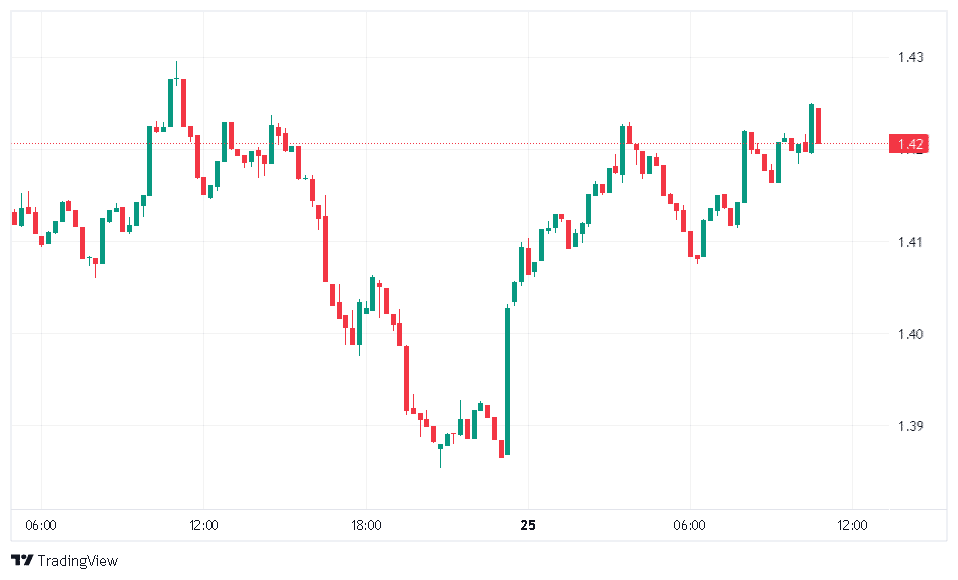
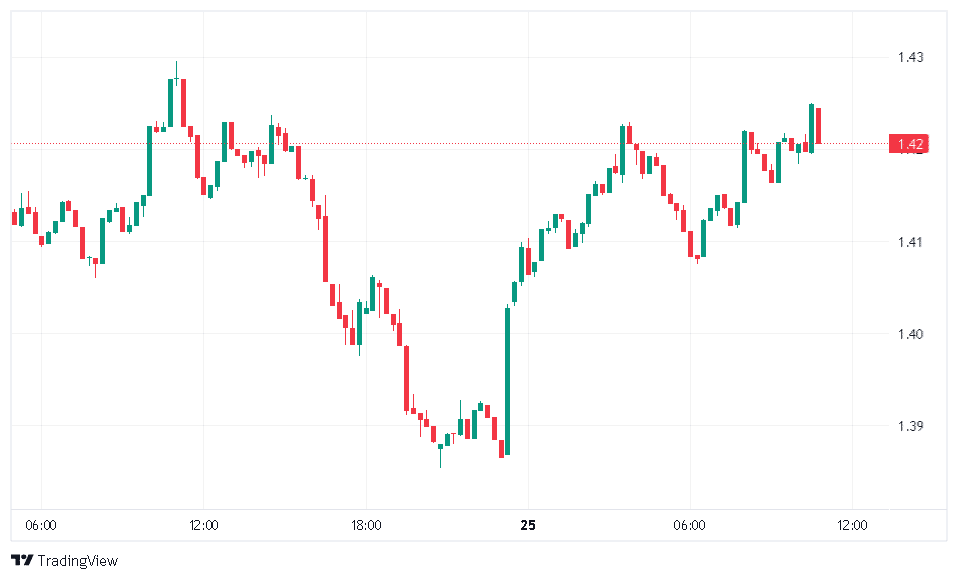
The market reacted quickly, and it did not do so quietly. XRP’s volume surged from $2.1 billion to $3.6 billion, at press time, while the price recovered from $1.38 to $1.42 as traders responded to the developments.
Source: CoinMarketCap

Rising volume alongside climbing prices signaled strong bullish participation Still, attention alone meant nothing.

XRP had seen excitement before, and much of it died fast. Looking ahead, Singapore could become a real utility catalyst, but failure to do so would mean this move would end up as just another temporary spike.


Final Summary

  • Ripple’s Singapore push gave XRP a harder, more credible utility narrative than the market usually gets.
  • The real test now lies in whether regulated pilots turn into sustained transaction demand.

Criptomoedas em alta

Perguntas relacionadas

QWhat was the main reason for XRP's trading volume surge to $3.6 billion?

AXRP's trading volume surged due to Ripple's expansion in Singapore, including its broader approval from the Monetary Authority of Singapore and participation in the MAS's BLOOM initiative for programmable trade settlement.

QHow did Ripple's Major Payment Institution license in Singapore benefit the company?

AThe license gave Ripple broader permissions to offer token-based settlement services and payment rails, allowing it to serve banks, fintechs, and crypto firms using XRP and RLUSD in the Singapore market.

QWhat specific problem does the MAS BLOOM initiative pilot program aim to solve?

AThe pilot program aims to address the challenges of cross-border trade settlement, which has been slow, fragmented, and inefficient, by using programmable payments that are triggered only after pre-agreed commercial conditions are met.

QWhat was the price movement of XRP following the news about Ripple's Singapore expansion?

AThe price of XRP recovered from $1.38 to $1.42 as traders responded to the developments in Ripple's Singapore strategy.

QWhy is Singapore considered a critical market for Ripple's Asia-Pacific strategy?

ASingapore is Ripple's fastest-growing region since 2017 and serves as a key proving ground for advancing real utility, thanks to its regulatory clarity and strategic importance in the Asia-Pacific region.

Leituras Relacionadas

Dialogue with Jia Hang | Looking Back at Two Decades of Chinese Payment Going Global

**Summary: A Conversation with Jia Hang on Two Decades of China's Payment Globalization** Jia Hang, a veteran with over twenty years in payments, reflects on China's attempts to build a global payment network through three key phases: UnionPay (card networks), Alipay+ (digital wallets), and now, stablecoins. His journey began at UnionPay International, aiming to establish China's card network abroad. While successful in following Chinese tourists ("where Chinese go, UnionPay goes"), it struggled to achieve true global scale. The core lesson: card networks like Visa/Mastercard's unassailable advantage isn't just technical standards, but their deeply entrenched **governance and profit-sharing models** that create powerful network effects. Competing as the "same species" is nearly impossible. At Ant Group, he led Alipay+, a strategy to bypass card networks by interconnecting local e-wallets worldwide. While innovative, it faced a similar ceiling. Mobile QR payments and card swipes were essentially **the same species competing for the same pie**, lacking a disruptive value proposition for users or a sustainable new incentive model to replace the card networks' established flywheel. Today, at Singapore's DCS, Jia focuses on stablecoin-based payments. He argues stablecoins represent a fundamental shift. They are not competing with Visa for consumer payments but challenging the **traditional banking and account system for value movement**. Products like "U Cards" (stablecoin-linked payment cards) are transitional, leveraging existing card networks for acceptance while building new rails. The real potential lies in stablecoins enabling seamless, low-cost global value transfer, potentially reorganizing the financial infrastructure around **accounts rather than cards**. Jia believes stablecoin adoption for local retail payments, cross-border transactions, and as high-yield savings vehicles is becoming irreversible. This could gradually reduce reliance on traditional fiat channels, especially in regions with weak currencies or capital controls. The quest for the "next global payment network" continues, now centered on whether stablecoins can successfully bridge Web2 and Web3, establish new governance, and create compelling user value beyond mere cost reduction.

marsbitHá 8m

Dialogue with Jia Hang | Looking Back at Two Decades of Chinese Payment Going Global

marsbitHá 8m

Circle's Stock Price Plunges 76%, Hong Kong Dollar Stablecoin Set to Launch Within Two Weeks

Circle's stock price has plunged approximately 76% from its 2023 peak, reflecting a major market revaluation. Despite this, Circle President Heath Tarbert emphasized the company's focus on long-term execution and its dominant position with USDC's $73 billion circulation across 34 blockchains. The competitive landscape is intensifying. A new consortium-backed stablecoin, Open USD, is attempting to challenge incumbents by sharing reserve yields with partners. More significantly, Visa's new stablecoin platform, initially supporting Open USD while also being compatible with USDC, could erode Circle's network effects. In response, Circle is expanding into real-world payments through partnerships like the one with Japan's JCB. Separately, Tether (USDT) faces a two-year compliance window under new U.S. regulations, requiring it to adjust its reserve composition away from assets like Bitcoin and loans towards cash and U.S. Treasuries. Meanwhile, in Hong Kong, Standard Chartered-backed fintech firm Dian Dian is poised to launch a licensed HKD-pegged stablecoin (HKDAP), moving the industry into a phase where the real test is integrating licensed stablecoins into actual payment flows and corporate treasury systems. The sharp decline in Circle's stock underscores a broader shift: the stablecoin market is moving from a winner-takes-all dynamic to a multi-player competitive arena where execution, compliance, and real-world utility are becoming paramount.

marsbitHá 9m

Circle's Stock Price Plunges 76%, Hong Kong Dollar Stablecoin Set to Launch Within Two Weeks

marsbitHá 9m

Amidst Capital's Encirclement, Decentralization is the Sole Defense for Public Blockchains

In a landscape dominated by power and profit motives, the author argues that decentralization is not merely one desirable feature among many in blockchain design—it is the singular, non-negotiable defense against corporate and capital capture. The article adopts a Machiavellian, realist perspective on human institutions, positing that businesses will inevitably attempt to co-opt any valuable network to protect their profits and dominance. While external attacks like 51% forks are often discussed, the greater existential risk is internal capture—the gradual erosion of a protocol’s neutrality by vested interests, as seen historically with platforms like Visa and Google. The piece critiques permissioned chains, highly centralized “permissionless” layer-1s, and layer-2s without sufficient decentralization (e.g., single sequencers) as inherently vulnerable. These compromised systems, promoted by established financial players, are framed as delaying tactics to stifle truly open networks that threaten existing high-fee, inefficient business models. Real-world examples, such as closed enterprise consortiums that exclude competitors, illustrate how such systems cement oligopolies rather than foster innovation. The author concludes that while decentralized protocols like Ethereum are imperfect and costly to operate, they represent the only viable long-term equilibrium. In a market where value naturally flows to the most secure and neutral settlement layer, only maximally decentralized public blockchains can resist being subsumed by capital and powerful incumbents.

Foresight NewsHá 19m

Amidst Capital's Encirclement, Decentralization is the Sole Defense for Public Blockchains

Foresight NewsHá 19m

Who Decides the Rules of Bitcoin? BIP-110 Ignites Governance Debate

Bitcoin's governance is once again at the center of a heated debate, this time ignited by BIP-110, the "Reduced Data Temporary Softfork." This proposal aims to curb non-monetary data (like inscriptions and Runes) by introducing seven new consensus-layer restrictions over a year, such as limiting new output scripts to 34 bytes and restoring the OP_RETURN cap to 83 bytes. The controversy stems from BIP-110's fundamental shift: it moves the battle against "spam" from node relay and miner policies to the consensus layer, rendering currently valid transactions invalid. Supporters, arguing that default policy governance has failed (highlighted by Bitcoin Core v30's relaxation of OP_RETURN limits), see this as necessary to protect node resources and Bitcoin's monetary focus. Opponents, led by figures like Michael Saylor and Adam Back, warn it dangerously centralizes governance. Saylor listed 110 reasons against it, criticizing its low 55% miner activation threshold and potential for chain splits. Back emphasized Bitcoin's "permissionless" ethos, arguing no single group should impose value judgments via consensus rules. Further complicating matters, technical critiques suggest BIP-110 may be technically circumventable, and a "BlockSlop" vulnerability in its upgrade path poses a consensus risk. The debate has drawn in diverse stakeholders: miners (with pools like Ocean signaling support and Foundry polling clients), node operators (like Bitcoin Knots), and new players like corporate treasury holder MicroStrategy (Saylor), whose market influence adds a novel dimension. Ultimately, BIP-110 acts as a governance stress test, exposing the unresolved question: who decides Bitcoin's rules? It pits the authority of miners, node operators, developers, and capital holders against each other, with each side claiming to defend Bitcoin's core principles of neutrality and security.

marsbitHá 36m

Who Decides the Rules of Bitcoin? BIP-110 Ignites Governance Debate

marsbitHá 36m

Trading

Spot

Artigos em Destaque

O que é XRP 2.0

XRP 2.0: Uma Nova Fronteira no Landscape das Criptomoedas Introdução ao XRP 2.0 No reino em constante evolução das criptomoedas, novos projetos surgem continuamente, lutando por atenção e adoção. Uma dessas iniciativas promissoras é o XRP 2.0, um novo projeto de criptomoeda concebido para aproveitar a tecnologia de blockchain avançada e as metodologias de criptografia robustas. Embora o nome tenha paralelos com o XRP da Ripple, é crucial notar que o XRP 2.0 opera de forma independente, focando em melhorar a segurança das transações, a privacidade e a escalabilidade. À medida que o panorama financeiro digital abraça cada vez mais soluções descentralizadas, o XRP 2.0 visa contribuir de forma significativa para a web3 e a expansão global dos projetos de criptomoedas. O que é o XRP 2.0? No seu núcleo, o XRP 2.0 é um projeto de criptomoeda que visa criar um ecossistema de moeda digital seguro e descentralizado. Sua tecnologia fundamental integra princípios de blockchain sofisticados com técnicas de criptografia de ponta. O objetivo abrangente do XRP 2.0 é estabelecer-se como uma plataforma confiável e eficiente que possibilita a execução rápida de transações, priorizando a proteção de privacidade aprimorada para os seus usuários. O projeto é promovido como uma solução para muitas limitações enfrentadas pelas criptomoedas existentes, propondo um sistema que pode lidar com um volume maior de transações com velocidade e privacidade melhoradas. Esta versatilidade posiciona o XRP 2.0 como um concorrente significativo em um mercado repleto de várias moedas digitais. Quem é o Criador do XRP 2.0? A identidade do criador por trás do XRP 2.0 foi identificada como 'Wilbur.' No entanto, detalhes abrangentes sobre Wilbur ou a sua entidade associada permanecem elusivos. O anonimato de muitos criadores de criptomoedas não é um fenômeno incomum na indústria, muitas vezes concebido para manter um grau de privacidade e segurança. Quem são os Investidores do XRP 2.0? Até agora, informações específicas relacionadas às fundações ou organizações de investimento que apoiam o XRP 2.0 não estão disponíveis publicamente. No setor das criptomoedas, o apoio de investidores reputados pode influenciar significativamente a credibilidade e o sucesso de um projeto, no entanto, a transparência em relação aos apoiantes financeiros do XRP 2.0 não foi estabelecida. Como Funciona o XRP 2.0? O XRP 2.0 destaca-se por empregar uma combinação de tecnologia blockchain e algoritmos de criptografia avançados que asseguram transações seguras e descentralizadas. Sua estrutura inovadora inclui características únicas projetadas para fomentar o envolvimento dos usuários e ampliar as funcionalidades além das transações convencionais de criptomoedas. Entre essas características, o XRP 2.0 incorpora capacidades potenciadas por IA, como funcionalidades de texto-para-imagem e texto-para-fala. Estas adições são projetadas para melhorar a experiência interativa dos usuários, promovendo uma maior aplicabilidade em vários setores. Ao unir avanços tecnológicos com um design centrado no utilizador, o XRP 2.0 pretende captar a atenção de uma diversa gama de indivíduos e empresas que procuram integrar soluções de criptomoedas em suas estruturas operacionais. Cronologia do XRP 2.0 Compreender o XRP 2.0 requer examinar os marcos que definiram sua jornada até agora: 23 de Julho de 2023: O XRP 2.0 é apresentado como um novo projeto de criptomoeda, visando revolucionar as capacidades de transação seguras e descentralizadas no domínio do blockchain. 8 de Setembro de 2023: O lançamento de outro projeto, XRP20, ocorre, marcando o surgimento de um token ERC-20 na blockchain Ethereum que permanece não relacionado ao XRP 2.0. 13 de Novembro de 2023: O XRP Ledger passa por uma atualização significativa com o lançamento da versão 2.0.0 do software do servidor rippled. É importante notar que este desenvolvimento está desconectado do projeto de criptomoeda XRP 2.0. Pontos-chave sobre o XRP 2.0 Para destilar a essência do XRP 2.0, vários fatores críticos emergem: Características Únicas: A inclusão de características como texto-para-imagem e texto-para-fala potenciadas por IA diversifica ainda mais as aplicações potenciais do XRP 2.0. Tecnologia Blockchain: A estrutura utiliza mecanismos de blockchain avançados e protocolos de criptografia, assegurando um ambiente seguro e descentralizado para transações. Escalabilidade e Privacidade: O XRP 2.0 prioriza proteção de privacidade aprimorada nos processos de transação e a escalabilidade necessária para acomodar uma base de utilizadores crescente. Sem Afiliação com a Ripple: Importante, apesar do seu nome, o XRP 2.0 não tem qualquer lealdade ou colaboração com o XRP da Ripple, distinguindo sua estrutura operacional e objetivos dentro do ecossistema das criptomoedas. Conclusão O XRP 2.0 representa uma empreitada ambiciosa no domínio das criptomoedas, visando oferecer uma combinação de segurança, privacidade e eficiência em transações digitais. Ao integrar tecnologias sofisticadas e características amigáveis ao utilizador, o projeto propõe-se a ampliar os horizontes do que as criptomoedas podem alcançar na economia digital atual. Embora o anonimato do seu criador e a falta de investidores divulgados possam levantar questões para alguns, o foco do XRP 2.0 em funcionalidades avançadas e descentralização aumenta seu apelo num mercado de criptomoedas cada vez mais congestionado. À medida que o panorama das criptomoedas continua a evoluir, o XRP 2.0 pode ainda emergir como um jogador crucial na expansão de soluções de blockchain seguras e escaláveis.

130 Visualizações TotaisPublicado em {updateTime}Atualizado em 2024.12.03

O que é XRP 2.0

Como comprar XRP

Bem-vindo à HTX.com!Tornámos a compra de XRP (XRP) simples e conveniente.Segue o nosso guia passo a passo para iniciar a tua jornada no mundo das criptos.Passo 1: cria a tua conta HTXUtiliza o teu e-mail ou número de telefone para te inscreveres numa conta gratuita na HTX.Desfruta de um processo de inscrição sem complicações e desbloqueia todas as funcionalidades.Obter a minha contaPasso 2: vai para Comprar Cripto e escolhe o teu método de pagamentoCartão de crédito/débito: usa o teu visa ou mastercard para comprar XRP (XRP) instantaneamente.Saldo: usa os fundos da tua conta HTX para transacionar sem problemas.Terceiros: adicionamos métodos de pagamento populares, como Google Pay e Apple Pay, para aumentar a conveniência.P2P: transaciona diretamente com outros utilizadores na HTX.Mercado de balcão (OTC): oferecemos serviços personalizados e taxas de câmbio competitivas para os traders.Passo 3: armazena teu XRP (XRP)Depois de comprar o teu XRP (XRP), armazena-o na tua conta HTX.Alternativamente, podes enviá-lo para outro lugar através de transferência blockchain ou usá-lo para transacionar outras criptomoedas.Passo 4: transaciona XRP (XRP)Transaciona facilmente XRP (XRP) no mercado à vista da HTX.Acede simplesmente à tua conta, seleciona o teu par de trading, executa as tuas transações e monitoriza em tempo real.Oferecemos uma experiência de fácil utilização tanto para principiantes como para traders experientes.

1.7k Visualizações TotaisPublicado em {updateTime}Atualizado em 2026.06.02

Como comprar XRP

Discussões

Bem-vindo à Comunidade HTX. Aqui, pode manter-se informado sobre os mais recentes desenvolvimentos da plataforma e obter acesso a análises profissionais de mercado. As opiniões dos utilizadores sobre o preço de XRP (XRP) são apresentadas abaixo.

活动图片