XRP Releases Major Update Aimed at Wall Street Giants!

cryptonews.ruPublished on 2026-10-10Last updated on 2026-10-10

Abstract

The XRP Ledger (XRPL) has activated a major new update, PermissionDelegationV1_1, targeting Wall Street institutions like banks, stablecoin issuers, and tokenized fund managers. This system allows corporate users to delegate specific account permissions—such as customer verification, payment processing, or account freezing—to other accounts without compromising the security of their master account's private keys. Organizations can delegate up to ten distinct permissions via a single account, and the master account owner can revoke these delegated rights at any time. The upgrade aims to provide a more secure and flexible framework for institutional account management on the XRPL.

$XRP Ledger (XRPL) has introduced a new authorization system that allows banks, stablecoin issuers, and tokenized fund managers to manage accounts more securely and flexibly.

The activated PermissionDelegationV1_1 update enables corporate users to delegate specific operational permissions to various accounts while keeping the private keys of their primary accounts offline.

The new system allows organizations to delegate limited access rights to other accounts for actions such as customer verification, payment processing, and account freezing, without transferring control of the main account. Through one account, a maximum of 10 different access rights can be delegated, and these rights can be revoked at any time by the owner of the primary account.

Trending Cryptos

Related Questions

QWhat is the main feature introduced in the XRPL update mentioned in the article?

AThe main feature is a new authorization system called PermissionDelegationV1_1, which allows banks, stablecoin issuers, and tokenized fund managers to more securely and flexibly manage their accounts.

QWhich specific entities or organizations is the new XRPL feature aimed at?

AThe feature is aimed at banks, stablecoin issuers, and managers of tokenized funds.

QHow does the new PermissionDelegationV1_1 system help corporate users with security?

AIt allows corporate users to delegate permissions for specific actions to different accounts while keeping their main account's private keys offline, thus enhancing security.

QWhat are some examples of actions that can be delegated to other accounts using this new system?

AExamples include customer verification, payment processing, and account blocking.

QWhat are the limits and control measures for delegating permissions, as mentioned in the article?

AA single account can delegate a maximum of 10 different permissions, and these permissions can be revoked at any time by the owner of the main account.

Related Reads

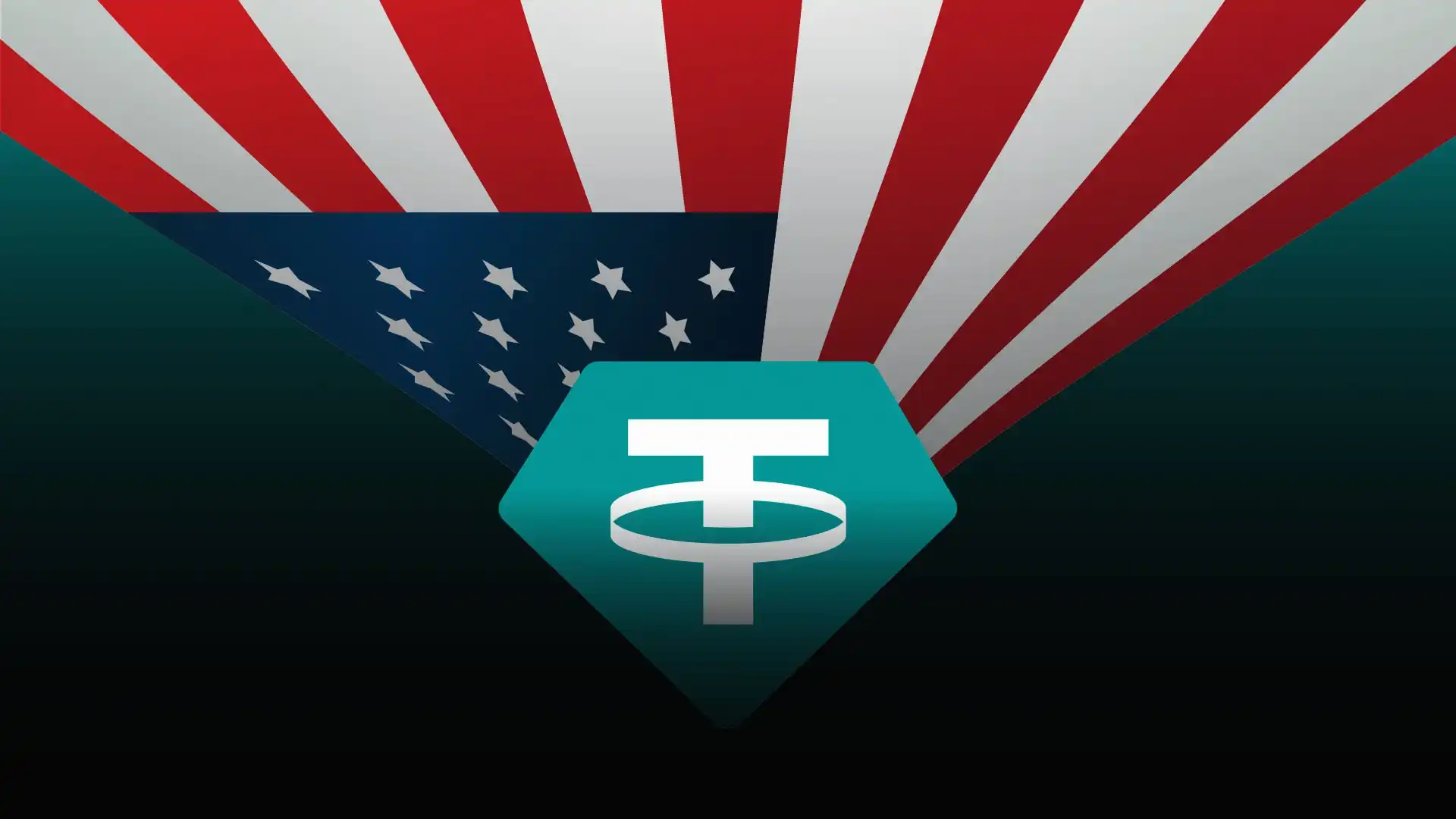
4.8 Billion Dollars: Tether's Hand Has Reached Into 13 U.S. Public Companies

Tether, the world's largest stablecoin issuer, holds roughly $4.8 billion in public-market exposure across 13 U.S.-listed companies, according to a Protos review of regulatory filings. Its holdings span a controversial video platform, gold royalty companies, a satellite firm, bitcoin miners, and a bitcoin treasury project. Key positions include a 50.3% stake (including warrants) in Rumble (RUM), though voting power is capped below 9.9%; Rumble has also acquired Tether's Northern Data and counts Tether as its most important advertising client, committed to $50 million annually for two years. Tether and Bitfinex are controlling shareholders of Twenty One Capital (XXI), with rights to nominate four of seven directors, including Tether CEO Paolo Ardoino; the company trades at about 60% of its bitcoin value. In gold, Tether holds about 27% of Elemental Royalty (ELE), 12.6% of Gold.com (GOLD), 12.6% of Versamet Royalties (VMET), 14.6% of Metalla (MTA), 14.4% of Gold Royalty (GROY), 12% of Aurelion (AURE), and about 8% of Antalpha (ANTA). It also holds 19.7% of Bitdeer (BTDR) and a stake in Adecoagro (AGRO), plus shares in Satellogic (SATL), 9.9% of SDEV (down about 99%), and a stake in VCI Global (VCIG) via Oobit. Powerlaw Corp (PWRL) claims roughly $20 million in Tether equity. The exposure is concentrated in a few large holdings—Twenty One, Rumble, and Adecoagro—showing Tether's growing role as a multi-sector financial institution that also places executives in key positions.

marsbit18m ago

4.8 Billion Dollars: Tether's Hand Has Reached Into 13 U.S. Public Companies

marsbit18m ago

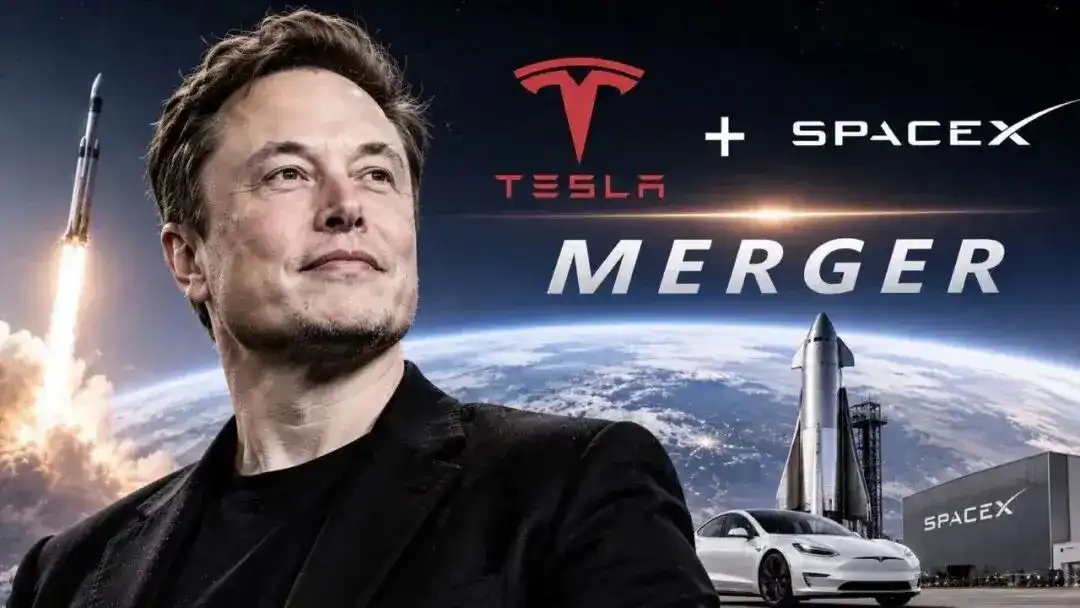
Tesla and SpaceX Merger Accelerates: A $3.47 Trillion Giant, Deal Could Be Announced as Early as December

Tesla and SpaceX are reportedly advancing merger talks, with a deal potentially announced as early as December, though complex corporate structure and regulatory issues could delay it to early 2027. Based on recent market values—SpaceX at about $1.90 trillion and Tesla at about $1.57 trillion—the combined entity would be worth roughly $3.47 trillion, making it one of the largest corporate integrations in history and bringing rocket launch, satellite internet, EVs, energy storage, AI, and robotics under one roof. In October, Musk called a merger "a good idea" and confirmed both companies had formed independent director special committees. The strategic logic centers on AI infrastructure—chips, compute, and energy—with the Terafab chip manufacturing joint venture as a concrete example, expected to produce first test chips in mid-2027 and reach mass production in Q3 2028. Shareholder impact is significant: Musk holds about 40-45% economic interest in SpaceX with over 80% voting power via dual-class shares, versus nearly 20% of Tesla with equal voting rights, raising questions about control and whether Tesla shareholders would accept a new structure. Regulatory hurdles may be the hardest obstacle, given SpaceX's sensitive U.S. defense contracts and Tesla's major China operations, implicating CFIUS and Chinese regulators. The merger reflects Musk's ambition to unify his business empire around a shared technology base spanning Earth and space.

marsbit53m ago

Tesla and SpaceX Merger Accelerates: A $3.47 Trillion Giant, Deal Could Be Announced as Early as December

marsbit53m ago

10-Second 4K Image Generation: MiniMax Once Again Delivers Open-Source SOTA

MiniMax has released MiniMax H3 Image, an open-source image generation model that has quickly claimed state-of-the-art status among open-weight models. It natively outputs 4K images (around 16 million pixels) in roughly 10 seconds with the fast version, supports up to 16 reference images, and ranks first among open-weight models on Artificial Analysis for both text-to-image and image editing. The model is available via web, API, and local deployment on GitHub and HuggingFace. In hands-on tests, H3 Image produced highly realistic WeChat chat screenshots with accurate iPhone status bar details, rendered complex graffiti-style text ("MiniMax H3 Image") with 3D lettering and spray-paint effects, and generated convincing Victoria's Secret backstage photos, cinematic street portraits, and Y2K-style retro portraits. It also handled image-to-image tasks well: turning a photo into a hand-drawn sticker, adding CCTV-style face bounding boxes and zoom-ins, and converting realistic images into anime collage styles. The model further demonstrated understanding of physical structure by generating a labeled exploded-view diagram of a 35mm camera, producing accurate outfit try-on images, e-commerce product posters, and typography-heavy Eastern botanical posters, and following complex multi-reference editing instructions. Architecturally, H3 Image derives from MiniMax's full-modal video model H3, retaining its backbone and text encoder (a 32-billion-parameter multimodal language model) while dropping the audio branch. Its core is a 33.1-billion-parameter diffusion Transformer using 3D multimodal rotary position encoding, with text and reference-image tokens processed in a single stream and decoded by a VAE. Native generation avoids external super-resolution. The video-first lineage is credited with giving the model strong visual world knowledge, including viewpoint, material, lighting, and motion understanding. The release has energized the global AI community: derivatives such as Pruna's P-H3-Image, Nvidia's Sol-H3, and Pika H3 Flex have appeared, with roughly 220 H3-based entries on Hugging Face. Chinese open-source technology is increasingly the foundation for overseas teams, and MiniMax is building a commercial loop around free weights plus paid hosted APIs and subscriptions. The article argues competition is shifting from raw model capability to ecosystem strength.

marsbit1h ago

10-Second 4K Image Generation: MiniMax Once Again Delivers Open-Source SOTA

marsbit1h ago

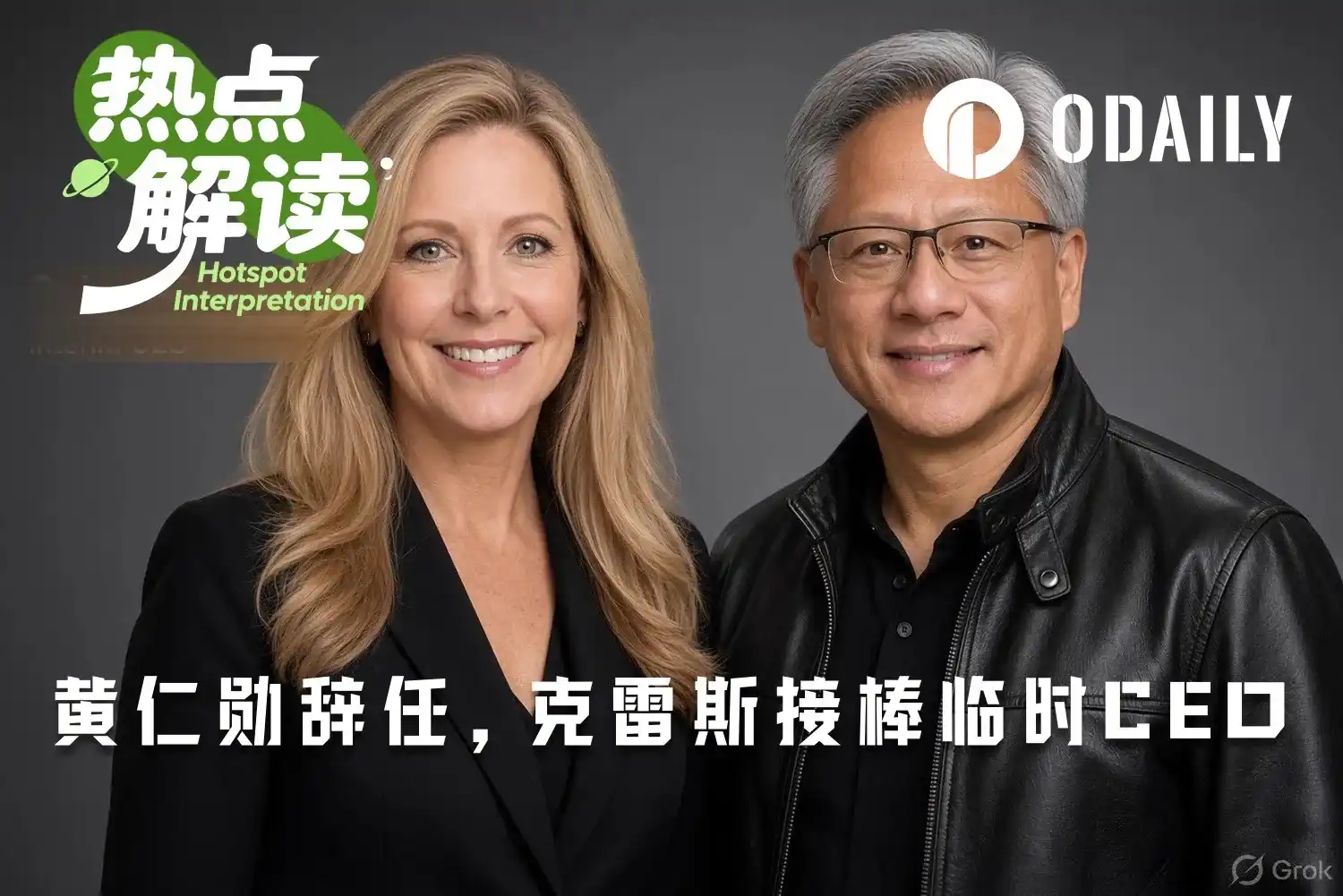
Jensen Huang Resigns, CFO Becomes NVIDIA Interim CEO, Who Is Kress?

NVIDIA announced on November 12 that co-founder Jensen Huang has resigned as president, CEO, and board member, effective immediately, after scandals involving extramarital affairs. The board accepted his resignation on November 11, and Huang, who led the company for 33 years and holds about 3.6% of shares, also left the board entirely. CFO Colette Kress has been appointed interim CEO while continuing as EVP and CFO; she becomes the first female leader in NVIDIA's history. Former Synopsys CEO Harvey C. Jones, a director since 1993, becomes the company's first independent board chair. The board will search for a permanent CEO internally and externally. Kress, 59, holds a finance degree from the University of Arizona and an MBA from SMU Cox, and previously worked at Texas Instruments, Microsoft, and Cisco before joining NVIDIA in 2013 at Huang's invitation. During her 13 years as CFO, NVIDIA's revenue grew from $4.13 billion in FY2014 to $215.9 billion in FY2026, roughly 52-fold, and she became a billionaire in July 2025 with a net worth of about $1–1.2 billion. The resignation followed reports of Huang's infidelity, including a New York Times report of a romantic relationship with NVIDIA healthcare VP Kimberly Powell. NVIDIA shares fell sharply, hitting a five-month low below $150 before recovering to about $160. The board expressed confidence that operations, customer commitments, and product roadmaps will not be disrupted.

marsbit1h ago

Jensen Huang Resigns, CFO Becomes NVIDIA Interim CEO, Who Is Kress?

marsbit1h ago

Trading

Spot

Hot Articles

What is XRP 2.0

XRP 2.0: A New Frontier in the Cryptocurrency Landscape Introduction to XRP 2.0 In the ever-evolving realm of cryptocurrency, new projects continuously emerge, vying for attention and adoption. One such promising initiative is XRP 2.0, a novel cryptocurrency project designed to leverage advanced blockchain technology and robust encryption methodologies. While the name draws parallels with Ripple’s XRP, it’s crucial to note that XRP 2.0 operates independently, focusing on enhancing transaction security, privacy, and scalability. As the digital financial landscape increasingly embraces decentralized solutions, XRP 2.0 aims to contribute meaningfully to web3 and the overall expansion of crypto projects. What is XRP 2.0? At its core, XRP 2.0 is a cryptocurrency project that aims to create a secure and decentralized digital currency ecosystem. Its foundational technology integrates sophisticated blockchain principles with cutting-edge encryption techniques. The overarching goal of XRP 2.0 is to establish itself as a reliable and efficient platform enabling swift transaction execution while prioritizing enhanced privacy protections for its users. The project is promoted as a solution to many limitations faced by existing cryptocurrencies, proposing a system that can handle a higher volume of transactions with improved speed and privacy. This versatility positions XRP 2.0 as a significant contender in a marketplace riddled with various digital currencies. Who is the Creator of XRP 2.0? The identity of the creator behind XRP 2.0 has been flagged as ‘Wilbur.’ However, comprehensive details regarding Wilbur or their associated entity remain elusive. The anonymity of many cryptocurrency creators is not an uncommon phenomenon in the industry, often designed to maintain a degree of privacy and security. Who are the Investors of XRP 2.0? As of now, specific information related to the investment foundations or organizations supporting XRP 2.0 is not publicly available. In the cryptocurrency sector, the backing by reputed investors can significantly influence a project's credibility and success, yet the transparency regarding the financial supporters of XRP 2.0 has not been established. How Does XRP 2.0 Work? XRP 2.0 stands out by employing a combination of blockchain technology and advanced encryption algorithms that ensures secure and decentralized transactions. Its innovative structure includes unique features designed to foster user engagement and broaden functionalities beyond conventional cryptocurrency transactions. Among these features, XRP 2.0 incorporates AI-powered capabilities, such as text-to-image and text-to-speech functionalities. These additions are designed to enhance the interactive experience for users, promoting broader applicability across various sectors. By bridging technological advancements with user-centered design, XRP 2.0 aims to capture the attention of a diverse range of individuals and enterprises looking to integrate cryptocurrency solutions into their operational frameworks. Timeline of XRP 2.0 Understanding XRP 2.0 requires examining the milestones that have defined its journey thus far: July 23, 2023: XRP 2.0 is introduced as a novel cryptocurrency project, aiming to revolutionize secure and decentralized transaction capabilities in the blockchain domain. September 8, 2023: The launching of another project, XRP20, occurs, marking the emergence of an ERC-20 token on the Ethereum blockchain that remains unrelated to XRP 2.0. November 13, 2023: The XRP Ledger undergoes a significant update with the release of rippled server software version 2.0.0. It is essential to note that this development is disconnected from the XRP 2.0 cryptocurrency project. Key Points About XRP 2.0 To distill the essence of XRP 2.0, several critical factors emerge: Unique Features: The inclusion of features like AI-powered text-to-image and text-to-speech further diversifies the potential applications of XRP 2.0. Blockchain Technology: The framework utilizes advanced blockchain mechanisms and encryption protocols, ensuring a secure and decentralized environment for transactions. Scalability and Privacy: XRP 2.0 prioritizes enhanced privacy protections in transaction processes and the scalability necessary to accommodate a growing user base. No Affiliation with Ripple: Importantly, despite its name, XRP 2.0 does not have any allegiance or collaboration with Ripple’s XRP, distinguishing its operational framework and objectives within the cryptocurrency ecosystem. Conclusion XRP 2.0 represents an ambitious venture into the cryptocurrency sphere, aiming to offer a combination of security, privacy, and efficiency in digital transactions. By integrating sophisticated technologies and user-friendly features, the project sets out to broaden the horizons of what cryptocurrency can achieve in today's digital economy. While the anonymity of its creator and lack of disclosed investors might raise questions for some, XRP 2.0's focus on advanced functionalities and decentralisation enhances its appeal amidst an increasingly crowded crypto market. As the cryptocurrency landscape continues to evolve, XRP 2.0 may yet emerge as a pivotal player in the expansion of secure and scalable blockchain solutions.

3.5k Total ViewsPublished 2024.04.01Updated 2024.12.03
What is XRP 2.0

Discussions

Welcome to the HTX Community. Here, you can stay informed about the latest platform developments and gain access to professional market insights. Users' opinions on the price of XRP (XRP) are presented below.

活动图片