While Playing Every Day, I See These Innovations and Changes in Prediction Markets

Odaily星球日报Publicado em 2026-02-10Última atualização em 2026-02-10

Resumo

The article, titled "While Playing Daily, I See These Innovations and Changes in Prediction Markets," explores emerging trends in prediction markets beyond the dominant player, Polymarket. While Polymarket is noted for its strong liquidity and anticipated token airdrop, the author highlights that newer platforms are introducing features that offer clearer airdrop strategies through point systems, unlike Polymarket's current "blind farming" approach. Key innovations identified include: 1. **Earning on Position Holdings**: Platforms like predict.fun integrate with DeFi protocols (e.g., Venus Protocol) to allow users' locked funds to generate yield (3-5% APY) while waiting for event resolutions, turning idle capital into productive assets. 2. **Swipe-Based, Social-Feed Interface**: Some platforms adopt TikTok or Instagram-style swipe interactions (vertical or horizontal) to make browsing and participating in prediction markets more engaging and content-driven, aiming to transform them from low-frequency trading tools into high-frequency content consumption products. 3. **Community-Centric Event Markets**: Instead of replicating generic events, platforms like predict.fun are designing markets around crypto-native topics (e.g., Binance SAFU fund changes, CZ's tweet counts), enhancing community engagement and creating niche, culturally relevant content that fosters discussion and participation, particularly within Asian crypto communities. The article suggests that these innov...

Original | Odaily Planet Daily (@OdailyChina)

Author | Asher (@Asher_ 0210)

"Polymarket has such good liquidity. Besides farming points for potential token airdrops, why would I use other prediction market platforms?" This is a question I kept pondering while recently experiencing various prediction markets.

Indeed, the recent trademark application for "POLY" submitted by Blockratize, the parent company of Polymarket, during its token issuance plan, coupled with previous clear indications from Polymarket executives about plans to launch a native token and conduct an airdrop, has led to widespread market expectations that farming on Polymarket might be the next "big opportunity." However, unlike other emerging prediction markets, Polymarket currently lacks a clear points or task-based incentive system, making it difficult for users to dynamically adjust their "farming" strategies based on incentive feedback. To some extent, it remains in the hard mode of 'blind farming'.

In contrast, most of these emerging prediction market platforms have introduced points mechanisms, allowing users to have a clearer "path to an airdrop strategy" while participating in platform trading. Although many of these prediction market platforms are still in their early stages, often have bugs, and frequently draw criticism from community members, during the actual experience, one can indeed discover some differentiated highlights that are "distinct from Polymarket."

Below, I will introduce several highlights summarized from recent experiences with different prediction market platforms.

Highlight One: Position Funds No Longer "Lie Idle"; Prediction Positions Can Also Generate Continuous Returns

In traditional prediction markets (like Polymarket, Kalshi), after users buy YES/NO positions, the funds are typically locked until the event is settled. During this period, these funds cannot be used for other strategies nor generate any returns; they are essentially "idle funds" with significant opportunity cost.

predict.fun attempts to change this. The platform connects the collateral funds users employ for predictions to low-risk yield-generating strategies within the BNB Chain ecosystem, allowing positions to automatically generate stablecoin returns while held. According to an official announcement on January 8, 2026, predict.fun has partnered with Venus Protocol. Users' locked USDT collateral assets are automatically deposited into Venus's money markets to generate yield, thus continuously producing additional returns while waiting for the event outcome.

This means users' funds continue to "work" on-chain during the holding period, with common stablecoin annualized returns roughly in the 3%–5% range (depending on the underlying DeFi strategy and market conditions). More importantly, these returns are independent of the prediction outcome—regardless of whether the prediction ultimately succeeds or fails, the yield generated during the holding period can be claimed separately, adding an additional layer of passive income on top of the prediction profit or loss.

From a product mechanism perspective, this design transforms "dead money" in traditional prediction markets into "live money," making it one of predict.fun's most distinctive differentiating features currently. The platform has already opened the position yield claim function, allowing users to claim accumulated holding returns at a fixed time every Tuesday, giving long-term holdings a clearer compound return logic from a strategic perspective.
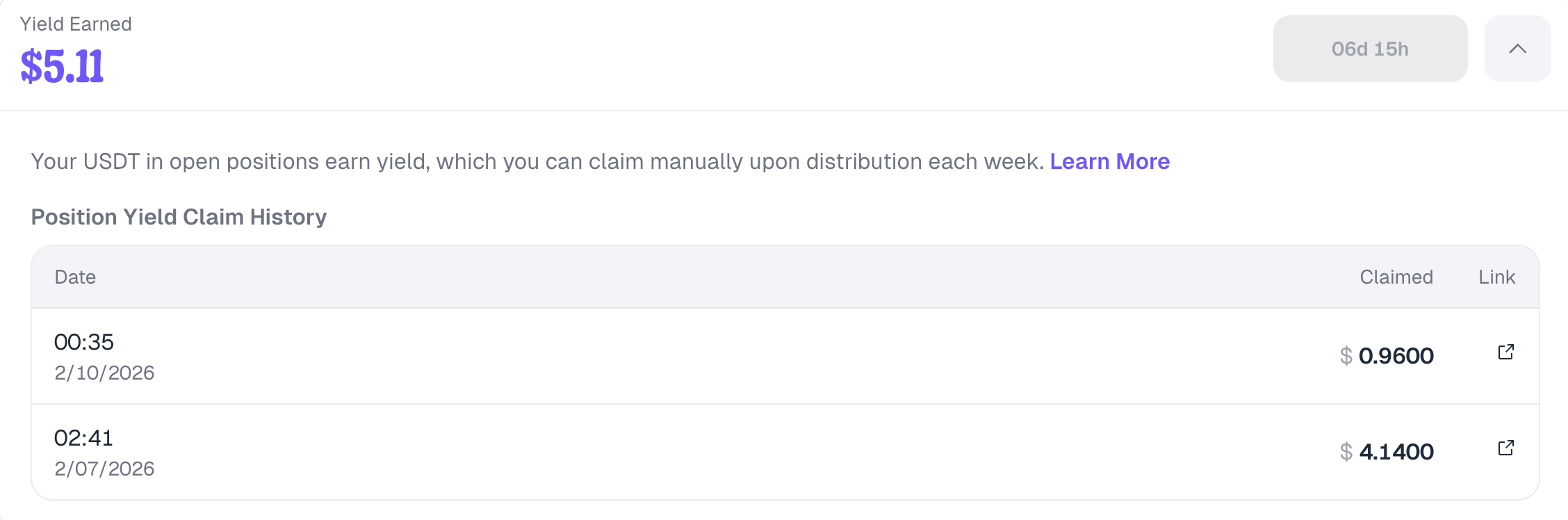
predict.fun Position Yield Claim Screenshot

Highlight Two: Short-Video Style Swiping Experience, Bringing Prediction Markets Closer to "Content Consumption Products"

Unlike the trading-terminal-like interface of traditional prediction markets, some emerging prediction market platforms are noticeably shifting their interaction design towards content platforms, attempting to lower the participation barrier and increase user dwell time. For example, on predict.fun's mobile interface, one screen corresponds to one prediction event. Users can quickly browse different markets by swiping up and down, an overall experience more akin to the information feed mode of short-video platforms. This design eliminates the need for users to actively search for events; instead, they naturally discover prediction topics of interest while continuously "scrolling through markets," significantly improving browsing efficiency and participation frequency.

Similarly, Probable employs a left-right swiping interaction, making the prediction experience closer to the information matching logic of social products. From a product perspective, the core of such designs is not merely UI optimization but an attempt to transform prediction markets from "low-frequency trading tools" into "high-frequency content consumption entry points."

Schematic Diagram of Mobile Interaction Methods for Two Prediction Market Platforms (Left: predict.fun; Right: Probable)

predict.fun founder Dingaling also mentioned in a Space that he hopes to build prediction markets into a usage scenario similar to short-video apps—where users can place bets while browsing hot events and fun topics in their daily routine, further enhancing community engagement and user stickiness through features like comments and interactions.

From an experiential standpoint, this information flow-style interaction is itself a highly attractive product innovation. Compared to the traditional method of actively searching for markets, swiping to browse allows users to continuously "scroll through markets" in fragmented time, naturally generating participation behaviors while consuming content, making the prediction market experience more lightweight and fluid.

Highlight Three: "Exclusive Event Markets" Centered on Community Hotspots, Strengthening Localized Sense of Participation

Beyond product mechanisms and interaction experiences, some emerging prediction market platforms are also beginning to experiment with differentiated approaches in market content design. That is, instead of simply replicating generic events available on Polymarket or Kalshi, they are launching more niche "exclusive event markets"围绕 (centered around) topics with high attention within the crypto community. For example, prediction events on predict.fun related to Binance and community hotspots, such as "Changes in Bitcoin Balance of Binance SAFU Fund Wallet on March 1st" and "Number of CZ's Tweets Between February 7 and 14, 2026," are topics closer to the daily discussions of crypto users.
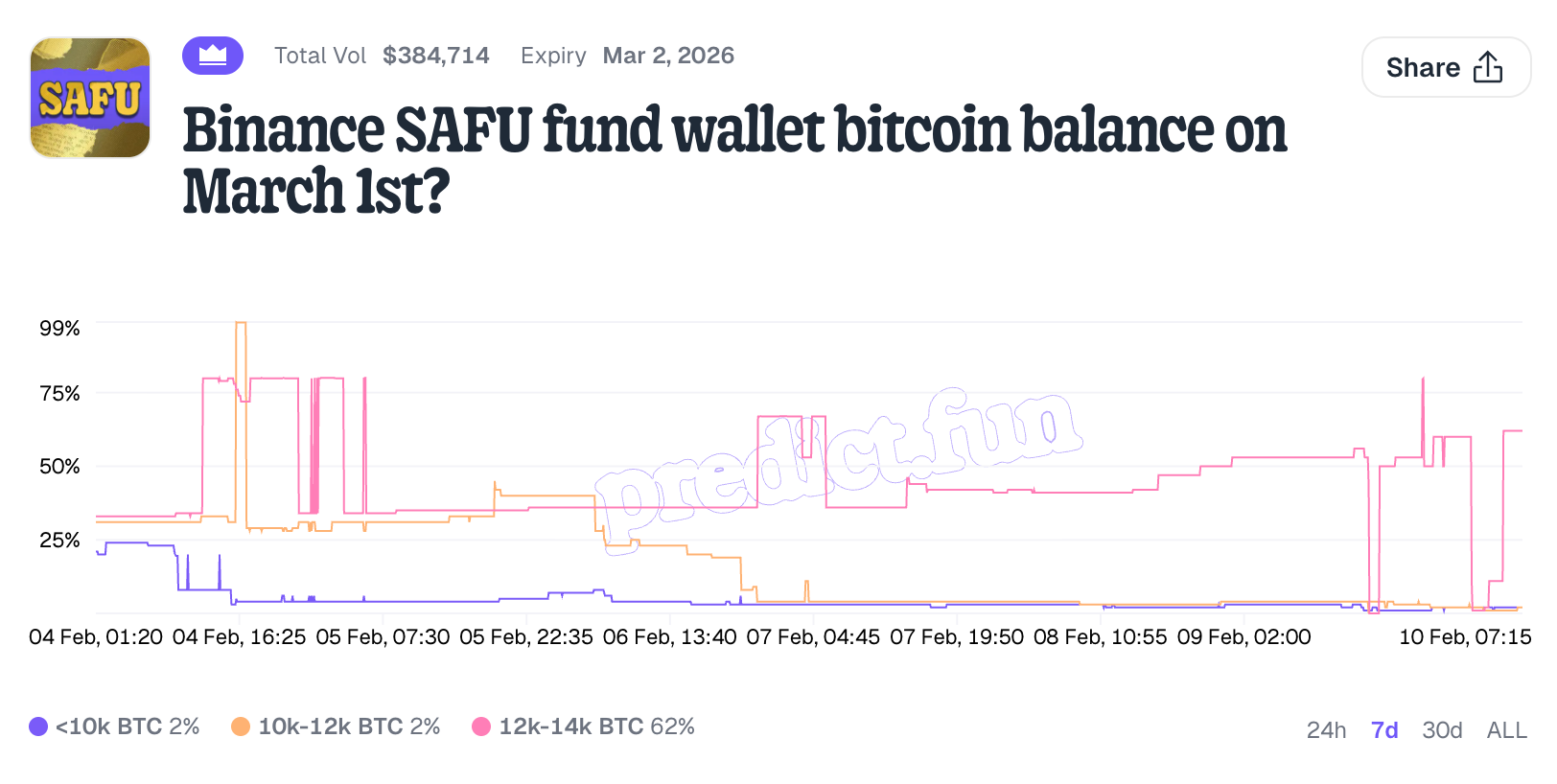
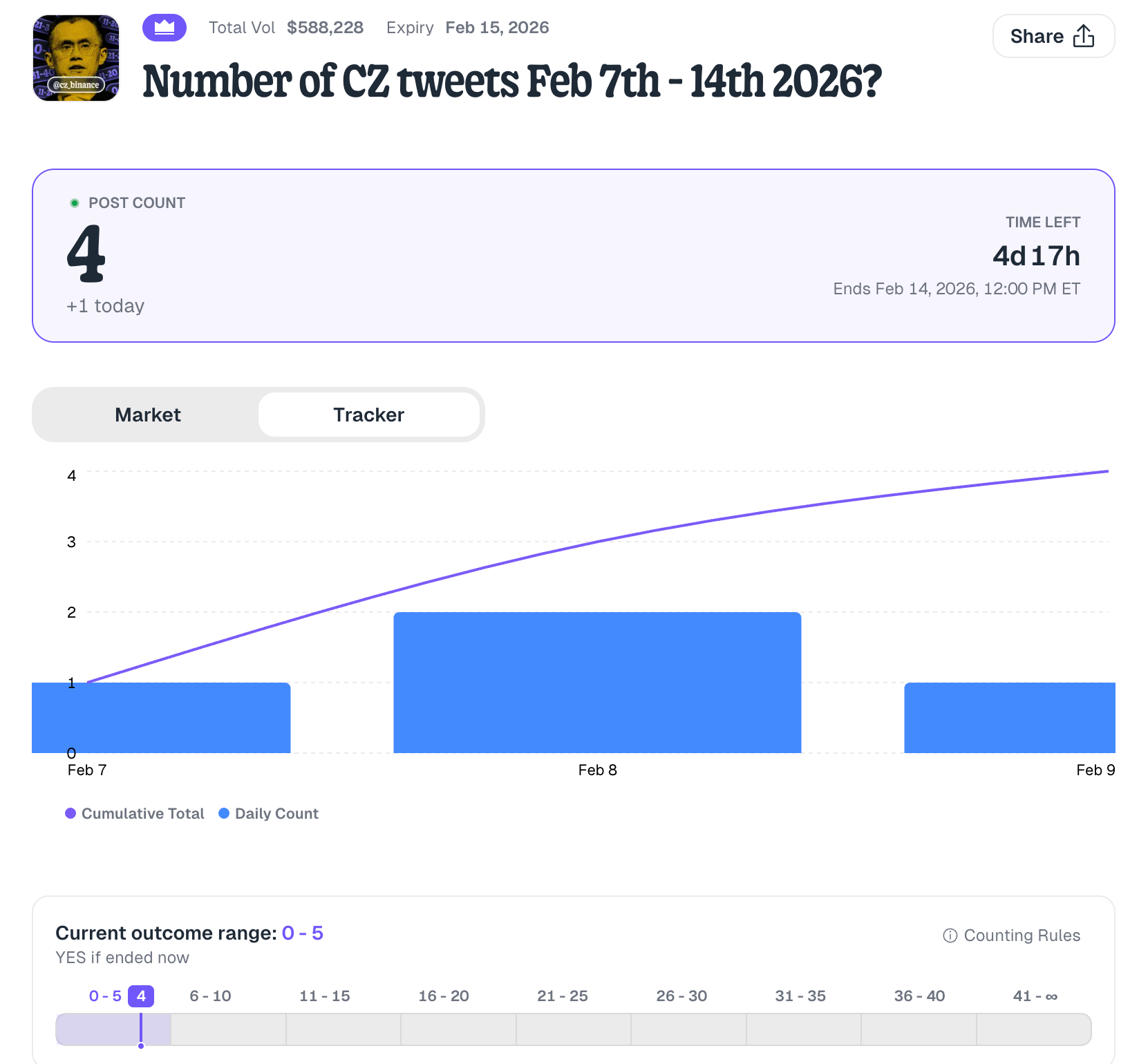
predict.fun Launches Exclusive Prediction Events

Compared to traditional macro events or generic political/sports markets, these community-centric prediction events are more likely to stimulate user discussion and dissemination, and更容易 (more easily) generate participation heat within specific user groups. From a platform operation perspective, the continuous launch of exclusive events essentially builds a content supply with platform characteristics, making the prediction market not just a "trading venue" but也逐渐 (gradually becoming) a gathering place for community hotspot sentiment and narratives.

From the aforementioned events, it's evident that predict.fun is consciously pursuing differentiation at the "event supply" level, rather than simply replicating markets already present on Polymarket or Kalshi. Designing prediction events around CZ, the Binance ecosystem, and community discussion hotspots makes it easier for the platform to achieve virality and participation within specific user groups. This content strategy is also becoming an important operational direction for some emerging prediction markets.

It is worth noting that a significant portion of the currently highly active emerging prediction markets originate from the BNB Chain ecosystem, and their user base is noticeably skewed towards the Asian community. In this context, community culture, subculture, and even participation behaviors with more "fan circle" characteristics are gradually becoming important factors influencing prediction market event design and dissemination. Against this backdrop, for emerging prediction market platforms, the Asian community culture formed around differentiated event design and the more "fan circle"-like participation behaviors are becoming a direction worthy of focused study. The related impacts will be further discussed in subsequent articles.

Related Content

The Underestimated Advantage of Prediction Markets: Counter-Cyclical, Anti-Volatility, Always Something to Play

Prediction Market Activity Hits Record High, Major Events Worth Noting in Top Projects Are All Here

Hot Sector, New Interaction Opportunities: Three Prediction Markets Favored by YZi Labs

Step-by-Step Guide to Participating in predict.fun, Backed by CZ

Perguntas relacionadas

QWhat is the main advantage of predict.fun over traditional prediction markets like Polymarket regarding locked funds?

APredict.fun allows users' locked collateral funds to earn yield through low-risk interest-bearing strategies on BNB Chain (e.g., via Venus Protocol), providing an additional 3%-5% APY during the prediction period, unlike traditional markets where funds remain idle.

QHow does predict.fun's mobile interface differ from traditional prediction market platforms in terms of user experience?

APredict.fun uses a vertical swiping interface similar to short-video platforms, allowing users to browse events quickly in a content-consumption style, making it more engaging and reducing participation barriers compared to traditional transaction-oriented interfaces.

QWhat type of exclusive event markets does predict.fun focus on to differentiate itself?

APredict.fun creates events around crypto community hotspots, such as Binance-related topics (e.g., changes in Binance SAFU fund BTC balance or CZ's tweet counts), which resonate more with Asian crypto users and enhance community engagement.

QWhy are some emerging prediction markets introducing point or task incentive mechanisms?

AThey provide users with a clearer 'airdrop strategy path' by offering feedback through积分 (points) or tasks, unlike Polymarket's current 'blind farming' mode without explicit incentives, helping users adjust their participation strategies dynamically.

QWhat collaboration did predict.fun announce on January 8, 2026, to enhance user earnings?

APredict.fun partnered with Venus Protocol to automatically deposit users' locked USDT collateral into Venus' money market, generating stablecoin yield during the prediction holding period.

Leituras Relacionadas

As Consensus Accelerates, What Are Young Investors Betting On?

Title: As Consensus Forms Faster, What Are Young Investors Betting On? In the rapid evolution of tech investment, a new generation of young investors is navigating a landscape where AI, robotics, commercial aerospace, and quantum computing are advancing simultaneously. Traditional investment logic based on financial models is giving way to a need for deep technical understanding and the ability to act before industry consensus forms. An analysis of trends from the "WAIC FUTURE TECH" list of young investment leaders reveals key shifts in focus. The first major trend is the movement of AI from the digital screen into the physical world. Investment is shifting from large language models and chatbots towards embodied AI, robotics, AI hardware, and edge computing. While demonstrations generate excitement, the real challenge lies in achieving scalable, reliable, and cost-effective delivery in complex real-world environments like factories and logistics. Success depends not just on algorithms but on the integration of sensors, actuators, and control systems. Second, the competitive focus for large models is moving beyond raw capability toward building an "intelligence flywheel." The goal is to create self-reinforcing systems where user interaction generates data, improving the model, which in turn enhances the user experience and attracts more engagement. Companies that successfully embed AI into workflows to create these closed-loop systems can build lasting value that isn't easily erased by the next model upgrade. Third, facing a potential bottleneck in high-quality human-generated data, investors are looking at new underlying technologies. Reinforcement learning and self-play, as demonstrated by AlphaGo Zero, offer paths for AI to generate its own experience. Scientific foundation models, which aim to build general AI capabilities for fields like life sciences and materials discovery, represent a non-consensus direction that could unlock new frontiers of knowledge and data. Finally, in deep-tech areas like quantum computing, commercial aerospace, and space-based infrastructure, patient capital is essential. These fields have long, uncertain development and validation cycles involving complex engineering, supply chains, and regulations. Investment here requires a long-term view, focusing on foundational team capabilities and the eventual emergence of market demand, even if commercial returns are distant. Collectively, these trends illustrate how young investors are adapting to a new era. They are learning to make earlier, technically-informed judgments, balance hype with real-world viability, and provide the patient capital needed to build the deep-tech foundations of the future.

marsbitHá 8m

As Consensus Accelerates, What Are Young Investors Betting On?

marsbitHá 8m

Can Japan Buy Growth with AI? Will the Bond Market Believe It?

Japan's cabinet has introduced the 2026 Basic Policy on Economic and Fiscal Management and Reform, shifting its primary fiscal target. The new framework moves away from the traditional annual primary balance goal and instead prioritizes a stable reduction of the debt-to-GDP ratio. This change is tied to a strategy of increased "responsible proactive fiscal" spending, aiming to boost long-term growth through investments in strategic sectors like AI, semiconductors, energy, and robotics. The government estimates total public and private investment in 62 key technologies could exceed 370 trillion yen by 2040. The market reaction has been mixed and cautious. While equity markets may respond to policy signals, bond markets are focused on fiscal credibility. Concerns center on whether the weakening of the clear primary balance anchor could lead to looser fiscal discipline. If investors doubt that these strategic investments will generate sufficient productivity gains, tax revenue, and nominal growth to outpace rising interest costs, they may demand higher yields on Japanese Government Bonds (JGBs). Recent volatility in the yen and JGB yields, with the 10-year yield briefly reaching 2.9%, reflects this skepticism. The success of this new framework hinges on two factors: whether Japan can achieve a nominal growth rate consistently higher than its long-term interest rates, and whether future budgets demonstrate disciplined control over bond issuance. The government's narrative is that strategic investment is essential to break Japan's cycle of low growth, aging, and labor shortages. However, the bond market will continuously assess the credibility of this plan, pricing the risk that it may represent fiscal expansion rather than a viable growth strategy.

marsbitHá 45m

Can Japan Buy Growth with AI? Will the Bond Market Believe It?

marsbitHá 45m

Misjudged A-Shares: Resilience, Expectations, and Confidence

China's A-share market recently faced selling pressure, especially in tech sectors, initially triggered by a global tech sell-off that began in South Korea. However, the article argues this is a case of "mistaken injury" and highlights the market's underlying resilience. This resilience stems from three main pillars: **1) Tech Sector Fundamentals:** Unlike Korea's market dominated by a few memory chip stocks, China's tech sector is diversified across computing, communications, electronics, and semiconductors, supported by dual narratives of global AI supply chains and domestic substitution. Core areas like optical modules and fiber optics continue to show strong earnings growth. **2) "National Team" Support:** State-backed institutions and large corporations have made significant market purchases and announced buybacks, providing liquidity and signaling confidence. This is seen as a stabilizing policy signal, often associated with market bottoms. **3) Broader Market Pillars:** Other major sectors are showing endogenous recovery momentum. Consumer stocks benefit from stabilizing CPI and signs of sector recovery (e.g., liquor price hikes). Cyclical sectors like aluminum have high earnings, potential price increases due to tight supply, and low valuations. The financial sector offers stable dividends and low valuations. The conclusion is that the sell-off was driven by external contagion, not a collapse in fundamentals. With strong policy support and recovering momentum across key sectors, the A-share market possesses the toughness to regain stability.

marsbitHá 1h

Misjudged A-Shares: Resilience, Expectations, and Confidence

marsbitHá 1h

Trading

Spot
活动图片





