When Prediction Markets No Longer 'Predict', But 'Leak the Truth': BlockBeats Officially Launches Prediction Market Coverage

marsbitPublicado em 2025-12-22Última atualização em 2025-12-22

Resumo

For a long time, prediction markets were seen as rational arenas where people bet on future outcomes based on public information, with prices reflecting collective consensus. However, over the past year, it has become increasingly clear that many prediction markets are not actually "predicting the future." Instead, they are exposing outcomes that have already been determined and are known to a select few, even before official announcements. When an outcome is certain but not yet public, prediction markets become a powerful and unsettling mechanism for leaking information. The movement of money itself acts as a signal—no explicit爆料, anonymous tips, or statements are needed. Key signals include unusually large bets on specific options, addresses consistently placing winning bets during critical periods, and accounts that repeatedly "predict" correctly ahead of time. This phenomenon is changing how secrets are kept and revealed. Examples include plot twists in TV shows, results of award selections, upcoming product launches or regulatory decisions, and governance votes in crypto protocols. In traditional contexts, this would be considered insider information. But in prediction markets, the mere act of betting can reveal what is known to a few. The article also highlights how prediction markets can influence reality itself, not just reveal it. A notable example is from a Coinbase earnings call where CEO Brian Armstrong used specific words that were the subject of active predic...

For a long time in the past, we have understood prediction markets as a very 'rational' thing: people bet on the future based on public information, and market prices reflect consensus. But over the past year, we have become increasingly aware of one thing: many prediction markets are not 'predicting the future', but are prematurely exposing those 'results that have already been known by a few'.

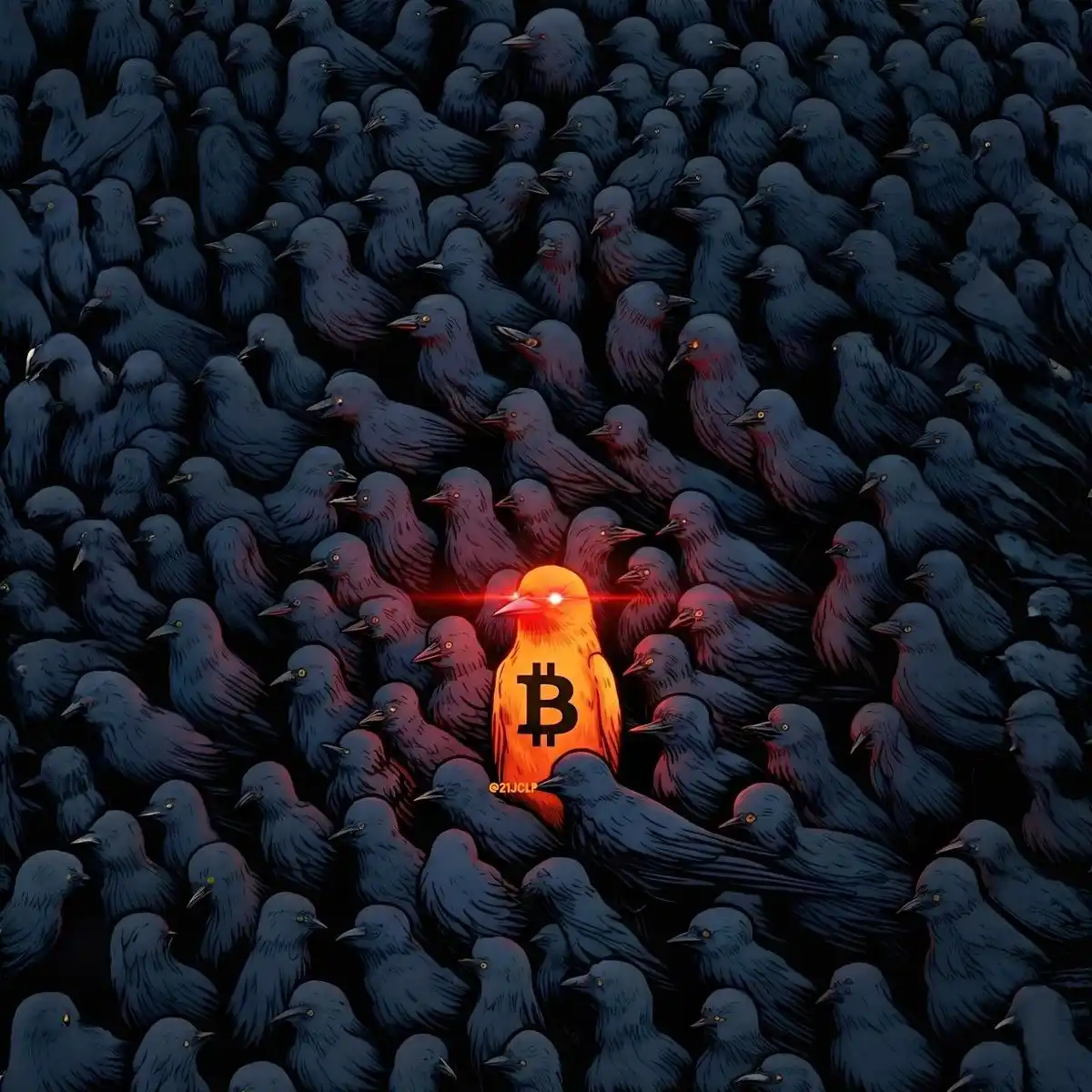
When an outcome is already determined but not yet been made public, prediction markets become an extremely brutal thing: they don't require leaks, anonymous letters, or even a single word. The direction of funds itself is the leak.

Prediction markets are changing the way 'secrets' exist:

Imagine a few scenarios:

· A popular TV series has finished filming; will the main character die?

· The selection process for a gaming award has basically ended, but the results haven't been announced yet

· An AI company is about to release key product or merger news

· The regulatory outcome, exchange listing time, or governance vote direction of a certain Crypto protocol

In the traditional world, these are all called 'insider information'. But after the emergence of prediction markets, they face a new problem: as long as someone knows and can bet, the secret is hard not to be captured by the market. You don't need to know 'who said what', you just need to look at:

· Which options are being heavily weighted

· Which addresses are continuously betting during key time periods

· Which accounts repeatedly 'bet correctly in advance' in similar events

This is not a conspiracy theory; it is the natural result of probability and incentives.

From 'Content Coverage' to 'Result Stress Testing'

This is also why we began to reflect on the traditional news model. The past content logic was: event occurs → a few people know → report (publish) → the public knows

What prediction markets bring is another path: event occurs → someone knows → someone places a bet → price begins to deviate → the world already 'knows in advance'

There is even an more extreme path: event occurs → someone knows → someone places a bet → price begins to deviate → causes the event to change

Regarding this path, I can give a classic example. At the end of the Q3 2025 earnings call for Coinbase (Nasdaq code: COIN), CEO Brian Armstrong said something that seemed casual:

These words were not random; they were the content people bet on in the prediction market's 'whether certain words would appear' market surrounding this earnings call. After Armstrong said these words, the relevant prediction market settled immediately, and those bettors who correctly predicted the related words being spoken made a profit. It was reported that roughly over $80,000 in betting volume on these markets was settled instantly on platforms like Kalshi and Polymarket.

That is to say, without these bets, in another parallel universe, Brian Armstrong would have just normally finished the earnings call process without deliberately saying these words. This is the 'reality distortion field' of prediction markets; the act of betting itself has the power to change reality. This is common in sports betting, where outcomes are often manipulated by insiders to favor the least bet option. However, whether it's the words at the Coinbase earnings call or a football match, they don't have a major impact on our lives. But as Polymarket and Kalshi grow, the topics on them will get closer and closer to our lives, and this 'reality distortion field' of prediction markets will also truly affect our lives.


Criptomoedas em alta

Perguntas relacionadas

QWhat is the main argument the article makes about prediction markets?

AThe article argues that prediction markets are no longer just about 'predicting the future' based on public information, but are increasingly being used to 'leak the truth' by exposing outcomes that are already known to a small group of insiders before they are publicly announced.

QAccording to the article, how do prediction markets change the way 'secrets' exist?

APrediction markets change the existence of secrets by allowing anyone with insider knowledge to place bets. The movement of money and betting patterns themselves act as a form of leakage, making it difficult to keep information secret even without a traditional leak or anonymous source.

QWhat new path for information flow do prediction markets create, as opposed to traditional news reporting?

AInstead of the traditional path of 'event occurs → a few people know → news report (release) → public knows,' prediction markets create a new path: 'event occurs → someone knows → someone places a bet → market price begins to deviate → the world already 'knows in advance'.'

QWhat example does the article use to illustrate the 'reality distortion field' of prediction markets?

AThe article uses the example of Coinbase's Q3 2025 earnings call, where CEO Brian Armstrong reportedly used specific words that were the subject of prediction market bets. His saying these words caused the relevant markets to settle, earning profits for those who bet correctly, suggesting the betting activity may have influenced his behavior.

QWhat platforms are mentioned as hosts for these prediction markets?

AThe article mentions the platforms Polymarket and Kalshi as hosts for prediction markets where these activities take place.

Leituras Relacionadas

From Gold to Bitcoin: Fixed Supply + Institutional Frenzy, Might It Repeat the 'Explosive' Price Trend?

"From Gold to Bitcoin: Fixed Supply and Institutional Frenzy May Lead to 'Explosive' Price Rally Analysts suggest Bitcoin's price action could mirror gold's over the past two decades, following the launch of spot Bitcoin ETFs. Gold ETFs, introduced in 2004, drove gold's price surge to a current market cap near $28 trillion. Both gold and Bitcoin are non-yielding stores of value, with prices driven purely by investor sentiment rather than cash flows or credit. Gold ETFs experienced dramatic cycles: explosive growth, painful drawdowns, and slow recoveries, with each cycle reaching higher peaks. Bitcoin ETFs, approved in early 2024, saw rapid institutional adoption but are now facing similar volatility. Recent warnings highlight the risk of significant ETF outflows disrupting the current rebound. BlackRock's IBIT, a leading Bitcoin ETF, has sold nearly 100,000 BTC to meet redemptions while still holding over 733,000. The core parallel is fixed supply: when demand surges, prices explode, but demand is often volatile and wave-like, not steady. Institutional interest, through ETFs and corporate adoption, remains a key support pillar, helping to cushion sell-offs. If Bitcoin captures even a fraction of gold's role as a store of value, its upside potential is immense, though the path will be marked by high volatility. For investors, focusing on long-term trends and managing risk is crucial as this 'price explosion' narrative unfolds."

Foresight NewsHá 35m

From Gold to Bitcoin: Fixed Supply + Institutional Frenzy, Might It Repeat the 'Explosive' Price Trend?

Foresight NewsHá 35m

Why Is AI Agent Shopping Hard to Popularize?

The article argues that the popular narrative of "AI agent shopping" – equipping AI with a wallet to autonomously handle purchases – is fundamentally flawed and oversimplifies the complexity of shopping. It deconstructs shopping into two core actions: **information retrieval** (standardized, easily automated) and **value judgment** (deeply subjective and human-centric). The narrative mistakenly assumes AI can fully handle both. Value judgment itself has two layers: **evaluation** (assessing options against criteria) and **demand definition** (setting the criteria, weights, and values). The latter is inherently human and dynamic, as preferences are not fixed but constructed during the decision-making process ("constructive preferences"). The real dividing line for automation is not product standardization, but whether the **act of choosing** itself holds experiential value. For mundane purchases (e.g., printer paper), full AI delegation works. For experiential goods (e.g., wine, furniture), the joy of selection is core to consumption, so AI should act as an assistant that narrows options, leaving the final choice to humans. The "AI wallet" concept confuses three separate elements: decision-making, execution, and fund custody. Current payment industry solutions (e.g., from Stripe, Mastercard, Google, Visa) show that limited, scoped payment authorization tokens are sufficient for most consumer scenarios, not full fund custody. The true use case for autonomous AI wallets is in **B2B procurement** and **machine-to-machine (M2M) settlements** for standardized, high-frequency, low-value transactions. The real bottlenecks for AI shopping are not payment technology, but **1) the lack of trusted data sources** (e.g., fake reviews, counterfeit goods) and **2) the impossibility of automating human demand definition**. The conclusion is that the focus should be on safely automating the assessment and filtering process while reserving for humans the rights to define their criteria and enjoy the final act of choice. For experiential goods, the platform's competitive advantage shifts to providing a superior selection experience.

Foresight NewsHá 1h

Why Is AI Agent Shopping Hard to Popularize?

Foresight NewsHá 1h

After Nine Months of Shorting, a Full Turn to Long: Renowned Trader Opens Bitcoin Positions Around 64K, Crypto Market Long-Short Divergence Intensifies

After nine months of being short, prominent crypto trader Doctor Profit has closed all his bearish positions and started buying Bitcoin near $64,000, signaling a complete bullish reversal. He argues that structural market changes—such as impending U.S. regulation (CLARITY Act) and institutional adoption via securities tokenization—are rewriting the traditional four-year cycle script, potentially bringing the market bottom forward from the widely expected September/October timeframe. This view finds some technical support from on-chain analyst gumsays, who notes a bullish divergence on Bitcoin's weekly chart has persisted for 147 days, nearing the 161-day duration seen before the 2022 cycle low. However, cycle researcher Jake Pahor presents a counter-argument based on historical data. Analyzing patterns since 2014, he identifies three common features of past bear market bottoms: a ~12-month duration from peak to trough, a sustained period of extreme fear (with a proprietary risk score below 20), and the price falling below Bitcoin's realized price (~$53,000 currently). The current cycle, only nine months from its October 2025 peak, meets none of these conditions. The debate highlights a market torn between "front-running" a potential early bottom driven by new fundamentals and waiting for confirmation through traditional on-chain and sentiment metrics. While Doctor Profit opts for aggressive buying, Pahor maintains a disciplined, tiered accumulation strategy, continuing weekly buys at current risk levels but reserving larger orders for if more extreme fear emerges.

marsbitHá 1h

After Nine Months of Shorting, a Full Turn to Long: Renowned Trader Opens Bitcoin Positions Around 64K, Crypto Market Long-Short Divergence Intensifies

marsbitHá 1h

Trading

Spot

Artigos em Destaque

Como comprar O

Bem-vindo à HTX.com!Tornámos a compra de O1 exchange (O) simples e conveniente.Segue o nosso guia passo a passo para iniciar a tua jornada no mundo das criptos.Passo 1: cria a tua conta HTXUtiliza o teu e-mail ou número de telefone para te inscreveres numa conta gratuita na HTX.Desfruta de um processo de inscrição sem complicações e desbloqueia todas as funcionalidades.Obter a minha contaPasso 2: vai para Comprar Cripto e escolhe o teu método de pagamentoCartão de crédito/débito: usa o teu visa ou mastercard para comprar O1 exchange (O) instantaneamente.Saldo: usa os fundos da tua conta HTX para transacionar sem problemas.Terceiros: adicionamos métodos de pagamento populares, como Google Pay e Apple Pay, para aumentar a conveniência.P2P: transaciona diretamente com outros utilizadores na HTX.Mercado de balcão (OTC): oferecemos serviços personalizados e taxas de câmbio competitivas para os traders.Passo 3: armazena teu O1 exchange (O)Depois de comprar o teu O1 exchange (O), armazena-o na tua conta HTX.Alternativamente, podes enviá-lo para outro lugar através de transferência blockchain ou usá-lo para transacionar outras criptomoedas.Passo 4: transaciona O1 exchange (O)Transaciona facilmente O1 exchange (O) no mercado à vista da HTX.Acede simplesmente à tua conta, seleciona o teu par de trading, executa as tuas transações e monitoriza em tempo real.Oferecemos uma experiência de fácil utilização tanto para principiantes como para traders experientes.

163 Visualizações TotaisPublicado em {updateTime}Atualizado em 2026.06.29

Como comprar O

Como comprar PROS

Bem-vindo à HTX.com!Tornámos a compra de Pharos (PROS) simples e conveniente.Segue o nosso guia passo a passo para iniciar a tua jornada no mundo das criptos.Passo 1: cria a tua conta HTXUtiliza o teu e-mail ou número de telefone para te inscreveres numa conta gratuita na HTX.Desfruta de um processo de inscrição sem complicações e desbloqueia todas as funcionalidades.Obter a minha contaPasso 2: vai para Comprar Cripto e escolhe o teu método de pagamentoCartão de crédito/débito: usa o teu visa ou mastercard para comprar Pharos (PROS) instantaneamente.Saldo: usa os fundos da tua conta HTX para transacionar sem problemas.Terceiros: adicionamos métodos de pagamento populares, como Google Pay e Apple Pay, para aumentar a conveniência.P2P: transaciona diretamente com outros utilizadores na HTX.Mercado de balcão (OTC): oferecemos serviços personalizados e taxas de câmbio competitivas para os traders.Passo 3: armazena teu Pharos (PROS)Depois de comprar o teu Pharos (PROS), armazena-o na tua conta HTX.Alternativamente, podes enviá-lo para outro lugar através de transferência blockchain ou usá-lo para transacionar outras criptomoedas.Passo 4: transaciona Pharos (PROS)Transaciona facilmente Pharos (PROS) no mercado à vista da HTX.Acede simplesmente à tua conta, seleciona o teu par de trading, executa as tuas transações e monitoriza em tempo real.Oferecemos uma experiência de fácil utilização tanto para principiantes como para traders experientes.

153 Visualizações TotaisPublicado em {updateTime}Atualizado em 2026.06.29

Como comprar PROS

O que é VERONA

I. Introdução ao Projeto VERONA é uma blockchain construída para todos, em todo o lado, através da abstração da cadeia. Utilizando a sua camada de Abstração Generalizada, a VERONA distingue-se por integrar funcionalidades complexas de blockchain, como contas, assinaturas e interoperabilidade, diretamente ao nível do protocolo. Esta abordagem permite a interação com aplicações de blockchain sem a necessidade de compreender as tecnologias subjacentes.1) Informação Básica Nome: VERONA (VERONA)III. Links Relacionados Link do site oficial: https://xion.burnt.com/ Whitepaper: https://xion.burnt.com/whitepaper.pdf Exploradores: https://explorer.burnt.com/ Mídias Sociais: https://x.com/burnt_xion Nota: A introdução ao projeto provém dos materiais publicados ou fornecidos pela equipa oficial do projeto, que é apenas para referência e não constitui aconselhamento de investimento. A HTX não se responsabiliza por quaisquer perdas diretas ou indiretas resultantes.

778 Visualizações TotaisPublicado em {updateTime}Atualizado em 2026.06.22

O que é VERONA

Discussões

Bem-vindo à Comunidade HTX. Aqui, pode manter-se informado sobre os mais recentes desenvolvimentos da plataforma e obter acesso a análises profissionais de mercado. As opiniões dos utilizadores sobre o preço de A (A) são apresentadas abaixo.

活动图片