When Gold And Silver Go Quiet, Crypto Tends To Explode: Tom Lee

bitcoinistPublicado em 2026-01-27Última atualização em 2026-01-27

Resumo

In a recent CNBC interview, Fundstrat's Tom Lee observed that the current surge in gold and silver is drawing capital away from riskier assets like cryptocurrency, delaying a potential crypto rally. Precious metals have seen significant gains due to geopolitical stress, tariff fears, and a weaker dollar, attracting nervous investors. Lee also cited a major October deleveraging event as a continued drag on market momentum. Bitcoin has been trading in a tight range around $87,000–$88,000, with buyers stepping in on dips rather than chasing rallies. According to analysis, a fear-driven dollar weakness benefits traditional safe havens like gold, not crypto. For a strong crypto rally, the dollar must weaken due to increased risk appetite, not panic. Lee suggests that a pause in precious metals or easing geopolitical tensions could shift investor focus back to digital assets. Despite short-term caution, institutional interest remains, as evidenced by continued accumulation.

Crypto traders are watching quietly. Prices are moving, but not in the way many bulls expected. According to Fundstrat managing partner Tom Lee, during an interview on CNBC’s Power Lunch Monday, the surge in gold and silver has pulled a lot of cash away from riskier bets. That shift has been strong enough to slow the momentum that might otherwise have lifted digital assets sooner.

Precious Metals Steal The Spotlight

Gold has surged to record territory, and silver has climbed sharply, drawing interest from investors seeking a safe place to park money. Reports note gold topped $5,100 after a strong run that added close to 8% since the start of the year, while silver hit about $110 following a 57% gain. Geopolitical stress, tariff fears, and a weaker dollar are cited as reasons for that move. In plain terms: a lot of nervous money went to metal, not crypto.

Lee pointed to the large deleveraging event in October as another drag. Many firms and market makers were hit hard, and margin-driven upside is much smaller now. That means rallies take more time to appear.

Based on reports, parts of the industry are recovering, but some players remain fragile. BitMine, an Ether treasury firm tied to Lee, added 20,000 ETH in a fresh buy, which shows belief is still there at institutional levels.

Bitcoin Price Action And Market Mood

Bitcoin traded in a tight band around $87,000–$88,000 after recent swings tied to global headlines. It tested support at about $86,000 and failed to push above $95,000 in recent attempts.

Buyers are stepping in on dips rather than chasing gains, and volumes have been mixed. ETF flows have been negative, which points to short-term caution. Still, holding those levels without a sharp drop keeps the story alive.

BTCUSD trading at $88,104 on the 24-hour chart: TradingView

Risk Appetite Matters More Than Dollar Moves

Reports from CryptoQuant contend that dollar weakness alone won’t send Bitcoin higher if the move is fear-driven. When people flee the dollar because they are scared, they pick the most traditional hideouts — like gold.

For crypto to rally strongly, the dollar needs to weaken because investors are willing to take on risk, not because they are panicked. That difference is subtle but crucial. And that’s precisely what Tom Lee means — that Bitcoin and Ethereum usually jump when gold and silver pause.

What Could Trigger A Shift

A pause or pullback in precious metals could free up capital and change investor focus. Easing from the Fed, or clearer signs that geopolitical tensions are cooling, might push some money back toward digital assets.

Institutional interest in smart contract platforms was highlighted at recent finance events, and some firms are building on Ethereum and similar chains. Those longer-term moves are being made quietly, even while spot prices wander.

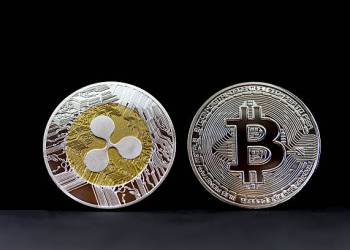
Featured image from Unchained, chart from TradingView

Perguntas relacionadas

QAccording to Tom Lee, why has the momentum for digital assets been slowed recently?

AThe surge in gold and silver has pulled a lot of cash away from riskier bets like crypto, and a large deleveraging event in October also acted as a drag on the market.

QWhat were the key factors cited for the rally in precious metals like gold and silver?

AGeopolitical stress, tariff fears, and a weaker dollar were the reasons cited, leading nervous investors to seek safe-haven assets.

QWhat specific purchase did Tom Lee's firm, BitMine, make that shows institutional belief is still present?

ABitMine, an Ether treasury firm tied to Tom Lee, purchased 20,000 ETH (worth $58.22 million) from FalconX.

QAccording to the article, what specific condition is needed for a strong crypto rally when the dollar weakens?

AThe dollar needs to weaken because investors are willing to take on risk, not because they are panicked and fleeing to traditional safe havens like gold.

QWhat are two potential triggers mentioned that could shift investor focus back to digital assets?

AA pause or pullback in precious metals could free up capital, and easing from the Fed or clearer signs that geopolitical tensions are cooling might push money back toward crypto.

Leituras Relacionadas

Google and Amazon Simultaneously Invest Heavily in a Competitor: The Most Absurd Business Logic of the AI Era Is Becoming Reality

In a span of four days, Amazon announced an additional $25 billion investment, and Google pledged up to $40 billion—both direct competitors pouring over $65 billion into the same AI startup, Anthropic. Rather than a typical venture capital move, this signals the latest escalation in the cloud wars. The core of the deal is not equity but compute pre-orders: Anthropic must spend the majority of these funds on AWS and Google Cloud services and chips, effectively locking in massive future compute consumption. This reflects a shift in cloud market dynamics—enterprises now choose cloud providers based on which hosts the best AI models, not just price or stability. With OpenAI deeply tied to Microsoft, Anthropic’s Claude has become the only viable strategic asset for Google and Amazon to remain competitive. Anthropic’s annualized revenue has surged to $30 billion, and it is expanding into verticals like biotech, positioning itself as a cross-industry AI infrastructure layer. However, this funding comes with constraints: Anthropic’s independence is challenged as it balances two rival investors, its safety-first narrative faces pressure from regulatory scrutiny, and its path to IPO introduces new financial pressures. Globally, this accelerates a "tri-polar" closed-loop structure in AI infrastructure, with Microsoft-OpenAI, Google-Anthropic, and Amazon-Anthropic forming exclusive model-cloud alliances. In contrast, China’s landscape differs—investments like Alibaba and Tencent backing open-source model firm DeepSeek reflect a more decoupled approach, though closed-source models from major cloud providers still dominate. The $65 billion bet is ultimately about securing a seat at the table in an AI-defined future—where missing the model layer means losing the cloud war.

marsbitHá 1h

Google and Amazon Simultaneously Invest Heavily in a Competitor: The Most Absurd Business Logic of the AI Era Is Becoming Reality

marsbitHá 1h

Computing Power Constrained, Why Did DeepSeek-V4 Open Source?

DeepSeek-V4 has been released as a preview open-source model, featuring 1 million tokens of context length as a baseline capability—previously a premium feature locked behind enterprise paywalls by major overseas AI firms. The official announcement, however, openly acknowledges computational constraints, particularly limited service throughput for the high-end DeepSeek-V4-Pro version due to restricted high-end computing power. Rather than competing on pure scale, DeepSeek adopts a pragmatic approach that balances algorithmic innovation with hardware realities in China’s AI ecosystem. The V4-Pro model uses a highly sparse architecture with 1.6T total parameters but only activates 49B during inference. It performs strongly in agentic coding, knowledge-intensive tasks, and STEM reasoning, competing closely with top-tier closed models like Gemini Pro 3.1 and Claude Opus 4.6 in certain scenarios. A key strategic product is the Flash edition, with 284B total parameters but only 13B activated—making it cost-effective and accessible for mid- and low-tier hardware, including domestic AI chips from Huawei (Ascend), Cambricon, and Hygon. This design supports broader adoption across developers and SMEs while stimulating China's domestic semiconductor ecosystem. Despite facing talent outflow and intense competition in user traffic—with rivals like Doubao and Qianwen leading in monthly active users—DeepSeek has maintained technical momentum. The release also comes amid reports of a new funding round targeting a valuation exceeding $10 billion, potentially setting a new record in China’s LLM sector. Ultimately, DeepSeek-V4 represents a shift toward open yet realistic infrastructure development in the constrained compute landscape of Chinese AI, emphasizing engineering efficiency and domestic hardware compatibility over pure model scale.

marsbitHá 2h

Computing Power Constrained, Why Did DeepSeek-V4 Open Source?

marsbitHá 2h

Trading

Spot
Futuros
活动图片