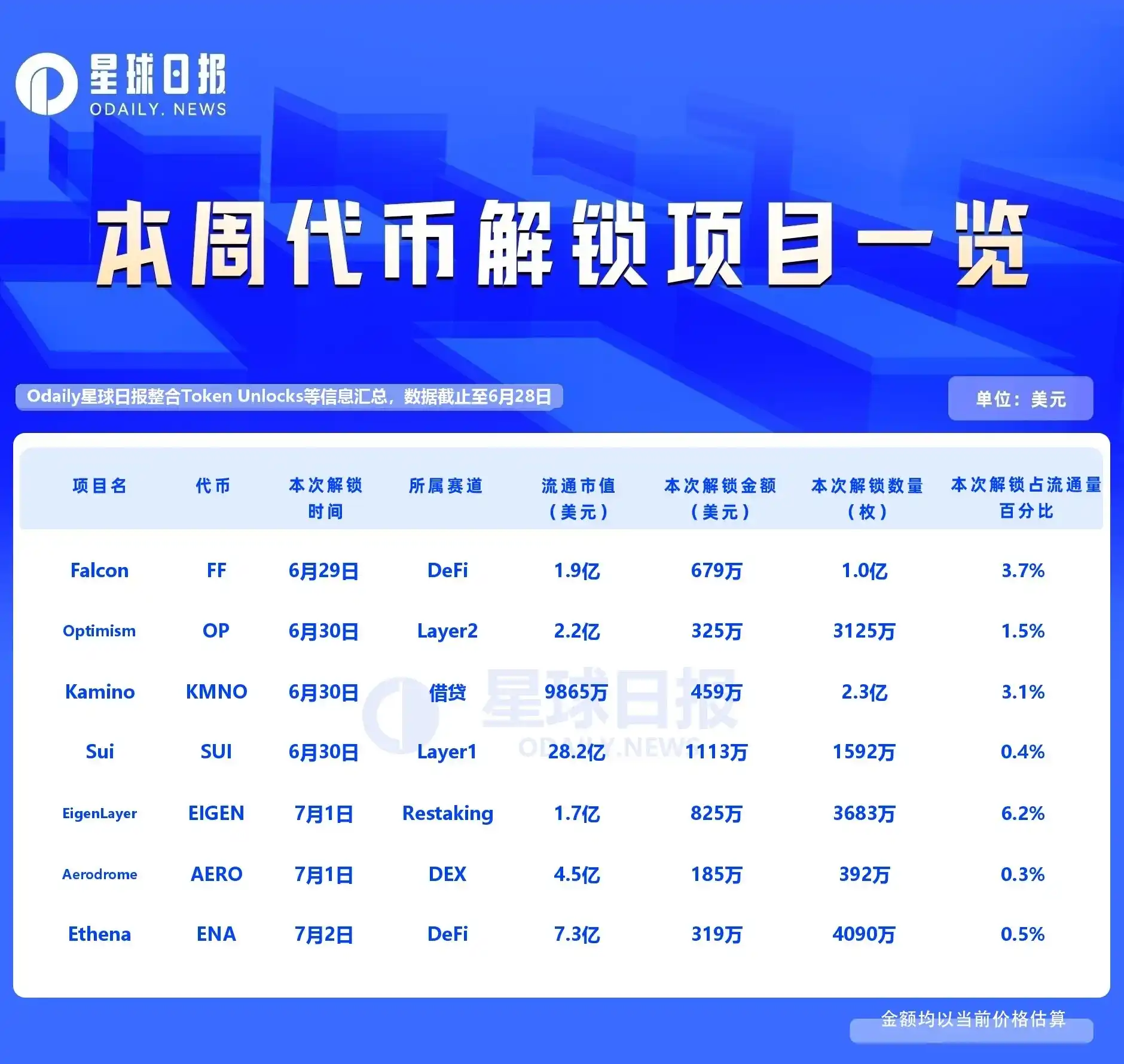
Weekly Token Unlocks: EIGEN Unlock to Reach 6.2% of Circulating Supply

marsbitPublicado em 2026-06-27Última atualização em 2026-06-27

Resumo

**Weekly Token Unlock Overview** This week, several major crypto projects are undergoing significant token unlocks, with a combined value exceeding tens of millions of dollars. * **EigenLayer (EIGEN)** leads the unlocks. Approximately 36.83 million EIGEN tokens (about 6.2% of the circulating supply), valued at roughly $8.25 million, are being released. EigenLayer is an Ethereum-based restaking protocol that allows users to restake their staked ETH to secure other applications on its network. * **Falcon Finance** is unlocking 100 million tokens, worth approximately $6.79 million. It is a decentralized protocol designed as a general-purpose collateral infrastructure for minting synthetic assets and generating yield. * **Kamino** is releasing 230 million tokens, valued at around $4.59 million. Kamino is an automated liquidity management solution built on a Concentrated Liquidity Market Maker (CLMM) mechanism, incubated by Hubble Protocol. The article includes detailed token release schedule charts for each project. These unlocks represent a substantial injection of tokens into the circulating supply, which can impact market dynamics.

EigenLayer

Project Twitter:https://x.com/eigenlayer

Project Website:https://www.eigenlayer.xyz/

Amount Unlocked This Time: 36.83 million tokens

Value Unlocked This Time: ~$8.25 million

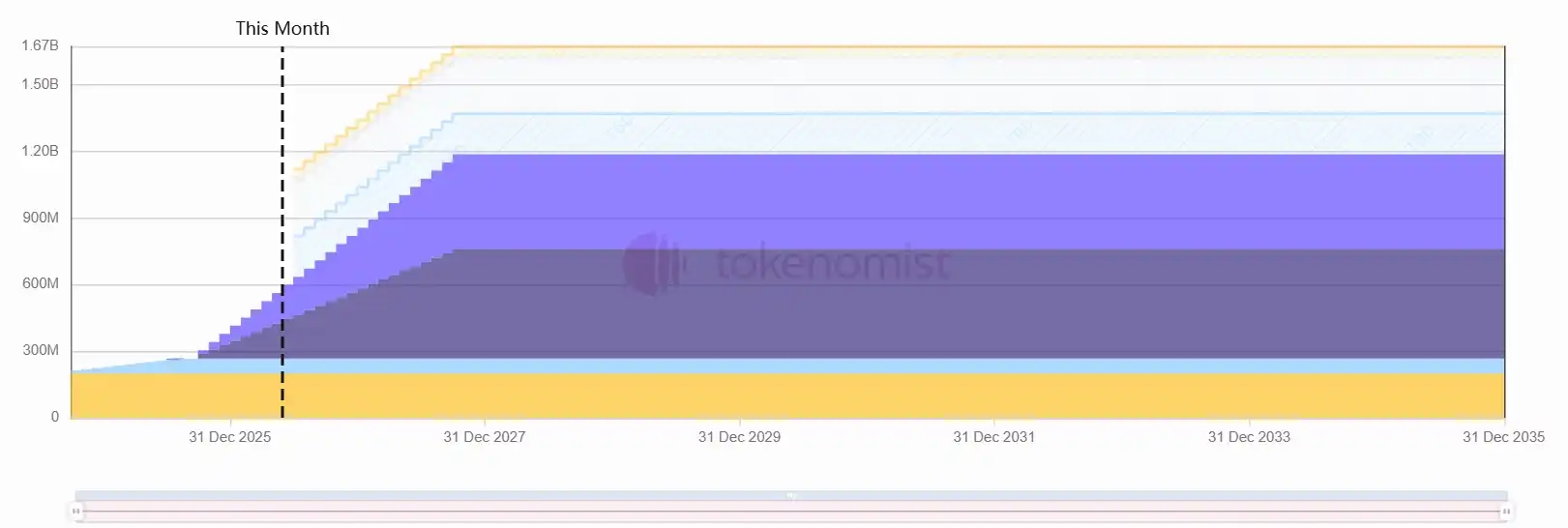
EigenLayer is a protocol built on top of Ethereum that introduces the concept of restaking, a new primitive in cryptoeconomic security. This primitive allows for the restaking of ETH on the consensus layer. Users who have staked ETH can opt-in to EigenLayer smart contracts to restake their ETH and extend cryptoeconomic security to other applications on the network.

Detailed release schedule is as follows:
Falcon Finance

Project Twitter:https://x.com/falconfinance

Project Website:https://falcon.finance/

Amount Unlocked This Time: 100 million tokens

Value Unlocked This Time: ~$6.79 million

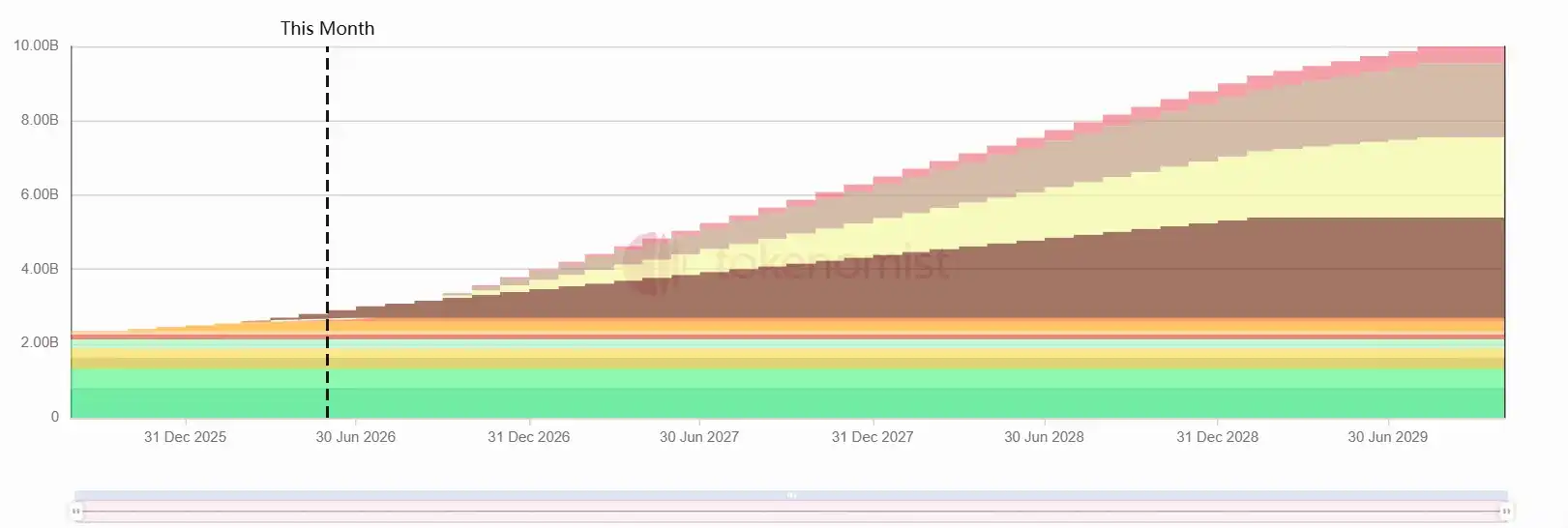
Falcon Finance is a decentralized protocol designed to serve as a universal collateral infrastructure for minting synthetic assets and generating yield.

Detailed release schedule is as follows:
Kamino

Project Twitter:https://x.com/kamino

Project Website:https://kamino.finance/

Amount Unlocked This Time: 230 million tokens

Value Unlocked This Time: ~$4.59 million

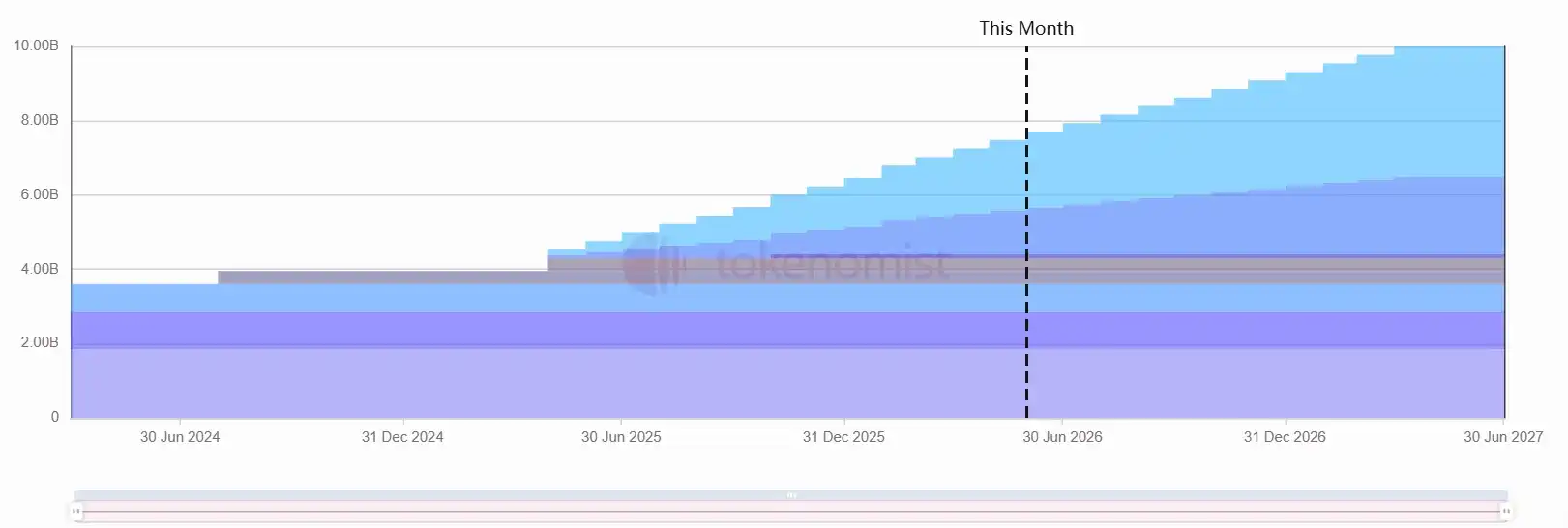
Kamino is an automated liquidity solution based on the Concentrated Liquidity Market Maker (CLMM) mechanism. Liquidity Providers (LPs) seeking to enhance capital efficiency can leverage Kamino's Automated Market Making Vaults to increase the expected yield from fees and rewards. Kamino was incubated by Hubble Protocol.

Detailed release schedule is as follows:
Criptomoedas em alta

Perguntas relacionadas

QWhat is the total amount and approximate value of EIGEN tokens being unlocked this week?

AThis week, 36.83 million EIGEN tokens are being unlocked, with an approximate value of $8.25 million.

QWhat core concept does EigenLayer introduce and how does it function?

AEigenLayer introduces the concept of restaking, a new primitive in cryptoeconomic security. It is a protocol built on Ethereum that allows users staking ETH to opt into EigenLayer smart contracts to restake their ETH and extend cryptoeconomic security to other applications on the network.

QFor Falcon Finance, what is the purpose of the protocol and how many tokens are being unlocked?

AFalcon Finance is a decentralized protocol designed to serve as a universal collateral infrastructure for minting synthetic assets and generating yield. This week, 100 million tokens are being unlocked, valued at approximately $6.79 million.

QWhat is Kamino and which protocol incubated it?

AKamino is an automated liquidity solution based on the Concentrated Liquidity Market Maker (CLMM) mechanism. It was incubated by Hubble Protocol.

QHow does Kamino aim to benefit liquidity providers (LPs)?

AKamino aims to benefit liquidity providers (LPs) seeking higher capital efficiency by allowing them to leverage its automated market-making vaults to enhance the expected yield from fees and rewards.

Leituras Relacionadas

Media: Anthropic Aims for Revenue Up to $200 Billion by 2028 Ahead of IPO

Anthropic, the AI company behind Claude, is reportedly projecting its revenue could reach between $190 billion and $200 billion by 2028, according to sources cited by Reuters. This forecast, significantly higher than its reported $47 billion annual run-rate in May 2026, is being used by investors and bankers to value the company ahead of a potential IPO. Anthropic has confidentially filed with the SEC, with listing details dependent on market conditions and regulatory approval. The valuation reportedly applies a revenue multiple (EV/Revenue) to these future 2028 figures, an approach common for high-growth tech firms but unusual for a forecast two years ahead of an IPO. This reflects confidence in Anthropic's rapid scaling; its annual run-rate grew tenfold yearly for three years leading into 2026, jumping from ~$9B in late 2025 to over $47B by May 2026. Investors are betting the company's massive spending on GPUs, model training, and infrastructure will eventually outpace costs, leading to expanding margins. Public companies like Palantir, Cloudflare, and SpaceX, valued at high multiples of their forward revenue, serve as benchmarks. While this forward-looking method has precedents, some analysts question the sustainability of such valuations and the actual productivity gains from AI. Despite these concerns, earlier reports suggested Anthropic could be valued at over $1 trillion for its IPO.

cryptonews.ruHá 13m

Media: Anthropic Aims for Revenue Up to $200 Billion by 2028 Ahead of IPO

cryptonews.ruHá 13m

Open Blockchain Business: Who Gets the Fees and Why a Foundation is Needed

Business of Open Blockchain: Who Gets the Fees and Why a Foundation is Needed In public blockchains, user transaction fees do not simply become "revenue" for a single entity. The flow of money is complex and protocol-dependent. In Ethereum, fees consist of a base fee (burned, permanently removing ETH from circulation) and a priority tip (paid to the validator). In Solana, half the base fee is burned and half goes to the validator, while priority fees go entirely to validators. Thus, "fees" are not synonymous with "project revenue"; they may go to network operators or be destroyed. Foundations like the Ethereum Foundation do not take a cut of user fees. They are funded by their own treasuries, which can generate income (e.g., from staking rewards) and finance ecosystem development, research, and security. Their role is to fund public goods that are hard to monetize directly. Developers of open-source blockchain code can monetize through services, not the code itself. For example, Optimism provides its technology freely but sells enterprise support and managed services (OP Enterprise). Additionally, networks built on Optimism's tech, like Coinbase's Base, share a portion of their revenue with the Optimism ecosystem via agreements, creating an economic link. Token holders do not automatically receive fees as dividends. In Optimism, a portion of protocol revenue is now used to buy back and treasury-lock OP tokens, creating an indirect link between network usage and token economics. In Ethereum, fee burning reduces ETH supply but doesn't distribute funds to all holders; stakers and validators receive direct rewards. For evaluation, analysts should look beyond total fee figures. Key questions are: Who paid and for what? Where did the money go (to validators, operators, treasury, or burning)? What were the recipient's costs? Is there a mechanism linking this income to the token? The same fee amount impacts different blockchain economies in vastly different ways depending on these factors.

cryptonews.ruHá 15m

Open Blockchain Business: Who Gets the Fees and Why a Foundation is Needed

cryptonews.ruHá 15m

Trading

Spot

Artigos em Destaque

Como comprar EIGEN

Bem-vindo à HTX.com!Tornámos a compra de EigenLayer (EIGEN) simples e conveniente.Segue o nosso guia passo a passo para iniciar a tua jornada no mundo das criptos.Passo 1: cria a tua conta HTXUtiliza o teu e-mail ou número de telefone para te inscreveres numa conta gratuita na HTX.Desfruta de um processo de inscrição sem complicações e desbloqueia todas as funcionalidades.Obter a minha contaPasso 2: vai para Comprar Cripto e escolhe o teu método de pagamentoCartão de crédito/débito: usa o teu visa ou mastercard para comprar EigenLayer (EIGEN) instantaneamente.Saldo: usa os fundos da tua conta HTX para transacionar sem problemas.Terceiros: adicionamos métodos de pagamento populares, como Google Pay e Apple Pay, para aumentar a conveniência.P2P: transaciona diretamente com outros utilizadores na HTX.Mercado de balcão (OTC): oferecemos serviços personalizados e taxas de câmbio competitivas para os traders.Passo 3: armazena teu EigenLayer (EIGEN)Depois de comprar o teu EigenLayer (EIGEN), armazena-o na tua conta HTX.Alternativamente, podes enviá-lo para outro lugar através de transferência blockchain ou usá-lo para transacionar outras criptomoedas.Passo 4: transaciona EigenLayer (EIGEN)Transaciona facilmente EigenLayer (EIGEN) no mercado à vista da HTX.Acede simplesmente à tua conta, seleciona o teu par de trading, executa as tuas transações e monitoriza em tempo real.Oferecemos uma experiência de fácil utilização tanto para principiantes como para traders experientes.

384 Visualizações TotaisPublicado em {updateTime}Atualizado em 2026.06.02

Como comprar EIGEN

Discussões

Bem-vindo à Comunidade HTX. Aqui, pode manter-se informado sobre os mais recentes desenvolvimentos da plataforma e obter acesso a análises profissionais de mercado. As opiniões dos utilizadores sobre o preço de EIGEN (EIGEN) são apresentadas abaixo.

活动图片